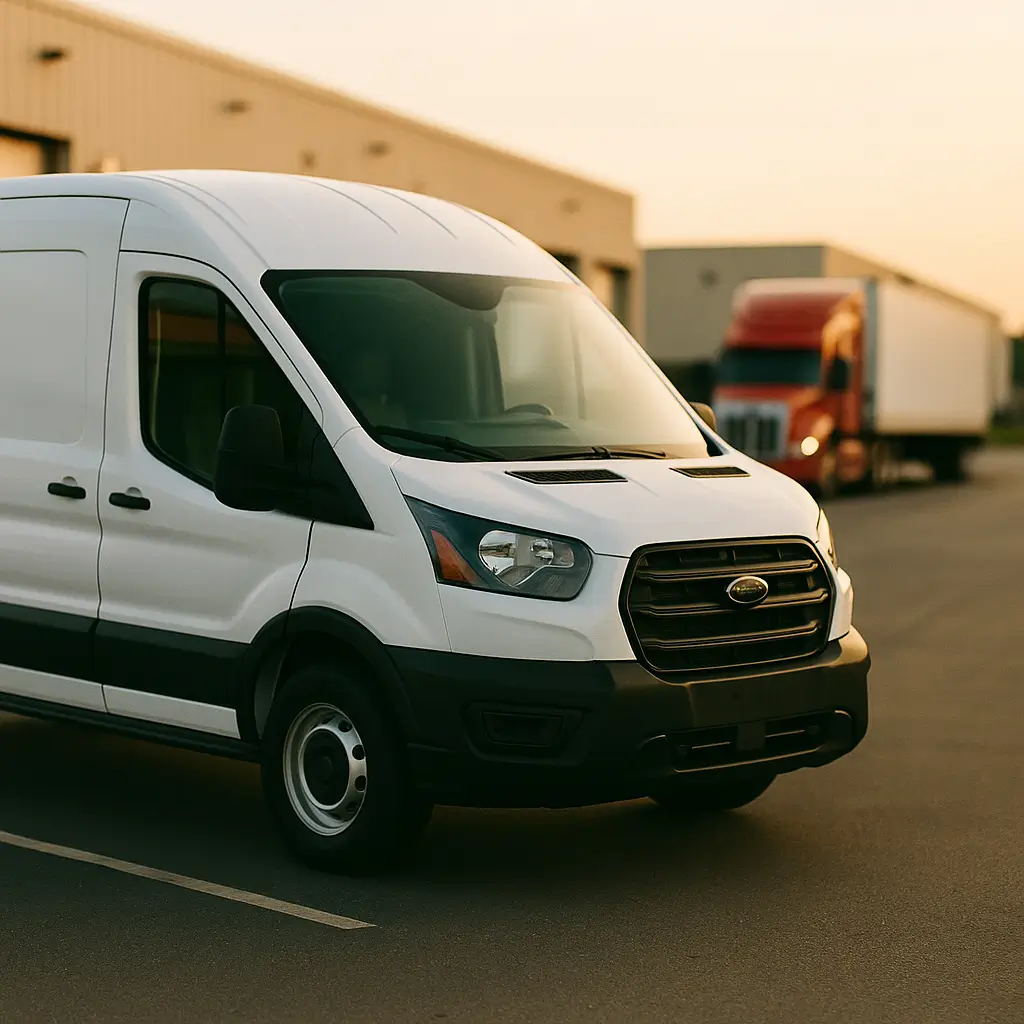
Compare 2026 cargo van insurance costs from $100–$625 per month, liability vs. full coverage, key rate factors, and practical ways to save.

Cheapest cargo van insurance in 2026 typically costs $100–$300/month for liability-only and $200–$625+/month for full coverage (liability + comp/collision), with your ZIP code, delivery exposure, radius, drivers, and deductibles doing most of the price moving. If you want a quick “featured snippet” answer: expect $1,200–$3,500/year for liability-only and $2,500–$7,500+/year for full coverage for many owner-operators and small delivery businesses.
If you don’t want to guess, the cleanest first step is to pull a baseline price using a cargo van insurance quote with the same limits and deductibles you plan to buy.
Table of Contents
Reading time: 8 minutes
Key Takeaways (Read This If You’re Busy)
The “cheapest” cargo van insurance is the lowest premium for the same coverage limits, deductibles, drivers, use class, and radius, not the lowest dollar amount on a mismatched quote.
- Match the policy to real use: Delivery/courier is rated differently than trades/service calls, and misclassification can cause claim delays or denials.
- Liability-only can be a trap: It’s cheaper, but risky if your van is financed or you can’t replace it quickly after a total loss.
- Your biggest pricing levers: Use class, garaging ZIP, operating radius, driver record, vehicle value, and deductibles.
- Fastest way to get “cheap” reliably: Compare quotes apples-to-apples (same limits, same deductibles, same drivers, same radius).
What “Cheapest Cargo Van Insurance” Really Means (and What It Doesn’t)
“Cheapest cargo van insurance” means the lowest premium for the same risk profile—same driver(s), same garaging ZIP, same radius, same use type, the same liability limits, and the same deductibles.
What it is (plain English)
If two quotes don’t match line-by-line, you’re not comparing price—you’re comparing different insurance. A quote that’s $120/month cheaper because it uses lower limits or excludes comp/collision isn’t a true “cheapest” option.
What it isn’t (the stuff that gets people burned)
- State-minimum limits: They can be the lowest legal option, but they often won’t satisfy contracts with shippers, brokers, or vendors.
- Wrong classification: Calling delivery “business use” to shave premium can backfire at claim time.
- Dropping physical damage blindly: If you can’t replace the van quickly, saving money upfront can cost weeks of income later.
Mini cost reality check (2026 benchmarks)
These ranges are common starting points many operators see, but your actual price will swing based on ZIP code, delivery density, and driver history.
| Coverage Setup | Typical “Cheaper” Range (2026) | Best Fit For |
|---|---|---|
| Liability-only | $100–$300/mo | Paid-off older van + strong cash reserve |
| Full coverage (liability + comp/collision) | $200–$625+/mo | Financed/leased vans, higher-value vans, owners who can’t afford downtime |
Want a plain-English breakdown of why personal vs commercial classification changes pricing? Read cheap van insurance.
For a full walkthrough of what it actually costs to get a cargo van business running — insurance included — watch this breakdown:
Do You Need Commercial Insurance—and What Coverage Actually Makes Sense?
Commercial auto insurance is typically required for for-profit cargo van operations, because many personal auto policies exclude delivery or “for-hire” use and may not cover claims tied to paid transportation.
Commercial vs personal: the quick reality check
If your van generates revenue, your policy needs to match what you do. Common cargo-van use types that change pricing and eligibility include:
- Delivery/courier work: Multiple stops, urban backing, tight parking, and higher claim frequency potential.
- Trades/service calls: Different rating than delivery; tools/equipment are usually a separate coverage topic.
- Hauling goods “for hire” vs hauling your own materials: Contracts and coverage needs can change fast.
If an insurer says “you’re fine,” ask for confirmation in writing. A phone conversation won’t help you during a claim dispute.
FMCSA filings: who needs them (and who usually doesn’t)
FMCSA insurance filings apply only to certain federally-regulated operations (for-hire interstate authority and specific thresholds), and many cargo van operators don’t meet those triggers.
If you’re unsure, review LogRock’s cargo van insurance requirements guide, then use FMCSA’s overview and match it to your operation: https://www.fmcsa.dot.gov/registration/insurance-filing-requirements.
Liability-only vs full coverage (and the deductible lever)
Liability pays for injury or damage you cause to others, while comp/collision (physical damage) helps repair or replace your van after a covered loss, subject to deductibles.
For a neutral consumer explanation of auto coverage components, NAIC’s guide is a solid reference: https://content.naic.org/consumer/auto-insurance.
| Deductible Choice | Premium Impact (Typical Direction) | Cash-Flow Reality Check |
|---|---|---|
| $500 | Higher premium | Easiest to pay after a claim |
| $1,000 | Often lower | Manageable for many operators |
| $2,500 | Often lowest | Can hurt if you don’t keep reserves |
If you want the broader primer on core coverages, start here: commercial auto insurance basics.
Quick take on getting a cargo van business off the ground on a tight budget:
Who Offers the Cheapest Cargo Van Insurance in 2026? (Plus How to Compare Quotes Correctly)
No single insurer is always the cheapest for cargo van insurance in 2026, because pricing is driven by underwriting variables like garaging ZIP, use class, radius, driver MVR, claims history, and vehicle value.
The honest short list: “often competitive” options
Instead of chasing a magic company name, compare a short list of cargo van insurers that fit your operation and state availability:
| Insurer Type | Often Best For | What to Watch |
|---|---|---|
| Large national commercial auto carriers | Broad availability and steady underwriting appetite | Delivery classification must be accurate |
| Regional commercial carriers | Certain states and cleaner risks | Limited footprint |
| Independent agent markets | New ventures, mixed-use, or harder-to-place risks | Coverage differences can hide in exclusions |
| Fleet-focused programs | Multiple vans with consistent operations | Minimum vehicle count may apply |
Running more than one van? See fleet insurance coverage and costs before you compare a multi-vehicle quote.
To comparison-shop correctly (and avoid false “cheap” quotes), use this guide as your backbone: cheapest commercial auto insurance.
Apples-to-apples quote checklist (where “cheap” is actually won)
If these items don’t match, you can’t trust the price comparison.
- Liability limits: Don’t compare $300,000 to $1,000,000 and call it “cheaper.”
- Comp/collision deductibles: $500 vs $2,500 can swing premium a lot.
- Driver list: Only active drivers; remove “ghost” drivers.
- Use class: Delivery/courier vs trades/service.
- Radius / annual miles: Local vs regional matters.
- Vehicle value: ACV vs stated amount (if applicable).
- Add-ons: Rental reimbursement, towing/labor, hired & non-owned, etc.
Practical lever: If a carrier offers dash cam discounts for telematics or driver coaching, that can materially reduce losses on stop-and-go routes with frequent backing.
For broader context on transportation operations and how the sector is categorized, BLS’s industry overview is a useful reference: https://www.bls.gov/iag/tgs/iag484.htm.
Here’s a 60-second recap of the three costs that matter most before you commit to a quote:

Frequently Asked Questions
In 2026, cargo van insurance commonly runs $1,200–$3,500/year for liability-only and $2,500–$7,500+/year for full coverage (liability + comp/collision). The biggest pricing drivers are your garaging ZIP, whether you’re rated as delivery/courier vs trades/service, your operating radius, and your driver MVR and claims history.
Two identical vans can price very differently if one does dense last‑mile routes and the other does low-stop service calls. To get a usable number, quote with the same limits and deductibles across carriers.
No insurer is always the cheapest for cargo van insurance, because commercial auto pricing changes by state, ZIP code, use class, radius, and driver history. The same driver and van can be “best priced” by a national carrier in one ZIP code and by a regional carrier or independent agent market in another.
The practical way to find the true low-cost option is to request multiple quotes with identical liability limits, physical damage deductibles, driver lists, and radius so you’re comparing apples-to-apples—not different coverage setups.
You get cheap cargo van insurance by shopping multiple carriers with the same limits and deductibles, classifying the operation accurately (delivery/courier vs trades), and choosing deductibles you can pay immediately (commonly $1,000 instead of $500, if cash reserves allow). Keeping continuous coverage also matters, because lapses can push you into higher-priced markets.
Finally, re-shop at renewal (not after a claim), keep only active drivers on the policy, and consider loss-control tools like dash cams or telematics if they earn verified discounts.
Liability-only coverage pays for injuries and property damage you cause to others, while a “full package” adds comprehensive and collision (physical damage) to help repair or replace your cargo van after a covered loss, minus your deductible. Full coverage is commonly required when a van is financed or leased.
Liability-only is cheaper, but it can be financially dangerous if a total loss would shut down your income or leave you making payments on a van you can’t use.
Cargo coverage cost depends on your commodity, the cargo limit (for example, $25,000 vs $100,000), territory, and claims history, and it may be written as a separate coverage from commercial auto. Many trades-based van operators aren’t hauling “cargo for hire” in the trucking sense, so the right solution may be different from a courier moving customer property.
To get an accurate premium, be ready with commodity type, max load value, radius/territory, and any contract-required cargo limits.
Sometimes a personal auto policy can allow limited business use (like commuting to job sites), but delivery, courier, and “for-hire” use are often excluded under personal auto policies. If you’re paid to transport goods or you’re making frequent stops, you generally need a commercial policy that matches that exposure.
Don’t rely on a verbal “yes.” Ask the insurer to confirm your exact use in writing, and switch to commercial auto if your operation involves deliveries, platforms, or contracts requiring proof of commercial coverage. For mixed-use scenarios, see cargo van insurance for personal use.
Insurance is often cheaper when paid annually because monthly billing can include installment or finance fees, which increase the total cost even if the base premium is the same. The exact savings depends on the carrier’s billing plan, but the right comparison is always the total annual cost, not the advertised monthly payment.
If cash flow is tight, pick a billing plan you can sustain without missing payments, because a cancellation or lapse can trigger higher pricing the next time you apply.
The cheapest liability limit is usually your state minimum liability requirements, but state-minimum limits are often not enough for real business risk and may not satisfy delivery contracts that require higher limits (commonly $1,000,000 in commercial agreements). One serious at-fault crash can exceed low limits quickly, leaving your business exposed.
A safer method is to meet contract requirements first, then optimize cost by adjusting deductibles, radius, and driver controls—without underinsuring or misclassifying the work.
Most standard commercial cargo van policies are written around a specific use class, and platform or gig delivery can fall outside that class unless it is declared upfront. Some carriers exclude platform-based delivery entirely, while others require a specific endorsement or a policy written for for-hire delivery use. Tell your agent exactly which platforms you drive for so the policy is written to match, not just “delivery” in general. For more detail, review auto insurance quotes for delivery drivers.
In most cases, yes. A paid at-fault claim can raise your premium at renewal, especially if the claim suggests repeated delivery-route risk, backing risk, or poor driver controls. Some carriers offer accident forgiveness or first-claim waivers for clean-record policyholders, but this is not universal in commercial auto. Ask your agent whether your carrier offers any claim-forgiveness terms before you buy.
Yes, in both directions. Newer vans usually cost more to insure for comprehensive and collision because they are more expensive to repair or replace, while older vans can be cheaper under liability-only if the owner can absorb the replacement risk. Very old vans may not qualify for full coverage if the actual cash value is too low to justify it. If your van is older and financed, confirm with your lender whether full coverage is still required.
In many states, insurers can use credit-based insurance scores as one rating factor for commercial auto, alongside driving record, business history, garaging ZIP, and claims history. Some states restrict or ban this practice, so it depends on where your van is garaged. If your credit has improved since you first bought coverage, ask your agent whether a re-rate at renewal could lower your premium.
There is no single industry-wide mile threshold, but many carriers treat “local” as a tighter radius around the garaging address and price wider service areas as regional or long-haul. The exact cutoff varies by carrier, so do not assume your operation qualifies for local rates just because it feels local. Confirm the carrier’s specific radius definition before you buy, since misreporting radius is a common reason claims get delayed or re-rated.
Conclusion: “Cheapest” Is the Policy That Matches Your Real Work
The cheapest cargo van insurance isn’t a carrier name—it’s a clean setup: correct use classification, realistic limits, smart deductibles, and an apples-to-apples quote comparison.
If you want to keep premiums from creeping up every renewal, avoid the preventable mistakes that trigger re-rating and coverage surprises.
Key Takeaways:
- Shop with the same limits, deductibles, drivers, and radius so the “cheapest” quote is real.
- Don’t underinsure just to hit a price; contracts and lawsuits don’t care about your budget.
- Use deductibles as a lever only if you can pay them immediately after a claim.
For more ways to cut costs without dangerous gaps, use these guides: insurance mistakes that raise premiums, How to save on affordable trucking insurance, and Commercial truck insurance costs by state.
If you’re trying to lock in the lowest honest price on cargo van insurance — without underinsuring a financed van or misclassifying delivery work — LogRock can help you review your operation, coverage needs, and available options.
Speak with LogRock and request a quote