
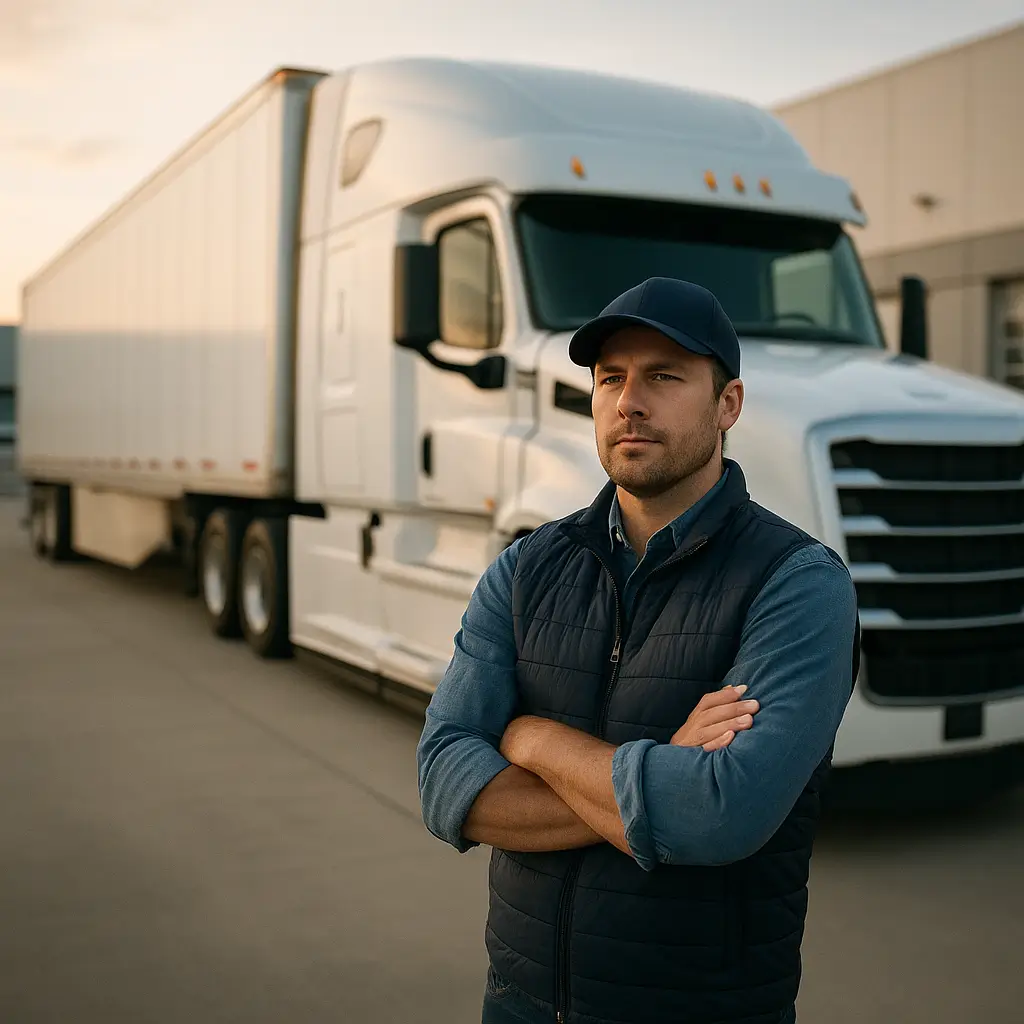

See Austin commercial auto insurance costs of $120–$450/month per vehicle, Texas minimums, city contract limits, and practical ways to save.
Commercial auto insurance Austin pricing usually lands in a predictable range: most small businesses in Austin see about $120–$450 per month per vehicle in 2026, depending on vehicle type, driver MVRs, annual mileage, operating radius, and liability limits (especially when a contract requires higher limits).
If you want a broader baseline for how insurers price business vehicles (and why two “similar” trucks can quote very differently), start with these commercial auto insurance cost benchmarks.
Table of Contents
Reading time: 8 minutes

Key takeaways: Austin commercial auto insurance (2026)
Most Austin small businesses pay $120–$450 per month per vehicle for commercial auto insurance in 2026, with the biggest price drivers being vehicle use (delivery vs service), driver records, miles/radius, and liability limits required by contracts.
For broader national context, compare Austin against 2026 commercial auto insurance rates by operation type.
- Texas legal minimums are a floor, not a target: City of Austin and larger clients often require limits like $500,000 CSL or higher, which can change pricing fast.
- Your price is mostly exposure-based: delivery/route work, multiple drivers per unit, higher mileage, and higher limits move the number more than a ZIP code does.
- Compare quotes apples-to-apples: same limits, same deductibles, same driver list, same use description, and the same vehicle schedule.
- Don’t force trucking exposure into a “business auto” box: hotshot, for-hire hauling, and heavier rigs often belong in trucking programs, not basic commercial auto.
Texas requirements vs City of Austin contract limits (what you must carry)
Texas auto liability minimums are commonly cited as 30/60/25 (bodily injury per person / bodily injury per accident / property damage), but City of Austin and commercial contracts often require higher limits such as $500,000 combined single limit (CSL) for Business Auto Liability.
For city jobs, verify the exact wording in your contract exhibit or vendor packet through the City of Austin Purchasing Office before you bind coverage.
Why this matters for Austin jobs
When you’re underinsured, you don’t just risk a bad claim outcome—you can lose the job because your paperwork doesn’t match the contract exhibit. Insurance compliance in Austin is often a COI problem, not a driving problem.
- Texas minimums (reference): Texas Department of Insurance consumer guidance: Texas Department of Insurance auto coverage guidance
- City contract insurance exhibits (example): City of Austin insurance requirements PDF (verify against your specific contract packet): City of Austin Purchasing Office
Quick comparison table (typical)
| Requirement type | What you’ll see | What it means for you |
| Texas legal minimum (baseline) | 30/60/25 (split limits) | Legal minimum to operate, but often too low for commercial contracts |
| City of Austin / larger client contracts (common) | $500,000 CSL (or higher) | You may need higher auto liability limits and specific COI wording |
Who typically needs higher limits in Austin
- Any business with titled company vehicles: LLC/Corp vehicles, leased units, financed units
- Delivery and service operations: higher frequency driving = higher exposure
- Any vendor bidding city/commercial work: insurance is often a pass/fail onboarding requirement
Pro tip: meet contract limits without overbuying
When a contract pushes higher limits, ask whether it’s better to raise auto liability limits or keep auto reasonable and add umbrella/excess (what’s “best” depends on underwriting appetite and what the contract allows). Also, tighten your COI process so endorsements don’t slow down billing.
For the paperwork side, this guide helps you avoid kickbacks for missing entity names, additional insured language, or wrong limits: certificate of insurance (COI) basics + how to request one.
What commercial auto covers (and the gaps that blow up claims)
Commercial auto insurance is designed to cover business vehicle liability plus optional physical damage (comprehensive and collision), and coverage details are governed by policy forms and endorsements that can differ by insurer.
Core coverages most Austin businesses rely on
- Liability: pays for injury/property damage you cause to others (limits matter most when contracts require higher limits).
- Physical damage (optional or lender-required): comprehensive (theft, hail, vandalism) and collision (at-fault damage to your vehicle).
- Medical payments / PIP (varies): sometimes included or optional depending on the policy and state rules.
If you want a plain-language breakdown of what auto liability actually pays for — and what it will not — this video covers it:
Common reasons claims get messy
- Wrong use classification: “service calls” vs “delivery/route” can change how the risk is rated.
- Driver list issues: unlisted regular drivers, turnover, or ineligible MVRs create underwriting and claims friction.
- Assuming personal auto covers business use: personal policies can exclude certain commercial use patterns.
Add-ons Austin businesses commonly overlook
Hired & Non-Owned Auto (HNOA) matters when employees use personal cars for errands/sales calls/deliveries or you rent vehicles, because your business can still be sued even if you don’t own the car.
If you’re not sure whether HNOA applies, start here: hired and non-owned auto insurance explained.
When “commercial auto” becomes trucking insurance
Hotshot loads, for-hire hauling, heavier units, frequent interstate trips, or DOT/FMCSA compliance can require trucking-specific coverage structures and filings that basic business auto often doesn’t address cleanly.
Use the FMCSA registration self-assessment tool to check whether your operation may trigger federal requirements.
- Hotshot work: often needs cargo/liability structures aligned with for-hire exposure.
- For-hire hauling: contracts and regulators may require filings and higher limits.
- Heavier trucks/trailers: underwriting class and limits can change significantly.
Commercial auto insurance cost in Austin (2026): monthly & annual benchmarks
Commercial auto premiums in Austin are primarily priced on measurable exposure variables—drivers, vehicle type/value, business use, annual mileage, operating radius, losses, and liability limits—rather than on “Austin ZIP code” alone.
Typical Austin ranges (per vehicle)
These are typical small-business ranges (not guarantees), and your quote can be outside them based on losses, MVRs, vehicle value, and required limits.
| Austin business use-case | Typical monthly range / vehicle | Typical annual range / vehicle |
| Contractor pickup/van (tools, local radius) | $120–$250 | $1,440–$3,000 |
| Service fleet (3–10 units, mixed drivers) | $150–$325 | $1,800–$3,900 |
| Local delivery van / route work | $200–$450 | $2,400–$5,400 |
| Food truck / mobile vending (scheduled events) | $175–$400 | $2,100–$4,800 |
| Light-duty box truck (local distribution) | $250–$600 | $3,000–$7,200 |
For route-heavy operators, compare this against delivery vehicle insurance coverage options. If you run several units, review fleet vehicle insurance costs and coverage. Food truck and mobile vending operators should also check food truck insurance in Texas.
Before comparing quotes, it helps to understand what underwriters are actually looking at. This video walks through the main pricing variables:
What pushes your Austin quote higher quickly
- Higher liability limits: especially contract-driven limits like $500,000 CSL or higher
- Delivery/route exposure: more time on the road, more frequent stops
- Multiple drivers per vehicle: more “keys in the wild,” more claim frequency risk
- Loss history and MVRs: prior at-fault accidents, tickets, or DUIs
- Mileage and radius: higher annual miles and broader territories
- Vehicle value and upfits: racks, lifts, toolboxes, refrigeration, wraps
If you operate beyond Austin or you’re comparing city pricing to statewide context for truck-leaning operations, see: Texas commercial truck insurance cost context.
Apples-to-apples quote checklist
Before you compare prices, make sure every quote matches on the items below (otherwise you’re comparing different products).
- Liability limits: split limits vs CSL, and any required endorsements
- Deductibles: comprehensive and collision deductibles
- Driver list: who’s listed, who’s excluded, and who regularly drives
- Vehicle schedule: VINs, stated values, and any upfits
- Use classification: service vs delivery vs transporting people
- HNOA: included or not (big gap if employees use personal cars)
Frequently Asked Questions
Texas auto liability minimums are commonly cited as 30/60/25, meaning $30,000 bodily injury per person, $60,000 bodily injury per accident, and $25,000 for property damage. Those limits can be legal to drive, but they’re often too low for commercial contracts, financed vehicles, and higher-mileage business use. Many Austin vendors get pushed to higher limits (for example, $500,000 CSL) when bidding City of Austin work or larger client jobs. Use TDI’s consumer guidance as a baseline reference, then match limits to your actual contracts and risk exposure.
Source: Texas Department of Insurance auto coverage guidance
Most Austin small businesses pay $120–$450 per month per vehicle for commercial auto insurance in 2026, with the biggest swings coming from vehicle use (delivery/route vs service), driver MVRs, annual mileage, operating radius, loss history, and liability limits required by contracts. For example, a contractor pickup doing local service calls can price far lower than a delivery van running daily routes with multiple drivers. To compare quotes fairly, keep limits, deductibles, driver lists, and the described vehicle use identical on every quote.
A typical commercial auto policy includes liability coverage and can include comprehensive and collision (often required if a vehicle is financed or leased). Many Austin businesses also need add-ons like Hired & Non-Owned Auto (HNOA) when employees drive personal cars for work or the business rents vehicles, because your business can still be pulled into a lawsuit. Coverage terms, exclusions, and endorsements vary by insurer, so the declarations page and policy forms matter as much as the premium.
Reference: NAIC auto insurance consumer guide
Commercial auto turns into DOT/FMCSA-driven requirements when you’re operating as a regulated carrier (often due to for-hire hauling, certain vehicle weight thresholds, or interstate operations) and need insurance structured for trucking plus any required filings. This is where many Austin operators get misclassified—especially hotshot setups, trailer-for-hire work, or heavier units that don’t fit standard business auto underwriting. If you’re close to those thresholds, use a specialist who can confirm whether you need trucking coverage, filings, or higher contract-driven limits.
More detail: DOT compliance + insurance filings overview
Split limits, like 30/60/25, set separate caps for bodily injury per person, bodily injury per accident, and property damage. A combined single limit (CSL), such as $500,000 CSL, pools liability into one number that can be applied to injury and property damage from the same accident. CSL gives more flexibility in a serious claim and is commonly what larger contracts ask for. If your contract requires CSL but your policy shows split limits, confirm the structure with your broker before submitting the COI.
Usually not fully. Personal auto policies often limit or exclude business use such as deliveries, transporting clients, or regular business routes. If an employee uses a personal vehicle for company errands, your business can still be exposed even if you do not own the vehicle. That is why Hired & Non-Owned Auto (HNOA) coverage is important for Austin businesses with employees driving personal cars for work.
There is no universal threshold, but many insurers begin offering fleet-style programs around 3–5 vehicles, and some may consider smaller accounts. The question is whether bundling improves pricing, simplifies COI management, and makes it easier to add or remove units. For Austin businesses with multiple vehicles and multiple drivers, a fleet policy can make administration easier and may improve pricing as the account grows.
A certificate of insurance is a one-page proof of coverage issued by your insurer or broker. It shows limits, effective dates, named insureds, and sometimes additional insured wording. The City of Austin and larger commercial clients often require a COI before work starts because they want proof your policy meets their contract requirements. A COI that does not match the contract exhibit can delay onboarding or get the job rejected.
Conclusion: Get Austin commercial auto that’s contract-ready
Austin commercial auto insurance is usually manageable when you match coverage to how you actually operate, then price it apples-to-apples across carriers. The big mistakes are underinsuring for contracts, misclassifying delivery vs service use, and forgetting HNOA when employees use personal cars.
Key Takeaways:
- Budget realistically: $120–$450 per vehicle per month is a common 2026 Austin range for small businesses.
- Match limits to contracts: City and large-client requirements like $500,000 CSL can change both pricing and COI wording.
- Reduce exposure the right way: clean driver lists, accurate use descriptions, and sensible deductibles usually beat “cheapest quote” shopping.
If your operation is drifting into hotshot or true for-hire hauling, don’t force it into the wrong policy type. Start here:
- For hotshot operators: hotshot insurance guide
- For heavier rigs and for-hire operations: semi truck insurance explained





