
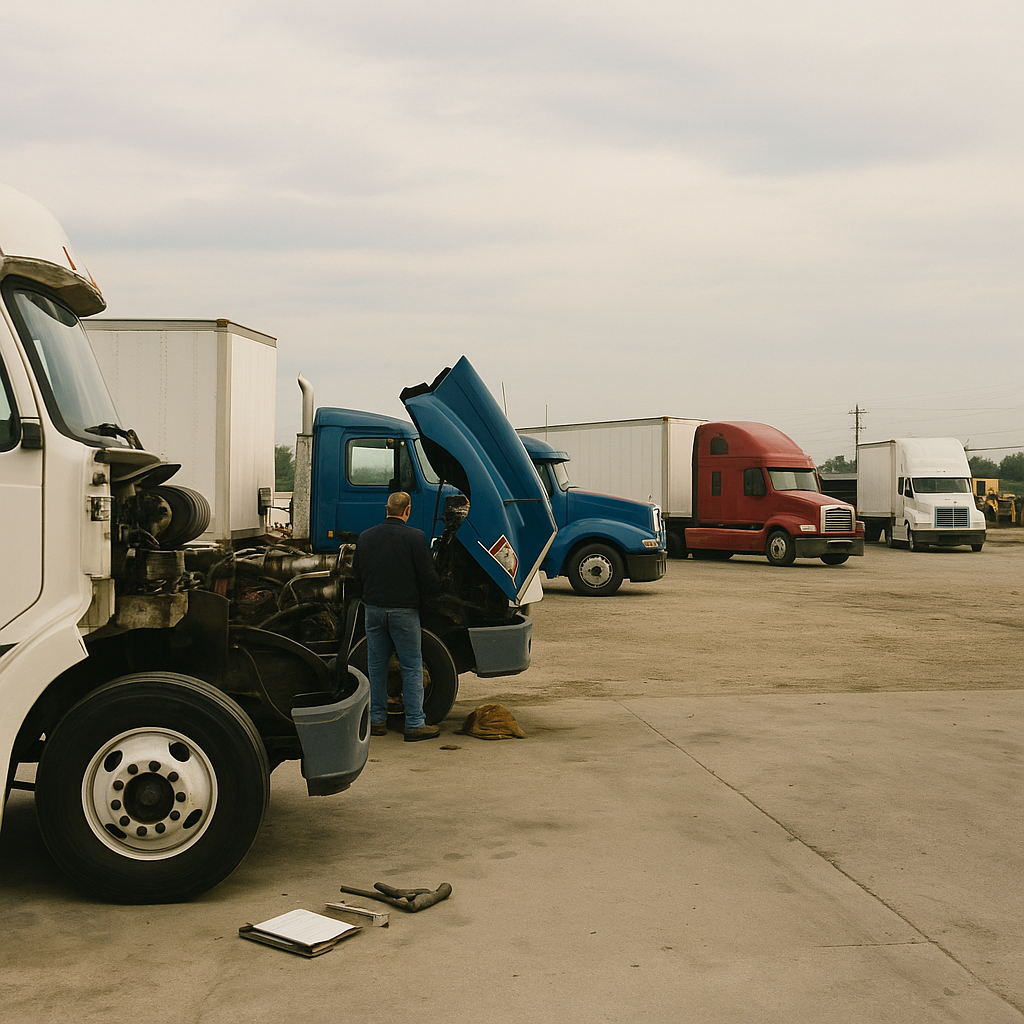

A commercial auto liability claim is the part of trucking insurance that responds when your covered truck operation causes injury or property damage to someone else. For owner-operators and small fleets, the big mistake is mixing up liability, cargo, physical damage, and FMCSA filing rules as if they all mean the same thing.
This guide breaks it down in plain English. You’ll see what a commercial auto liability claim actually pays for, what it does not pay for, when it gets triggered, and what to do after a truck accident.
What a commercial auto liability claim is#
A commercial auto liability claim is the insurer’s response when an insured truck causes bodily injury or property damage to another person during a covered business operation. In trucking, that simple definition gets more specific fast because coverage can turn on how you operate, what you haul, and whether you’re running interstate or intrastate.
Commercial auto liability insurance is business-use auto coverage that pays when a covered vehicle causes third-party injury or third-party property damage, subject to the policy terms. A claim is the request for payment or defense under that policy after a loss. A lawsuit or settlement demand is what can happen after the claim starts if the other side says you owe damages.
Plain-English definition#
If your truck rear-ends a car and the other driver gets hurt, that can lead to a commercial auto liability claim. If you back into a loading dock, crush a gate, or damage someone else’s trailer in a covered situation, that can also trigger a claim.
The key point is this: liability is about damage you cause to others. It is not the part that fixes your own tractor, and it is not the same thing as a general “commercial auto insurance claim.”
According to the NAIC, liability coverage is separate from first-party coverages that protect your own property. That’s why one accident can involve multiple claim paths at once.
Why trucking claims are different from personal auto#
Trucking claims are different because the truck is being used for business, often under a motor carrier operation with contracts, filings, dispatch records, and cargo documents. A personal auto policy usually is not built for for-hire hauling, and using the wrong policy can create a serious coverage problem.
An interstate motor carrier is a carrier that transports property or passengers across state lines or in commerce tied to more than one state. An intrastate carrier operates only within one state, though that does not mean the insurance rules are simple. Carrier type, vehicle weight, cargo, and route all matter when a commercial auto liability claim gets reviewed.
What liability coverage pays for after a truck accident#
A commercial auto liability claim usually pays for third-party bodily injury, third-party property damage, and sometimes the legal defense tied to a covered at-fault accident. It does not mean every crash is covered automatically, and it does not pay for your own truck repairs just because your truck was involved.
Bodily injury liability#
Bodily injury liability is the part of liability coverage that pays damages you owe when another person is hurt in a covered accident you caused. In a trucking claim, that can include medical bills, lost wages, pain-related damages, and other amounts claimed by the injured party.
If a four-wheeler driver, passenger, pedestrian, or dock worker is injured and your insured operation is legally responsible, this is the part of the policy that usually comes into play. The claim still has to be investigated. Fault, covered use, listed drivers, and the specific policy wording all matter.
Property damage liability#
Property damage liability is the part of liability coverage that pays for damage you cause to someone else’s property in a covered auto accident. In trucking, that may include another vehicle, a building, a fence, a loading dock, a guardrail, road signs, or other third-party property.
This is where a lot of confusion starts. If your tractor or trailer is damaged, that is not a liability payment to you. If the damaged property belongs to someone else and you were at fault in a covered event, property damage liability may respond.
Cargo belonging to others can be a separate issue, depending on what was damaged and how the loss happened. Liability is not a catch-all bucket for every business loss tied to the truck.
Defense costs and legal fees#
Defense costs are the legal expenses tied to defending a covered claim, but the exact treatment depends on the policy wording and the facts of the loss. Some claims resolve before a lawsuit. Others turn into formal litigation, especially when injuries are serious or fault is disputed.
That is why two accidents that look similar at the scene can develop very differently later. Liability coverage is built around covered, at-fault events and the insurer’s duty under the policy, not around the idea that every crash gets paid the same way.
When you’re staring at a damaged truck, missed loads, and a third-party injury claim, small wording differences start to matter fast. If you’re not sure whether your setup matches your operation,
What a commercial auto liability claim does not cover#
A commercial auto liability claim does not cover damage to your own truck, most cargo losses, or every off-duty or excluded-use situation. In trucking, liability is only one part of the insurance picture, so the gaps matter just as much as the covered pieces.
Damage to your truck#
Physical damage coverage is insurance for damage to your own insured vehicle, usually through collision and comprehensive-type protection. If your tractor is wrecked in an accident, liability does not repair it; physical damage coverage is the coverage owners usually look to instead.
That matters because drivers often say “insurance will cover the truck” without separating liability from vehicle damage coverage. A claim adjuster will separate those issues right away, even if you don’t at the scene.
Cargo and load issues#
Motor truck cargo coverage is insurance for covered freight you are hauling for others. If the freight is damaged, stolen, or spoiled, liability may not be the coverage that responds. Many owner-operators need separate truck cargo insurance because cargo losses are usually handled under their own terms and exclusions.
The same goes for many trailer and equipment exposures. Damage to a trailer you don’t own, or to non-owned equipment in your possession, often needs its own coverage structure rather than a standard liability claim.
Personal-use and excluded-use situations#
A named insured is the person or business listed on the policy as the covered insured party. Coverage can also depend on who was driving, whether the use matched the policy, and whether the trip fell inside the described operation.
Personal auto is not a substitute for business hauling coverage. If the vehicle is being used in trucking operations, a personal auto carrier may deny the claim based on business-use exclusions.
Some policies also restrict certain drivers, routes, commodities, or operating authorities. That means a commercial auto liability claim can fail not because liability coverage is useless, but because the actual use did not fit the policy you bought.
When a trucking liability claim gets triggered#
A trucking liability claim gets triggered when a covered truck operation causes injury or property damage and the loss falls within the policy terms. The hard part is not the basic idea; it’s knowing whether the accident, use, cargo, and operating authority match what was insured.
Accidents on the road#
Common trigger events include rear-end crashes, lane-change accidents, backing claims, side-swipes, and strikes involving parked vehicles or roadside property. If another party says your truck caused their injury or property loss, that is often the start of a liability claim.
Not every accident becomes a paid claim. The insurer still reviews fault, damages, covered use, vehicle status, and who was operating the truck.
Loading, unloading, and yard incidents#
Some trucking losses happen away from the highway. A forklift incident, a backing loss at a shipper, or damage during loading and unloading can still turn into a liability issue depending on the facts and the policy wording.
This is where small details matter. Was the truck in covered business use? Was the driver acting within the described operation? Did the damage involve the truck itself, the freight, a trailer, or separate equipment? Those questions shape whether the commercial auto liability claim responds.
Interstate vs. intrastate and carrier-type differences#
MCS-90 is a federal endorsement used to help satisfy certain motor carrier financial responsibility requirements, but it is not the same thing as broad coverage for every loss. For certain interstate motor carriers, FMCSA financial responsibility rules apply under FMCSA regulations and are laid out in 49 CFR Part 387.
For-hire interstate carriers hauling general freight in vehicles over 10,001 lbs must carry at least $750,000 in public liability under 49 CFR Part 387. That does not mean all truckers need the same limit. Requirements vary by carrier type, vehicle weight, cargo, and whether the operation is interstate or intrastate.
An auto hauler, hazmat carrier, private carrier, or strictly intrastate operation can fall under a different rule set. That’s why forum shorthand causes problems. Your state minimum is not automatically your federal minimum, and your federal filing does not answer every claim question.
What to do immediately after a truck accident#
After a truck accident, protect people first, document the scene, and report the loss quickly. The fastest way to make a bad situation worse is to leave gaps in the record, admit fault at the scene, or wait too long to notify the insurer or broker.
Safety and police response#
Get to a safe position if you can do it without creating more danger. Call emergency services when anyone is hurt, when traffic is blocked, or when local law requires a police response.

Check on injuries, but do not argue about fault on the roadside. Keep your statements factual. You can say what happened as you saw it, but don’t promise payment or admit liability before the facts are reviewed.
Evidence to collect#
Good documentation helps the claim move faster and gives the adjuster something better than two competing stories. Try to collect:
- Photos of all vehicles, trailer numbers, damage, skid marks, cargo position, road signs, and the wider scene
- Dash cam footage if available
- Driver statements while details are fresh
- Police report number
- Witness names and contact details
- License plate, VIN, and unit information
- Time, date, weather, and location details
- Bills of lading or dispatch records if the trip matters to the claim
Preserve records exactly as they are. Don’t delete video, rewrite logs, or “clean up” paperwork after the fact.
What to report to your broker or insurer#
Prompt notice matters because late reporting can complicate investigation, defense, and settlement. Give your broker or insurer the basic facts, who was involved, what was damaged, where it happened, and whether police or medical responders were called.
Be organized. Send the photos, report number, witness details, and any demand letters as soon as you have them. If you later receive a lawyer letter, lawsuit papers, or repair demands, forward them right away.
How commercial auto liability claims are handled#
Commercial auto liability claims are handled through a basic sequence: notice of loss, investigation, coverage review, liability review, and resolution. For trucking operations, the process can involve more documents than a personal auto claim because the insurer may need to verify the trip, the vehicle, the driver, and the business use.
Investigation and liability review#
After notice comes in, the insurer usually assigns an adjuster and starts gathering facts. That can include speaking with the driver, reviewing photos, inspecting damage, checking statements, and comparing the account to police findings.
The adjuster may also ask for dispatch records, bills of lading, maintenance records, lease paperwork, or contracts if those facts affect the use of the truck. If the operation itself is in question, public records can matter too. You can verify carrier status and operating information through SAFER.
Repair, settlement, or legal defense#
If the claim is covered and liability is reasonably clear, the insurer may pay the third party for injury damages or property loss, or negotiate a settlement. If fault is disputed or injuries are severe, the file may stay open longer and move into attorney handling.
If a lawsuit is filed, defense obligations depend on the policy terms and the nature of the allegations. Some claims are resolved quickly. Others take months because medical treatment, litigation, or multiple parties slow everything down.
What the insured should expect#
The insured should expect document requests, recorded statements in some cases, and repeated follow-up questions as the file develops. That does not automatically mean the claim is going badly. It usually means the insurer is building the liability picture.
Stay organized and respond fast. A missing document or delayed answer can create problems that did not exist on day one.
How much liability coverage and cost drivers matter#
Liability limits matter because a commercial auto liability claim can grow far beyond the initial damage you see at the scene. The cost of that coverage depends on the operation, not just the limit printed on the declarations page.
Why limits matter in a claim#
A higher limit can provide more protection when injuries, multi-vehicle damage, or legal expenses push the exposure up. But bigger is not automatically better if the policy structure still does not match the actual operation.
The right question is whether the limit fits the risk. One truck hauling local general freight has a different exposure profile than a small fleet running longer lanes, different commodities, or more complex contracts.
What affects the price of coverage#
Premiums vary based on the truck, driver history, business experience, operating radius, cargo, garaging location, claims history, and whether the operation is interstate or intrastate. The carrier type and authority structure can also affect underwriting.
That is why “How much does a $1,000,000 liability policy cost?” has no honest one-line answer. Your actual premium depends on your operation, cargo, radius, driving history, and other factors.
Why $1,000,000 is not a universal answer#
A $1,000,000 limit is common in trucking conversations because some shippers, brokers, and contracts ask for it. But it is not the universal legal minimum for every trucker.
For-hire interstate general freight over the federal weight threshold often starts with the FMCSA minimum under 49 CFR Part 387, while some operations choose or need higher limits for contract or risk reasons. The coverage decision should follow your exposure, not internet shorthand.
How to choose the right liability setup for your operation#
The right liability setup matches your real operation, your contracts, and your exposure to loss. Most owner-operators and small fleets do better when they stop copying another driver’s insurance stack and start matching coverage to what actually happens in their business.
Owner-operator vs. small fleet needs#
A one-truck owner-operator may need a simpler setup than a fleet with multiple drivers, changing units, and more lane or customer variation. Once you add drivers, expand your radius, or change cargo, the liability picture can change quickly.
Review your coverage when you change authority, add trucks, switch commodities, hire drivers, or start working under different contracts. The setup that worked for a leased-on owner-operator may not fit a new venture authority operation.
Cargo, trailer, and physical damage add-ons#
Liability alone is often not enough. Depending on the operation, you may also need cargo, physical damage, bobtail coverage, non-trucking liability, trailer protection, or reefer-related protection.
Bobtail usually refers to operating a tractor without a trailer attached. Non-trucking liability is liability coverage for non-business use only; it does not cover paid hauling. If those exposures apply, compare bobtail coverage and non-trucking liability based on how you actually use the truck.
Trailer interchange applies when you have a signed interchange agreement making you responsible for a non-owned trailer in your possession. If that’s part of your operation, look at trailer interchange coverage before assuming liability will handle trailer damage.
When to review your policy#
Review the policy any time your business changes in a way that affects risk. New lanes, new cargo, new equipment, new drivers, or a move from intrastate to interstate operation can all change what should be on the policy.
That review is not about buying everything possible. It is about making sure the commercial auto liability claim you expect to have is the one your policy is actually built to handle.
FAQ#
What are commercial liability claims?
Commercial liability claims are claims made against a business’s liability insurance after the business allegedly causes injury or property damage to someone else. In trucking, that usually means a claim arising from a truck accident, backing loss, or other business-use incident where another person says your operation caused harm.
The phrase is broad, though. It can refer to commercial auto liability, general liability, or other liability policies depending on the event. For owner-operators, the practical question is which policy applies. If the loss came from a covered truck accident, the claim usually starts under commercial auto liability, not cargo or physical damage.
How much does a $1,000,000 liability insurance policy cost?
A $1,000,000 liability policy does not have one standard price because trucking insurance is rated on the operation, not just the limit. Underwriters look at the truck, driver age and experience, MVR, cargo type, operating radius, garaging state, claims history, authority type, and whether the operation is interstate or intrastate.
A higher limit can change both your protection and the underwriting view of the account, but it is not automatically the right answer for everyone. Your actual premium depends on your operation, cargo, radius, driving history, and other factors. The better question is whether the limit fits your exposure and contract requirements.
What is an auto liability claim?
An auto liability claim is a claim for injury or property damage you allegedly caused to another person in an auto-related incident. If you are at fault in a crash and the other party seeks payment for medical bills or repair costs, that is an auto liability claim.
It is different from a physical damage claim. Liability pays others for covered losses you caused. Physical damage coverage pays for covered damage to your own insured vehicle. In trucking, that difference matters because one accident can create both a third-party liability claim and a separate first-party truck damage claim.
What is commercial auto liability insurance?
Commercial auto liability insurance is business-use auto liability coverage for covered vehicles used in a business operation. It responds when the insured commercial vehicle causes third-party bodily injury or third-party property damage, subject to the policy language, listed vehicles and drivers, and covered use.
For trucking, the details matter more than the label. Coverage can depend on carrier type, vehicle weight, cargo, and whether you operate interstate or intrastate. It also does not replace cargo insurance, physical damage, trailer coverage, or non-trucking liability where those are needed for the operation.
Can I use personal auto insurance for trucking work?
Usually no. Personal auto policies are built for personal driving, not for-hire trucking or business hauling. If a truck is being used in commercial operations and a loss occurs, the personal auto carrier may deny the claim based on business-use exclusions or vehicle-type restrictions.
That is one of the most expensive misunderstandings new operators run into. A commercial auto liability claim depends on having the right business-use coverage in place before the accident happens. If the truck is part of your business, the insurance needs to match that business use.





