
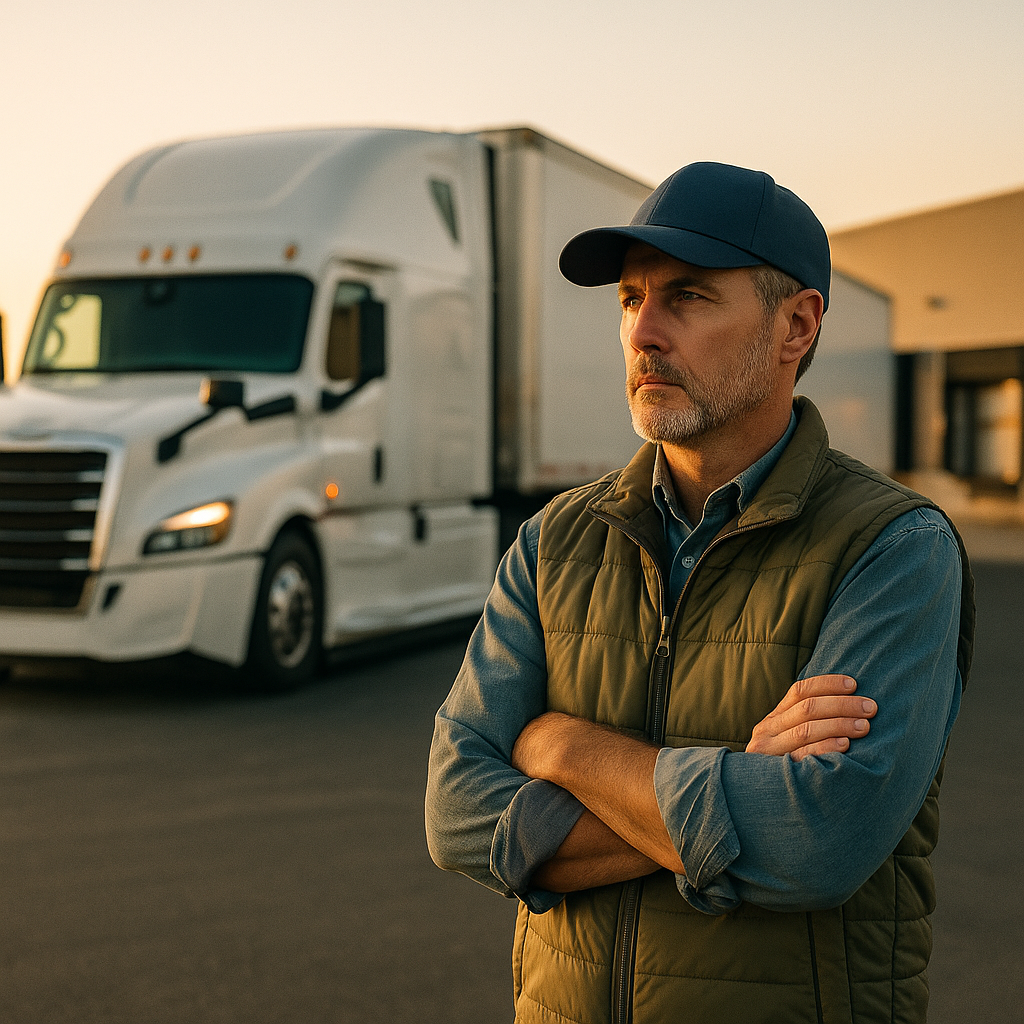

Florida commercial insurance FL guide: 7 core coverages, 2026 cost drivers, plus trucking notes (commercial truck insurance). Get quotes today—fast. No fluff.
Commercial insurance FL usually means a stack of policies (not one policy) that protects your business from lawsuits, storms, auto wrecks, employee injuries, and data breaches—most often built around a $1,000,000 general liability limit plus add-ons based on payroll, vehicles, and property.
Most Florida owners start with General liability insurance for Florida businesses, then add what their landlord, lender, GC, shipper, or broker requires—often at the last minute, right before a job starts.
Table of Contents
Reading time: 8 minutes
- Introduction
- Commercial Insurance in Florida (FL): What it covers
- Florida business insurance requirements (what’s required vs “required to get paid”)
- The 7 core commercial insurance coverages for Florida businesses
- Commercial insurance cost in Florida (2026): ranges + how to get affordable quotes
- Frequently Asked Questions
- Conclusion: Get the right Florida commercial insurance (without overpaying)

Introduction
Many Florida contracts and leases require $1,000,000 per occurrence general liability (and sometimes an umbrella) before you’re allowed on-site, even when a coverage isn’t strictly required by law.
In Florida, one bad claim can wipe out months of profit—especially when you’re already battling slow-paying invoices, rising payroll, expensive equipment, and “surprise” insurance requirements that show up the day before a job starts.
The hard part: “commercial insurance” isn’t one policy. It’s a stack of coverages (and endorsements) that protect your cash flow from lawsuits, storms, vehicle wrecks, and employee injuries.
This guide breaks down the 7 core policies most Florida businesses consider first, what’s typically required vs optional, and what actually drives pricing in 2026—so you can buy enough protection without overpaying.
Key takeaways
- Florida commercial insurance is a package, not a single product: The right setup depends on payroll, vehicles, property, contracts, and storm exposure.
- Requirements come from two places: Florida law and the contracts you sign (landlords, lenders, job sites, brokers).
- Most premium swings come from inputs you control: limits, deductibles, payroll/revenue, driver quality, loss history, and how operations are described.
- Trucking is its own animal: If you’re hauling for-hire, “commercial auto” may not be enough—plan for trucking coverage and filings.
Commercial Insurance in Florida (FL): What it covers
Commercial insurance in Florida usually includes seven core coverages—general liability, commercial property (or a BOP), workers’ comp, commercial auto (plus hired/non-owned), professional liability (E&O), cyber liability, and often an umbrella—selected based on your operations, contracts, payroll, vehicles, and storm/data exposure.
What coverage does commercial insurance in Florida include? (featured-snippet answer)
Commercial insurance in Florida usually includes general liability, commercial property (or a BOP), workers’ comp, commercial auto (plus hired/non-owned), professional liability (E&O), cyber liability, and sometimes an umbrella. What you need depends on your industry, contracts, payroll, vehicles, and whether you have hurricane/wind or data breach exposure.
What “commercial insurance” really means (plain English)
Think of commercial insurance like the maintenance schedule on your business: it’s not one thing. It’s a set of protections that keep one incident from turning into a business-ending loss.
A typical Florida stack looks like this:
- Liability: Someone claims you hurt them or damaged property.
- Property: Your building, contents, equipment, and inventory.
- Employee-related: Injuries, classification issues, and payroll audits.
- Vehicle-related: Wrecks, rentals, and employee-owned cars used for work.
- Professional + cyber: “Your advice caused a loss” and “we got hacked” scenarios.
Why it’s essential (business reality)
Florida is high-frequency for premises claims, auto losses, and windstorm damage—and contracts often add their own rules on top.
- Slip-and-falls and premises claims: Retail, restaurants, offices, and event spaces see these constantly.
- Auto claims: Dense metro traffic increases frequency and severity.
- Wind/hurricane losses: Deductibles and sublimits can matter more than the “headline” premium.
- Contract “risk transfer” language: Additional insureds, waiver of subrogation, primary/noncontributory, higher limits.
Who this guide is for
- Florida small businesses (service, retail, restaurants, professional services)
- Contractors and trades
- Fleets, owner-operators, and small carriers that need commercial truck insurance, semi truck insurance, or hotshot insurance to keep loads moving
If you’re trying to figure out whether a bundle is worth it, start with Business owner’s policy (BOP) explained—it’s one of the most common “best value” setups for eligible small businesses.
Florida business insurance requirements (what’s required vs “required to get paid”)
Florida workers’ compensation is commonly required at 1+ employees in construction, 4+ employees in non-construction, and (in many cases) 6+ regular agricultural employees or 12+ seasonal agricultural employees—but you should confirm your exact situation using the state’s published rules.
Workers’ comp requirements in Florida
Don’t guess—verify using the Florida CFO’s Division of Workers’ Compensation guidance:
Even if you’re under a threshold, you may still need workers’ comp to:
- Get on certain job sites
- Satisfy GC/subcontractor agreements
- Reduce out-of-pocket risk from an employee injury claim
For a clearer breakdown of how “required” is determined and what typically triggers audits, review Florida workers’ compensation requirements.
Commercial auto requirements (when personal auto won’t work)
Personal auto insurance can deny business-use claims—especially when a vehicle is titled to the business, carries tools/materials daily, has signage/wraps, or you need higher limits with proof for a contract.
Hired & Non-Owned Auto (HNOA) is another common gap. If employees use personal cars for errands, deliveries, or client visits, your business can still get pulled into a lawsuit.
Contract-driven requirements (the stuff that sneaks up on you)
Many Florida businesses buy coverage because a third party demands it.
- Landlords: GL limits, property coverage, additional insured wording
- Job sites: higher GL limits + umbrella + workers’ comp + waivers
- Lenders: property coverage + loss payee/mortgagee language
- Brokers/shippers (trucking): specific liability/cargo limits and active policies on file
Bottom line: “Not required by law” doesn’t mean “not required to operate.”
The 7 core commercial insurance coverages for Florida businesses
Most Florida small businesses price, compare, and bind coverage around seven common policy types, then add endorsements (additional insured, waivers, higher limits) to satisfy contracts and real-world risks.
Quick comparison table (what it protects + who it’s for)
| Coverage | What it protects | Who typically needs it | Common add-ons / “gotchas” |
|---|---|---|---|
| General Liability (GL) | 3rd-party injury/property damage + legal defense | Nearly any business with customers, job sites, or leases | Additional insured, primary/noncontributory, waiver of subrogation |
| Commercial Property | Building/contents/equipment + business income (often) | Anyone with a location, inventory, tools, or equipment | Wind/hurricane deductibles, flood exclusions, sublimits |
| BOP | Bundle of GL + property + business income (eligible classes) | Offices, retail, light service businesses | Eligibility limits; may not fit high-hazard ops |
| Workers’ Comp | Employee medical + wage benefits for work injuries | Many employers; often contract-required for contractors | Audits, class codes, subcontractor/1099 documentation |
| Commercial Auto + HNOA | Business vehicle liability + physical damage; rentals/personal car business use | Any business using vehicles for work | Driver MVRs, radius, vehicle type; HNOA is often missing |
| Professional Liability (E&O) | Financial-loss claims tied to your advice/services | Consultants, IT, designers, real estate, bookkeeping | Claims-made, retro date, tail coverage |
| Cyber | Breach response, ransomware, business interruption, liability | Any business handling PII, POS, online bookings, employee data | MFA requirements, social engineering sublimits, vendor breach |
1) General Liability (GL)
General liability covers third-party bodily injury and property damage (plus advertising injury), and it typically includes legal defense.
- Why it’s essential: Slip-and-fall, jobsite damage, and “you scratched my stuff” claims happen fast—and defense costs add up quickly.
- Who needs it: Almost everyone with customers, job sites, deliveries, or leased space.
- Pro tip: Read endorsement requests before you bind—additional insured + primary/noncontributory wording can change pricing and eligibility.
2) Commercial Property (with Florida wind/flood reality)
Commercial property insurance covers a building and/or business personal property (contents, equipment, inventory) and often includes business income/extra expense.
- Why it’s essential: A storm loss isn’t just physical damage—it’s downtime and lost revenue.
- Who needs it: Anyone with a location, tools, inventory, or expensive equipment.
- Pro tip: Flood is usually excluded, and wind/hurricane deductibles (and sublimits) can be the real story in Florida.
3) Business Owner’s Policy (BOP)
A BOP typically bundles general liability + property + business income for eligible business classes.
- Why it’s essential: It’s often the most cost-effective way to cover the basics without buying separate policies.
- Who needs it: Offices, retail, and light service businesses—when you fit the underwriting box.
- Pro tip: Bundling is great until it isn’t; high-hazard ops or unusual property may need a different structure.
4) Workers’ Compensation
Workers’ compensation provides medical and wage benefits for work-related injuries, regardless of fault.
- Why it’s essential: Employee injuries are expensive even when nobody did anything “wrong.”
- Who needs it: Many employers (based on Florida thresholds) and many contractors due to jobsite requirements.
- Pro tip: Expect audits; if you use 1099s/subs, keep clean records to avoid surprise audit bills.
5) Commercial Auto (owned, hired & non-owned)
Commercial auto covers liability and (optionally) physical damage for business vehicles, and it can extend protection to rentals and employee-owned vehicles via HNOA.
- Why it’s essential: Auto losses are a major claim driver, and Florida metro traffic increases frequency and severity.
- Who needs it: Anyone with vehicles used for business—especially if you have employees driving.
- Pro tip: For a clean breakdown of owned vs HNOA and how limits stack, use Commercial auto insurance guide (owned + hired/non-owned).
6) Professional Liability (Errors & Omissions / E&O)
Professional liability (E&O) covers claims that your service or advice caused a financial loss (missed deadline, design error, incorrect recommendation).
- Why it’s essential: General liability usually won’t cover “your professional work was wrong” allegations.
- Who needs it: Consultants, IT, real estate, designers, accountants/bookkeepers, and many healthcare-related services.
- Pro tip: Many E&O policies are claims-made—watch the retro date and tail coverage when switching carriers.
7) Cyber Liability
Cyber liability can cover breach response (forensics, notifications), ransomware, business interruption, and liability tied to exposed data.
- Why it’s essential: If you run cards, store customer data, use online booking, or keep employee records, you have cyber exposure.
- Who needs it: Retail, restaurants (POS), professional services, medical, and any business holding PII.
- Pro tip: Ask what’s included—ransomware, social engineering, and vendor breach coverage are common gaps.
Commercial insurance cost in Florida (2026): ranges + how to get affordable quotes
In 2026, Florida small-business premiums commonly start around $40–$250 per month for general liability and can exceed $1,000+ per vehicle per month for commercial auto, depending on drivers, radius, vehicles, claims history, and location risk.
Insurance pricing is basically risk + limits + loss history. Florida adds storm and traffic variables that can change the math fast.
For market context on commercial lines, the NAIC is a useful reference: https://content.naic.org/. For payroll benchmarks (a core workers’ comp input), BLS OES data can help: https://www.bls.gov/oes/.
Typical 2026 cost ranges (planning numbers, not promises)
These are typical small-business monthly ranges assuming standard limits and clean history. Your industry and limits can push outside these quickly.
| Policy type | Typical monthly range | What usually moves it most |
|---|---|---|
| General Liability | $40–$250 | Industry class, limits, prior claims, contract endorsements |
| BOP (GL + property) | $80–$400 | Property value, location, wind deductibles/sublimits |
| Commercial Property (standalone) | $100–$800+ | Construction type, roof age, distance to coast, protection class |
| Workers’ Comp | Highly variable | Payroll, class codes, experience mod, subcontractor exposure |
| Commercial Auto | $150–$1,000+ per vehicle | Driver MVR, radius, vehicle type, metro density |
| Professional Liability (E&O) | $50–$300+ | Services, revenue, claims-made terms, limits |
| Cyber | $50–$300+ | Records count, revenue, controls (MFA), past incidents |
| Umbrella | $50–$250+ | Underlying limits, auto exposure, contracts |
Florida regional lens (Miami vs Tampa vs Orlando vs rural)
Pricing differences are usually driven by claim frequency/severity and carrier appetite, not just the name of the city.
- Commercial auto: Often trends higher in dense metros because accidents and litigation costs can be higher.
- Property: Wind exposure, roof age/type, and underwriting appetite can matter more than ZIP code.
- Workers’ comp: Less “city vs rural” and more payroll, class codes, and loss history.
How to get affordable commercial insurance in Florida (without buying junk)
If you want affordable trucking insurance or better-priced small business coverage, quote quality is everything: clean data in, clean quotes out.
Underwriting checklist (bring this to every quote):
- Clear business description (what you do and don’t do)
- Revenue and payroll by role (don’t blend clerical with field labor)
- 5 years of prior losses / loss runs (if available)
- Vehicles: VINs, garaging ZIPs, driver list, radius, MVRs
- Property: roof age, updates, construction type, alarm/sprinkler info, distance to coast
- Contract requirements: limits, additional insured wording, waivers
What to compare (apples-to-apples):
- Limits + deductibles
- Wind/hurricane deductibles and sublimits (property)
- Exclusions (especially for contractors and specialized operations)
- Hired & non-owned auto inclusion
- Endorsements your clients demand
Trucking, hotshot, and fleet note: when “commercial auto” isn’t enough
For-hire trucking insurance is often packaged differently than standard business auto, and it may include liability, cargo, physical damage, and filings depending on your operation.
If you operate as a motor carrier (especially interstate), you may need trucking insurance packages that include:
- Auto liability at motor-carrier limits
- Cargo (if you’re responsible for freight)
- Physical damage (your equipment)
- Filings/proof requirements depending on your authority and contracts
FMCSA outlines insurance filing requirements here: https://www.fmcsa.dot.gov/registration/insurance-filing-requirements.
If you’re pricing commercial truck insurance, hotshot insurance, or semi truck insurance in Florida, don’t let a generic “commercial auto” quote lull you into a coverage gap. Use Florida commercial truck insurance cost guide as a baseline, then adjust for your radius, commodity, driver history, units, and claims.
Frequently Asked Questions
The answers below cover the most common commercial insurance Florida questions, including typical $40–$250/month general liability planning ranges and Florida workers’ comp thresholds that often start at 1 construction employee or 4 non-construction employees.
Commercial insurance in Florida usually includes general liability, commercial property (or a BOP), workers’ compensation (if required by law or contract), and commercial auto—plus optional coverages like E&O, cyber, and an umbrella. A common baseline many contracts ask for is $1,000,000 per occurrence on general liability, but the “right” stack depends on payroll, vehicles, location/property values, and the contracts you sign. If employees use personal cars for errands or deliveries, hired & non-owned auto (HNOA) is a frequent add-on to avoid gaps.
Commercial insurance cost in Florida in 2026 ranges widely, but many small businesses see general liability around $40–$250/month, BOPs around $80–$400/month, and commercial auto from $150 to $1,000+ per vehicle per month depending on drivers and radius. Your premium is driven by industry class, limits/deductibles, claims history, payroll (workers’ comp), and Florida-specific variables like wind exposure (property) and metro traffic density (auto). The fastest way to get a fair comparison is to submit consistent info and request quotes with matching limits and endorsements.
Yes—many Florida businesses must carry workers’ compensation once they hit state thresholds, which commonly start at 1+ employees in construction and 4+ employees in non-construction (with separate rules for agriculture). Requirements and exemptions can change, so you should confirm your situation using the Florida CFO’s published guidance and then align it with any jobsite or subcontract requirements. Even when you’re technically exempt, general contractors and property managers often require workers’ comp (and waivers) before you’re allowed to work.
Businesses typically need commercial auto insurance when vehicles are titled in the business name, used regularly for work, carry tools/materials, have branding/signage, or must show higher liability limits to a client or landlord. Even if you don’t own vehicles, you may need hired & non-owned auto (HNOA) when employees drive personal cars for business errands, deliveries, or client meetings, because your business can still be sued after a crash. For fleets and trucking, the policy structure and limits can be different than standard business auto.
You can get a commercial insurance quote faster by preparing the inputs underwriters actually rate: revenue/payroll by role, prior loss history (loss runs if available), vehicle list (VINs, garaging ZIPs, drivers, radius), and property details (roof age, construction, updates). You should also send the exact contract requirements for limits and endorsements (additional insured, waiver of subrogation, primary/noncontributory). After binding, many clients will require a COI with specific wording—use Certificate of insurance (COI) basics to avoid delays.
Conclusion: Get the right Florida commercial insurance (without overpaying)
A practical Florida commercial insurance stack usually starts with $1,000,000 general liability, then adds workers’ comp (when required), commercial auto/HNOA, and property coverage based on your real exposure and contract requirements.
Separate “required by law” from “required to get paid,” and price your limits and deductibles intentionally—especially for auto and property in Florida.
Key Takeaways:
- Buy the stack you need: GL + property/BOP + workers’ comp + auto are the core for many Florida businesses.
- Quote clean to quote cheap: Accurate payroll, drivers, vehicle radius, property details, and loss history reduce pricing surprises.
- Don’t ignore Florida-specific gaps: Wind deductibles, flood exclusions, HNOA, and contract endorsements are where problems show up.
If you want fewer surprises at renewal, get clear on cyber exposure and Florida property terms: Cyber liability insurance overview and Commercial property insurance (wind/flood basics). If you run trucks, use truck-specific terms and limits so one claim doesn’t park your business.





