
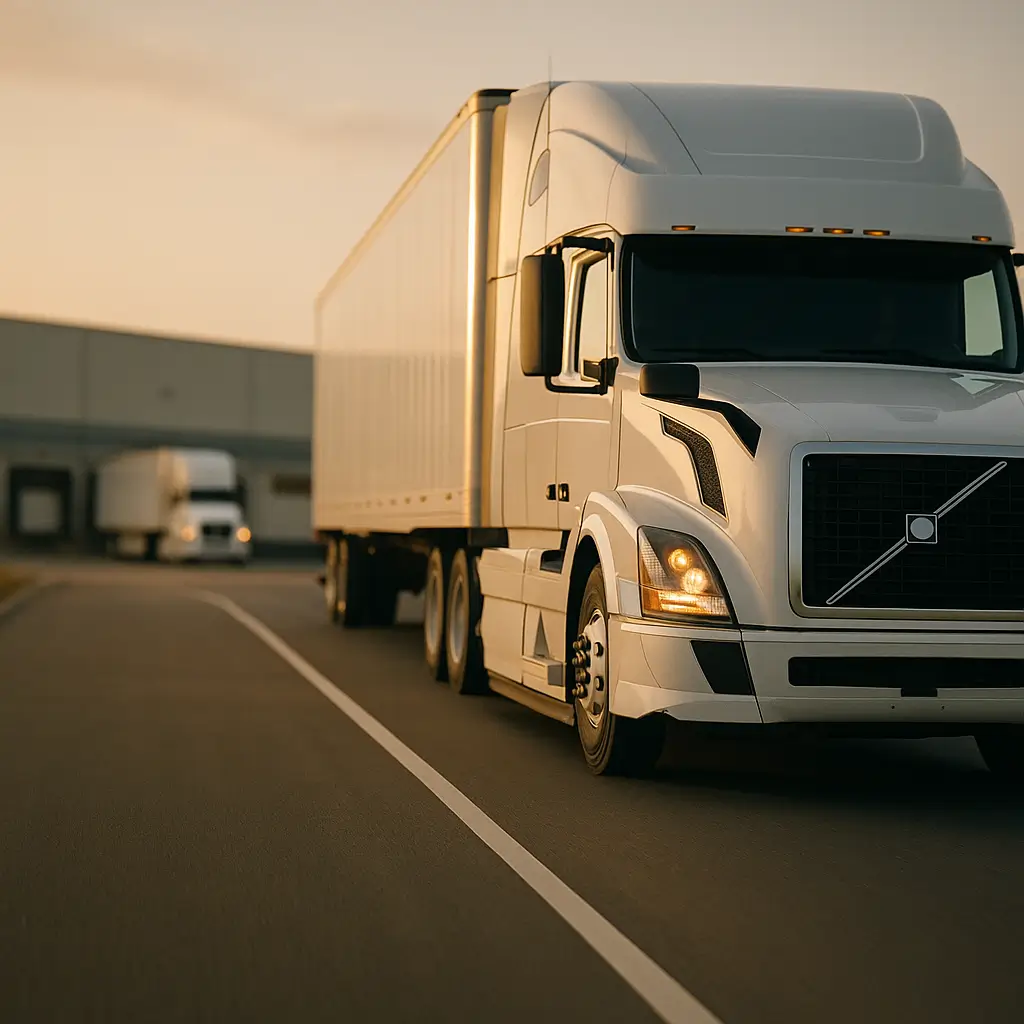

See California truck insurance minimums, 30/60/15 vs. $750K–$5M limits, MCP and FMCSA rules, plus owner-operator tips.
Commercial truck insurance minimum requirements California rules usually come down to this: California’s baseline “30/60/15” numbers may show up on paperwork, but many working trucks must carry $750,000 to $5,000,000 in public liability under FMCSA rules and/or meet California Motor Carrier Permit (MCP) insurance compliance to avoid delays, failed broker onboarding, or shutdown risk.
If you want a quick refresher on how trucking policies are built (liability vs cargo vs physical damage, and why “minimums” rarely match real-world needs), start with commercial truck insurance basics. For California’s official overview of proof of insurance and financial responsibility for commercial vehicles, Caltrans also maintains a reference page: https://dot.ca.gov/programs/traffic-operations/legal-truck-access/insurance.
For a fast visual rundown of what California trucking coverage can cost in 2026, watch California Truck Insurance: 2026 Cost Breakdown Revealed!
Table of Contents
Reading time: 9 minutes
- Key takeaways (2026)
- California minimum liability limits (baseline): what they cover—and what they don’t
- When federal FMCSA minimums apply in California (interstate trucking)
- Motor Carrier Permit (MCP) in California: step-by-step compliance (2026)
- Build a policy that’s compliant and wins loads (liability vs cargo vs physical damage)
- Frequently Asked Questions
- Conclusion: choose a “minimum” that actually keeps you working

Key takeaways (2026)
California trucking compliance often requires more than the 30/60/15 baseline because interstate authority, MCP rules, and shipper/broker contracts commonly drive required limits up to $750,000–$5,000,000 depending on operations and cargo category.
- 30/60/15 is a baseline: It’s commonly referenced, but many trucking operations must meet higher state permit and/or FMCSA minimums.
- Interstate changes the game: FMCSA public liability minimums commonly start at $750,000 and can go up to $5,000,000 for certain hazmat/passenger operations (FMCSA reference: https://www.fmcsa.dot.gov/registration/insurance-filing-requirements).
- MCP is a separate compliance lane: Don’t assume “I bought commercial auto” automatically satisfies California motor carrier permit requirements (CA DMV overview: https://www.dmv.ca.gov/portal/vehicle-industry-services/motor-carrier-services-mcs/motor-carrier-permits/).
- Affordable trucking insurance comes from accuracy: Correct classification, clean underwriting, and no coverage lapses usually matter more than buying the smallest limit.
California minimum liability limits (baseline): what they cover—and what they don’t
California’s 30/60/15 baseline commercial auto liability minimums are often shown as 30/60/15 (bodily injury per person / bodily injury per accident / property damage), but trucking operations frequently need higher limits due to permitting, filings, and interstate rules.
A lot of the confusion comes from mixing three different things: (1) baseline auto minimums, (2) motor carrier permit insurance compliance, and (3) FMCSA (federal) financial responsibility minimums. If you want the deeper definitions and how California phrases them, keep this open: California commercial auto insurance limits explained.
What “30/60/15” means (plain English)
30/60/15 typically means $30,000 bodily injury (BI) per person, $60,000 BI per accident, and $15,000 property damage (PD) per accident.
- 30: $30,000 BI per person
- 60: $60,000 BI per accident
- 15: $15,000 PD per accident
For a loaded tractor, a hotshot rig, or anything pulling a 40′ trailer, $15,000 PD can disappear in a single chain-reaction hit—before medical bills even enter the picture.
California baseline minimum liability limits (quick reference)
| Limit type | Minimum often cited | What it pays for | Why trucks exceed it fast |
|---|---|---|---|
| Bodily Injury (per person) | $30,000 | Injuries to one person | Multi-vehicle crashes + hospital bills can blow past it quickly |
| Bodily Injury (per accident) | $60,000 | Total injuries for the crash | Two injured people can exceed it immediately |
| Property Damage | $15,000 | Vehicles, guardrails, structures | One modern SUV repair can exceed $15k; infrastructure damage adds up fast |
Proof of financial responsibility in California
California expects commercial vehicles operating in the state to carry proof of insurance/financial responsibility, and that proof can be required during roadside stops, permitting, and onboarding (Caltrans reference: https://dot.ca.gov/programs/traffic-operations/legal-truck-access/insurance).
In practice, “proof” can mean different things depending on your operation: insurance ID cards, certificates of insurance, or specific filings when authority/permits require them.
When federal FMCSA minimums apply in California (interstate trucking)
FMCSA financial responsibility rules commonly require $750,000 minimum public liability for many for-hire interstate motor carriers, with higher tiers up to $5,000,000 for certain hazmat and passenger categories (FMCSA reference: https://www.fmcsa.dot.gov/registration/insurance-filing-requirements).
If you’re worried about buying the right limit but filing the wrong form (or filing under the wrong authority type), read: FMCSA insurance filings guide (BMC-91/BMC-91X).
The big trigger: interstate commerce + authority
Interstate commerce usually means crossing state lines, but it can also include hauling freight that’s part of interstate movement even if you personally stay in California.
- Common examples: CA ↔ NV/AZ/OR/UT lanes, occasional out-of-state loads, or freight that originated out of state.
- Why it matters: When FMCSA rules apply, the policy often must be correctly filed to keep authority active and avoid cancellations/interruptions.
FMCSA minimum liability limits (typical scenarios)
FMCSA publishes federal minimum public liability limits and insurance filing requirements here: https://www.fmcsa.dot.gov/registration/insurance-filing-requirements.
- General freight (many for-hire operations): Commonly starts at $750,000 minimum public liability.
- Higher-risk categories: Often $1,000,000 and up; some hazmat/passenger operations can require up to $5,000,000.
Even when your legal minimum is $750K, brokers frequently require $1,000,000 auto liability to tender loads; that’s contract reality, not a statute.
State baseline vs FMCSA (at-a-glance)
| Scenario | Which rules usually drive the minimum? | Minimum liability limit (typical) | Common real-world requirement |
|---|---|---|---|
| Local CA-only light commercial vehicle | CA baseline financial responsibility | 30/60/15 | Varies by contract |
| Interstate, for-hire general freight | FMCSA | $750,000 | $1,000,000 (common broker standard) |
| Hazmat (placarded / higher-risk) | FMCSA | Up to $5,000,000 | $5,000,000 |
| Passenger-carrying for hire | CA + FMCSA (depends on operation) | Higher tiers apply | Higher tiers apply |
Motor Carrier Permit (MCP) in California: step-by-step compliance (2026)
California’s Motor Carrier Permit (MCP) program is administered through the California DMV, and compliance typically requires meeting the MCP program’s insurance and operating requirements beyond simply “having a commercial auto policy.” The DMV sets MCP liability coverage from $300,000 to $5,000,000 combined single limit depending on vehicle type and property transported. See the California DMV Motor Carrier Permits overview.
If you want a step-by-step workflow checklist, use LogRock’s motor carrier filings guide.
What MCP is and who needs it
MCP is a California compliance requirement for many motor carriers operating in the state, and the fastest “fine” you’ll ever pay is downtime from a suspended or missing permit.
Whether you need MCP depends on your operation (intrastate vs interstate), registration, weight class, and how you’re operating as a carrier. When in doubt, confirm through the official DMV MCP guidance above.
Step-by-step: how operators typically satisfy MCP insurance/compliance
- Define your operation clearly: intrastate vs interstate, what you haul, whether you touch hazmat, and whether you transport passengers.
- Buy the correct liability limit: classifications like semi truck insurance and hotshot insurance matter, because the wrong class can mean the wrong quote and messy claims later.
- Handle the right filings and proof: some operations require state proof/filings; interstate authority often requires FMCSA filings.
- Keep proof accessible: cab copy, digital copies, and cert formats brokers ask for.
- Avoid lapses: lapses can create reinstatement friction, authority/permit interruptions, and higher rates at renewal.
Special cases in California: hazmat and passenger operations
Hazmat: Hazmat requirements depend on commodity, packaging, and whether it’s placarded. FMCSA minimums range from $1,000,000 for most placarded materials up to $5,000,000 for explosives, poison gas, or radioactive materials. Confirm the exact category in FMCSA’s insurance filing requirements before accepting the load.
Passenger carriers: For-hire passenger limits scale by seating capacity: $750,000 for 7 seats or fewer, $1,500,000 for 8–15 seats, and $5,000,000 for 16 or more. See Caltrans’s commercial vehicle insurance overview.
Build a policy that’s compliant and wins loads (liability vs cargo vs physical damage)
A trucking policy that keeps you working usually needs to satisfy three different gatekeepers—regulators (state/federal), brokers/shippers (cert language + limits), and lenders/lessors (physical damage + deductibles).
If you’re hauling brokered freight, cargo is a common tripwire; this breakdown covers what it does (and common exclusions): cargo insurance coverage for truckers.
Liability (required): protects the public
Liability insurance pays for injuries and property damage you cause, and it’s the coverage regulators focus on when they talk about minimum limits.
- Why it matters: Severe losses are business-ending, so limits aren’t where most operators can “save money” long-term.
- Who needs it: Every commercial vehicle operation.
Liability insurance is often confused with general liability—here is the practical difference: Auto Liability vs General Liability for Truckers.
Cargo (often contract-required): protects the freight
Cargo insurance pays for covered loss or damage to the load, subject to exclusions and policy conditions.
- Why it matters: You can be legal to drive and still be unbookable without cargo.
- Common denial drivers: temperature control issues, unattended theft, and unsecured freight.
Physical damage (often lender/lease-required): protects the truck
Physical damage (comprehensive + collision) covers your equipment, and it’s commonly required when the truck is financed or leased.
Even on a paid-off rig, major repairs (hood/radiator stack/emissions components) can wreck cash flow if you’re not prepared.
Is the “minimum” ever enough?
Not sure whether your current limit is actually enough? This breaks down how to think about it:
Minimums can be “enough” only in narrow cases (truly local, low-risk use, no broker freight), but most real trucking runs into these realities fast:
- Broker standard: $1,000,000 auto liability is a common onboarding requirement.
- Certificate wording: shippers may require specific cert language and additional insured.
- Lapse penalties: a lapse can make “affordable trucking insurance” disappear at renewal.
Lapse risk: how it costs you money (before tickets)
A coverage lapse can cause lost loads, potential permit/authority complications when filings cancel, and higher premiums because carriers view lapses as a risk signal.
- Prevent it: shop renewals early, track payment dates, and confirm filings were accepted (not just “submitted”).
Frequently Asked Questions
California commercial truck insurance minimum requirements can range from a baseline 30/60/15 format to $750,000–$5,000,000 under FMCSA rules, depending on whether you’re intrastate, interstate, hauling placarded hazmat, or transporting passengers.
California is commonly cited as using a 30/60/15 baseline liability format—$30,000 bodily injury per person, $60,000 per accident, and $15,000 property damage per accident—but many trucking operations must carry higher limits based on MCP compliance and/or FMCSA interstate rules. For interstate for-hire operations, FMCSA public liability minimums commonly start at $750,000 and can increase for hazmat/passenger categories. Caltrans also outlines proof of financial responsibility expectations for commercial vehicles operating in California.
Yes, many commercial trucks in California need more than 30/60/15 because interstate authority, higher-risk operations, MCP compliance, and broker/shipper contracts often require higher limits such as $750,000 (the federal minimum for many general-freight interstate carriers) or $1,000,000 (a common broker standard). Buying only a low baseline limit can lead to failed onboarding when a broker requests a $1M certificate or create a filing mismatch if your authority requires federal filings.
For most general-freight interstate carriers, the federal legal minimum is $750,000. The $1,000,000 figure many owner-operators carry is usually a broker or shipper onboarding standard designed to reduce their own risk exposure—not a universal legal requirement. Carrying only the legal minimum can still mean getting turned down for loads.
Federal FMCSA insurance limits apply when you operate as a regulated motor carrier in interstate commerce, which can include crossing state lines or hauling freight that is part of interstate movement even if you stay in California. FMCSA public liability minimums commonly start at $750,000 for many for-hire interstate carriers and can go up to $5,000,000 for certain hazmat or passenger categories. If you have authority, the policy must be correctly filed to keep it active.
Generally no—if you never cross state lines and never haul freight that is part of an interstate movement, FMCSA financial responsibility rules typically do not apply, and MCP/state baseline requirements govern instead. The moment a load touches interstate commerce, that analysis can change.
No. MCP and FMCSA filings are separate compliance lanes. An MCP satisfies California’s state-level permit requirements; if you also operate in interstate commerce under federal operating authority, you separately need the correct FMCSA filing—such as BMC-91, BMC-91X, or BMC-82—on file, or your authority can be suspended even with an active MCP.
A lapse can trigger an FMCSA revocation proceeding on your authority and, separately, suspension of your MCP by the DMV. Reinstatement can mean re-filing, gaps in load eligibility, and higher renewal premiums because carriers treat lapses as a risk signal.
Hazmat transport can require higher public liability limits depending on the material, classification, and whether it is placarded. FMCSA minimums range from $1,000,000 for most placarded materials up to $5,000,000 for explosives, poison gas, or radioactive materials. Confirm the required limit before accepting the load because general-freight limits do not automatically apply to placarded hazmat.
Costs vary widely by equipment type, safety record, and operating radius, but the jump from $750,000 to $1,000,000 is usually a modest percentage increase rather than a proportional one because it is an excess layer over the same base risk. A quote based on your actual operation is the only reliable way to know.
Conclusion: choose a “minimum” that actually keeps you working
California has baseline minimums, but trucking rarely lives at the baseline. If you want fewer delays and fewer surprises, match your limits and filings to your actual operation—then match what brokers and lenders will require to keep you moving.
Key Takeaways:
- Confirm your operation first: intrastate vs interstate, what you haul, and whether hazmat/passengers apply.
- Meet MCP and/or FMCSA requirements where they apply: don’t assume a standard commercial auto policy satisfies permits or filings.
- Avoid lapses: lapses can trigger lost loads, filing cancellations, and higher renewal premiums.
If you’re building a policy around an owner-operator setup or deciding how to cover off-dispatch driving, these two reads help: owner-operator insurance requirements and bobtail vs non-trucking liability explained.
If you’re trying to figure out whether your California operation needs the state 30/60/15 baseline, MCP-level coverage, or FMCSA’s $750K–$5M interstate minimums, LogRock can help you match your limits and filings to what you actually haul. Talk to our team to review your coverage, avoid a filing mismatch, and request a quote built around your lanes.





