
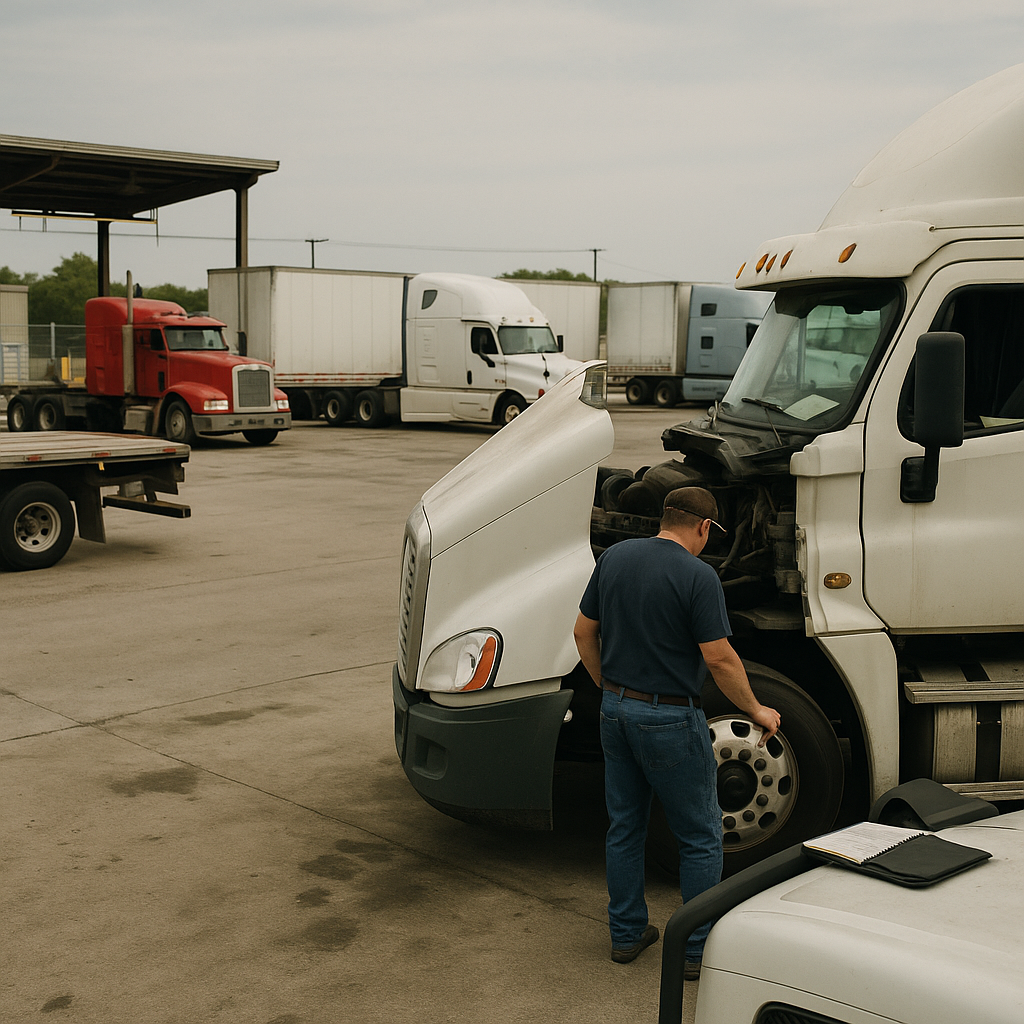

A comprehensive truck insurance claim is a claim for non-collision damage to your insured truck, usually under physical damage coverage. If your tractor is stolen, hit by hail, damaged by fire, or smashed by a falling object, this is the part of the policy you look at, not liability or cargo.
A lot of owner-operators hear “full coverage” and assume everything damaged in a bad day gets paid. That’s where expensive mistakes start. On a commercial truck policy, comprehensive, collision, liability, and cargo all do different jobs.
What Comprehensive Truck Insurance Means#
Comprehensive truck insurance is physical damage coverage for non-collision losses to the insured truck. In plain English, it usually helps pay for damage from theft, vandalism, fire, hail, flood, falling objects, glass damage, and animal strikes rather than damage from hitting another vehicle or object.
Physical damage coverage is the part of a truck policy that covers damage to your own equipment, usually through comprehensive and collision. On a truck policy, comprehensive sits inside that bucket. It protects the truck from certain events that happen outside a traffic impact.
Common examples include a stolen tractor, a windshield shattered by debris, hail damage while the truck is parked, a fire in the engine compartment, or a deer strike. Those are very different from backing into a pole, sideswiping another truck, or rear-ending someone in traffic. Those impact losses usually fall under collision, not comprehensive.
This is also where truckers mix up terms. Liability coverage pays for injury or property damage you cause to others, not damage to your own truck. Motor truck cargo covers the freight you’re hauling, not the tractor itself. General liability usually addresses certain non-driving business exposures, not damage to the truck from weather or theft.
“Full coverage” isn’t a formal coverage name on most commercial truck policies. It’s loose shorthand, and that shorthand can hide missing pieces. A driver may say he has full coverage, but that doesn’t tell you whether he has cargo, trailer coverage, a workable deductible, or the right physical damage setup for the operation. FMCSA insurance rules focus on public liability minimums for regulated carriers, not on forcing comprehensive coverage onto every truck, which is why personal-auto assumptions break down fast in trucking (FMCSA).

What a Comprehensive Claim Covers and What It Does Not#
A comprehensive claim usually covers non-collision damage to the insured truck, while excluding crash damage, freight loss, and injuries or property damage you cause to others. The key question is not “Was it bad?” but “Was it a covered non-collision event affecting the scheduled truck?”
A few truck-specific examples make this easier:
- Someone steals your tractor from a yard.
- Hail dents the hood and cab while the truck is parked.
- A tree limb falls on the truck during a storm.
- Vandals break lights and smash windows.
- An animal runs into the truck and causes front-end damage.
- A fire damages part of the unit.
Those are the kinds of losses that often fit a comprehensive truck insurance claim.
Now compare that with a few losses that usually do not fit comprehensive:
- You slide into a guardrail.
- You back into a loading dock.
- You hit another vehicle.
- Your freight is ruined in transit.
- Another person is injured in a wreck you caused.
Those usually point to collision, cargo, or liability instead.
Under 49 CFR Part 387, FMCSA financial responsibility rules deal with public liability for certain motor carriers. They do not mean comprehensive is federally required on every truck. That matters because many drivers confuse required liability limits with optional physical damage protections.
Coverage details also change with the operation. The same truck can have different exposures depending on whether it runs interstate or intrastate, what it hauls, where it garages, and how it’s described in underwriting. You can verify operating status and authority details through FMCSA SAFER, but don’t assume SAFER status tells you what physical damage applies. It doesn’t.
A weather loss might damage the truck but not the cargo. A theft claim might involve the tractor but leave a trailer issue or cargo issue unanswered. That’s why you can’t assume one comprehensive claim opens every other coverage on the policy.
If you’re staring at truck damage and aren’t sure whether it’s comprehensive, collision, or something else,
How a Comprehensive Insurance Claim Works#
A comprehensive insurance claim usually starts with reporting the loss, documenting the damage, and letting the insurer decide whether the event fits covered non-collision damage under the policy. After that, the adjuster reviews the facts, applies the deductible, and approves repair payment or a total-loss settlement if the claim qualifies.
An adjuster is the insurance professional who investigates the loss and evaluates what the policy may pay. Once a claim is opened, the adjuster may ask for photos, video, police reports, theft reports, fire reports, repair estimates, storage details, and a timeline of what happened.
The flow is usually straightforward. You report the incident. The insurer assigns a claim number and adjuster. The truck gets inspected in person, by photos, or through a repair facility. The adjuster compares the damage to the policy terms and decides whether it’s a covered comprehensive loss, a collision loss, excluded damage, or a mixed situation.
A deductible is the amount you pay out of pocket before coverage pays on a covered loss. If the repair is only a little more than your deductible, some owner-operators think twice before filing. That doesn’t mean you should hide losses. It means you should understand the math before assuming every dent belongs in a claim file.
For example, a cracked windshield, minor vandalism, or a small branch impact may be technically claim-worthy but not always worth turning in once the deductible is considered. A major theft, fire, or heavy storm loss is a different story. Those usually justify immediate reporting because the damage can grow fast and documentation matters.
The insurer may also look for signs of prior damage, maintenance issues, or facts that change the cause of loss. That’s one reason clean photos and a clear timeline help. The faster you separate what happened, when it happened, and what was damaged, the smoother the review tends to go.
How to File a Comprehensive Truck Claim Step by Step#
Filing a comprehensive truck claim usually means securing the truck, documenting the damage, reporting the loss quickly, and staying organized while the adjuster reviews it. The main goal is simple: prevent more damage, preserve evidence, and give the insurer what it needs to make a decision.
Secure the truck and prevent more damage#
Protect people first. If the truck is in a dangerous spot, follow normal safety steps and move it only if that can be done safely and legally. After that, take reasonable steps to stop additional damage, like covering broken glass openings or protecting the unit from more water exposure.
Don’t start tearing parts off or authorizing major repairs before the insurer gives direction unless emergency action is necessary to prevent further harm. Save receipts for any temporary protection or emergency mitigation.
Document the loss#
Build your file while the facts are fresh. Gather:
- Photos of all visible damage
- Video of the truck and surrounding area
- Date and time of loss
- Exact location
- Weather details if relevant
- Police, fire, or incident reports
- Witness names and contact information
- Repair shop estimates
- Towing or storage invoices if applicable
For theft, vandalism, and fire losses, expect extra scrutiny. The insurer may want a police case number, proof of ownership, recent maintenance records, keys information, unit location history, or more detailed statements about when the truck was last seen undamaged.
Submit the claim and follow up#
Report the claim as soon as practical through the carrier’s claims channel or the contact listed on your policy documents. Keep the claim number, adjuster name, phone number, email, inspection appointment details, and any repair authorization in one place. If a shop is involved, make sure everybody is working from the same damage description.
This part matters more than drivers think. A claim can drag out when the photos don’t match the estimate, the shop starts work too early, or the insured can’t produce a basic timeline. Good organization saves time.
If the truck’s garaging, operating radius, cargo mix, or business setup changed before the loss and the policy wasn’t updated, say so early. It’s better to clear that up at the start than have it surface later in review.
How Comprehensive Differs from Collision, Liability, and Cargo Coverage#
Comprehensive covers non-collision damage to your insured truck, collision covers impact damage to your truck, liability covers damage or injury you cause to others, and cargo covers the freight. If you remember that one sentence, you’ll avoid most of the confusion that trips up new authorities.
The NAIC uses consumer insurance definitions that help draw the line between comprehensive and collision, but trucking adds extra layers because one load can involve the tractor, trailer, freight, and public liability all at once. That’s why “my truck got damaged” still isn’t enough information to know which coverage applies.
| Coverage type | What it usually protects | Common trigger | What it usually does not cover |
|---|---|---|---|
| Comprehensive | Your insured truck | Theft, fire, hail, vandalism | Freight, your liability to others |
| Collision | Your insured truck | Impact with vehicle or object | Freight, your liability to others |
| Liability | Other people and property | Crash or damage you cause | Damage to your own truck |
| Motor truck cargo | Freight you haul | Covered cargo loss or damage | Damage to tractor itself |
A deer strike often lands under comprehensive. Backing into a post usually lands under collision. Rear-ending another vehicle may involve your liability coverage for the other party and collision for your own truck. A load ruined during a separate covered event may involve cargo, not comprehensive.
This is also why “full coverage” can mislead. A driver may carry liability plus physical damage on the truck but still have no cargo coverage, no trailer protection, or deductibles that change the claim decision.
Does Filing a Comprehensive Claim Affect Insurance Costs?#
Filing a comprehensive claim can affect insurance costs, but there is no universal rate change you can plug into a calculator. Carriers often review claim history during underwriting and renewal, and the actual effect depends on the carrier, the type of loss, its severity, and the rest of your policy history.
Underwriting is the insurer’s process for evaluating risk and deciding how to price and structure coverage. When underwriters review an account, they don’t just ask whether you filed a claim. They also look at what kind of claim it was, how often losses happen, how recent they are, and whether they suggest a pattern.
That’s why small losses deserve a pause before you file. Compare the repair bill with your deductible. Think about downtime, out-of-pocket cost, and whether the damage is serious enough to justify opening a claim. A clean claims record can matter, especially in a hard market.
Before filing, ask practical questions. Is this clearly a covered non-collision loss? Is the damage well above the deductible? Could the cause of loss be disputed? Is there theft, fire, or major weather damage that should be reported immediately no matter what? Your actual premium depends on your operation, cargo, radius, driving history, and other factors.
When a Comprehensive Claim Is Usually the Right Move#
A comprehensive claim is usually worth starting when the truck has major non-collision damage, when the unit is stolen, or when fire or severe weather creates a loss that could be expensive or hard to document later. In those situations, quick reporting usually helps more than waiting does.
Theft and fire losses almost always justify immediate notice. The same goes for major hail, heavy storm damage, vandalism with extensive repairs, or a falling-object loss that puts the truck out of service. The bigger the loss, the more important the paper trail becomes.
If the policy language feels muddy, or if your operation changed since the policy was written, get help before making assumptions. A truck that changed garaging location, operating radius, commodity mix, or business setup can create claim questions you don’t want to guess at.
FAQ#
How does a comprehensive insurance claim work?
A comprehensive insurance claim usually works like this: you report the loss, document the damage, and the insurer assigns an adjuster to review it. The adjuster looks at the cause of loss, confirms whether it fits covered non-collision damage under your policy, and reviews photos, reports, and estimates. If the loss is covered, your deductible is applied and the insurer pays for covered repairs or a total-loss amount up to the policy terms. For truck claims, theft, fire, vandalism, and weather losses often need extra documentation, so staying organized matters.
How much will a comprehensive claim raise my insurance?
There isn’t one answer for every truck policy. A comprehensive claim may affect renewal pricing or underwriting review, but the outcome depends on the carrier, the loss type, the size of the claim, your prior claims history, and the rest of the account. A single weather or theft loss is not the same as repeated losses over time. Before filing a smaller claim, many owner-operators compare the expected repair cost with the deductible and think about whether preserving a cleaner claims record matters more than turning in the damage.
What is comprehensive truck insurance?
Comprehensive truck insurance is the part of physical damage coverage that usually pays for non-collision damage to your insured truck. Common examples include theft, vandalism, fire, hail, flood, falling objects, glass damage, and animal strikes. It is not the same thing as liability coverage, which pays for damage or injuries you cause to others, and it is not cargo coverage, which protects the freight. On a commercial truck policy, comprehensive is one piece of the larger coverage setup, not a catch-all for every kind of loss.
Does comprehensive coverage pay regardless of fault?
Usually, fault is not the main issue in a comprehensive claim. What matters most is whether the event fits a covered non-collision cause of loss under the policy. If hail damages a parked truck or someone steals the unit, the question is generally whether that event is covered and what deductible applies, not who was at fault in a crash. That said, coverage still depends on policy language, documentation, and the facts of the loss. Comprehensive also does not automatically pay for cargo, trailer issues, or liability claims tied to the same event.
Is comprehensive insurance the same as full coverage?
No. “Full coverage” is informal shorthand, not a precise commercial trucking coverage term. Some drivers use it to mean liability plus physical damage, but that still doesn’t tell you whether cargo, trailer damage, general liability, or other protections are included. It also says nothing about deductibles, exclusions, or how the truck is rated for the operation. In trucking, relying on that phrase can leave gaps you only discover after a loss. It’s better to confirm each coverage by name and make sure the policy matches what the truck actually does.





