
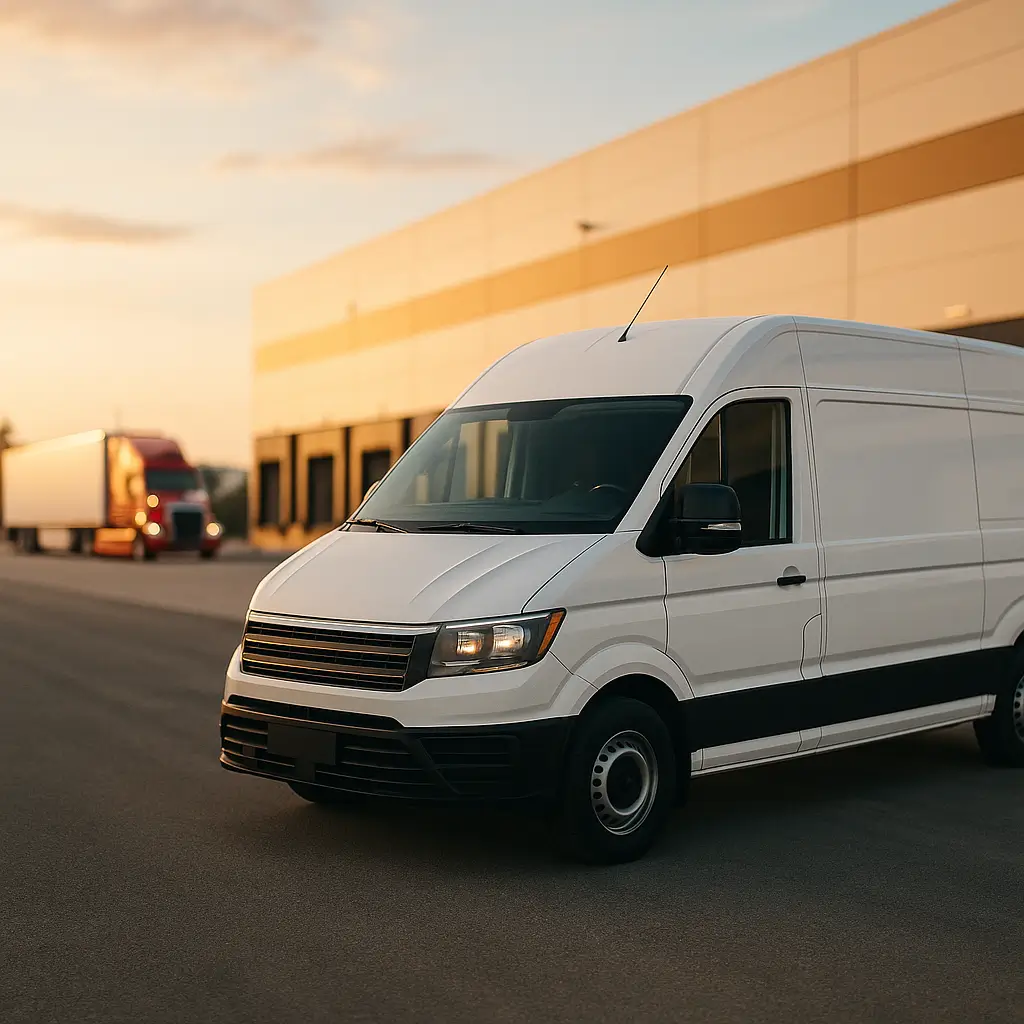

Courier van insurance can cost $1.2K–$7.5K+ per year in the US. See price drivers, coverage factors, and savings.
Courier van insurance cost in 2026 typically runs $1,200–$3,500/year (US liability-only) or $2,500–$7,500+ for full coverage depending on your route, van, and record — and around £1,100–£2,300/year for most UK operators (higher for new/young couriers). The moment you’re doing paid deliveries (hire & reward/for-hire), pricing changes fast.
The expensive mistake is treating courier work like “normal van use.” If your cover doesn’t match your actual operation, you can end up overpaying—or worse, fighting a claim. This guide breaks down real-world cost ranges, the biggest rate levers, and a practical way to shop it like a business expense (not a guess). Start with the basics so you’re comparing apples-to-apples: commercial auto insurance basics.
Key Takeaways
- UK benchmark: Many courier van policies fall in the £1,100–£2,300/year range, but higher-risk profiles can push £3,000–£4,500.
- US benchmark: Expect $1,200–$3,500/year for liability-only and $2,500–$7,500+ for a fuller package, depending on state/ZIP, mileage, and loss history.
- Biggest cost drivers: correct use class (hire & reward/for-hire), driver history, annual miles, urban exposure, van value, and liability limits.
- Fastest savings: shop multiple quotes with identical limits, tighten operations (radius/mileage), improve security, and use telematics—without underinsuring.
Table of Contents
Reading time: 8 minutes

What Counts as “Courier Van Insurance” (and why it costs more than regular van cover)
Courier van insurance is commercial motor insurance rated for paid delivery use (UK “hire & reward” and US “for-hire delivery”), and UK law requires at least third‑party motor insurance to use a vehicle on the road.
It costs more than standard “social, domestic & pleasure” or basic business use because delivery work stacks up risk: more stops, more reversing, more congestion, and more time pressure. Underwriters price that frequency—especially in cities and theft-heavy areas.
What it is (plain English)
Courier van insurance is commercial cover designed for delivery exposure: frequent multi-drop driving, loading/unloading, and more time on the road. In the UK it’s commonly tied to hire & reward — the classification applied when you’re paid to carry goods for others. In the US it’s typically written as courier auto insurance with a delivery/for-hire classification.
Why it’s essential (money + contract reality)
- Higher exposure: tight ETAs, urban driving, frequent stops, and open-door theft risk all increase claims frequency.
- Contract requirements: platforms, shippers, and brokers often require proof of insurance and minimum limits (sometimes plus “additional insured”).
If you’re not sure what limits actually mean (and how they affect price and contract eligibility), read: commercial auto liability limits explained.
Who needs it
- Solo couriers doing parcels, same-day, multi-drop deliveries, or gig-platform deliveries (including Amazon Relay) — see the full courier van insurance coverage breakdown once you’ve reviewed costs.
- Owner-drivers with a single van on a contract
- Small fleets (2–10 vans) with employees or subcontractors
Courier Van Insurance Cost in 2026: Typical UK vs US price ranges
Courier van insurance cost in 2026 commonly benchmarks at £1,100–£2,300/year in the UK for many drivers and $1,200–$3,500/year (US liability-only) or $2,500–$7,500+/year (US full coverage), with new ventures and claims-heavy profiles landing higher.
UK: common annual premium ranges (benchmarks)
These are realistic benchmark bands from current market guidance and widely reported competitor ranges (your quote can land outside them based on risk) — see the full van insurance UK guide for how cover types and legal minimums affect pricing across regions:
- Typical comprehensive band (many drivers): £1,100–£2,300/year
- Common “average” range often quoted: £1,450–£2,150/year
- New/young couriers often see: £2,000–£4,000/year
- Higher-risk regions / claims-heavy profiles: up to £4,500/year
US: common annual premium ranges (benchmarks)
In the US, pricing is usually discussed as liability-only vs full coverage. For a detailed month-by-month breakdown of US pricing, see commercial cargo van insurance cost in 2026:
- Liability-only: $1,200–$3,500/year
- Full coverage “package”: $2,500–$7,500+/year (liability + physical damage, often with endorsements based on operation)
For a deeper US breakdown and what a “package” usually includes, see: cargo van insurance costs and coverages.
Cost-at-a-glance table (UK vs US)
| Region | Low (best-case) | Typical | High (harder risk) |
|---|---|---|---|
| UK (courier van, annual) | ~£1,100 | £1,450–£2,150 | £3,000–£4,500 |
| US (cargo/courier van, annual) | ~$1,200 (liability-only) | $2,500–$7,500 (full) | $7,500+ (new venture/claims/high miles) |
Benchmarks only. Garaging location, delivery type (multi-drop vs linehaul), annual mileage, claims/convictions, and chosen limits can move the number significantly.
The biggest factors that change your courier van insurance cost (coverage + operations)
The biggest drivers of courier van insurance cost are use classification (hire & reward/for-hire), liability limits, physical damage, annual miles/radius, driver history, and garaging ZIP/region, because those variables directly change exposure and claim frequency/severity.
Coverage choices that move the premium most
- Liability limit selection
Higher limits can help you win contracts, but they raise premium. Some shippers require higher limits and additional insured wording. - Physical damage (comprehensive/collision)
Newer/financed vans cost more to insure. Higher deductibles lower premium—if you actually have cash reserves to pay them. - Cargo / goods-in-transit
Auto insurance covers the van and auto liability; it doesn’t automatically protect the parcels you’re responsible for. If you regularly carry goods for others, cargo insurance for courier and delivery vans covers what auto liability does not. - Driver schedule / who is covered
Adding drivers, inexperienced drivers, or broad “any driver” setups (common for some fleets) can push pricing up fast.
The “use class” switch: hire & reward (UK) / for-hire delivery (US)
Being paid to deliver goods generally must be declared as courier/for-hire use (UK “hire & reward”), and a cheaper policy that doesn’t match your declared use can create claim disputes and contract problems.
UK compliance baseline: you must have motor insurance that matches your use class, not just any motor policy; GOV.UK summarises the legal requirement to be insured to drive: GOV.UK: vehicle insurance requirements.
Regional and regulatory reality (don’t over-assume)
- UK regions: dense cities and higher theft exposure tend to rate higher; secure overnight parking and immobilisers can matter.
- US states/ZIP: rates swing by garaging ZIP, claims frequency, and litigation environment.
DOT/FMCSA note (US): federal requirements depend on vehicle specs and operation; FMCSA provides general context on insurance filing requirements here: FMCSA insurance filing requirements.
Frequently Asked Questions
These FAQs answer the most searched courier van insurance cost questions using the same 2026 benchmark ranges (UK £1,100–£4,500 and US $1,200–$7,500+) so you can compare quotes with realistic expectations.
“Business use” cover lets you drive between work sites or visit clients — it doesn’t cover being paid to carry goods for other people. “Hire & reward” is the classification that applies the moment you’re earning money from transporting someone else’s property. The distinction matters because a standard business use policy that doesn’t include hire & reward can void your claim if you’re doing paid deliveries when the loss occurs. If you’re paid per drop, per parcel, or per delivery run — even occasionally — your policy needs to explicitly include hire & reward or for-hire delivery coverage, not just “business use.” See the full courier van insurance coverage breakdown for what that classification includes.
Yes, typically. Courier and hire & reward policies are priced for paid delivery use — more daily miles, more stops, higher theft exposure, and tighter time pressure than social or standard business van use. The price difference varies by insurer and risk profile, but it’s meaningful: trying to run courier work on a cheaper “business use” policy that doesn’t cover hire & reward creates coverage gaps that can result in denied claims. The additional premium for correct classification is usually the cheaper option compared to fighting a claim dispute. For a broader breakdown, see courier van insurance.
Usually yes, if you’re financially responsible for the items you deliver. Standard commercial auto and most courier motor policies cover your vehicle and auto liability — they don’t automatically insure the parcels or freight inside. If you lose, damage, or deliver the wrong goods and you’re responsible, the claim comes out of your pocket unless you have cargo or goods-in-transit coverage. For most platforms and many shipper contracts, proving cargo coverage on your COI is also a prerequisite to getting dispatched. Learn more about cargo insurance for courier vans.
No — personal van policies are not written for hire & reward or for-hire delivery use, and most explicitly exclude it. Gig platforms may provide some limited coverage during active delivery periods, but the gaps between “logged in, no delivery assigned” and “delivery in progress” are where personal policy claims get denied. If gig delivery is how you earn income with your van — even part-time — you need cover that correctly declares your use class. Getting caught with a personal policy during a paid delivery can mean a denied claim, policy cancellation, and difficulty getting insured afterward. For the US delivery-driver angle, see auto insurance quotes for delivery drivers.
It depends on how your policy is written. A properly rated hire & reward or for-hire delivery policy generally covers you throughout the working day — including gaps between pickups and drop-offs — because the vehicle is being used for commercial purposes even while idle. Where gaps typically appear is when you’re using a personal auto policy or a gig-platform “contingent” policy: those often only activate during specific states (e.g., “order accepted” or “in transit”) and leave you exposed during the in-between window. If you’re doing gig-platform delivery work, review exactly when your platform coverage applies and purchase a dedicated commercial auto or for-hire policy to fill any window it doesn’t cover. See cargo van insurance for the coverage types that apply during the full working day.
Telematics devices record driving data — speed, braking, cornering, and mileage — which insurers use to price risk more precisely. If you can demonstrate consistent safe driving, some insurers offer lower rates or avoid the high-risk premium loading that applies to new or young drivers by default. The tradeoff is data sharing: if the data shows harsh braking, late-night driving, or high-mileage patterns, it can price you higher rather than lower. For operators with good habits, telematics is one of the most reliable ways to prove safer risk and reduce premium, especially in the first year or two when there’s no commercial claims history to offset the uncertainty.
Most insurers and brokers will ask for: your vehicle details (make, model, year, VIN or registration), your driver’s license and MVR (motor vehicle record), your commercial entity details (LLC or sole proprietorship, years in operation), estimated annual mileage and operating radius, the type of deliveries you’re running (parcels, freight, multi-drop, platform-based), your desired coverage limits and deductibles, and your current or prior insurance declarations page if you have one. Having these ready before you call or submit a form shortens the quoting process significantly. If you’re quoting for a fleet, you’ll also need a driver schedule listing all operators. See auto insurance quotes for delivery drivers for what to expect in the quoting process.
Many couriers pay around £1,100–£2,300 per year for comprehensive cover in the UK, with widely cited “average” bands around £1,450–£2,150. If you’re new to courier work, operate heavy multi-drop routes, park on-street overnight, or have points/claims, it’s common to see £2,000–£4,500 depending on the insurer and coverage level. Prices also move with where you live (theft and accident frequency), how many miles you run, and whether your policy is correctly rated for hire & reward.
The biggest cost drivers are driver history (claims/convictions), annual mileage and radius, delivery type (multi-drop vs longer runs), garaging/overnight parking, van value, and your chosen liability limits and deductibles. Those factors change both frequency (how often claims happen) and severity (how expensive they are). If you use subcontractors or you have drivers using vehicles you don’t own, you also need to address the coverage gap with hired and non-owned auto insurance, because one uncovered loss can cost more than years of premium savings.
New courier drivers usually pay more because insurers have less commercial driving history and less insurance history to price, which pushes quotes toward the higher end of the range (UK commonly £2,000–£4,000+ in tougher profiles; US “new venture” delivery risks often price above established operators). The most reliable offsets are practical proof points: telematics, tighter radius/mileage, documented training, and a deductible you can actually fund. What rarely works is hiding delivery use, because misclassification can trigger claim disputes and contract issues.
Typical US benchmarks are $1,200–$3,500 per year for liability-only and $2,500–$7,500+ for a full coverage setup (liability plus physical damage, with endorsements depending on operation). Your state, garaging ZIP, annual miles, delivery classification, and loss history can move a quote from the low end to the high end quickly. If you want to see what’s commonly included in a courier/cargo van “package,” start with cargo van insurance costs and coverages.
The minimum legal limit is the floor, not the target. In the US, commercial auto minimums vary by state, but $1,000,000 combined single limit (CSL) is a common platform requirement and a practical starting point for most for-hire delivery operators — it covers most contracts without significant premium uplift over $500K. In the UK, the minimum is third-party only, but comprehensive cover with adequate public liability is standard for operators working under platform contracts. Higher limits (above $1M in the US) make sense if you’re running heavier loads, operating in litigation-heavy states, or working for shippers that require additional insured status and higher certificate limits. The right limit isn’t about the minimum — it’s about what a realistic worst-case claim in your operation would look like. See commercial auto liability limits explained for how to think through the math, and the FMCSA insurance filing requirements for US federal minimums.
Conclusion: What you’ll pay—and the fastest way to lower it
In 2026, courier van insurance cost often benchmarks around £1.1K–£4.5K/year (UK) and $1.2K–$7.5K+/year (US), driven by use class, miles, driver history, location, and limits.
The fastest wins are (1) correct courier/for-hire classification, (2) controlled mileage/radius, (3) security + telematics, and (4) shopping quotes with identical inputs.
Key Takeaways:
- Quote like-for-like: keep limits and deductibles identical across carriers so you can compare price fairly.
- Match coverage to responsibility: add cargo/goods-in-transit if you’re financially responsible for parcels.
- Build a bind-ready package: many delivery contracts ask for more than auto liability.
Related reading (build a bind-ready policy):
- delivery van insurance coverage checklist
- general liability insurance for truckers and delivery businesses
If you’re running paid deliveries — whether solo multi-drop, platform-based, or a small fleet — your coverage needs to match your actual operation, not just satisfy the minimum. LogRock can help you review your current setup, identify gaps, and get quotes built around your routes, mileage, and the certificates your contracts require.
Talk to LogRock and get a courier van insurance quote.
If you’re running delivery like a real business—protect the business like one. Re-quote at renewal, document safety, and don’t let a cheap mismatch policy blow up your cash flow.





