If you’re shopping for dry van truck insurance Idaho owner-operators actually need, the biggest trap is buying the wrong policy for the way you run. A leased-on dry van driver, an own-authority interstate carrier, and a local Idaho intrastate hauler can all need different coverage mixes.
This guide breaks down what dry van truck insurance covers, what changes in Idaho, what FMCSA rules control, and why two similar trucks can get very different quotes.
What Dry Van Truck Insurance Covers for Idaho Operators#
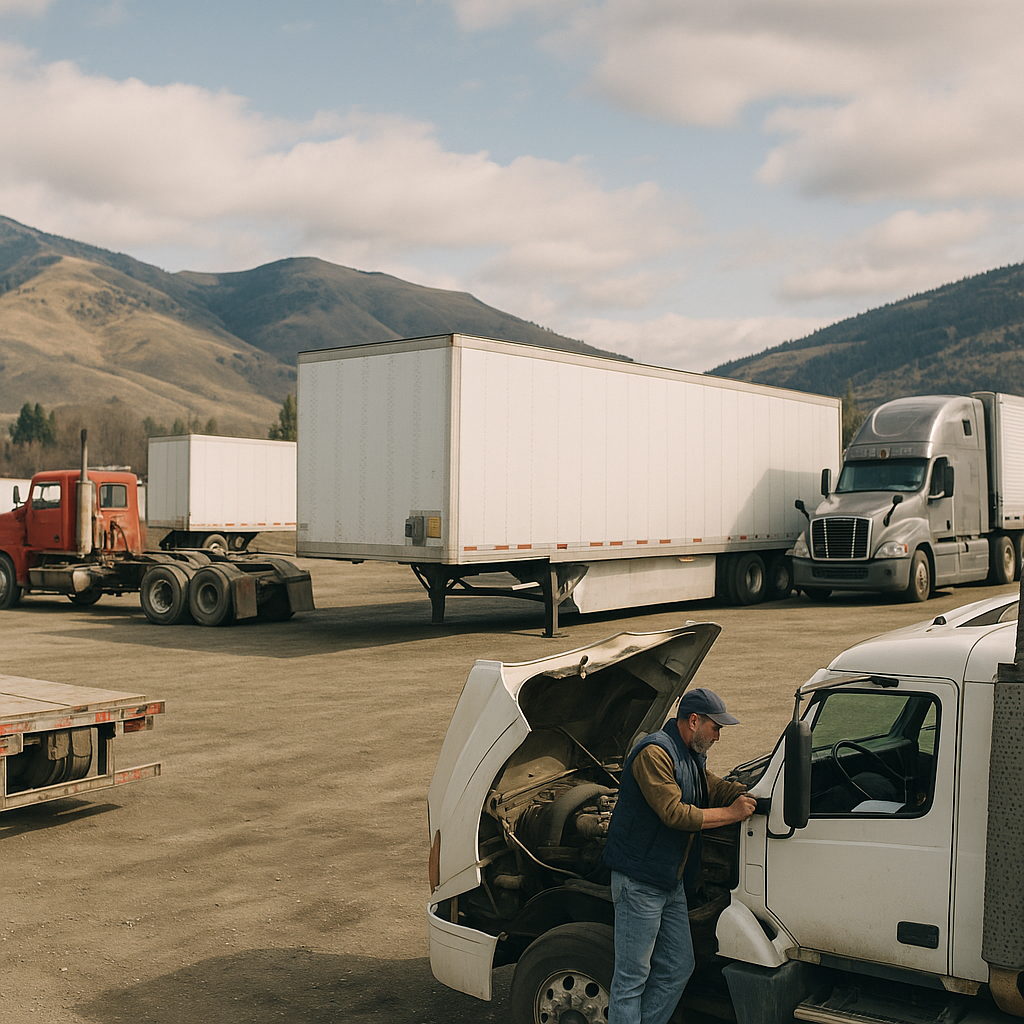
Dry van truck insurance covers the truck, and sometimes the trailer, freight, and specific business uses tied to hauling enclosed trailer loads. For Idaho owner-operators, the right package depends on whether you haul under your own authority or lease on to another carrier, because the truck, trailer, and cargo each create separate insurance exposures.
Dry van trucking means hauling freight in an enclosed box trailer that protects cargo from weather and road debris. That sounds simple, but insurance gets layered fast because damage to the truck, damage to the trailer, and damage to the freight are not the same claim.
Dry van basics and the risks it addresses#
Auto liability is the coverage that pays when your truck causes bodily injury or property damage to other people. This is the coverage tied most directly to FMCSA minimums for interstate for-hire carriers under FMCSA rules and 49 CFR Part 387.
Motor truck cargo is coverage for the freight you’re hauling if it’s damaged by a covered loss. A dry van operator hauling palletized retail goods has a different cargo exposure than someone moving higher-theft electronics, even if both pull similar trailers.
Physical damage is coverage for your own equipment, usually including collision and comprehensive or fire and theft with combined additional coverage. If you financed your tractor, your lender will usually care a lot more about this than your state does.
Core coverages for owner-operators and small fleets#
Non-trucking liability, often called bobtail by drivers, covers certain non-business use of the truck when you’re not under dispatch. It does not cover paid hauling, and that’s one of the most common misunderstandings owner-operators run into.
For a lot of dry van operators, the core conversation starts with:
- Auto liability
- Motor truck cargo
- Physical damage
- Non-trucking liability, if leased-on and needed
- Trailer-related coverage, if the trailer isn’t fully covered elsewhere
What is usually optional vs required by contract#
What feels “required” often comes from a carrier contract, broker agreement, or equipment lender, not just a law. A solo Idaho owner-operator hauling interstate dry van freight under their own authority may need auto liability, cargo, and physical damage to operate practically, while a local intrastate hauler might have a different mix depending on freight, truck size, and customer demands.
A leased-on operator is different. The carrier may provide primary liability for dispatched loads, but the driver may still need non-trucking liability, physical damage, occupational-style protections outside this article’s scope, or trailer-related coverage depending on the arrangement.
Idaho Rules vs FMCSA Requirements#
For dry van trucking in Idaho, federal rules usually control when you haul for hire across state lines, while Idaho rules may control some purely intrastate operations. The key question is not just “am I in Idaho?” but whether you’re for-hire, what the truck weighs, what cargo you haul, and whether you operate interstate or intrastate.
When federal rules apply#
FMCSA rules matter most when you’re a for-hire interstate carrier. Under 49 CFR Part 387, for-hire interstate carriers hauling general freight in vehicles over 10,001 pounds must carry at least $750,000 in public liability, while other operations can have different minimums depending on weight, commodity, and carrier type. Auto haulers and hazmat carriers are different, and that matters because there is no single “all truckers need X” rule.
A USDOT number is the federal registration number used to identify carriers and monitor safety. An MC number is operating authority for certain for-hire interstate operations, and many new owner-operators confuse having one with being fully insured, which it does not guarantee.
When Idaho intrastate rules may apply#
If you stay within Idaho and your operation is intrastate, Idaho rules may shape the insurance conversation differently. The Idaho Department of Insurance is the right place to confirm state insurance guidance, but even then, your actual needs still depend on your business use, vehicle class, and contract requirements.
This is where owner-operators get burned by comparing personal auto limits to commercial trucking exposure. A personal auto policy generally isn’t built for for-hire trucking, and Idaho state minimums for ordinary vehicle use should not be treated as proof that a commercial dry van operation is properly covered.
Why state minimums and carrier minimums are not the same thing#
A carrier’s insurance requirement can be higher or broader than a legal minimum. For example, a leased-on dry van operator may rely on the carrier’s primary liability while under dispatch, but still be required by that carrier to carry non-trucking liability or physical damage on the truck.
That gap is where expensive mistakes happen. A driver hears “the carrier covers liability,” assumes everything is handled, then finds out trailer damage, off-dispatch use, or cargo claims were never part of that protection. If you’re not sure where your setup falls,
How Much Dry Van Insurance Costs in Idaho#
Dry van insurance in Idaho doesn’t have one fixed price because underwriters rate the operation, not just the truck. Your actual premium depends on your authority status, driving history, routes, cargo, equipment value, requested limits, and claims history, so two operators with similar tractors can still get very different quotes.
What underwriters look at#
Underwriters usually start with the basics: who is driving, what is being hauled, how far the truck runs, and who holds the operating authority. A first-year own-authority operator running long-haul interstate lanes often presents a different risk than an experienced leased-on operator hauling regional dry goods on a steady schedule.
They also look at:
- Motor vehicle records
- Years of CDL and commercial experience
- Garaging location
- Annual mileage and operating radius
- Trailer ownership or borrowing setup
- Prior losses
- Requested deductibles and limits
Why quotes vary for similar trucks#
Two Idaho owner-operators can own similar sleepers and pull similar dry vans, yet get noticeably different quotes. One might run mostly local or regional freight with shorter miles and a simpler trailer arrangement, while the other runs interstate, works with more brokers, asks for higher cargo limits, and has a newer financed tractor with more equipment value to insure.
Authority setup matters too. A leased-on operator is contracted to haul under another motor carrier’s authority. An own authority operator runs under their own USDOT and MC setup, handles more of the compliance burden directly, and usually needs a broader insurance package to support that.
Practical cost expectations without guessing a premium#
The honest answer to “how much does dry van insurance cost?” is that you should expect a range, not a universal number. If you ask for higher liability limits, broader cargo protection, lower physical damage deductibles, or trailer-related coverage, the quote structure can change fast.
Here’s a practical example. An Idaho dry van owner-operator hauling boxed consumer goods on interstate lanes under their own authority may be rated differently from a Boise-area operator leased to one carrier, parking at the same yard, because the second driver’s primary liability may be handled through the carrier while the first needs a full operating package.
The same thing happens with equipment choices. A truck with higher stated value, a financed trailer, or a lower deductible can push cost up even if the driving record looks solid. That’s why “cheapest” shopping often backfires: two quotes with similar names can be built on very different coverage assumptions.
What a $1,000,000 Liability Limit Really Means#
A $1,000,000 liability limit is a common benchmark in trucking, but it is a coverage limit, not a standard price tag and not a universal legal rule for every truck. In practice, Idaho dry van operators usually see this number because of carrier, broker, or shipper expectations, not because every operation has the same requirement.
Bodily injury and property damage exposure#
Public liability in trucking refers to bodily injury and property damage caused to others by the truck. A serious crash can involve multiple vehicles, cargo spill cleanup, roadside structures, and injury claims, so operators often talk about liability limits in round numbers because the exposure can get big quickly.
When a higher limit is required by contract#
Some contracts require a $1,000,000 limit even when the legal minimum for the operation is different. That’s especially common when working with larger brokers, certain shippers, or carrier programs that want higher protection standards before they hand over freight.
Why the same limit can feel different by operation type#
A leased-on operator may need to meet a carrier’s insurance standard in a way that looks different from an own-authority policy package. The number may sound the same, but who provides the coverage, when it applies, and what else is bundled around it can change a lot.
So when someone asks, “What does a $1,000,000 policy cost?” the right follow-up is: for what operation, with what freight, under whose authority, and with what loss history?
Do Dry Van Trailers Need Insurance?#
Yes, dry van trailers often need their own insurance attention because the trailer can be damaged even when the truck’s liability coverage does not pay for it. Whether you need trailer coverage depends on whether you own the trailer, borrow it, lease it, or move it under a signed interchange agreement.
Owned trailer coverage#
If you own the dry van trailer, you usually need physical damage coverage for that trailer if you want protection for collision, theft, fire, vandalism, or similar covered losses. Truck liability coverage protects against damage you cause to others, not automatic repair coverage for your own trailer.
Trailer interchange and non-owned trailer physical damage#
Trailer interchange covers physical damage to a trailer in your possession under a written interchange agreement. Non-owned trailer physical damage covers damage to a trailer you don’t own when there’s no signed interchange agreement, which is the more common need for many non-intermodal owner-operators.
That distinction matters. A lot of dry van drivers ask for trailer interchange when what they really mean is protection for a borrowed or carrier-provided trailer without a formal interchange contract.
When a trailer may already be covered elsewhere#
If you’re leased on and pulling a carrier-owned trailer, the carrier may already insure it, but you shouldn’t assume that without checking. One Idaho operator might be fully covered for the carrier’s trailer while under dispatch, while another may be responsible for certain damage through deductions, contract terms, or required supplemental coverage.
An owner-operator who owns both tractor and trailer has a simpler answer: both units need to be addressed directly in the policy.
How to Choose Coverage for Your Setup#
The right Idaho dry van insurance setup starts with one question: are you leased on to a carrier or running under your own authority? That split changes who files primary liability, what coverages you still need to buy yourself, and how broad your policy package usually has to be.
Leased-on to a carrier#
Leased-on operators often rely on the motor carrier for primary liability while under dispatch. But that does not automatically handle your non-business driving, your truck’s physical damage, or every trailer exposure that can come up between loads or outside the dispatch window.
This is why a first-time owner-operator leased to a small OTR carrier might buy non-trucking liability, physical damage, and possibly trailer-related protection, but not the same full filing-backed package as an own-authority truck.
Running under your own authority#
Own-authority operators usually need a more complete commercial insurance structure because they are responsible for the operating setup themselves. That often includes liability tied to FMCSA filing requirements, cargo, physical damage, and any trailer coverage needed for owned or non-owned equipment.
Single-truck vs small fleet considerations#
A one-truck operation is usually underwritten around the owner’s own record, routes, and equipment. A two-to-five-truck fleet adds moving parts: more drivers, more schedule variability, more maintenance exposure, and more chances for one claim to affect the whole account.
A practical example: a driver comparing a leased-on package to an own-authority package may think the own-authority quote is “too high,” when the real difference is that it includes coverages the carrier would otherwise handle. Match the quote to the setup before you compare totals.
How to Lower Risk Without Buying the Wrong Policy#
The best way to lower dry van insurance friction is to present a clean, accurate operation to underwriting. That means your garaging address, operating radius, driver list, and freight description should match how the truck really runs, because sloppy information creates delays, higher uncertainty, and sometimes the wrong policy.
Reduce avoidable underwriting friction#
Keep motor vehicle records clean where you can, disclose prior claims honestly, and don’t guess on annual mileage. If the truck is based near Boise but regularly runs multi-state lanes, say that up front rather than trying to fit the operation into a smaller radius that won’t match reality.
Match limits to your actual operation#
Higher limits and lower deductibles can improve protection, but they also change premium and cash-flow exposure. A higher deductible can reduce premium, but it only makes sense if a breakdown, deer hit, or backing loss won’t wreck your working capital.
Prepare information before requesting quotes#
Organized submissions usually move faster and cleaner. If you’re not sure which combination fits your setup,
How to Get a Quote for Idaho Dry Van Insurance#
To get a useful Idaho dry van insurance quote, gather your operating details before you start. The goal is to compare real coverage terms, not just broad labels, because “liability included” can mean very different things depending on whether you’re leased on, own your authority, own the trailer, or need cargo and physical damage added.
Information to gather first#
Have these details ready:
- USDOT number, if applicable
- MC authority status, if applicable
- VINs for the tractor and any owned trailer
- Driver history
- Garaging location
- Cargo type
- Annual mileage
- Operating radius
- Leased-on or own-authority status
- Trailer setup
You can verify federal operating status through SAFER, which is useful when checking authority context and basic carrier information during the quote process.
Questions to ask before binding#
Ask whether the quote includes filings where needed, motor truck cargo, physical damage, non-trucking liability, and any trailer protection. Also ask what deductibles apply, whether the trailer is covered as owned or non-owned, and whether the quoted liability is tied to your authority or a leased-on arrangement.
When to compare policy details, not just names#
Two quotes can sound similar and still leave very different gaps. Compare limits, deductibles, covered equipment, trailer wording, and when coverage applies. That’s the part that keeps a “good deal” from turning into a bad surprise.
FAQ#
How much is dry van insurance?
Dry van insurance varies by operation, so the useful answer is a quote range based on your setup, not one flat price. Underwriters usually look at authority status, driving record, cargo, routes, truck and trailer values, requested limits, deductibles, and prior claims. A leased-on Idaho owner-operator may need a narrower package than an own-authority interstate carrier, which can change pricing significantly. The cleanest way to compare cost is to make sure each quote uses the same assumptions for liability, cargo, physical damage, and trailer coverage before you judge which one fits.
Does Idaho require UTV insurance?
This article is about commercial dry van trucking insurance, so UTV insurance is a different issue. Whether Idaho requires insurance for a UTV depends on how the vehicle is used, where it is operated, and how Idaho classifies that vehicle for road or off-road use. The safest move is to check the current guidance from the Idaho DMV and the Idaho Department of Insurance for that specific vehicle class. Don’t assume rules for a recreational or utility vehicle match rules for a commercial truck, because they usually don’t.
How much does a $1,000,000 liability insurance policy cost?
A $1,000,000 liability policy does not have one universal price because the number refers to the liability limit, not a standard package. The cost depends on your operation, whether you’re leased on or own your authority, your driving and loss history, your radius, and whether the policy also includes cargo, physical damage, or trailer coverage. In trucking, operators often ask for a $1,000,000 limit because a carrier, broker, or shipper expects it. That doesn’t mean every truck has the same cost or even the same legal minimum behind that request.
Do dry van trailers need insurance?
Often, yes. If you own the trailer, you typically need trailer physical damage coverage if you want protection for damage to that trailer itself. If you pull a trailer you don’t own, the right answer depends on whether you’re using it under a signed interchange agreement or just hauling a non-owned trailer without one. Liability on the truck is not the same as physical damage coverage for the trailer. A leased-on operator pulling a carrier trailer may find the carrier already insures it, but that should always be confirmed before assuming you’re fully protected.