
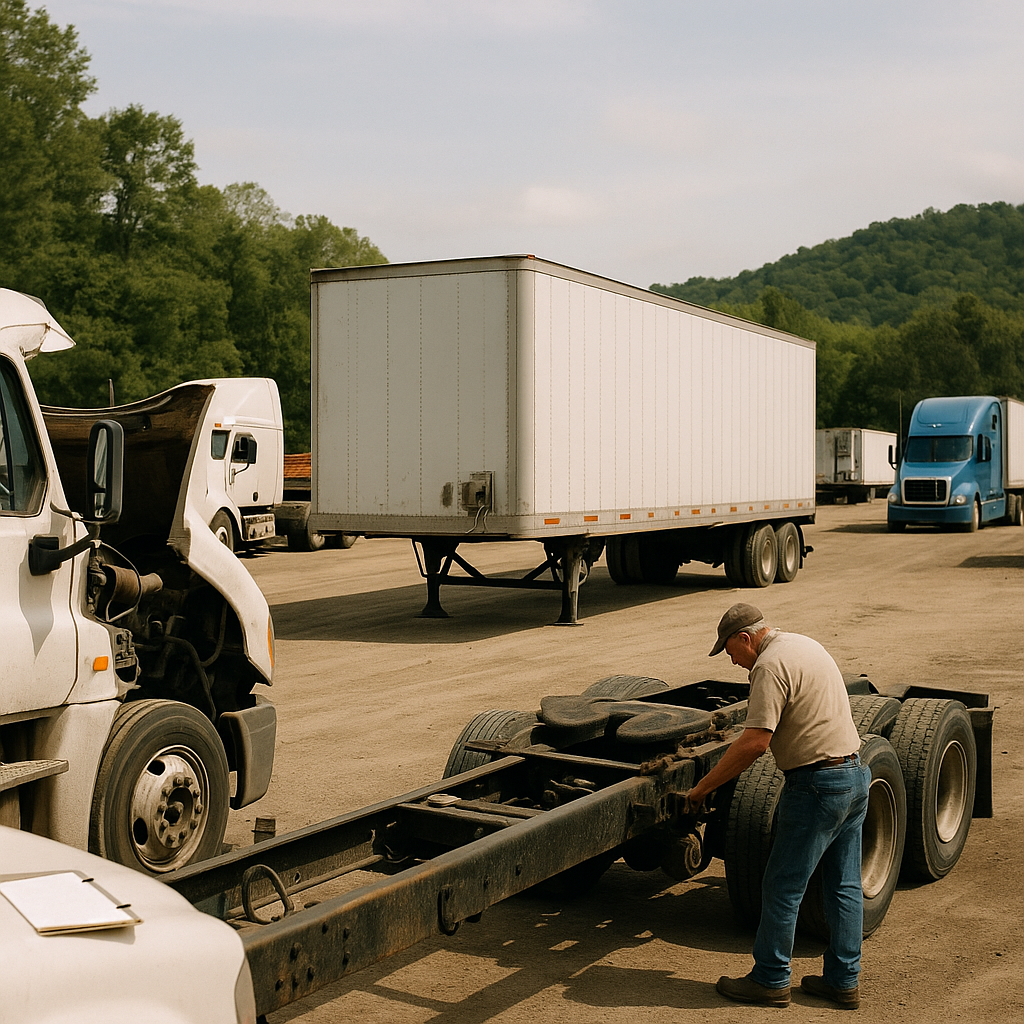

Dry van trucking insurance in Alabama usually means a package of commercial coverages for a tractor hauling enclosed freight, not a personal auto policy. If you run under your own authority or haul for-hire freight, the right setup depends on your carrier type, cargo, truck weight, and whether you operate interstate or only inside Alabama.
Dry Van Trucking Insurance in Alabama: What It Covers#
Dry van trucking insurance in Alabama is commercial insurance built for owner-operators and small fleets hauling freight in enclosed van trailers. For most dry van operations, that means auto liability, cargo, and physical damage working together, because personal auto insurance and generic business auto policies usually don’t match how a semi actually operates.
A dry van is an enclosed box trailer used to haul general freight that needs protection from weather and theft but not refrigeration. Dry van trucking insurance is the set of commercial policies that protects the truck, the trailer exposure, the freight, and your legal liability while you haul that freight.
This guide is for Alabama owner-operators with one truck, plus small fleets with a handful of trucks. It’s especially useful if you’re getting your own authority, switching from leased-on to independent, or trying to compare quotes that don’t all include the same coverages.
Who this guide is for#
Most Alabama dry van operators need commercial coverage because they’re hauling for business, often under a USDOT number and sometimes an MC number. An MC number is FMCSA operating authority that for-hire interstate carriers need when they transport regulated freight across state lines.
Dry van operations that need commercial coverage#
If you’re pulling a dry van trailer for hire, the usual insurance conversation starts with auto liability, then moves to cargo and truck value. A for-hire carrier is a trucking business that gets paid to transport someone else’s property.
That setup is different from a local cargo van delivery business, a pickup used for side work, or a personal vehicle. Those operations may still need commercial insurance, but they aren’t the same as dry van trucking and shouldn’t be quoted the same way.
What dry van insurance is not#
Dry van insurance is not personal auto insurance for a commuter car. It also isn’t a one-size-fits-all package for every kind of trucking.
A lot of quote problems start when someone says "van" but means a cargo van, while the broker assumes a semi with a 53-foot trailer. Others ask for "state minimum" coverage without realizing federal rules may apply first. That’s how drivers end up with quotes that look cheap on paper but don’t fit the operation.

FMCSA Rules vs Alabama Requirements#
If your dry van operation hauls for-hire freight in interstate commerce, federal rules usually drive the core liability requirement first, while Alabama handles state-level registration and intrastate processes. The key is sorting out whether you’re interstate or intrastate, what you haul, and whether you’re operating under your own authority before you shop for coverage.
The FMCSA is the Federal Motor Carrier Safety Administration, the agency that regulates interstate commercial trucking. BIPD means bodily injury and property damage liability, the public liability coverage tied to federal financial responsibility rules.
When federal rules apply#
Under FMCSA rules and 49 CFR Part 387, for-hire interstate carriers hauling general freight in vehicles over 10,001 lbs must carry at least $750,000 in public liability. That doesn’t mean all truckers need the same number. Requirements vary by carrier type, vehicle weight, cargo, and whether you operate interstate or intrastate.
For many Alabama dry van operators with their own authority, that federal liability rule is the starting point for commercial auto liability. If you haul interstate, insurers also look at whether you need filings tied to your authority and whether your status appears correctly in SAFER.
When Alabama rules matter#
Alabama still matters because state agencies handle registration, plates, licensing, and intrastate administrative requirements. For Alabama-only operations, state requirements can affect what you need to stay legal even when FMCSA interstate rules don’t apply the same way. Verify Alabama-specific steps with the Alabama Department of Insurance and other relevant Alabama state agencies before binding coverage.
Interstate vs intrastate operations#
Interstate commerce means your freight crosses state lines or is part of a shipment moving across state lines, even if your truck stays inside Alabama for one leg. Intrastate commerce means the transportation starts and ends within Alabama and isn’t part of a broader interstate movement.
That distinction matters more than many drivers think. A Birmingham-to-Mobile load can still be interstate in the regulatory sense if the shipment originated out of state. If you aren’t sure, sort that out before requesting quotes, because the wrong answer changes filings, insurer appetite, and sometimes whether the quote is usable at all.
If quote forms keep giving you conflicting answers,
Core Coverages for a Dry Van Operation#
Most dry van owner-operators in Alabama need auto liability as the foundation, then add cargo and physical damage based on the truck, trailer, and contracts they work under. The right mix depends on whether you have your own authority, what freight you haul, whether you own the trailer, and what gaps your lease or shipper contracts leave on you.
Primary liability / auto liability#
Primary liability or auto liability is the coverage that pays when your truck causes bodily injury or property damage to others. For a for-hire dry van operation, it’s usually the first policy insurers and regulators look at because it supports legal operation on the road.
If you have your own authority, this is the policy most directly tied to filings and operating status. If you’re leased on to a motor carrier, the carrier may provide primary liability while you’re under dispatch, but that doesn’t automatically cover every non-dispatch situation.
Motor truck cargo#
Motor truck cargo insurance covers your legal responsibility for freight you’re hauling if it gets damaged, stolen, or lost from a covered cause. Dry van freight often includes boxed, palletized, or packaged general goods, so cargo coverage matters both for contract compliance and for protecting the revenue hit from a cargo loss.
Cargo isn’t interchangeable from one operation to another. Electronics, higher-theft goods, household items, and mixed general freight can all be viewed differently by underwriting. If you need a closer breakdown of motor truck cargo coverage, compare your policy language to the actual commodities you plan to haul.
Physical damage and deductibles#
Physical damage insurance protects the insured truck or trailer against direct damage, usually through collision and comprehensive-type causes. A deductible is the amount you pay out of pocket on a covered loss before insurance responds.
Truck value, financing terms, and cash flow all matter here. Higher deductibles can lower premium, but they also mean more money due if the tractor is damaged. For a deeper look at physical damage coverage, pay attention to stated value, lender requirements, and whether the trailer itself needs to be insured.
Optional coverages that may fit#
Some dry van operations also need general liability, which covers certain non-driving business claims like premises or some loading-related exposures. It isn’t a substitute for truck liability, but some shippers, brokers, or contracts ask for it. If that applies to your operation, review how general liability for truckers fits alongside your main trucking policies.
Trailer interchange covers a non-owned trailer in your care under a written interchange agreement. If you regularly pull someone else’s trailer, check whether you need trailer interchange coverage or instead need non-owned trailer physical damage, which is often the better fit when there’s no signed interchange agreement.
What Drives Dry Van Insurance Cost in Alabama#
Dry van insurance cost in Alabama depends more on your operation details than on the words "dry van" alone. Authority status, interstate activity, freight type, lane radius, truck value, driver history, and prior claims all affect underwriting, which is why two Alabama owner-operators with similar tractors can get very different quotes.
Authority status and filing needs#
A carrier with its own authority usually gets underwritten differently from an owner-operator leased on to another motor carrier. An operating authority is FMCSA permission for a for-hire interstate carrier to transport regulated freight under its own business name.
New authority can be harder to place than established authority with a clean record. If filings are needed and your DOT or MC setup isn’t consistent, that can slow quotes down or produce numbers that don’t hold once underwriting reviews the file.
Cargo, radius, and lanes#
What you haul matters because not all "general freight" looks the same to an insurer. Higher-theft commodities, long-haul lanes, dense metro routes, and irregular radius patterns can all change how a carrier views risk.
A radius is the typical distance your truck operates from its base or the territory it regularly runs. If you say local but actually run regional or multi-state lanes, the quote can come back mispriced and may need to be reworked later.
Truck value, deductibles, and claims history#
The more expensive the tractor, the more important physical damage pricing becomes. Financed equipment, newer model years, and custom add-ons can all affect how the policy is written.
Claims matter too. A prior cargo loss, a major physical damage claim, or frequent roadside issues can narrow insurer appetite even if the business is still insurable. Deductible choices can help manage premium, but only if the deductible still fits what you could realistically pay after a loss.
Driver and fleet profile#
Underwriting changes when you move from one truck to a small fleet. A small fleet usually means a business with multiple power units, where insurer review starts looking beyond one driver’s record and into hiring standards, scheduling, and overall management.
For owner-operators, the focus is usually your own MVR, experience, authority age, and freight details. For a two-to-five truck fleet, insurers also look at who drives each unit, how records are kept, and whether the business has stable operations.
How to Get the Right Quote Without Overbuying#
The best dry van trucking insurance quote in Alabama is the one that matches your actual operation, not the one with the lowest headline price. To get there, gather the right details up front, avoid common terminology mistakes, and compare policies by limits, deductibles, exclusions, and filing needs instead of treating every quote like the same product.
Information to gather before comparing quotes#
Before you start, have your DOT and MC status, VINs, unit values, year/make/model details, trailer ownership, and driver records ready. Also nail down your freight description, operating radius, states run, and whether you’re leased on or running under your own authority.
If you borrow, lease, or swap trailers, say that clearly. If you only ask for "full coverage," you’ll get mixed assumptions back from different brokers, and those assumptions may not line up with your contracts.
Red flags that cause quote mismatches#
One common mismatch is mixing up cargo van and dry van terminology. Another is asking for personal auto-style coverage when the risk is a commercial tractor hauling freight for hire.
A third problem shows up when leased-on drivers ask for coverages they may not need, or skip ones they do. For example, bobtail and non-trucking liability can matter for leased-on owner-operators, but it doesn’t replace primary liability for a carrier with its own authority.
How to compare policies side by side#
Use the same fact pattern for every quote request. Then compare limit structure, deductibles, filing needs, covered commodities, trailer treatment, and exclusions line by line.
An exclusion is a situation, cause of loss, or type of property the policy does not cover. The NAIC offers plain-language insurance definitions that can help when two quotes sound similar but handle deductibles and exclusions differently. Price matters, but only after you’re sure the policies are solving the same problem.
How to Keep Costs Manageable Without Buying the Wrong Policy#
You can keep dry van insurance costs manageable by tightening the facts behind the quote, choosing deductibles carefully, and matching coverage to the freight you really haul. The goal isn’t to strip the policy down to the cheapest version. It’s to avoid paying for the wrong setup while still protecting the truck, the cargo exposure, and your authority.
Choose deductibles strategically#
Higher deductibles can lower premium, but only choose them if you could actually absorb that out-of-pocket hit after a claim. Saving on paper doesn’t help much if a collision sidelines the truck and the deductible creates a cash crunch.
Match coverage to actual freight#
Don’t describe everything as "general freight" if you already know you plan to haul specific commodities that get different underwriting treatment. The cleaner and more accurate your freight description is, the less likely you are to get a quote that changes later.
Keep records clean#
Driver records, loss history, maintenance habits, and business paperwork all shape underwriting. Clean records won’t guarantee a specific price, but they do support better quote accuracy and smoother renewals.
Review policy fit after changes#
Recheck your insurance whenever the truck changes, the freight mix shifts, the authority status changes, or you move from leased-on to your own authority. A policy that fit last year can become the wrong policy fast after one business change.
Dry Van Insurance FAQs for Alabama Truckers#
How much is dry van insurance?#
Dry van insurance doesn’t have one standard price because underwriting changes with your authority status, freight, operating radius, truck value, driver history, claims, and deductibles. A new authority running interstate under its own MC number is a different risk from a leased-on owner-operator with no cargo exposure on their own policy.
To get a usable quote, have your DOT and MC status, truck details, value, lanes, freight type, and driver information ready. Your actual premium depends on your operation, cargo, radius, driving history, and other factors.
What trucking companies will pay for CDL training in Alabama?#
That’s mainly a hiring and training question, not an insurance requirement question. Carriers that sponsor CDL training can change over time, so the practical move is to check current training programs directly with Alabama-based or regional carriers and compare contract terms, tuition repayment rules, and route commitments.
From an insurance standpoint, the key point comes later: once you start operating commercially, your experience level, employer setup, and whether you stay company-side or move toward owner-operator work will affect what coverage you need.
What kind of insurance do I need for a cargo van business?#
A cargo van business often needs different insurance than a dry van trucking operation. A cargo van is the vehicle itself, while a dry van usually refers to an enclosed trailer pulled by a tractor in commercial trucking.
If you’re running a cargo van for business, you may need commercial auto and possibly cargo-related coverage, but the vehicle class, haul type, and use pattern are different from semi-truck insurance. Don’t ask for dry van trucking coverage unless you’re actually insuring a tractor-trailer operation.
Do Alabama dry van owner-operators need cargo insurance?#
Many do, even when it’s not spelled out by a regulator in the same way liability is. Cargo insurance is often driven by broker, shipper, or contract requirements, and it matters because a dry van operator is usually hauling someone else’s freight with real theft and damage exposure.
The right limit and form depend on what you haul. If your loads vary, say that up front. A cargo quote built for low-risk boxed goods may not fit if your freight mix changes later.
Is leased-on dry van insurance different from having your own authority?#
Yes. A leased-on owner-operator often relies on the motor carrier’s primary liability while under dispatch, then adds coverages that fit the gaps left on them personally. A carrier with its own authority usually needs its own liability setup, filings, and often a broader policy package built around independent operation.
That difference is one of the biggest reasons quotes can miss. Before shopping, be clear about whether you’re leased on, whose trailer you’re pulling, and which policy is supposed to cover each part of the operation.





