Dry van trucking insurance in Kansas usually means a bundle of commercial coverages built around a for-hire trucking operation, not a personal car policy with higher limits. If you run under your own authority or haul loads for pay, your coverage needs depend on your truck, cargo, routes, and whether you operate interstate or intrastate.
A lot of owner-operators hear one-liners in truck stop conversations and forums, then buy around those shortcuts. That’s how people end up mixing up Kansas rules with FMCSA rules, or thinking “full coverage” automatically includes cargo, trailer damage, and off-dispatch liability. It doesn’t.
Kansas dry van insurance basics: what this policy actually covers#
Dry van trucking insurance in Kansas covers the business risks tied to hauling freight for pay: causing injuries or property damage in a crash, damaging your truck, losing or damaging cargo, and other operation-specific exposures. For most owner-operators, it’s a package of separate policies and endorsements, not one catch-all form.
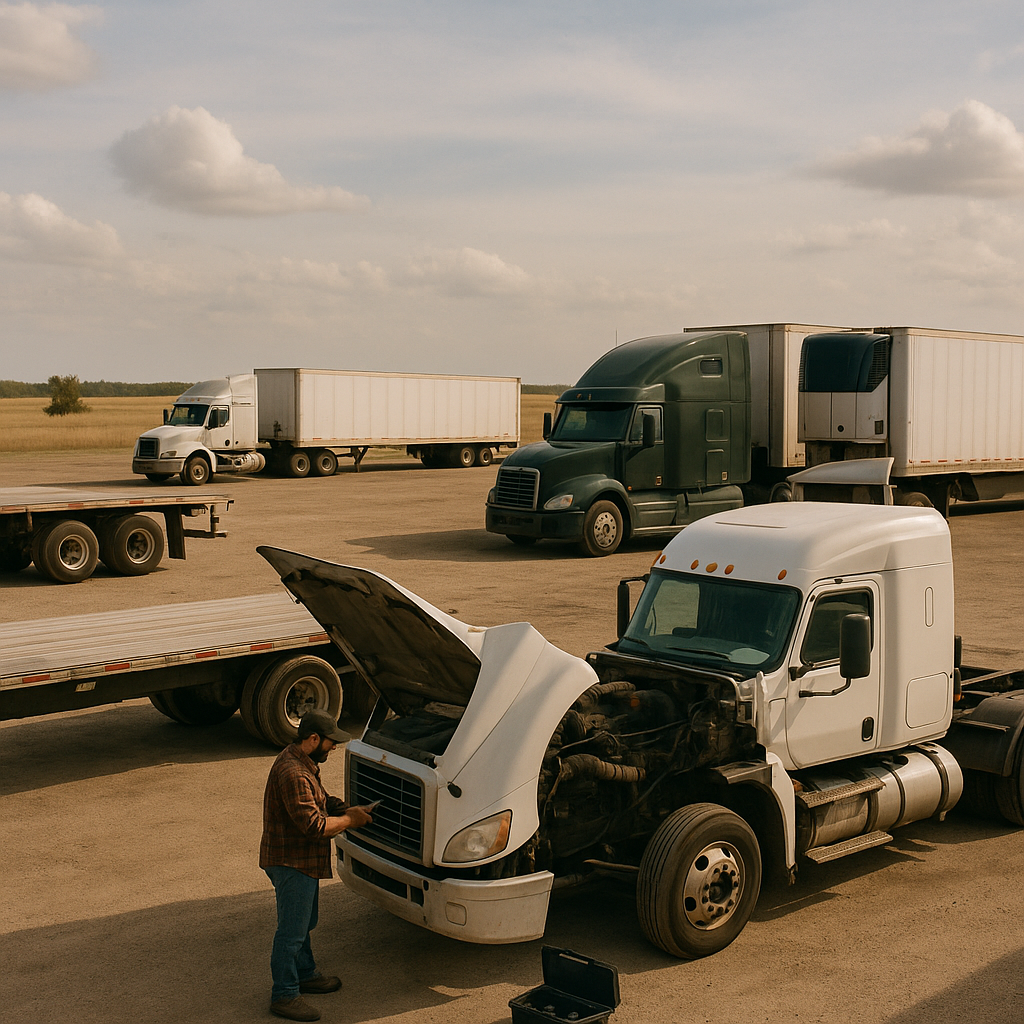
A dry van operation profile is pretty straightforward on paper: a tractor hauling enclosed freight in a van trailer, usually for general commodities. In real underwriting, though, the details matter. A carrier hauling boxed retail goods on regional lanes can be rated differently from one hauling higher-theft freight, running longer interstate radius, or pulling someone else’s trailer under contract.
Commercial trucking insurance is insurance written for business use in trucking, with policy forms and limits built for trucks, freight, liability filings, and for-hire operations. Personal auto insurance is built for private passenger vehicle use, so it doesn’t replace commercial trucking insurance for a dry van owner-operator hauling freight for pay.
Dry van operation profile#
Dry van doesn’t mean risk-free. Enclosed freight is protected from weather better than open-deck cargo, but theft, load shifts, water intrusion, and misdescribed commodities still create claims problems. That’s why the cargo you actually haul matters as much as the trailer type.
Commercial trucking insurance vs personal auto#
A pickup policy or personal auto policy won’t stand in for a Class 8 tractor working under a USDOT number. If the truck is being used in a business operation, especially for-hire trucking, the insurer and the regulator look at it differently.
What “full coverage” usually means for a dry van#
“Full coverage” in trucking usually means auto liability plus physical damage, then often cargo and other add-ons depending on the job. Physical damage is coverage for damage to your insured truck from collision or other causes like theft, fire, or weather. It does not automatically include motor truck cargo, bobtail, general liability, or trailer-related coverage.
Kansas requirements vs FMCSA federal rules#
Kansas rules and FMCSA rules are not the same thing, and mixing them up causes a lot of bad decisions. If you run interstate for-hire trucking, federal financial responsibility rules can control your minimum liability requirement even if a lower state minimum exists for other vehicle classes or uses.
Kansas may have state-level registration, filing, or proof requirements tied to operating in the state, especially for intrastate authority. But once you step into interstate for-hire trucking, FMCSA rules matter. The clean way to think about it is this: state requirements and federal requirements can overlap, but they don’t mean the same thing.
Under FMCSA rules and the financial responsibility framework in 49 CFR Part 387, required public liability depends on carrier type, vehicle weight, and commodity. BIPD means bodily injury and property damage liability together under the public liability requirement. For-hire interstate carriers hauling general freight in vehicles over 10,001 pounds must carry at least $750,000 in public liability under 49 CFR Part 387. That is not a universal rule for every trucker.
If you’re under 10,000 pounds, the federal threshold can be different. If you haul certain hazardous materials, the minimum can be much higher. If you’re an auto hauler, the federal minimum is also different. That’s why “all truckers need $750K” is sloppy advice.
Kansas filing and state-level requirements#
Intrastate Kansas operations may face state-specific insurance and filing expectations through state agencies. Those requirements can affect whether you can legally operate in-state, but they don’t automatically replace federal requirements for an interstate authority.
FMCSA minimum liability requirements#
FMCSA minimums are tied to what you do, what you haul, and what you drive. They are minimums to operate legally, not a guarantee that the limit is enough for your business risk.
Interstate vs intrastate operation differences#
Interstate means crossing state lines or hauling freight in a movement tied to interstate commerce. Intrastate means operating only within one state in a way that is not part of interstate commerce. A Kansas owner-operator may need a different insurance setup depending on which side of that line the operation falls on.
If you’re staring at quotes and still aren’t sure whether the policy matches your authority, cargo, and routes, that’s where mistakes get expensive. A limit can be legal on paper and still leave the business exposed in the real world. If you’re not sure what coverage fits your operation,
Core coverages for a Kansas dry van operation#
Most Kansas dry van operations need more than liability alone. The main coverages solve different problems: hurting someone in a crash, damaging freight, fixing your truck, protecting off-dispatch use, covering non-driving business claims, or handling trailer damage responsibilities.
Auto liability#
Auto liability is the foundation of a trucking policy. It pays when your truck causes bodily injury to other people or damages someone else’s property in a covered accident. This is the coverage tied most directly to FMCSA minimum financial responsibility for interstate for-hire carriers.
A lot of owner-operators buy higher limits than the legal minimum because shippers, brokers, or contracts may require it. Even where a lower limit may satisfy a narrow legal rule, the business side of trucking often pushes coverage higher.
Motor truck cargo#
Motor truck cargo covers legal liability for covered freight you are hauling. In dry van terms, this is the policy that matters when the load is stolen, damaged, contaminated, or otherwise lost in a covered situation.
Commodity matters here. General dry goods may be simpler to insure than higher-theft electronics, alcohol, tobacco, or other restricted commodities. Exclusions also matter. Some policies limit unattended vehicle theft, employee dishonesty, improper securement, or certain commodity classes. Don’t assume “dry van cargo” means every boxed load is automatically covered.
Physical damage#
Physical damage covers your truck itself. Collision pays for damage from an impact or upset. Comprehensive covers other causes like theft, vandalism, hail, or fire. Some carriers structure this as collision plus comprehensive, or collision plus fire and theft with combined additional coverage.
Your deductible is the amount you pay out of pocket before the insurer pays the covered loss above that amount. Higher deductibles can lower premium, but they also mean more cash pressure after a claim.
Non-trucking liability and bobtail#
Non-trucking liability, often called NTL, covers liability when the truck is being used for non-business personal use, not while hauling or under dispatch. Bobtail is often used loosely in conversation, but the real coverage question is what happens when you’re driving without a trailer and whether that use is business-related or personal. NTL does not cover paid hauling.
General liability#
General liability covers certain non-driving business claims, like some slip-and-fall or premises-related exposures. For many for-hire trucking operations, it comes up because shippers, brokers, or contracts ask for it. It is separate from auto liability.
Trailer interchange#
Trailer interchange covers physical damage to a non-owned trailer in your care under a written interchange agreement. If you don’t have a signed interchange agreement and just need protection for a trailer you don’t own, the better fit is often non-owned trailer physical damage rather than trailer interchange. Many non-intermodal dry van owner-operators get this wrong.
What 250/500/100 means in trucking insurance#
250/500/100 is shorthand for three liability limits: bodily injury per person, bodily injury per accident, and property damage per accident. It explains one way liability limits can be written, but it does not tell you anything about cargo, physical damage, trailer coverage, or most trucking-specific endorsements.
The first number, 250, usually means up to $250,000 for bodily injury to one person in a covered accident. The second, 500, usually means up to $500,000 total bodily injury for everyone injured in that same accident. The third, 100, usually means up to $100,000 for property damage in that accident.
The NAIC uses plain-language consumer education around policy terms and limits, and that framework helps here: these numbers describe liability slices, not the whole policy. In trucking, people also talk about combined single limits or regulatory public liability requirements instead of the same shorthand you hear in personal auto.
That matters because a dry van owner-operator can hear 250/500/100 and assume it’s talking about the whole insurance package. It isn’t. You still need to ask separate questions about cargo limits, truck value, deductibles, trailer use, and endorsements.
How much dry van trucking insurance costs in Kansas#
Dry van trucking insurance in Kansas can vary widely because underwriting looks at the whole operation, not just the truck type. Your actual premium depends on your operation, cargo, radius, driving history, truck value, authority status, selected limits, deductibles, and endorsements.
Underwriting is the insurer’s process for evaluating risk and deciding how to price and structure coverage. A new venture with fresh authority, long interstate lanes, financed equipment, and higher-risk freight usually looks different from an established owner-operator with stable lanes and a cleaner record.
Primary cost drivers#
The biggest drivers usually include:
- Whether you’re a new venture or established carrier
- Your MVR and loss history
- Interstate or intrastate operation
- Radius and lane patterns
- Tractor value and trailer details
- Cargo type
- Requested limits and deductibles
- Whether you add cargo, physical damage, general liability, NTL, and trailer-related coverages
Kansas location and route factors#
Kansas location can matter, but not in a simple “Kansas is cheap” or “Kansas is expensive” way. Garaging location, theft exposure, hail exposure, local traffic patterns, and whether you run heavily through larger freight corridors can all affect how an insurer looks at the risk.
Kansas City searches are common, but the rating question is broader than city name alone. Where the truck is based, where it travels, where it parks, and how far it runs often matter more than a generic statewide label.
Cargo, authority, and driving history#
Dry van sounds broad because it is broad. One dry van operator may haul ordinary packaged freight. Another may chase higher-paying loads that come with tighter cargo terms or more theft concern. That difference can change both eligibility and premium.
Authority status matters too. Carriers running under their own MC number can be viewed differently from leased-on owner-operators, depending on the policy setup. Your DOT number is the federal identifier tied to your safety and operating profile, while an MC number is the operating authority identifier for certain for-hire interstate carriers.
Ways quotes can differ by coverage mix#
Two quotes can look similar at first and still be miles apart in protection. One may include cargo and broad physical damage terms. Another may show a lower premium because it leaves out cargo, raises deductibles, narrows commodity eligibility, or skips trailer-related protection. That’s why the right question isn’t just “what does it cost?” but “what exactly is included?”
How to compare Kansas dry van quotes without buying the wrong policy#
The best way to compare Kansas dry van quotes is to line them up by operational fit, exclusions, deductibles, and limits before you look at price. A lower premium only helps if the quote actually matches your authority, cargo, routes, and trailer use.
Start with scope. Does the quote fit your operation as an interstate or intrastate carrier? Does it reflect the commodities you really haul, not just “general freight” in a broad sense? Are you using your own trailer, someone else’s trailer, or both?
Next, read exclusions and endorsements. An endorsement is a policy change that adds, limits, or clarifies coverage. If cargo theft terms, trailer damage terms, or off-dispatch liability terms are different, the cheaper quote may not be comparable at all.
Then compare deductibles and limits. A deductible that looks manageable on paper can be rough after a roadside loss, cargo claim, or major truck repair. Decide what you truly need now, and what can wait until the operation grows. Buying too little can be expensive in a different way than buying too much.
Get help choosing coverage for your Kansas dry van#
If you’re unsure whether a quote fits your Kansas dry van operation, a quote review makes sense before you bind coverage. The goal isn’t just to satisfy a filing. It’s to make sure the policy matches how you actually run.
Have your basics ready:
- USDOT and MC status, if applicable
- Truck year, make, model, and value
- Garaging location
- Cargo types
- Planned radius and operating states
- Driver history
- Trailer ownership or interchange details
- Coverage mix you want reviewed
You can also verify federal carrier status and public information through FMCSA SAFER, which helps confirm registration context while you sort out your insurance setup.
LogRock specializes in trucking insurance for owner-operators and small fleets. If you’re not sure how to separate federal rules, Kansas requirements, and policy choices,
FAQ#
How much is dry van insurance?
Dry van insurance doesn’t have one standard price because the premium is based on the operation behind the truck. Insurers usually look at driving history, years in business, authority status, garaging location, operating radius, cargo type, truck value, loss history, selected limits, deductibles, and endorsements. A new venture hauling interstate general freight can price very differently from an established owner-operator with stable lanes and cleaner records. The best way to compare cost is to compare equal coverage scope first, then see which quote fits the business best.
What is the cheapest full coverage insurance in Kansas?
The cheapest full coverage insurance in Kansas is not automatically the best choice if it leaves out coverage your operation actually needs. In trucking, “full coverage” usually means at least liability plus physical damage, but many dry van operators also need cargo and may need non-trucking liability, general liability, or trailer-related coverage. A lower-priced quote can look attractive because it uses higher deductibles, narrower cargo terms, or more exclusions. Compare quotes by coverage scope, endorsements, deductible level, and whether they truly match your routes, freight, and authority.
What does 250/500/100 mean in insurance?
250/500/100 is a shorthand for three separate liability limits on a policy. The first number is bodily injury per person, the second is bodily injury per accident, and the third is property damage per accident. In plain English, it tells you how much the policy can pay for injuries to one person, injuries to all people in one accident, and damage to other people’s property in that accident. It does not describe cargo insurance, physical damage for your truck, trailer coverage, or other trucking-specific protections. In trucking, always ask what policy form and limits structure you’re actually looking at.
How much does $1,000,000 general liability insurance cost?
A $1,000,000 general liability policy doesn’t have one fixed price because general liability is rated on business exposure, operations, claims history, and policy structure. For a trucking business, the insurer may consider what kind of non-driving exposures exist, whether contracts require additional insured language, and how the policy is packaged with other coverages. General liability is separate from auto liability, so the price isn’t a shortcut for your whole insurance program. The useful comparison is whether the policy meets the contract requirement and whether its terms fit how your business actually operates.
Do dry van owner-operators in Kansas always need cargo insurance?
Dry van owner-operators in Kansas do not always face a legal rule that says cargo coverage is mandatory in every case, but many loads, brokers, and shipper agreements effectively make it necessary. Motor truck cargo protects covered freight you are hauling, and dry van operations often carry general commodities that still come with theft, shortage, or damage exposure. The key is not to assume every commodity is covered the same way. Electronics, alcohol, tobacco, and other higher-risk freight may be limited, excluded, or need different underwriting. Always match cargo coverage to what you actually haul.