
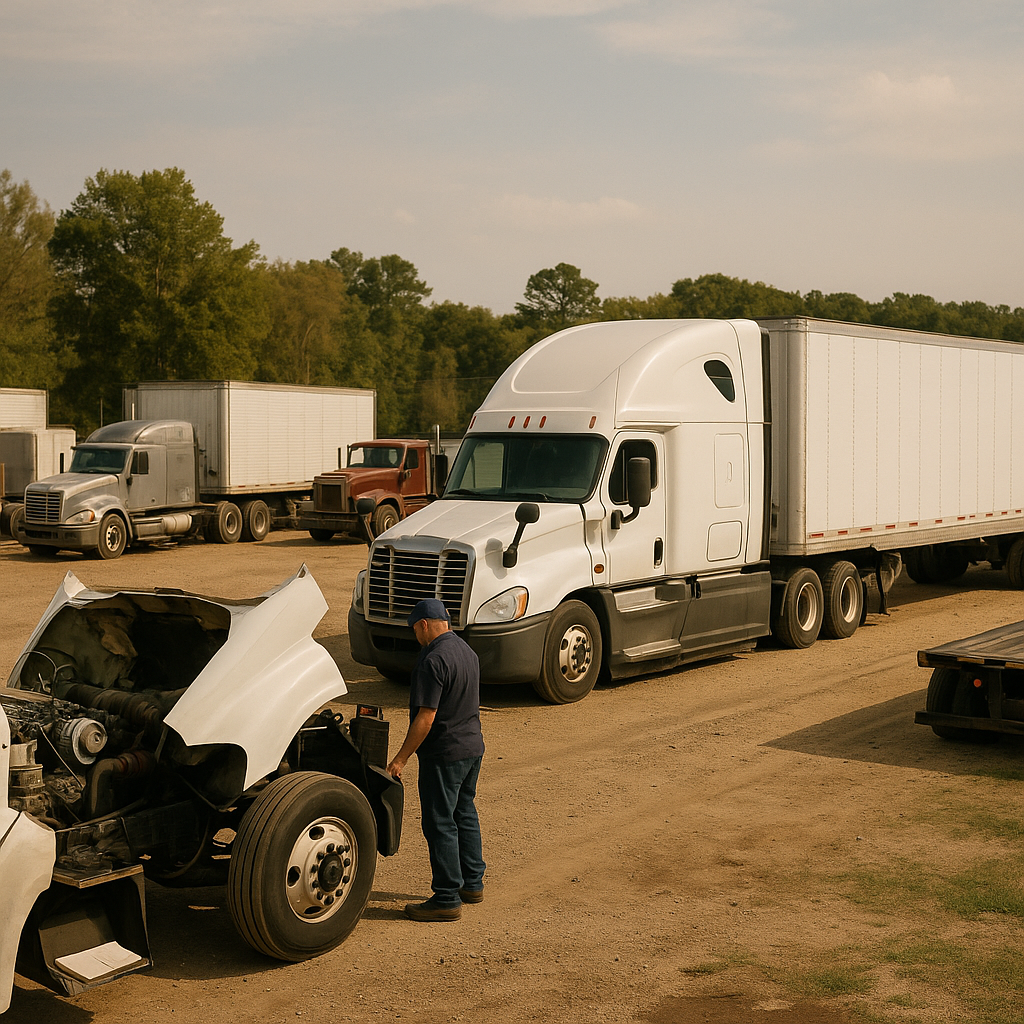

If you’re shopping for dry van trucking insurance in Mississippi, the biggest mistake is assuming a personal auto policy, a state minimum, or a generic trucking quote tells you what your operation actually needs. For a dry van owner-operator, the right setup depends on what you haul, whether you run interstate, what trailer you use, and how your authority is set up.
Dry Van Trucking Insurance in Mississippi: What It Covers#
Dry van trucking insurance in Mississippi usually means a bundle of commercial coverages built around a tractor and a dry van trailer hauling enclosed freight for pay. The exact mix depends on whether you’re for-hire or private, interstate or intrastate, what the truck weighs, and what cargo you move.
A dry van operation is a trucking setup using an enclosed trailer to haul freight protected from weather and road debris. For most owner-operators, insurance starts with auto liability, then expands based on the freight, truck value, and trailer arrangement.
What a dry van operation usually needs#
Auto liability is the coverage that responds if your truck causes bodily injury or property damage to other people. It’s the starting point because federal or state compliance usually begins there.
A motor truck cargo policy covers the freight you’re hauling, subject to the policy terms and exclusions. A physical damage policy covers damage to your own truck, typically through collision and comprehensive or fire and theft options.
General liability is separate from trucking auto liability and usually addresses non-driving business exposures, such as certain loading, unloading, or premises-related claims. Trailer-related coverage can also matter if you own the trailer, lease it, or pull somebody else’s trailer.
What the trailer carries vs what the tractor covers#
The tractor, the trailer, and the freight aren’t all protected by the same thing. That’s where a lot of Mississippi operators get tripped up.
Auto liability follows your trucking operation’s legal responsibility to others after an at-fault accident. Cargo covers the goods inside the dry van. Physical damage protects the insured truck and, when scheduled correctly, can also protect an owned trailer.
If you’re using a borrowed or leased trailer, you may need trailer interchange or non-owned trailer physical damage instead of assuming the tractor policy covers everything. Requirements vary by carrier type, vehicle weight, cargo, and whether you operate interstate or intrastate.

FMCSA Rules vs Mississippi Requirements#
FMCSA rules and Mississippi rules are not the same thing, and a dry van operator needs to check both before binding coverage. Federal rules usually control for-hire interstate trucking, while Mississippi may have separate state-level requirements for intrastate operation, registration, or insurance oversight.
The FMCSA is the Federal Motor Carrier Safety Administration, the agency that regulates many interstate trucking operations. BIPD means bodily injury and property damage liability, the public liability coverage referenced in federal financial responsibility rules.
What federal rules cover#
For dry van owner-operators running for-hire interstate freight, federal financial responsibility rules are the first place to look. Under FMCSA guidance and 49 CFR Part 387 at eCFR, for-hire interstate carriers hauling general freight in vehicles over 10,001 pounds must carry at least $750,000 in public liability.
That doesn’t mean all truckers need the same limit. Under 49 CFR Part 387, the minimum changes by carrier type, weight, and commodity. Carriers under 10,000 pounds, auto haulers, hazmat carriers, and certain other operations follow different thresholds.
An MCS-90 is a federally required endorsement used in certain interstate filings to show proof of public liability financial responsibility. If your operation requires a filing, the policy and filing setup need to match your authority.
Where Mississippi rules may differ#
Mississippi can still matter even when federal rules apply. State registration, intrastate authority, and insurance oversight may involve state agencies, and the Mississippi Department of Insurance is the right place to confirm state insurance context.
The practical point is simple: your Mississippi state minimum is not automatically your federal trucking minimum. If you haul for-hire interstate freight, FMCSA rules can override the shorthand advice drivers swap online.
Before you bind coverage, confirm your carrier type, truck weight class, cargo type, and whether you’re interstate or intrastate. If you already have a USDOT number or MC number, make sure the insurance structure matches how your authority is actually set up.
Core Coverages for a Dry Van Tractor-Trailer Setup#
A dry van tractor-trailer setup usually needs more than one policy part because liability, cargo, truck damage, and trailer damage are different risks. Most owner-operators start with auto liability, then add cargo, truck physical damage, and the right trailer protection based on ownership and use.
A DOT number is your federal registration identifier for safety oversight. An MC number is operating authority used by for-hire interstate carriers that need federal authority to haul regulated freight.
Auto liability#
Auto liability is the legal foundation of most trucking insurance programs. If your tractor causes an accident, this is the coverage that responds to third-party bodily injury or property damage claims.
For a Mississippi dry van operator, this is also where compliance mistakes happen fast. A quote built on the wrong operating radius, wrong commodity description, or wrong interstate status may look fine until a filing is needed or a claim exposes the mismatch.
Cargo and trailer-related coverage#
Motor truck cargo protects the freight inside the trailer, not the trailer itself. If you haul dry goods, packaged products, or general freight, review your cargo coverage for exclusions, sublimits, and commodity restrictions before assuming "cargo is included."
Dry van trailers don’t all need the same protection. If you own the trailer, you may schedule it for physical damage. If you’re responsible for someone else’s trailer under a signed interchange agreement, trailer interchange may apply. If there is no signed interchange agreement and you still need protection for a trailer you don’t own, non-owned trailer physical damage may be the better fit for many non-intermodal operators.
The expensive mistake is finding out after a yard loss or backing accident that the trailer itself wasn’t covered at all. If you’re not sure how your trailer should be insured,
Physical damage and general liability#
Physical damage protects your insured truck from direct loss, including collision and comprehensive-type causes. If you want a closer breakdown of deductibles and truck-only protection, review how physical damage coverage works for owner-operators.
General liability covers business risks that auto liability doesn’t handle. For some for-hire operators, general liability insurance matters because customers, leases, or contracts ask for it even though it doesn’t replace trucking auto liability.
LogRock specializes in trucking insurance for owner-operators and small fleets, including auto liability, motor truck cargo, general liability, physical damage, non-trucking liability, trailer interchange, non-owned trailer physical damage, and reefer-related coverage. It does not write every operation type, so if your setup falls outside standard dry van for-hire work, scope it before you shop.
How Much Dry Van Trucking Insurance Costs in Mississippi#
Dry van trucking insurance in Mississippi doesn’t have one standard price because insurers rate the operation, not just the state. Your actual premium depends on your operation, cargo, radius, driving history, truck value, years in business, prior losses, and whether the account is interstate or intrastate.
Mississippi matters, but it usually isn’t the whole story. Two trucks parked in the same town can price very differently if one has new authority, a financed tractor, long-haul interstate miles, and a tougher cargo profile.
What drives price#
The biggest pricing drivers are usually your driving record, claims history, years with CDL experience, years under authority, and the truck itself. A newer tractor with a higher stated value changes the physical damage side, while a wider operating radius can change the liability profile.
Cargo also matters. A dry van hauling general freight may rate differently than a dry van moving higher-theft or higher-claim commodities, even though both use enclosed trailers.
Why quotes differ#
Quotes often differ because the coverage isn’t actually the same. One quote may include cargo, a broader trailer setup, and physical damage with a lower deductible, while another may only solve the filing problem.
That’s why "lowest quote" talk online causes so much confusion. Sometimes the cheaper number is missing a key endorsement, using a different deductible, or describing the operation too loosely to hold up when the policy is issued.
How to avoid overbuying#
Avoid overbuying by matching coverage to the way you actually run. If you don’t own a trailer, owned-trailer coverage may not help. If you never operate under a signed interchange agreement, the trailer solution may be different from what another driver told you.
The goal isn’t the biggest policy stack. It’s an accurate one that meets compliance, protects the truck and freight you actually have at risk, and doesn’t leave avoidable gaps.
How to Get the Right Quote Without Overbuying#
The best dry van trucking insurance quote is built from accurate operating details, not guesswork. Gather your DOT and authority information, truck and trailer specs, cargo details, radius, driver history, and prior loss information so every quote is based on the same facts.
A SAFER lookup is FMCSA’s public system for checking carrier registration and basic federal status. It’s useful for confirming how your operation appears before a quote is built or a filing is requested.
Information to gather before shopping#
Start with your USDOT number, MC number if applicable, garaging address, VIN, year, make, model, stated truck value, and trailer details. Have a clean description of the freight you haul, where you run, and whether you’re under your own authority or leased on.
If you already operate federally, verify your public status through SAFER. That helps catch mismatches between what you think your operation is and how it’s registered.
Questions to ask before binding#
Ask whether every quote uses the same liability limit, cargo limit, deductibles, and trailer assumptions. Ask what exclusions apply to the freight you haul and whether the trailer is covered only if owned, only if scheduled, or only under certain agreements.
Also ask whether any filing, such as an MCS-90-related setup, is required for your authority. A quote isn’t really comparable if one option includes the needed filing structure and another doesn’t.
When to get help#
Get help when the operation doesn’t fit a simple one-truck template. New authority, leased trailers, changing freight, and mixed interstate/intrastate work are all situations where small mistakes turn into expensive gaps.
A broker that understands trucking can help you compare identical terms instead of comparing headlines. If you’re sorting through quotes and want a second set of eyes,
Mississippi Dry Van Coverage Questions to Ask Before You Buy#
Before you buy Mississippi dry van coverage, ask a few basic questions about authority, trailer use, and freight. Those answers usually tell you more than any generic rate list.
Carrier type and authority#
Are you for-hire under your own authority, leased to another carrier, or running private freight? Do you cross state lines, or do you stay strictly intrastate inside Mississippi?
That changes which rules matter and whether federal filings may apply. It also changes whether add-ons like non-trucking liability are even relevant to your setup.
Trailer ownership and use#
Do you own the dry van trailer, lease it long-term, or pull trailers you don’t own? Is there a signed trailer interchange agreement, or are you just responsible for a non-owned trailer while it’s in your care?
Those details determine whether you need trailer interchange, non-owned trailer physical damage, or scheduled trailer physical damage.
Cargo and operating pattern#
What do you actually haul, and how far do you go? General dry van freight can still vary a lot in claim profile depending on theft exposure, load type, and routes.
This is where personal auto thinking causes trouble. Trucking insurance is built around commercial use, authority, cargo, and equipment responsibility, not just whether the truck is legally registered.
FAQ#
How much is commercial truck insurance in Mississippi?
Commercial truck insurance in Mississippi varies by operation, not just location. The biggest factors are carrier type, driver history, years in business, truck value, cargo, operating radius, claims history, and whether you’re interstate or intrastate. For a dry van operator, the best way to compare price is to compare identical liability limits, deductibles, cargo terms, and trailer assumptions. Otherwise, you’re not looking at true apples-to-apples quotes.
How much is dry van insurance?
Dry van insurance depends on the tractor, how the trailer is used, what freight you haul, where you run, your loss history, and whether the operation is under interstate or intrastate rules. Some quotes only solve the liability requirement, while others include cargo, truck physical damage, and trailer protection. That’s why two "dry van insurance" quotes can look far apart even when they’re both for Mississippi.
What insurance does a trucking company need?
A trucking company usually starts with auto liability, then evaluates cargo, physical damage, and general liability based on how it operates. Some dry van operations also need trailer-related protection, especially if the trailer is owned, leased, borrowed, or used under an interchange agreement. The right mix depends on carrier type, vehicle weight, cargo, and whether the business runs interstate or intrastate. There isn’t one universal setup for every trucking company.
Do dry van trailers need insurance?
Dry van trailers often need their own form of protection, but not always in the same way. If you own the trailer, you may insure it for physical damage. If you use someone else’s trailer under a signed agreement, trailer interchange may apply. If you don’t own the trailer and there is no signed interchange agreement, non-owned trailer physical damage may be the better fit. The trailer is separate from the freight inside it, so cargo coverage alone doesn’t protect the trailer itself.
Is Mississippi’s state minimum enough for a dry van owner-operator?
Usually not by itself if you run for-hire interstate freight. Mississippi state requirements and federal FMCSA requirements are different issues, and the federal side can control your minimum public liability obligation under 49 CFR Part 387. For-hire interstate carriers hauling general freight in vehicles over 10,001 pounds generally need at least $750,000 in public liability. Confirm your exact requirement based on carrier type, weight, cargo, and interstate status before binding coverage.





