
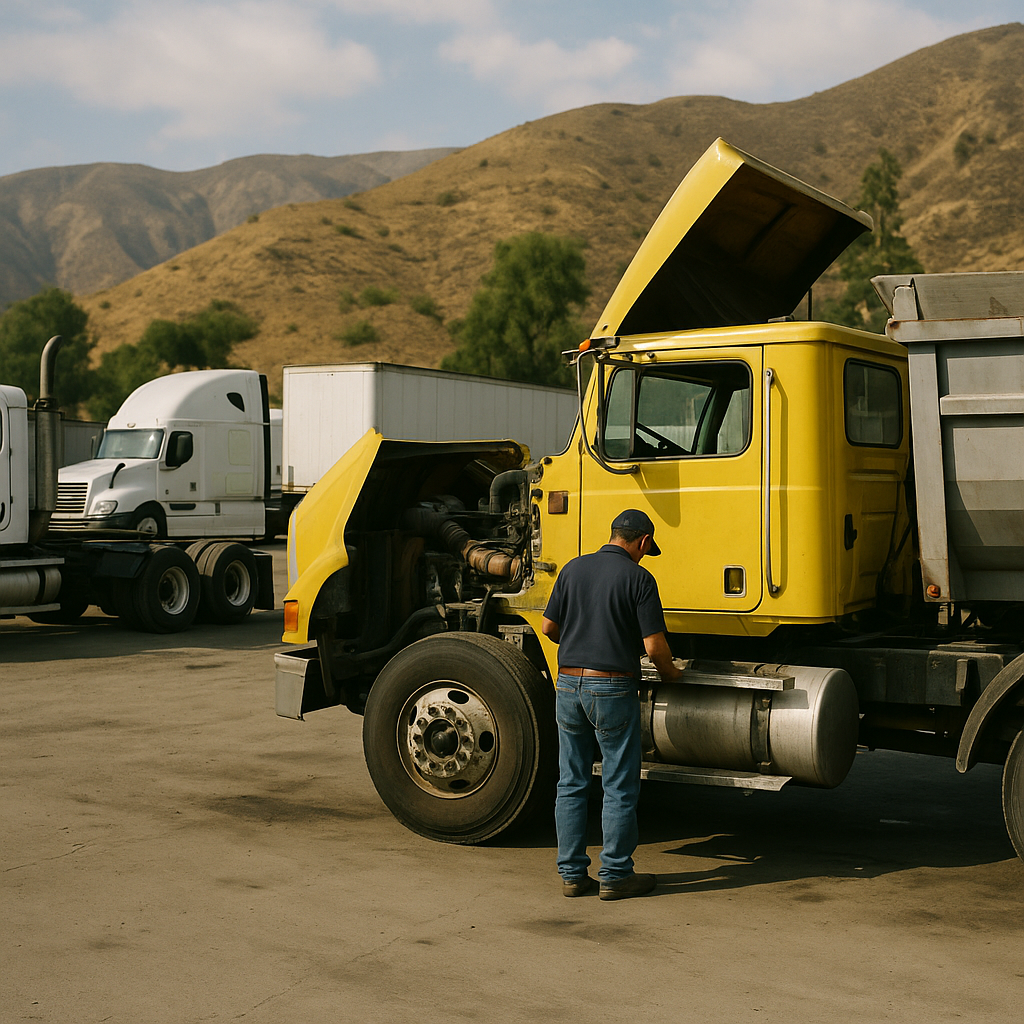

If you’re shopping for dump truck insurance California operators actually need, the main job is getting the coverage to match how the truck works. A dump truck used for paid hauling, jobsite runs, or contractor work is usually a commercial insurance problem, not a personal auto problem. That one distinction drives most of the cost, compliance, and coverage mistakes.
What Dump Truck Insurance Covers in California#
Dump truck insurance is commercial insurance built for a truck used in business, especially hauling material, moving loads to jobsites, or working under a contractor or motor carrier. The right setup depends on how the truck is used, registered, and paid, not just on the fact that it’s a dump truck. That’s why two similar trucks can need very different policies.
Commercial use vs. personal use#
Commercial use means the truck is used to earn money or support a business operation. If you’re hauling gravel, dirt, asphalt, debris, or aggregate to a jobsite for pay, that’s commercial use even if the truck also gets driven home at night.
Personal use is different. If someone owns a truck and only uses it around private property or for occasional non-business driving, the insurance question changes. But once the truck is tied to paid work, business registration, or contractor activity, you usually need commercial coverage.
A common mistake is assuming a personal auto policy can stretch far enough because the truck isn’t crossing state lines. That’s risky. If the truck is titled to a business, used on jobs, or carries material as part of paid work, insurers usually treat it as commercial exposure.
For a quick grounding in commercial auto coverage basics, start with how business use changes liability and vehicle damage coverage.
Core coverages most owners consider#
Most California dump truck owners look first at auto liability, then physical damage, and then any add-on coverage tied to how the truck actually makes money. The basic package should protect against road liability, truck damage, and any work-related exposures that aren’t covered by a personal-style policy.
Auto liability pays for injury or property damage you cause to others in a covered accident. This is the core coverage tied to legal operation.
Physical damage covers damage to your truck from collision and other causes like fire, theft, or some weather events. If the truck has real value or a loan on it, this usually matters fast.
Motor truck cargo covers cargo you’re legally responsible for while hauling it. Not every dump truck operation needs it, but third-party hauling can create that exposure.
General liability covers certain non-driving business claims, like some jobsite-related bodily injury or property damage exposures, when that coverage applies to the operation. The California Department of Insurance offers general consumer guidance on business insurance at insurance.ca.gov.
When a dump truck is not just a personal auto problem#
A dump truck stops being a simple vehicle issue once contracts, jobsites, hauling-for-hire, or business ownership enter the picture. That’s when coverage has to match the work, because the gap between “truck used sometimes” and “truck used commercially” is where claims and denials happen.
Example: a pickup-style dump body used by a landscaper on weekends may have a different risk profile than a tri-axle dump truck hauling aggregate for a subcontractor every weekday. Same broad vehicle category, very different insurance structure.
If you’re not sure whether your setup is too thin or overbuilt,
California Requirements and Federal Rules That Can Apply#
California dump truck insurance requirements can sit on two different tracks: state rules and federal trucking rules. Which one applies depends on whether you’re for-hire or private, what the truck weighs, what you haul, and whether you operate intrastate or interstate. That’s why generic advice causes so many compliance mistakes.
California rules versus FMCSA rules#
California rules don’t automatically equal FMCSA rules, and federal requirements don’t apply the same way to every dump truck. The key questions are whether you’re operating for hire, whether you cross state lines, what the truck’s weight is, and what commodity you’re hauling.
The FMCSA is the Federal Motor Carrier Safety Administration, the federal agency that regulates many interstate motor carriers. A USDOT number is a federal identifier used for safety oversight, and an MC number is operating authority for certain for-hire interstate operations.
Under 49 CFR Part 387, for-hire interstate carriers hauling general freight in vehicles over 10,001 lbs must carry at least $750,000 in public liability. Higher federal minimums can apply for other operations, such as certain hazardous materials, and some operations under 10,000 lbs are scoped differently. You can review the federal framework at fmcsa.dot.gov and the regulation itself at ecfr.gov.
For a practical breakdown of auto liability requirements, it’s critical to separate state minimums from federal minimums.
When filings matter#
Filings matter when your operation has to show proof of financial responsibility to a regulator, broker, or authority body. A local California contractor moving its own material may have a different filing picture than a for-hire dump truck hauling for others across state lines.
If you’re running under federal authority, your insurer may need to support the required filing tied to that authority. If you’re purely local and intrastate, the requirement can look different. The safest move is to verify the status of the business, not guess based on what another driver told you.
You can check carrier status and authority on SAFER, which helps confirm whether federal oversight may apply.
Common mistakes that create compliance gaps#
Most compliance gaps come from assuming the truck’s body style tells you the insurance rule. It doesn’t. Regulators and insurers care more about use, authority, weight, cargo, and business structure than whether the unit is labeled “dump truck.”
One owner may be hauling its own material locally for a construction business. Another may be hauling aggregate for third parties under a for-hire setup. Those are not the same exposure, and they may not follow the same insurance path.
Common mistakes include relying on personal-use assumptions, buying limits that don’t match contract requirements, and not checking whether federal filings are triggered by the operation.
How Much Dump Truck Insurance Costs#
Dump truck insurance cost is driven by the operation more than the truck alone. Vehicle value, radius, driver history, loss history, hauling type, and whether the truck runs locally or under broader authority all affect pricing. The only useful quote is one built around the actual work being done.
The biggest premium drivers#
The biggest price drivers are the truck’s value, what it hauls, where it runs, who drives it, and how clean the record is. Two dump trucks that look similar in a yard can price very differently once underwriters see the use case.
A newer, financed truck usually creates more pressure on the physical damage side because the value at risk is higher. A truck hauling for multiple third parties may look different from one used by a contractor to move its own material between local sites.
Driving record and claims history matter too. A clean CDL history, stable business story, and consistent local radius often present better than a new operation with losses, violations, or vague submissions.
If truck value is a major part of the premium, study how physical damage coverage works before comparing quotes.
Monthly cost examples to think through#
The better way to think about monthly cost is as a budget range, not a universal number. Commercial insurance pricing varies widely, and monthly spend can move a lot based on coverage limits, deductibles, and the operation behind the truck.
Example one: a single local dump truck with a clean record, modest radius, and older paid-off equipment may budget very differently than a newer truck with a loan, broader territory, and heavier contract requirements.
Example two: a startup owner-operator with no prior commercial history may get a different market response than an established hauler with documented experience and a clean DOT record. Same truck class, different underwriting story.
So when people ask about “dump truck insurance cost per month,” the practical answer is this: build your budget around comparable quotes using the same coverage structure. Otherwise you’re comparing apples to oranges.
Why one truck may not price like another#
One truck may price higher because of how it earns money, not because of the truck itself. Underwriters look at risk patterns, and dump-truck work can vary a lot between contractor support, debris hauling, aggregate hauling, and occasional side jobs.

A local owner hauling dirt for one regular customer may look more stable than an operator bouncing between unknown jobsites with mixed commodities and no clear radius. Garaging location also matters in California, as do theft patterns, traffic density, and claims environment.
The fastest way to get a bad estimate is to give partial information. The fastest way to get a usable estimate is to describe the operation clearly and keep the coverage structure consistent across quotes.
How to Avoid Overbuying or Underinsuring#
The goal isn’t to buy the most insurance. It’s to buy the right insurance for how the dump truck actually works. Overbuying wastes cash on coverage that doesn’t fit the operation, while underinsuring leaves you exposed where the truck earns its living.
Right-size coverage to the operation#
Right-sized coverage starts with one question: how does this truck make money week to week? A local dump truck used only for a contractor’s own material may not need the same structure as a truck hauling loads for third parties under tighter contract terms.
If there is no true cargo exposure, don’t assume every add-on belongs on the policy. If the truck is financed or expensive to replace, don’t treat physical damage like an optional afterthought either.
Match limits to actual risk#
Limits should match the real loss potential of the work, the contract requirements, and the value at risk. Thin limits can create trouble fast when a serious accident happens or a customer requires higher proof before work starts.
On the other hand, adding broad coverage just because it sounds “safer” can create unnecessary spend if the exposure isn’t there. The best quote is usually the one that fits the operation cleanly, not the one with the longest coverage list.
Examples of common coverage mismatches#
A common mismatch is buying coverage for exposures you don’t have while missing the one exposure that could stop the business. That’s how owner-operators end up paying too much and still carrying the wrong risk.
Examples include paying for cargo coverage when the hauling arrangement doesn’t create real cargo responsibility, skipping physical damage on a high-value truck that couldn’t be easily replaced, or ignoring trailer and contract language that changes the insurance need.
Review truck use, trailer exposure, customer contracts, and financing requirements before binding.
How to Get Quotes Faster and Compare Them Correctly#
Getting dump truck insurance quoted fast usually comes down to one thing: sending clean information the first time. Most delays happen because the operation description is incomplete, the driver history is unclear, or the requested coverage doesn’t line up with the actual work.
What information insurers need#
Most insurers need the same core details to quote a dump truck properly: vehicle details, driver details, operating details, and requested coverage details. If you have those ready, the process usually goes much faster.
Have these ready:
- VIN
- Garaging ZIP code
- Driver history and license details
- Years of commercial experience
- Operating radius
- Commodities or materials hauled
- Whether you haul for hire or for your own business
- Desired liability limits and deductibles
- Any loan or lease information
How to compare apples to apples#
Compare quotes only after you line up the same limits, deductibles, and coverage types. The lowest total premium doesn’t tell you much if one quote strips out physical damage, changes deductibles, or leaves out a needed filing.
A clean comparison means checking liability limits, physical damage deductibles, any cargo coverage, and any added liability pieces side by side. If one quote includes more protection, it should not be judged only on bottom-line price.
What a clean submission helps with#
A complete submission cuts down the back-and-forth and makes mismatched quotes less likely. That’s a big deal for owner-operators trying to handle compliance, dispatch, and paperwork from the cab.
If the insurer has to guess what you haul or whether you’re for hire, the quote may come back wrong. Clear details help underwriters classify the risk correctly the first time.
Ways to Lower Cost Without Cutting Needed Protection#
The safest way to lower insurance cost is to improve the risk the insurer sees, then trim only the coverage pieces that truly don’t fit. Trying to slash price by stripping core protection can backfire fast after one claim or one contract review.
Operational habits that can help#
Cleaner operations usually create better pricing opportunities than aggressive shopping alone. Safer driving, fewer violations, a stable hauling story, and accurate mileage or radius reporting all help present the risk better.
That means keeping MVRs clean, maintaining the truck, avoiding preventable claims, and making sure the policy reflects the real operation instead of a vague or outdated description.
Coverage choices that may change price#
Deductibles and coverage structure can change the premium, but only if you can absorb the risk comfortably. A higher deductible may reduce cost, but it also increases what you pay out of pocket after a covered loss.
The same goes for optional add-ons. If a coverage doesn’t match the operation, removing it may help. If a coverage protects the truck’s earning power, cutting it just to lower premium may be false savings.
When a broker adds value#
A specialist broker can help lower waste by matching the policy to the operation instead of forcing a generic setup. That’s especially useful with dump trucks, where local contractor work, for-hire hauling, and mixed-use situations can look similar at first glance but rate differently.
LogRock specializes in trucking insurance for owner-operators and small fleets. If you’re not sure what coverage fits your operation, LogRock can help you scope it.
When Dump Truck Owners Need General Liability or Other Extra Coverage#
Vehicle coverage handles road risk, but it doesn’t automatically cover every business exposure around the truck. If your work includes jobsites, contract terms, trailers, or non-driving duties, you may need more than just auto coverage.
Contracting work versus vehicle-only exposure#
General liability may matter when the business exposure goes beyond driving the truck. If you’re hired into contractor workflows, enter active jobsites, or your contract requires proof of broader business coverage, vehicle insurance alone may not be enough.
That’s especially true when the owner-operator also performs non-driving work tied to the job. The right answer depends on who hired the truck and what the agreement says.
Trailer and equipment questions#
Trailer and equipment exposures should be reviewed separately because they don’t always fit automatically inside the truck policy. If you pull non-owned trailers or use equipment controlled by someone else, the insurance need can change.
For some haulers, motor truck cargo insurance may also matter if they’re legally responsible for material in transit. For others, cargo may be minimal compared with vehicle and liability risk.
Special cases to review before binding#
Review special cases before binding if the truck crosses state lines, hauls for others, works under contract language, or uses borrowed equipment. Those details often decide whether the quote is properly built or quietly missing something important.
Don’t assume every dump truck needs every extra coverage. But don’t assume vehicle insurance alone solves every contract or jobsite requirement either.
FAQ#
How much is insurance for a dump truck?
Dump truck insurance cost depends on the operation, not just the truck. Insurers usually price around factors like truck value, radius, garaging location, driver history, claims history, business experience, hauling type, and whether the operation is local or interstate. A financed, newer truck hauling for third parties can look very different from an older paid-off truck used locally by one contractor. For budgeting, think in monthly terms only after you line up the same liability limits, deductibles, and coverage types. The only accurate number comes from a quote based on the actual truck and operation.
How much can you make owning a dump truck per month?
Monthly income from a dump truck can vary a lot based on how often the truck works, what contracts you have, fuel costs, maintenance, downtime, financing, driver pay if applicable, and insurance. Gross revenue is not the same as take-home income. One owner may stay busy on steady contractor work but still see margins squeezed by repairs and idle time. Another may gross less but keep more because the truck is paid off and the operation is tighter. The smart way to judge earning potential is to compare expected workload and contract rates against fixed costs, including insurance, before you buy.
Do you need commercial insurance for a dump truck in California?
If the dump truck is used in business, you usually need commercial insurance. Hauling dirt, gravel, debris, or other material for pay is commercial use, even if the truck also has limited personal or incidental use. The right policy depends on how the truck is registered, owned, and operated. A truck owned by a business or used on jobsites usually isn’t a personal auto situation. Requirements can also change if you’re for hire, operate interstate, or need filings tied to authority. That’s why the truck’s actual use matters more than the body style alone.
Is dump truck insurance required for personal use only?
If a truck is truly used only for personal purposes, the insurance question may be different than for commercial hauling. But dump trucks rarely stay in a clean personal-use lane once they support paid work, contractor jobs, or business activity. Even occasional business use can change how an insurer views the risk. The danger is assuming “mostly personal” means a personal policy will respond to a business-related claim. If the truck helps generate income or supports a business, it’s safer to review it as a commercial exposure before relying on personal-use assumptions.
What should I have ready before asking for a quote?
Have the VIN, garaging address, driver license details, years of commercial experience, loss history, operating radius, materials hauled, business name, and desired coverage limits ready. It also helps to know whether you’re hauling for hire or moving your own material, whether the truck has a loan, and whether any customer contract requires certain limits or extra insured language. Clean, complete information speeds quoting and reduces the chance of getting a price that looks good at first but doesn’t match the operation. For owner-operators, that usually means fewer delays and fewer surprises.





