
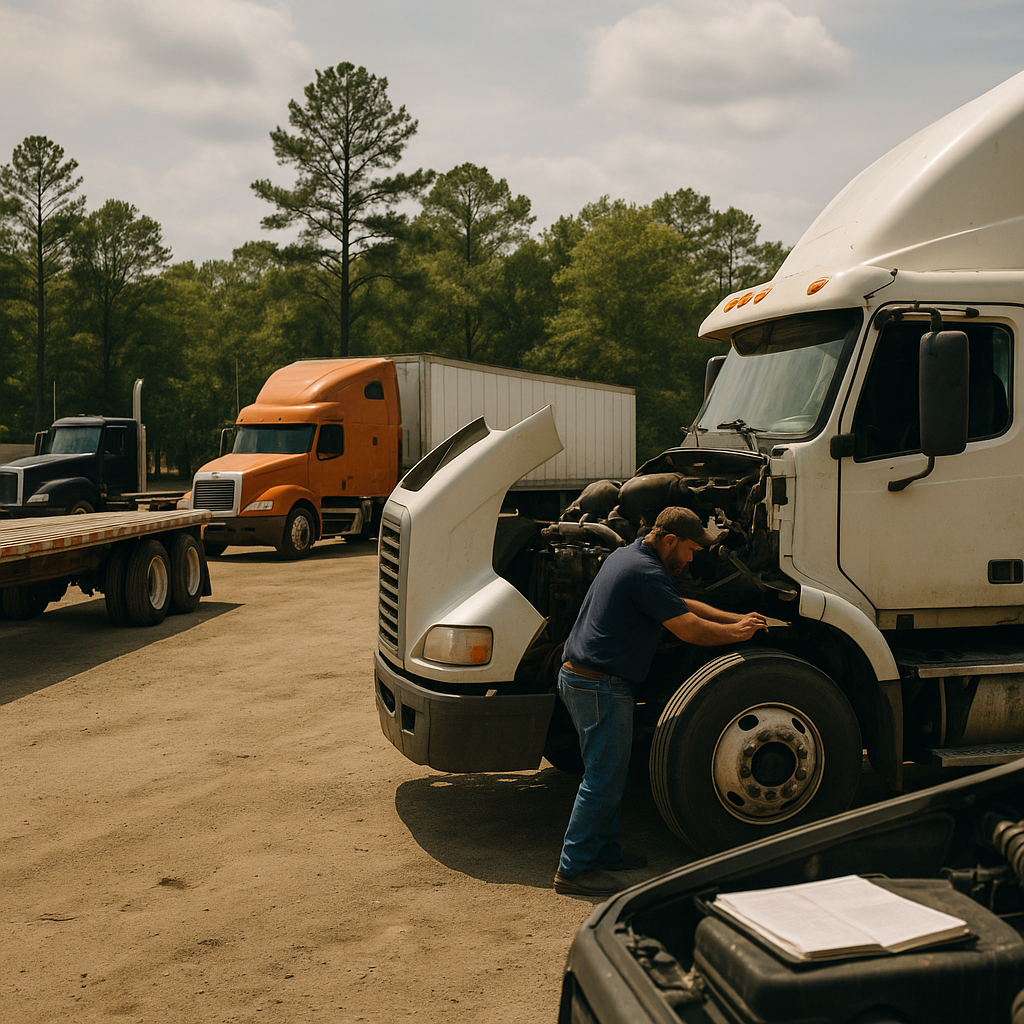

South Carolina dump truck insurance is a commercial truck policy built around how your truck is used, what you haul, where you run, and what rules apply to your operation. If you’re pricing coverage for one truck or a small fleet, the big mistake is treating a dump truck like a personal pickup or a generic business auto.
This guide breaks down the coverage stack, South Carolina rules versus FMCSA requirements, what actually drives price, and how to compare quotes without buying the wrong policy.
South Carolina Dump Truck Insurance Basics#
South Carolina dump truck insurance is commercial insurance built for a working truck, not a personal vehicle. It usually combines liability coverage with other protections tied to the truck, the job, and the hauling operation, depending on whether you run intrastate in South Carolina or cross state lines.
A commercial auto policy is an insurance policy designed for vehicles used in business, with coverage terms built around commercial risk instead of personal driving. For dump trucks, that matters because the exposure isn’t just “driving from A to B.” It’s backing into jobsites, hauling material, loading and unloading, and sometimes pulling equipment or borrowed trailers.
What dump truck insurance usually includes#
Most South Carolina dump truck insurance setups start with auto liability because that’s the coverage that responds if your truck causes bodily injury or property damage to others. From there, many operators add physical damage for the truck itself and then decide whether they also need cargo, general liability, or trailer-related coverage based on contracts and how they work.
Dump-truck risk is different from long-haul freight. You’re often dealing with dirt, gravel, sand, asphalt, debris, or equipment-related exposure, which means the policy needs to match the actual operation instead of using a generic trucking template.
Who needs a commercial policy instead of personal auto#
If the truck is used to haul for business, a personal auto policy usually isn’t the right fit. Personal auto insurance is built for private driving, not a dump truck used for paid work, jobsites, business hauling, or commercial contracts.
That catches a lot of new operators off guard. A truck may be registered, plated, and parked at home in South Carolina, but if it’s being used as a business dump truck, you need commercial coverage scoped to that use.
How South Carolina operations differ from interstate trucking#
Intrastate means you operate only within one state. Interstate means the truck crosses state lines or is part of transportation tied to more than one state.
That distinction matters because a South Carolina-only dump truck may mainly deal with state rules, while interstate hauling can trigger FMCSA oversight, a USDOT number, an MC number in some cases, and federal insurance requirements. Your state minimum isn’t automatically your federal minimum, and your actual requirement depends on vehicle use, weight, cargo, and operating authority.

Coverage Stack for Dump Truck Operators#
Dump truck insurance usually includes a core set of coverages, but not every dump truck needs every box checked. The right stack depends on whether you’re protecting the truck itself, the materials being hauled, your off-truck business exposure, or trailers and equipment you use under contract.
Auto liability is the coverage that pays for injury or property damage you cause to others in an at-fault accident. It’s the foundation of a dump truck policy because it addresses the main road risk and is also the coverage most often tied to legal and contract requirements.
Auto liability and when it matters most#
Auto liability matters any time the truck is moving on public roads, entering a site, or interacting with traffic. For dump trucks, that can include claims tied to heavy stopping distance, backing, tight turns, debris issues, and damage to other vehicles or property.
This is also where owner-operators get tripped up by shorthand. Not every commercial truck has the same required limit, and you can’t assume a generic number applies to your South Carolina dump truck operation without checking how you run.
Physical damage for the truck itself#
Physical damage covers your truck for direct loss like collision, overturn, theft, fire, vandalism, or certain weather events, depending on the coverages selected. If the dump truck is financed, leased, or simply too valuable to replace out of pocket, this is usually a key part of the policy.
For trucking, physical damage commonly includes collision plus comprehensive, or fire and theft with combined additional coverage. A bent frame, damaged bed, or major front-end loss can shut down income fast, so this isn’t just about the truck’s value on paper. It’s about keeping the business alive after a loss.
Cargo, general liability, and trailer-related coverages#
Motor truck cargo covers damage to covered property you’re hauling for others, subject to the policy’s terms and exclusions. For dump trucks, cargo needs aren’t always the same as van or reefer freight, because aggregate, fill, debris, or similar materials may be handled differently and some operators may have little or no true cargo exposure depending on contracts and the nature of the haul.
General liability covers certain non-driving business claims, like some third-party bodily injury or property damage that doesn’t arise from the truck’s use as an auto. Some dump truck operators need it because project owners, municipalities, or contractors require it.
Trailer interchange covers a non-owned trailer in your care when there’s a signed interchange agreement. Non-owned trailer physical damage covers certain trailers you don’t own without that signed interchange setup, which is often closer to what non-intermodal operators actually need.
Bobtail, also called non-trucking liability, covers the truck for personal, non-business use when you’re not under dispatch or hauling. It’s not a substitute for primary commercial auto liability.
For plain-language insurance term help, the NAIC is a useful baseline source, but trucking still needs trucking-specific review.
What is usually excluded or limited#
Dump truck policies don’t cover everything just because the truck is insured. Wear and tear, mechanical breakdown, intentional damage, some unattended theft situations, certain overweight or misrepresented operations, and uncovered cargo scenarios can all create problems.
This is where bad assumptions get expensive: the truck may be covered, but the load isn’t; the trailer may be in use, but not scheduled correctly; the loss may happen during work activity that’s not covered the way the operator thought it was. If you’re not sure whether your setup matches your actual operation,
South Carolina Rules vs FMCSA Requirements#
South Carolina rules and FMCSA rules are not interchangeable. A dump truck running only in South Carolina may still need commercial insurance, but once the operation is interstate or otherwise falls under federal oversight, federal financial responsibility rules can apply on top of state requirements.
When state-only operations may still need commercial coverage#
Even if you never leave South Carolina, a working dump truck still isn’t personal auto exposure. State registration, tags, or minimum auto rules don’t change the fact that paid hauling is commercial use and usually needs a properly written commercial policy.
That’s the practical point most operators need first. “Intrastate” doesn’t mean “simple” or “cheap.” It just means the compliance picture may stay state-focused unless your operation triggers federal oversight.
When federal trucking rules apply#
Federal rules usually become part of the picture when you’re operating interstate as a for-hire carrier or otherwise meet FMCSA thresholds. FMCSA explains the basics at FMCSA, and the federal minimum financial responsibility rules sit under 49 CFR Part 387.
Under 49 CFR Part 387, for-hire interstate carriers hauling general freight in vehicles over 10,001 lbs must carry at least $750,000 in public liability. Other minimums can differ based on weight, carrier type, and commodity, including higher requirements for certain operations like auto hauling or hazmat.
A USDOT number is a federal identifier for carriers subject to certain safety and operating rules. An MC number is a federal operating authority number used for certain for-hire interstate operations.
Why minimums are not the same as full protection#
Legal minimums are just that: minimums. They don’t tell you whether the limit makes sense for the truck’s value, your contracts, your hauling exposure, or the kind of loss that could put a one-truck business under.
That’s why state minimums and FMCSA minimums are only the start of the conversation. A South Carolina dump truck operator needs to scope coverage around actual risk, not just around what gets a filing accepted.
How Much South Carolina Dump Truck Insurance Costs#
South Carolina dump truck insurance cost varies widely because insurers price the truck, the operator, and the work as a package. There isn’t one statewide rate, and the right question isn’t “What’s the number?” so much as “What in my operation is pushing the number up or down?”
The biggest pricing drivers#
Your actual premium depends on your operation, cargo, radius, driving history, and other factors. For dump trucks, the major pricing inputs usually include:
- Truck value
- Driver history and MVR, or motor vehicle record
- Hauling type and jobsite exposure
- Operating radius
- Prior losses
- Requested limits and deductibles
- New venture versus established operating history
- Number of trucks and drivers
A newer, high-value truck with physical damage will price differently from an older paid-off truck carrying liability only. A clean MVR and stable hauling scope usually help more than generic “discount” talk.
Why newer authority and higher-risk work can cost more#
New authority usually means the insurer has less operating history to review. A new dump truck business may have a solid driver, but if the plan is broad, the radius is unclear, the commodity description is vague, or the prior insurance history is thin, underwriting will treat that uncertainty as risk.
Dump-truck work can also cost more than some linehaul operations because the claim pattern is different. Jobsites, backing losses, rollover potential, material spillage, equipment contact, and expensive repairs all affect how insurers view the class.
How location, radius, and truck value affect quotes#
Garaging ZIP in South Carolina matters, but it’s only one variable. A truck based near dense traffic, fast growth corridors, or more theft and claim activity may rate differently than one in a less congested area, but location alone won’t make or break the quote.
Radius matters because a truck running a tight local loop is a different risk from one traveling long distances or bouncing between counties and neighboring states. Truck value matters because physical damage pricing follows replacement cost and repair severity, especially on heavier units and specialty bodies.
The biggest mistake is comparing one operator’s premium to another’s without matching the facts. If you want a quote that actually fits your truck and work instead of a generic commercial-auto answer,
What Affects Underwriting for Dump Truck Operators#
Underwriting for dump trucks focuses on whether the insurer can clearly understand the truck, the driver, and the work. The cleaner and more consistent the file, the faster a quote usually moves and the fewer surprises you get later.
Common red flags insurers review#
Insurers pay attention to prior claims, serious violations, poor MVRs, unstable business plans, mismatched application details, and unclear hauling descriptions. They also care about maintenance habits because heavy trucks doing stop-and-go or jobsite work can generate losses that look preventable in hindsight.
A VIN is the vehicle identification number used to verify the exact truck being insured. If the VIN, body type, value, garaging address, or business use doesn’t line up, the submission slows down fast.
Owner-operator versus small fleet differences#
A one-truck owner-operator often gets judged heavily on personal driving history, experience, truck details, and whether the operation is clearly defined. A two-to-five-truck fleet still needs strong driver files, but insurers also look harder at maintenance controls, hiring practices, and how the business manages vehicles across the group.
That means the small-fleet question isn’t just “How many trucks?” It’s “Do you run them with discipline?”
New authority versus established carriers#
New authority isn’t automatically disqualifying, but it does mean less proof. An established carrier with cleaner loss history, stable hauling, and consistent prior coverage often has an easier path than a brand-new operation with incomplete paperwork.
How to improve your submission before quoting#
Bring clear facts up front: truck details, title or lease status, intended use, radius, cargo or material type, prior coverage history, and driver information. Underwriters don’t expect perfection, but they do want a file that makes operational sense.
How to Compare Quotes Without Buying the Wrong Policy#
The right way to compare dump truck insurance quotes is to hold the facts constant and compare the policy structure, not just the premium. Two quotes only mean the same thing if the truck details, limits, deductibles, filings, and key exclusions line up.
What to line up before you request quotes#
Use the same truck, driver, garaging, radius, hauling description, and requested coverages for every quote. If one quote assumes local dirt hauling and another assumes broader construction material work, the price difference may have nothing to do with the carrier and everything to do with the class.
If you’re interstate or running under federal authority, confirm the operating details match what appears in public records. You can verify basic carrier status through SAFER.
How to compare limits, deductibles, and exclusions#
Compare auto liability limits side by side. Then compare physical damage deductibles, cargo terms if applicable, whether general liability is included or separate, and whether trailer-related coverage is added when you actually use non-owned equipment.
Look hard at exclusions and assumptions. A quote that looks cheaper may be missing a filing, leaving out physical damage, excluding the kind of hauling you actually do, or ignoring trailer exposure.
What matters more than the cheapest number#
The cheapest-looking quote can become the most expensive one if it leaves a gap that shows up after a loss or during contract review. The better question is whether the policy matches how your South Carolina dump truck business really operates day to day.
Ways South Carolina Dump Truck Operators Can Lower Cost#
South Carolina dump truck insurance usually gets cheaper through cleaner operations, tighter facts, and smarter coverage choices, not by chasing random discounts. The operators who control cost best are the ones who make underwriting easier and claims less likely.
Choose only the coverages you actually need#
Don’t pay for a generic package that doesn’t fit the truck. If you need liability and physical damage, say that. If you also haul covered property for others or use borrowed trailers, scope those separately so the policy reflects real exposure instead of guesswork.
Keep records and equipment in better shape#
Good maintenance records, clean inspections, and a consistent repair routine help support a more credible submission. They also reduce the kind of losses that make future renewals harder.
Use radius and routing discipline where possible#
If you truly run local, don’t describe the operation like a broad regional haul. Accurate radius, accurate garaging, and accurate use matter because inflated or vague operating descriptions can push pricing in the wrong direction.
Re-shop as your operation stabilizes#
A new business with thin history may see better options after building time in business, cleaner loss history, and more stable hauling patterns. Re-evaluating coverage as the operation changes can help you avoid carrying the wrong setup for too long.
How to Get a South Carolina Dump Truck Quote#
Getting a South Carolina dump truck insurance quote goes faster when the file is complete. Most brokers will ask for the truck details, driver details, operating facts, and the coverages you want before they can accurately shop the account.
Information you should gather first#
Have the VIN, title or lease status, garaging ZIP, driver history, hauling type, radius, authority status, and requested coverages ready. If there are prior policies or losses, gather those too.
What the broker will ask you#
Expect questions about where the truck operates, what materials it hauls, whether you cross state lines, who drives it, and whether you use non-owned trailers or need contract-driven coverages.
How to move from quote to bind#
Commercial trucking quotes are detail-heavy, but they can move quickly when the submission is complete and consistent. A trucking-focused broker can help catch misclassified coverage before you bind the policy.
FAQ#
How much does it cost to get insurance on a dump truck?
There isn’t one flat price for dump truck insurance in South Carolina because the quote depends on the truck, the driver, and the work. Insurers usually price around truck value, driving history, hauling type, operating radius, prior losses, requested limits, and whether you’re a new venture or an established carrier. A higher-value truck with physical damage, broader hauling, or tougher jobsite exposure will usually cost more than a simpler local setup. The only useful comparison is between quotes built on the same operating facts.
What insurance companies insure dump trucks?
Dump trucks are usually insured through commercial trucking insurers, often accessed through a trucking-focused broker rather than a generic personal auto channel. Eligibility depends on the operation, not just the truck type. Insurers look at whether you’re intrastate or interstate, whether filings are needed, what material you haul, your loss history, the truck’s value, and the driver’s MVR. That’s why one company may consider an account while another declines it. The real question is less “who writes dump trucks” and more “who will write this specific dump truck operation correctly.”
Why is dump truck insurance so high?
Dump truck insurance can run high because the loss exposure is tough. These trucks operate on jobsites, back frequently, deal with heavy loads, face rollover and spillage risk, and often cost a lot to repair. Claims can involve not just road accidents but also damage tied to site conditions, equipment contact, or material-related issues. On top of that, a poor MVR, prior losses, vague hauling descriptions, or new authority can make underwriting more cautious. In short, the premium reflects the severity and complexity of the work, not just the fact that it’s a truck.
Is SC a no-fault state?
No. South Carolina is not a no-fault auto insurance state. It follows a fault-based system, which means the party responsible for causing an accident is generally the one whose liability coverage responds. For dump truck operators, though, that state-level rule is only part of the picture. The bigger issue is making sure the commercial truck policy is written correctly for business use and that any state or federal filing requirements match the operation. Fault rules matter after a crash, but policy structure matters before one.
Do South Carolina dump trucks always need FMCSA insurance filings?
No, not always. FMCSA-related filings usually come into play when the dump truck operation is interstate or otherwise subject to federal authority requirements. A South Carolina-only intrastate operation may still need commercial insurance, but that doesn’t automatically mean it needs the same federal filing setup as a for-hire interstate carrier. The details depend on whether you’re for-hire or private, your vehicle weight, what you haul, and whether the operation crosses state lines. That’s why it’s worth checking the compliance side before assuming state-only rules are enough.





