If you’re shopping for dump truck liability insurance Pennsylvania operators actually need, the first thing to sort out is scope. A personal-use dump truck, a local Pennsylvania-only hauler, and an interstate for-hire operation can all face different insurance rules. The right answer depends on how the truck is used, where it runs, and what exposures you need covered.
What dump truck liability insurance covers in Pennsylvania#
Dump truck liability insurance in Pennsylvania pays for damage or injuries you cause to other people while operating the truck for business. It does not pay to repair your own truck, replace stolen equipment, or cover every jobsite problem automatically. That split matters because many owners assume "full coverage" starts with liability alone.
Who needs it#
If your dump truck is used for business, you usually need commercial auto liability rather than a personal auto policy. Personal auto insurance is built for private driving like commuting or errands, while commercial auto insurance is designed for business vehicles and business risk.
That matters fast with dump trucks. If you haul gravel, dirt, asphalt, millings, debris, or equipment for pay, you’re in commercial use. The same is usually true if the truck is titled in a business name, used on jobsites, or supports a contracting business even if you don’t cross state lines.
A common mistake is assuming a personally owned dump truck stays "personal" because it’s only used a few days a week. If you back it into a paid job, most carriers will treat that as commercial use.
What liability pays for#
Liability covers third-party bodily injury and property damage claims when your dump truck causes an accident. Third-party means someone other than you or your business, such as another driver, a property owner, or a pedestrian.
Picture a simple claim. You back into a utility pole at a delivery site and knock out service to a nearby building. Or you clip a fence while turning into a tight job entrance. Liability is the coverage that responds to the other party’s damage, up to your policy limit.
The same goes for injury claims. If someone at a site says your truck movement caused an injury, liability is the policy piece that typically gets pulled in first.
What it does not cover#
Liability does not cover damage to your own dump truck, and it usually does not cover cargo, tools, or every non-driving claim around the job. That’s where many operators get blindsided after a loss.
If your truck slides into a barrier and your hood, axle, and dump body are damaged, liability won’t fix your truck. If material is damaged in transit, that can point to a cargo question. If a customer says your operation caused a non-auto jobsite injury, that may point to general liability instead of auto liability.
That gap is where operators often realize too late they bought the legal minimum but not the protection their business actually needed. If you’re not sure where your setup falls,
Pennsylvania rules: state minimums vs trucking requirements#
Pennsylvania minimum liability rules and federal trucking rules are not the same thing. Your requirement can change based on whether you operate intrastate or interstate, whether you’re for-hire or private, what the truck weighs, and what you’re hauling.
When Pennsylvania minimums apply#
Pennsylvania state minimums matter for vehicles registered and operated under state rules, but they don’t automatically answer a commercial dump truck’s full insurance need. State minimum means the baseline Pennsylvania requires in a given vehicle context, not necessarily the limit a dump truck business should rely on.
For a dump truck used only inside Pennsylvania, your setup may be driven more by state registration and business-use rules than by FMCSA interstate filings. But that still doesn’t mean a bare state minimum is enough for a heavy commercial vehicle working jobsites, hauling material, and creating larger property-damage exposure than a passenger car.
In practical terms, a local contractor with one dump truck hauling fill dirt between jobs in Pennsylvania may not face the same filing requirements as an interstate for-hire motor carrier. The coverage decision still needs to match the truck’s commercial use.
When FMCSA rules matter#
FMCSA rules matter when your dump truck operation falls under federal motor carrier regulation, especially for interstate for-hire trucking. FMCSA is the Federal Motor Carrier Safety Administration, the agency that regulates interstate commercial motor carriers.
Under FMCSA rules and 49 CFR Part 387, for-hire interstate carriers hauling general freight in vehicles over 10,001 pounds must carry at least $750,000 in public liability. That’s the rule people often shorten badly into "all truckers need $750K," which isn’t correct. Requirements vary by carrier type, weight, cargo, and whether the operation is interstate or intrastate.
An interstate dump truck hauling regulated freight across state lines may also need filings tied to operating authority, including the MCS-90 in the right context. An MCS-90 is an endorsement used to meet certain federal financial responsibility requirements for motor carriers.
Intrastate vs interstate operations#
Intrastate means operating only within Pennsylvania, while interstate means your business crosses state lines or is part of interstate commerce. That distinction affects whether federal financial responsibility rules may apply.
Here’s a practical split. A truck hauling stone from one Pennsylvania quarry to a Pennsylvania jobsite for a local contractor may be intrastate. A truck hauling material into Ohio, New Jersey, or Maryland, or moving freight tied to an interstate shipment, can push the operation into interstate territory.
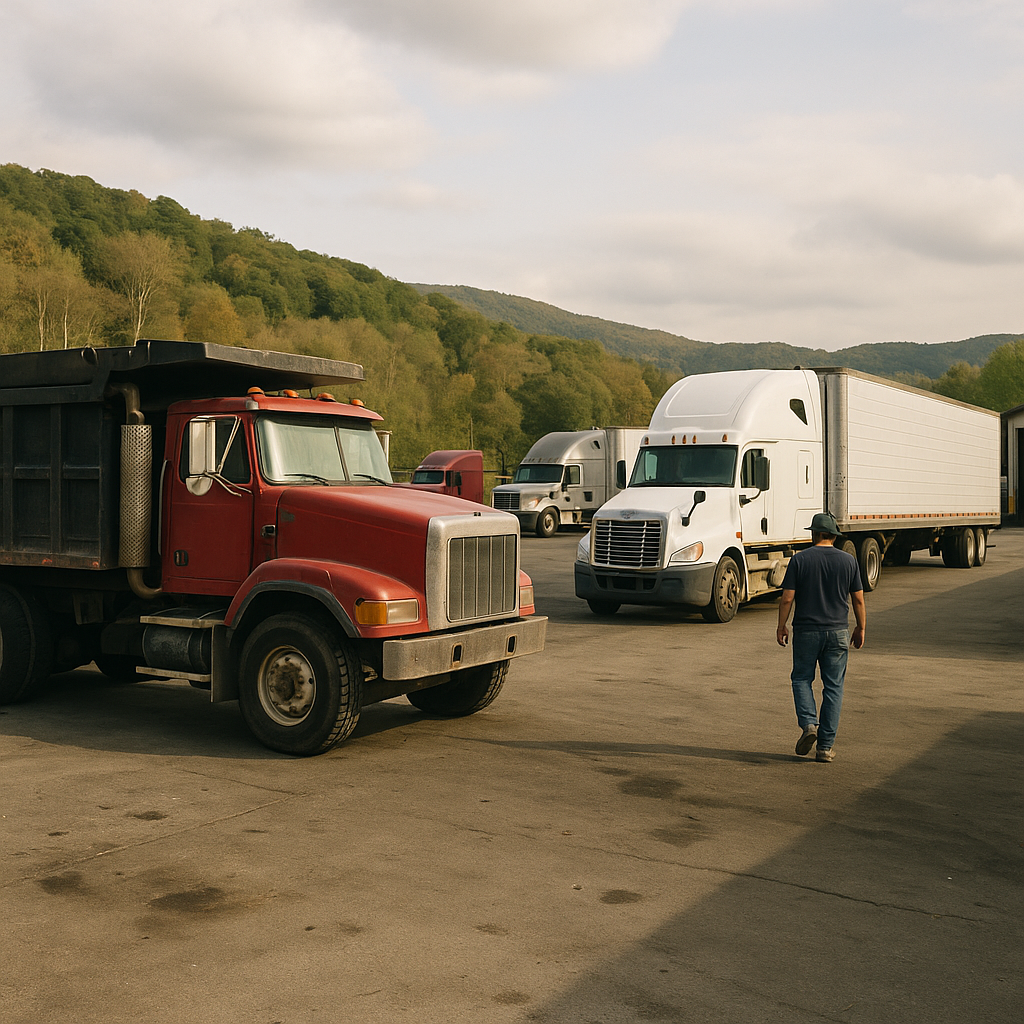
That’s why two dump trucks parked side by side can need different insurance treatment. One may only need Pennsylvania-based commercial coverage. The other may need federal filings and limits tied to operating authority. Before you assume which bucket you’re in, check your operating status and authority details through SAFER and confirm Pennsylvania-specific rules with the Pennsylvania transportation or insurance agencies.
How much dump truck liability insurance costs#
Dump truck liability insurance cost depends on risk, not a universal monthly number. Your premium can move up or down based on driving history, operating radius, truck type, business use, prior claims, requested limits, and whether you add coverages beyond liability.
Main cost drivers#
Underwriters price dump truck insurance by looking at how likely the truck is to have a severe claim. Underwriting is the carrier’s risk review of your operation before offering terms and pricing.
The big drivers usually include:
- Driver history
- Years in business
- Loss history
- Garaging location
- Operating radius
- Truck value
- Dump body use
- Material hauled
- Requested policy limit
A clean local operator hauling dirt inside a tight radius usually looks different on paper than a truck running longer distances to multiple jobsites with a history of backing claims. The quote changes again if the truck is financed and needs physical damage, or if the customer contract pushes you toward higher limits.
Why quotes vary so much#
Two dump truck owners can ask for "the same liability policy" and still get very different quotes. That’s because the carrier isn’t pricing the phrase. It’s pricing the actual operation.
Take two examples. Operator A has one truck, a stable garaging address, a clean MVR, and a consistent Pennsylvania-only route pattern. Operator B has the same class of truck but a newer business, wider radius, heavier jobsite exposure, and prior claims from backing or load-related incidents. The second quote will usually reflect more uncertainty and more severity risk.
The limit you request also matters. A policy discussed at $1,000,000 liability is not priced the same as a lower required minimum, and the difference can be meaningful depending on the rest of the risk.
Example scenarios#
Practical quote ranges come from the whole operation, not the truck alone. That’s why the useful question isn’t "What does dump truck insurance cost per month?" but "What does my operation look like to an underwriter?"
A new owner-operator with one dump truck and no prior commercial insurance history may pay more because the carrier has less proof of how the risk performs. A seasoned owner with a clean record, maintenance documentation, and a consistent local operation may see better options because the file is easier to trust.
A small fleet with prior claims can get hit from both directions. The claims history raises concern, and the extra units multiply exposure. Then add higher limits, physical damage, cargo, or general liability, and the premium can move again. Your actual premium depends on your operation, cargo, radius, driving history, and other factors.
What coverage dump truck owners usually pair with liability#
Most dump truck operators need more than liability alone because liability only covers damage or injuries caused to others. If you want protection for the truck itself, certain hauled materials, or non-auto jobsite exposures, you may need separate coverages.
Physical damage#
Physical damage covers your own truck for collision and other covered losses like theft, fire, or weather, depending on the policy setup. It’s usually the first add-on owner-operators consider after liability.
If you still owe money on the truck, your lender may require it. Even when the truck is owned outright, physical damage can be practical because a major loss can shut down income fast. Think of a rollover, a fire in the engine compartment, or storm damage while the truck is parked.
Motor truck cargo#
Motor truck cargo covers covered damage to cargo you’re hauling, subject to the policy’s terms, exclusions, and commodity fit. It matters more when the hauled material creates a real cargo exposure under contract.
Not every dump truck operation needs the same cargo treatment. A carrier hauling aggregate under one type of agreement may face a different exposure than a contractor moving its own material. The details matter, especially with debris, spoil, or materials that can raise questions about what counts as covered cargo.
General liability#
General liability covers certain non-auto business claims that commercial auto liability doesn’t. For-hire scope matters here, and the fit depends on how your dump truck business actually operates.
A practical example: a customer says your business caused property damage at a site, but not from the truck’s driving movement itself. That’s where operators often discover the auto policy isn’t built for every claim with a truck nearby.
Trailer and equipment options#
Trailer-related coverage can matter if you pull trailers you don’t own or have responsibility for equipment under contract. The right option depends on whether you own the trailer, borrow it, or sign an agreement making you responsible for it.
This is one area where small operators often buy the wrong thing. If there’s no signed interchange agreement, non-owned trailer physical damage may be the better fit than trailer interchange. Matching the coverage to the actual paperwork matters more than buying a long list of endorsements.
Ways to lower your premium without buying the wrong policy#
The safest way to lower dump truck insurance cost is to make the risk cleaner and the policy more accurate. That means improving what underwriters care about, choosing limits intentionally, and not paying for coverage that doesn’t match your operation.
Reduce avoidable risk#
Cleaner files usually quote better than messy ones. That starts with driver records, maintenance habits, and consistent business information.
If your inspection history is solid, your garaging address is accurate, and your operation is documented clearly, the underwriter has fewer reasons to price in uncertainty. For dump trucks, documented maintenance and jobsite procedures can also help your story make sense when the carrier reviews the risk.
Choose the right limits#
The right limit is the one that fits your legal and contractual exposure, not the one that sounds cheapest up front. A lower limit can reduce premium, but it can also leave you short if a contract, broker, shipper, or loss scenario demands more.
That matters with dump trucks because property damage can get expensive quickly. A bad backing loss, roadway incident, or strike involving equipment or utilities can blow past a bare-bones setup faster than many new operators expect.
Match coverage to real use#
Accurate use description helps avoid both overpaying and claim trouble later. If the truck is local, say it’s local. If it crosses state lines, say that too.
Skeptical owners often compare a direct quote against a broker quote and assume the cheaper number wins. But if one quote is missing the right use class, limits, or add-ons, it’s not a true comparison. The goal isn’t a cheap-looking policy. It’s a policy that fits the work.
How to get the right quote fast#
The fastest way to get an accurate dump truck insurance quote is to bring clean operation details up front. At minimum, you’ll usually need the VIN, garaging address, operating radius, driver history, and authority details if the operation involves regulated trucking.
What information to gather#
Good quote intake saves time because it cuts down on rework and bad assumptions. Have these details ready before you start:
- VIN and truck year/make/model
- Garaging address
- Business name and ownership details
- Driver license history
- Years of experience
- Operating radius
- States of operation
- Cargo or material type
- Authority details, if applicable
For a Pennsylvania-only dump truck doing local site work, the conversation may stay focused on vehicle use, radius, and job type. For an interstate operation, the quote may also turn on USDOT status, operating authority, and filing needs.
How brokers compare options#
A broker with trucking expertise can help separate Pennsylvania commercial use questions from federal motor carrier requirements. That’s useful when you’re trying to avoid buying either too little coverage or the wrong kind.
The real advantage isn’t magic pricing. It’s getting the operation classified correctly. A local dump truck with no interstate exposure should not be forced into an interstate template. An interstate for-hire operation should not be quoted like a simple local business auto risk.
What to ask before binding#
Before you bind coverage, confirm the policy limit, filings, exclusions, and any add-on coverages tied to your actual work. Binding means putting the policy in force.
Ask whether the quote assumes intrastate or interstate use. Ask whether physical damage, cargo, or general liability is included or separate. Ask whether any endorsement is there because you actually need it, or because it was copied from a different kind of trucking account.
Frequently asked questions about Pennsylvania dump truck liability#
How much is liability insurance for a dump truck?
Dump truck liability insurance in Pennsylvania varies based on the operation rather than a fixed statewide price. Carriers look at your driving record, where the truck runs, how far it travels, the truck’s use, prior claims, and the policy limit you request. A local owner-operator with a clean record can look very different from a fleet with claims or wider jobsite exposure. The best way to judge price is to compare quotes built on the same facts, limits, and use description.
What kind of insurance do I need for a dump truck?
Most dump truck businesses need commercial auto liability first because it covers third-party bodily injury and property damage claims. Many also need physical damage for the truck itself, and some need motor truck cargo or general liability depending on what they haul and how they work. If the truck is financed, physical damage may be required by the lender. The right package depends on whether the truck is used personally, for a contractor’s own work, or in a regulated trucking operation.
How much does a $1,000,000 liability insurance policy cost?
A $1,000,000 liability policy does not have one standard price for dump trucks in Pennsylvania. That higher limit can change the quote materially, but the actual premium still depends on the same underwriting factors: driver history, operating radius, loss history, truck type, business use, and whether the operation is intrastate or interstate. It’s also important not to confuse a commonly requested $1,000,000 limit with a universal legal requirement. The legal minimum can depend on carrier type, vehicle weight, cargo, and operating scope.
What is the minimum liability coverage in PA?
Pennsylvania minimum liability depends on the vehicle and operating context, and it should not be confused with federal trucking requirements. A dump truck used commercially may face a different insurance decision than a private passenger vehicle, especially if the operation is for-hire, heavy, or tied to interstate commerce. If FMCSA rules apply, federal financial responsibility standards under 49 CFR Part 387 may control instead of a simple state-minimum mindset. The practical answer is to verify whether your truck is intrastate-only or part of a regulated interstate operation before choosing limits.
Do I need commercial insurance for a dump truck used only occasionally?
If the dump truck is used for business, even occasionally, commercial insurance is usually the safer assumption. A personal policy is generally not built for hauling material, jobsite activity, or business-use exposure. That means a claim can turn into a coverage problem if the carrier finds the truck was being used commercially. Occasional use does not always mean personal use. If the truck supports paid work, contracting, hauling, or business operations, it usually needs to be scoped as a commercial risk.