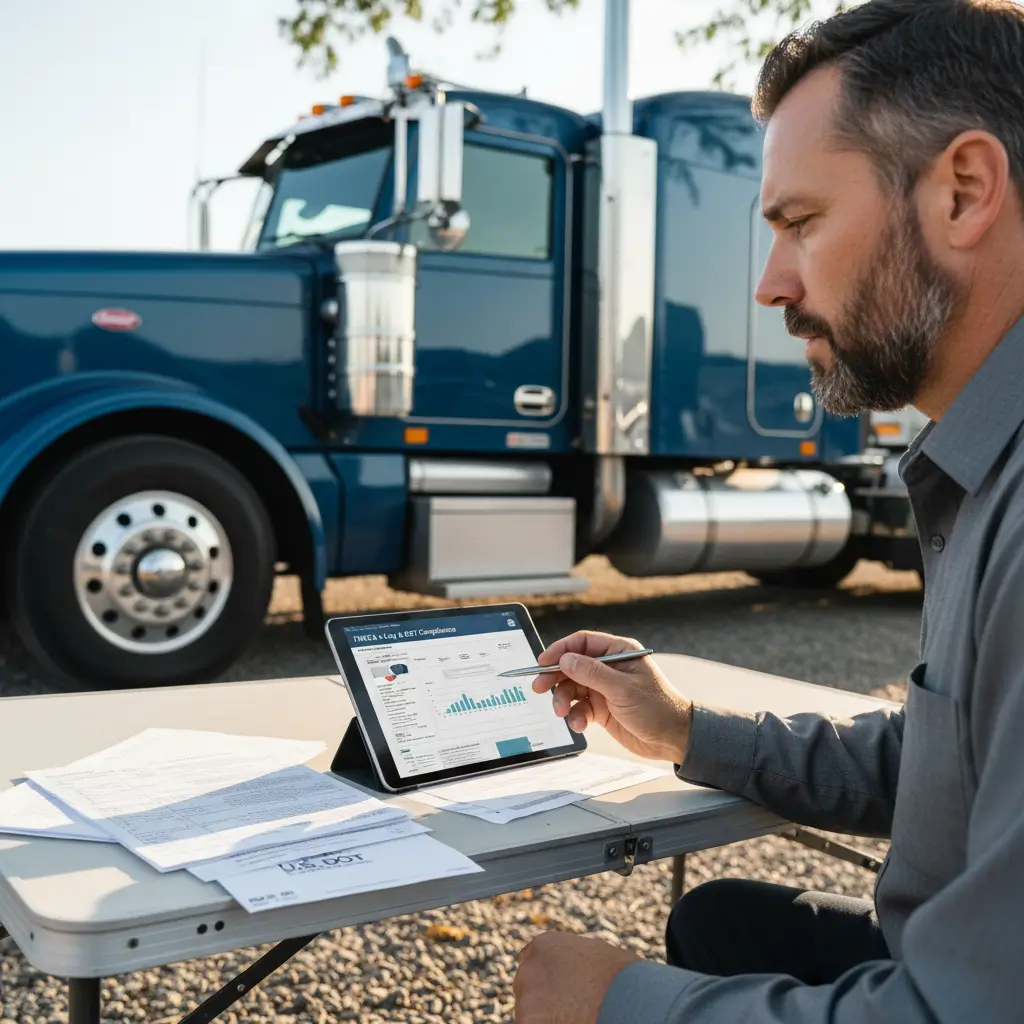

Learn fleet insurance for 2 vehicles, including 2026 costs from $250–$1,200+ per month, eligibility rules, 5 key coverages, and ways to save.
If you’re searching for fleet insurance for 2 vehicles, here’s the straight answer: you can usually insure two business vehicles on one commercial auto policy, but some carriers won’t label it “fleet” until you have 3–5+ units. In practice, what matters is whether your two vehicles are scheduled on one policy (cleaner paperwork) and whether the pricing/discounts make sense for your risk.
Before you compare quotes, set expectations with real benchmarks for two-vehicle accounts using business vehicle insurance cost benchmarks (2026). That one page will keep you from chasing “cheap” quotes that come back higher after underwriting.
Table of Contents
Reading time: 8 minutes
- Do You Qualify for Fleet Insurance with 2 Vehicles?
- The 5 Core Coverages to Carry on a 2-Vehicle Fleet Policy
- Fleet vs Two Separate Policies: What’s Usually Cheaper for 2 Vehicles?
- 2026 Cost Ranges: What Fleet Insurance for 2 Vehicles Can Cost
- Requirements & Regulations: What Actually Changes with 2 Vehicles?
- How to Lower Premiums (and Get Quote-Ready Without Re-Quotes)
- Frequently Asked Questions
- Conclusion: 2 Vehicles Is Enough to Shop “Fleet-Like” Options

Do You Qualify for Fleet Insurance with 2 Vehicles?
Most U.S. commercial auto insurers will write a single policy with 2 scheduled vehicles, but “fleet” classification commonly starts anywhere from 2 to 5 vehicles depending on the carrier and program.
Before asking your agent, it helps to know which fleet insurance companies commonly serve 2–5 unit accounts so you can name specific programs in your conversation.
The confusing part: “fleet” can mean 2+ or 5+ vehicles
In plain English, carriers usually handle “two vehicles” in one of three ways:
- Scheduled commercial auto: 2 vehicles listed on one policy (very common).
- Small-fleet / mini-fleet programs: many insurers offer small-fleet programs starting around 2–5 units, with pricing that differs meaningfully from standard scheduled policies.
- Fleet-rated programs: often 5–10+ units before the carrier uses true fleet rating models.
If you want a baseline on how commercial auto policies are structured (and who needs them), start with Commercial auto insurance basics for businesses.
What insurers usually require (even for 2 vehicles)
Underwriting is looking for consistent, verifiable risk details, especially when a single claim can swing a two-vehicle account’s results.
- Business use: not “mostly personal” with occasional work.
- Garaging addresses: where the vehicles sit most nights.
- Driver list + MVR quality: tickets and at-fault accidents matter fast with only 2 units.
- Usage and radius: local service vs regional delivery vs multi-state travel.
- Prior insurance / loss runs: if you’ve had a commercial policy before.
Quick self-check: should you shop “fleet” or “commercial auto”?
Ask your agent for both structures when possible, because “fleet” is sometimes just a program label with different eligibility rules.
- If you’re staying at 2 vehicles for the next 12 months: quote scheduled commercial auto and also ask if a mini-fleet program applies.
- If you’re adding vehicle #3 or #4 soon: ask when the carrier re-rates (midterm vs renewal) and what triggers reclassification.
| Program label you’ll hear | Typical threshold | What it means for 2 vehicles |
|---|---|---|
| “Commercial auto (scheduled)” | 1–4 | Very common fit for 2 units |
| “Small/mini fleet” | 2–5 | Sometimes better pricing/discounts |
| “Fleet-rated” | 5–10+ | Usually not available at 2 units |
The 5 Core Coverages to Carry on a 2-Vehicle Fleet Policy
A 2-vehicle commercial auto policy is typically built from five core coverages: liability, physical damage, uninsured/underinsured motorist (UM/UIM), Med Pay/PIP (state-dependent), and hired & non-owned auto (HNOA).
If your “two vehicles” are actually trucks (hotshot, straight truck, semi), the coverages and endorsements get truck-specific fast—use Commercial truck insurance coverage explained as the deeper companion.
1) Liability (required in every state)
What it is: Pays for injuries and property damage you cause to others.
Why it’s essential: One serious crash can exceed state minimums quickly, and many contracts require higher limits than the legal minimum.
- Pro tip: Quote the limit you actually need for customers/vendors (not just the minimum that “might pass”).
If you’re not sure how auto liability applies when one of your vehicles is involved in an at-fault accident, this breakdown from LogRock walks through the real-world mechanics:
2) Physical damage (comprehensive + collision)
What it is: Covers repairs or replacement after collision, theft, vandalism, fire, hail, and similar losses.
Why it’s essential: Financed or leased vehicles usually require it, and it protects cash flow when your work vehicle is your revenue engine.
- Pro tip: Deductibles can lower premium, but only raise them to a number you can pay without shutting down operations.
3) Uninsured / underinsured motorist (UM/UIM)
What it is: Helps pay when the other driver is uninsured or doesn’t carry enough coverage.
Why it’s essential: Getting hit by an uninsured driver shouldn’t become a business-ending expense.
For a full breakdown of uninsured and underinsured motorist coverage costs and how limits are typically elected on commercial auto policies, see our UM/UIM guide.
4) Medical payments / PIP (state-dependent)
What it is: Pays certain medical costs for occupants, depending on your state’s rules and elections.
Why it’s essential: Injuries can create downtime and distractions that small operations can’t absorb easily.
5) Hired & Non-Owned Auto (HNOA)
What it is: Liability coverage if you rent/borrow vehicles or employees use personal cars for business errands.
Why it’s essential: Two-vehicle businesses often rent a van/truck during peak weeks or use a personal car for occasional runs.
- What HNOA does NOT do: It usually doesn’t pay physical damage to the rented/borrowed vehicle itself.
| Coverage | Protects | Common 2-vehicle use case |
|---|---|---|
| Liability | Others (injury/PD) | Required for every job/site/client |
| Physical damage | Your vehicle | Financed work truck, branded van |
| UM/UIM | You/your people | Other driver has no/low insurance |
| Med Pay/PIP | Medical costs | Helps reduce out-of-pocket exposure |
| HNOA | Liability on rentals/employee cars | Renting a van for a rush contract |
Fleet vs Two Separate Policies: What’s Usually Cheaper for 2 Vehicles?
For two business vehicles, one shared commercial auto policy often reduces admin costs and coverage gaps, but two separate policies can price better when the vehicles have clearly different risks and usage.
To see what discounts might apply even at 2 units, review Insurance discounts that apply to small fleets.
When one 2-vehicle policy usually wins
- One renewal date and one document set (IDs/COIs).
- Easier to add/remove drivers or swap vehicles.
- Better consistency in limits and endorsements (fewer accidental gaps).
When separate policies sometimes win
- The vehicles have very different risk (delivery van vs occasional admin car).
- Different garaging states or very different driver pools.
- One vehicle is mostly personal use and should be cleanly separated.
“Apples-to-apples” comparison checklist
When you ask for both structures, make sure these details match across quotes:
- Liability limit: CSL vs split limits (and same limit amount).
- Physical damage deductibles: comp and collision.
- UM/UIM and Med Pay/PIP: same elections.
- Drivers + radius + usage: identical inputs.
2026 Cost Ranges: What Fleet Insurance for 2 Vehicles Can Cost
In 2026, fleet insurance for 2 vehicles commonly ranges from about $250 to $1,200+ per month for light-duty cars, vans, and pickups, while trucking operations (hotshot, straight trucks, semis) often price substantially higher due to radius and liability exposure.
Whether you call it automobile fleet insurance or scheduled commercial auto, the pricing benchmarks below apply to any policy covering two business vehicles on one account.
If you want third-party cost context on trucking operations, ATRI publishes operational cost research here: ATRI’s Analysis of the Operational Costs of Trucking.
For a practical breakdown of the biggest rating variables that push prices up or down, see What affects the cost of truck insurance (many factors apply to non-trucking commercial auto too).
Typical monthly ranges (what you can expect to see)
These are broad, real-world ranges; your ZIP code, driver history, industry, and vehicle class can move you quickly within the band.
- 2 light-duty business vehicles (cars/small SUVs): ~$250–$800+/month
- 2 work vans (local service/delivery): ~$350–$1,200+/month
- 2 work pickups (contractor use, tools, local radius): ~$300–$1,200+/month
- 2 commercial trucks (hotshot/straight truck/semi): often substantially higher (see trucking notes below)
Why prices swing so much
- Driver MVRs: speeding, following too close, and preventables.
- Claims history: even “small” claims add up.
- Garaging ZIP: theft/vandalism frequency matters.
- Operating radius: local vs multi-state exposure.
- Vehicle value + deductibles: higher values and low deductibles raise premium.
- Contract requirements: higher limits and endorsements can be non-negotiable.
The following video walks through the main factors that underwriters weight when pricing a commercial auto or fleet policy — applicable whether you have 2 vehicles or 20:
Mini case examples (directional, not quotes)
| Scenario | Vehicles | Profile | Premium direction |
|---|---|---|---|
| HVAC company | 2 work pickups | Local radius, clean MVRs | Low to medium |
| Cleaning business | 2 vans | Multiple drivers, mixed experience | Medium |
| Hotshot start-up | 2 units (truck + trailer) | Multi-state, higher liability exposure | Medium to high |
| 2 semis under authority | 2 power units | Interstate, filings/COIs, higher limits | High |
Requirements & Regulations: What Actually Changes with 2 Vehicles?
Requirements for fleet insurance for 2 vehicles are mainly driven by state commercial auto rules, but if your two vehicles are commercial trucks operating interstate under authority, FMCSA financial responsibility and insurance filing requirements can apply.
For-hire carriers operating interstate are subject to federal financial responsibility rules under 49 CFR Part 387; the specific minimums depend on the type of freight and operation.
This is where two similar-sounding situations split into two different worlds: (1) commercial auto for most small businesses, and (2) trucking insurance when the “2 vehicles” are trucks hauling for hire.
If your two vehicles are trucks and you’re thinking in trucking terms, use the Commercial truck fleet insurance guide as the deeper next step.
For most small businesses (cars/vans/pickups)
- You’re typically dealing with state commercial auto requirements and contract requirements (clients, landlords, job sites).
- Many customers ask for a Certificate of Insurance (COI), additional insured status, or specific liability limits.
If your 2 vehicles are commercial trucks (interstate)
FMCSA publishes an overview of insurance filing requirements here: FMCSA’s insurance filing requirements page.
This matters most for:
- Hotshot setups (pickup + trailer hauling for hire)
- Semi truck operations with 2 power units under authority
- Any operation where brokers/shippers require higher limits and fast, accurate COIs
Frequently Asked Questions
These FAQs summarize common carrier rules for fleet insurance for 2 vehicles, including typical fleet thresholds (2–5+ units), core coverages, and trucking-related compliance triggers.
Yes—most businesses can insure two vehicles on one commercial auto policy as two scheduled units, even if the carrier doesn’t call it “fleet.” Many insurers treat “mini-fleet” programs as starting around 2–3 vehicles, while true fleet rating is more commonly 5+ vehicles. The best move is to request quotes both ways (scheduled vs any available small-fleet program) using identical limits, deductibles, drivers, and radius, so you can compare real pricing and real terms instead of labels.
Cost savings at 2 vehicles aren’t guaranteed, but they often show up as fewer admin fees, one renewal date, simpler driver/vehicle changes, and faster COIs for job sites. The biggest price drivers are still the same ones underwriting rates most heavily: liability limit, driver MVRs, claims history, operating radius, garaging ZIP, and vehicle class/value. For discount ideas that can apply at small unit counts, see Insurance discounts that apply to small fleets.
Fleet-style commercial auto coverage is usually built from the same core options: liability (required), physical damage (comp/collision), UM/UIM, Med Pay or PIP (state-dependent), and hired & non-owned auto (HNOA). Depending on your work, carriers may also add endorsements for towing/labor, rental reimbursement, equipment, or special use classifications (delivery, contractor tools, etc.). If your two vehicles are trucks hauling for hire, use Commercial truck insurance coverage explained for truck-specific coverages and endorsements.
You can lower premiums by improving the exact inputs carriers rate: keep MVRs clean, assign primary drivers, right-size your radius/usage, raise deductibles to a number you can actually pay, and avoid small claims that follow you for years. Shopping at renewal works best when you keep limits and deductibles consistent across carriers, so you’re comparing the same policy. For a step-by-step shopping process that reduces re-quotes, follow Commercial auto insurance quote checklist/process.
Most carriers require business use, acceptable drivers, consistent garaging, and verifiable operations (radius, mileage, and vehicle details) to insure 2 vehicles on one commercial policy. Prior insurance and loss runs are commonly requested if you’ve had commercial coverage before, because loss history is a major pricing factor. If your “2 vehicles” are commercial trucks operating for hire, requirements may also include FMCSA-related filings and higher contract limits depending on your lanes and customers; the FMCSA overview is here: FMCSA’s insurance filing requirements page.
Two commercial trucks typically cost significantly more to insure than two light-duty business vehicles because truck rating heavily weighs interstate radius, for-hire exposure, vehicle class/value, cargo, driver history, and authority/filing needs. Even when you only have 2 power units, one claim can impact pricing sharply, so underwriting tends to be strict about MVRs and loss history. For trucking-specific benchmarks and what normally drives those premiums, start with Trucking insurance costs overview, then tighten your inputs using the same deductibles/radius/driver assignment approach you’d use on commercial auto.
Yes — most commercial auto carriers allow mid-term vehicle adds, swaps, and removals, though the process and any premium adjustment (pro-rated) vary by carrier. Adding a third vehicle mid-term is especially important to handle promptly, because driving an unscheduled vehicle on a commercial errand could leave you with a coverage gap if a claim occurs before the vehicle is endorsed onto the policy. Always notify your agent before the new vehicle goes into service, not after.
Yes — a commercial auto policy covers drivers you list on the policy (and, depending on the policy language, permissive users). Most carriers ask for a driver list upfront and run MVRs on each named driver. An employee who regularly operates a company vehicle should be listed; an occasional fill-in driver may be covered under permissive use depending on the carrier’s form. Drivers with serious violations (DUI, major at-fault accidents) may be excluded or result in a surcharge, so it’s better to know before the quote than after a claim.
A Combined Single Limit (CSL) sets one total dollar amount that can pay toward any combination of bodily injury and property damage in a single occurrence — for example, $1,000,000 CSL. Split limits set separate caps for each category — for example, 100/300/100 means $100K per person for bodily injury, $300K per occurrence for bodily injury, and $100K for property damage. CSL is more flexible when a claim involves high property damage and low injury (or vice versa) and is the format most common in commercial auto and trucking. When comparing quotes, make sure both are expressed the same way — a $1M CSL is not directly comparable to a $100K/occurrence split limit.
It depends on what you’re carrying and for whom. A standard commercial auto policy covers liability (injury and property damage to others) and physical damage to your vehicle — it does NOT cover the cargo inside your truck or van if it’s damaged, stolen, or lost. If you’re hauling goods for customers or under contract, you likely need a separate motor truck cargo policy. If your two vehicles are used for internal business tasks (tools, supplies, personal property) and you’re not hauling for hire, cargo coverage may be optional — but check your contracts, because many clients require it.
Once your commercial auto policy is bound, a COI can typically be issued same-day or within a few hours through your agent or broker. If a client or job site requires you to be listed as an additional insured or needs a specific endorsement, that may add some lead time — usually 24–48 hours. Working with a broker that has direct system access to issue COIs (rather than routing through a carrier call center) speeds the process considerably.
Conclusion: 2 Vehicles Is Enough to Shop “Fleet-Like” Options
Two vehicles is usually enough to place both units on one commercial auto policy, and many carriers consider small-fleet programs starting around 2–5 vehicles depending on the market. The win isn’t the label—it’s getting the right coverages, matching limits across quotes, and controlling the rating factors that actually move premium.
Key Takeaways:
- Ask for both scheduled and any available mini-fleet quote structure when you only have 2 units.
- Keep quotes apples-to-apples: same drivers, radius, limits, UM/UIM, Med Pay/PIP, and deductibles.
- If the vehicles are trucks hauling for hire, confirm FMCSA/contract requirements early to avoid last-minute re-quotes.
If you’re trying to insure two business vehicles on one policy — whether they’re work pickups, service vans, or commercial trucks — LogRock can help you review your coverage needs, compare structure options (scheduled vs. mini-fleet), and identify inputs that affect your rate before you shop. Talk to our team to ask questions, close coverage gaps, and request a quote based on your actual operation.
Speak with LogRock and request a 2-vehicle commercial auto quote.
If you’re focused on lowering trucking costs, keep learning with How to save on truck insurance and DOT compliance basics for owner-operators.