
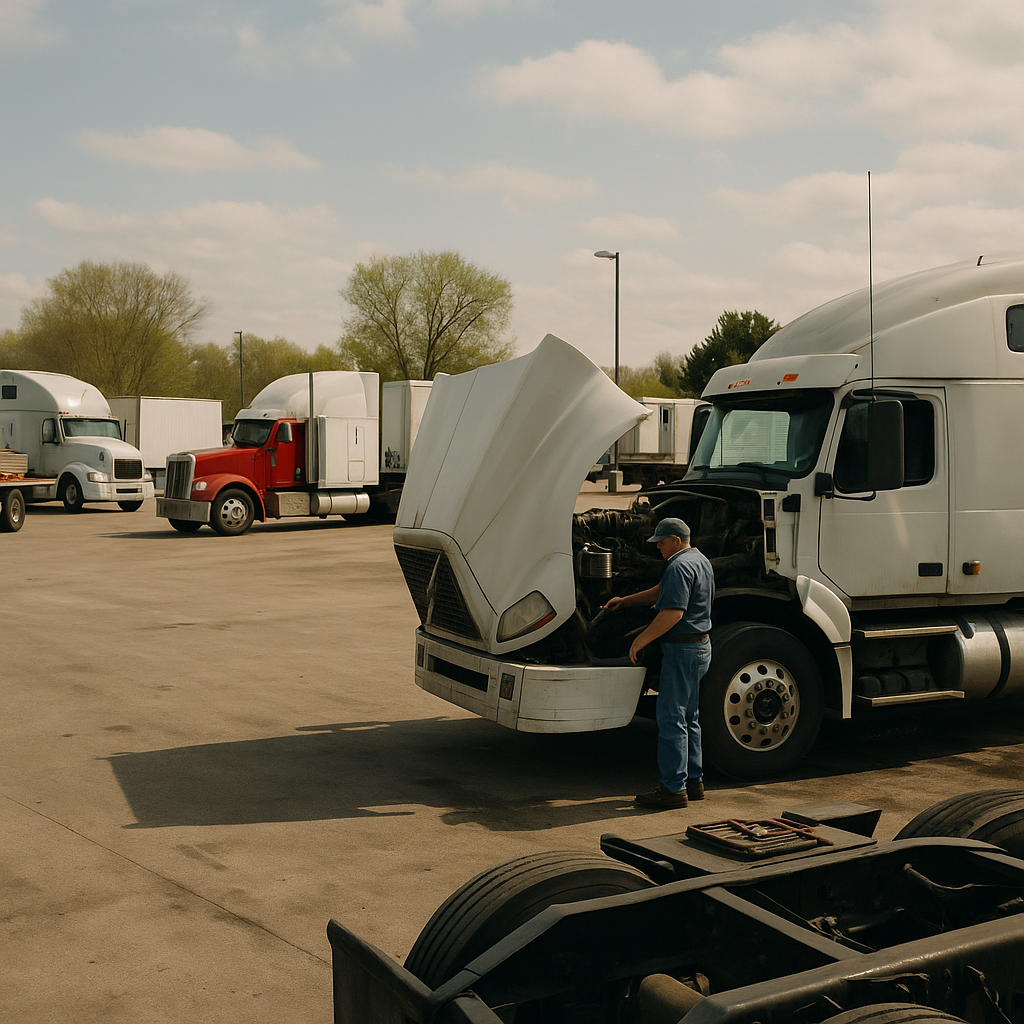

If you’re shopping for fleet truck insurance Indiana, the first thing to clear up is the word “fleet.” A one-truck owner-operator, a two-truck box truck business, and a five-truck semi fleet may all shop similar coverages, but the right policy depends on what the trucks do, what they haul, and whether they run interstate or intrastate.
What Fleet Truck Insurance Means in Indiana#
Fleet truck insurance in Indiana usually means one commercial insurance setup covering multiple business-use trucks under the same operation. In practice, many Indiana operators use “fleet” loosely, but the policy still has to match the real trucking exposure: truck type, cargo, radius, and whether you’re hauling for pay.
The term commercial truck insurance means insurance built for trucks used in business, especially freight hauling, not personal driving. If you want a broader primer, this guide on commercial truck insurance helps frame the basics.
Fleet vs. commercial truck insurance#
Fleet insurance is usually a policy structure. Commercial truck insurance is the broader category.
A two-truck Indiana carrier might call it fleet insurance because both units sit under one account. A single-truck owner-operator might still need almost the same core coverages as that fleet: liability, cargo, and physical damage. The difference is often in administration, underwriting review, and how the carrier looks at the overall operation.
Who this guide is for#
This guide is for Indiana owner-operators, small fleets with 2–5 trucks, and box truck businesses trying to sort out what coverage actually fits. It’s also for operators who keep hearing blanket advice from forums and other drivers that doesn’t match their authority, cargo, or routes.
When personal auto insurance is not enough#
Personal auto insurance is a policy for private, non-business driving. Once a vehicle is being used in a commercial hauling operation, that personal policy usually isn’t built for the exposure.
A pickup used to grab parts or groceries is one thing. That same pickup pulling a trailer for paid freight, or a box truck making business deliveries, is a different risk entirely. That’s where people get burned: they assume “insured is insured,” then find out the policy language doesn’t fit the work.

Who Needs It and What Operations It Covers#
Fleet truck insurance Indiana can apply to both one-truck and small multi-truck businesses because the real issue is commercial use, not just fleet size. What you need depends on carrier type, gross vehicle weight, cargo, and whether the operation runs interstate or stays inside Indiana.
Owner-operators with one truck#
A single-truck owner-operator may not think of the business as a fleet, but the coverage logic is still close. If you’re running under your own authority or leasing on and carrying certain responsibilities yourself, the insurer will still want to know the same basics: what truck, what cargo, what radius, and whose name the operation runs under.
A hotshot setup is a good example. One truck doesn’t automatically mean simple insurance. If that truck crosses state lines, hauls for hire, and carries higher-value freight, the coverage questions get more specific fast.
Small fleets with 2-5 trucks#
A small fleet with two to five trucks usually gains a little efficiency on policy management, but not a free pass on underwriting. If one truck is a local box truck and another is a tractor hauling refrigerated freight across multiple states, the risk profile isn’t uniform just because they share an account.
Box trucks, semis, and mixed fleets#
A box-truck delivery business, a hotshot operation, and a small semi fleet can all need different coverage mixes. One might prioritize cargo and local-use details. Another may need higher federal-facing liability structure, trailer-related coverage, or reefer protection because a temperature issue can ruin the load even when the truck itself isn’t badly damaged.
Interstate vs. intrastate use#
Interstate means you cross state lines or operate in a way that places the move in interstate commerce. Intrastate means the operation stays within one state.
That split matters. Requirements vary by carrier type, vehicle weight, cargo, and whether you operate interstate or intrastate. It also helps readers self-sort early: intermodal, household goods movers, last-mile or final-mile as a primary class, and driveaway operations are outside LogRock’s scope.
Indiana Rules, FMCSA Basics, and Filing Requirements#
Indiana truck insurance rules don’t stop at a state minimum if your operation falls under federal trucking requirements. For interstate for-hire carriers, FMCSA rules under 49 CFR Part 387 can control the minimum public liability requirement, and the right filing pattern depends on authority, cargo, and operating scope.
State minimums vs. federal requirements#
Your state minimum isn’t automatically your federal minimum. For interstate trucking, FMCSA rules can override the casual advice operators trade online.
Under FMCSA rules and 49 CFR Part 387, for-hire interstate carriers hauling general freight in vehicles over 10,001 lbs must carry at least $750,000 in public liability. Under 10,000 lbs, the common federal minimum is $300,000. Auto haulers commonly require $1,000,000, and certain hazmat operations require $5,000,000. The point isn’t the number by itself. The point is that the number changes with weight, commodity, and operation.
When FMCSA filings matter#
An MC number is federal operating authority for certain for-hire interstate carriers. An MCS-90 is an endorsement tied to federally required public liability filings, not a substitute for reading the actual policy.
If you’re operating as a for-hire interstate carrier, filings matter because insurers may need to support your authority-related compliance. If you’re strictly intrastate, the answer may look different. That’s why two Indiana fleets with the same truck count can need different liability setups: one hauls dry van freight only inside Indiana, while the other crosses into Illinois, Ohio, or Kentucky under federal authority.
Why your authority and operating scope change the answer#
Don’t start with a generic internet minimum. Start with your actual profile: for-hire or private, vehicle weight, cargo type, interstate or intrastate, and whether you need federal filings.
If you’re unsure whether your operating details line up,
Coverage Types Small Fleets Usually Compare#
Most Indiana small fleets compare the same handful of core trucking coverages, but not every add-on belongs on every account. Liability protects against injury or damage you cause to others, cargo protects the freight, and physical damage protects the truck itself.
Auto liability#
Auto liability means coverage for bodily injury and property damage you cause to other people in a truck accident. For many for-hire trucking operations, this is the policy section most directly tied to filings and minimum requirements.
If you want a deeper breakdown, see auto liability coverage. A local Indiana box truck, a regional tractor, and a hotshot rig can all carry liability, but the required structure may differ based on weight, cargo, and interstate status.
Motor truck cargo#
Motor truck cargo means coverage for freight you’re hauling for others if it’s damaged or lost from a covered cause. This matters most when you’re under contract to deliver somebody else’s load.
Cargo isn’t one-size-fits-all. Electronics, refrigerated freight, and general dry goods don’t underwrite the same way. This guide to motor truck cargo insurance helps explain those differences.
Physical damage#
Physical damage means coverage for your truck itself, usually through collision and comprehensive or fire-and-theft-with-combined-additional-coverage. Lenders often care about this, but owner-operators should care too because one bad loss can park the business.
A financed newer tractor and an older paid-off day cab won’t be treated the same. For a closer look, review physical damage coverage.
General liability#
General liability means business liability protection outside normal truck driving accidents, such as certain premises or non-driving exposures tied to a for-hire operation. It isn’t the same thing as auto liability, and not every account needs it in the same way.
Bobtail and trailer options#
Non-trucking liability, often called bobtail in everyday conversation, means coverage for non-business personal use of the truck when you’re not under dispatch. It does not cover paid hauling.
That distinction matters. A leased-on owner-operator might ask for bobtail insurance when what they really mean is non-trucking liability, but the policy only makes sense if their actual use fits that non-business exposure.
Trailer interchange means coverage for a non-owned trailer in your care when you have a written interchange agreement. Non-owned trailer physical damage is different and often fits owner-operators who use someone else’s trailer without that signed interchange setup. If your operation does use interchange agreements, look at trailer interchange coverage.
For reefer loads, cargo alone may not solve spoilage exposure caused by equipment failure. Reefer breakdown means coverage tied to refrigeration unit failure and the resulting temperature problem. For temperature-sensitive freight, reefer breakdown coverage is worth comparing carefully.
What Drives Fleet Truck Insurance Cost in Indiana#
Fleet truck insurance Indiana pricing is driven by risk, not just truck count. A two-truck operation hauling refrigerated freight across several states may cost more to insure than a larger but lower-risk local setup because underwriters price the exposure, not just the label on the account.
Truck count and policy structure#
More trucks usually mean more total premium, but not always a simpler quote. A one-truck operation with new authority, broader radius, and tougher cargo can present more underwriting concern than a three-truck business with stable local routes and clean drivers.
Vehicle type and value#
A newer tractor with a loan balance creates a different physical damage exposure than an older straight truck used on short local runs. Vehicle value, repair cost, and body style all affect how the account is reviewed.
Cargo type and radius of operation#
Cargo changes the conversation fast. Refrigerated freight, higher-value goods, or contract-driven cargo requirements can all push the quote differently than a local dry-van setup.
Radius matters too. A truck staying close to home in Indiana doesn’t present the same operating pattern as one regularly running interstate lanes. The farther and more often you run, the more the underwriter wants to understand the route pattern.
Driving history and claims#
Driver records, prior losses, years of CDL experience, and business history all matter. A clean MVR and stable loss history usually help. Multiple recent claims or serious violations can make the quote harder, even if the truck list is small.
Deductibles and endorsements#
Lower deductibles usually raise premium because the policy pays sooner after a covered loss. Higher deductibles can reduce premium, but they also raise your out-of-pocket exposure when something happens.
People often ask for a monthly number, but that’s just the final output of a quote. Limits, truck value, cargo, authority, radius, and driver history all move the result. A policy that looks cheap up front can turn expensive fast if the deductible, exclusions, or missing endorsements don’t fit the operation.
Common Quote Questions: Liability, Cargo, and Providers#
The most common Indiana quote questions are really fit questions in disguise. Monthly liability pricing, cargo pricing, and provider names matter, but none of them make sense without knowing the exact trucking operation behind the quote request.
Monthly liability pricing questions#
When someone asks, “How much is $1,000,000 liability insurance a month?” the honest answer is that there is no single monthly price. A $1,000,000 liability setup for one operation can price very differently from the same limit on another because underwriting looks at truck type, authority, driver history, commodity, and route pattern.
A local Indiana box truck with clean drivers is one thing. A small interstate semi fleet with newer authority is another. Same headline limit, very different exposure.
Cargo pricing questions#
The same thing applies to “$100,000 cargo.” The limit by itself doesn’t price the policy.
Cargo pricing depends on what you’re hauling, how often, where it’s going, your claims history, and the policy terms around theft, spoilage, unattended vehicles, and related exclusions. General freight and temperature-sensitive freight do not underwrite the same way.
Whether big-name auto insurers write fleet truck coverage#
A name like GEICO may come up because drivers recognize it from personal auto advertising. But the right question isn’t whether a household name does “fleet insurance” in a broad sense. The better question is whether that carrier or program writes your exact commercial trucking class.
Some providers fit certain commercial auto risks better than true trucking risks. Compare appetite, underwriting questions, and support quality, not just the first number on the screen.
How to Get a Better Quote Without Buying the Wrong Policy#
A better truck insurance quote starts with better operating details, not with chasing the first low number. If the application doesn’t clearly match your trucks, cargo, routes, and authority, you can end up comparing policies that look similar but protect very different things.
Have your operation details ready#
Before you ask for a quote, gather the basics:
- Number of trucks
- VINs
- Garaging state
- Cargo type
- Usual routes and operating radius
- Driver records
- Whether you run interstate or intrastate
- Any trailer exposure
- Current or planned authority details
If you’re running under your own authority, verify how your operation appears in SAFER. That helps catch mismatches before they become filing or underwriting problems.
Match coverage to actual hauling#
If you haul general freight in a semi, that should be clear in the submission. If you run a box truck locally, that should be clear too. Coverage should follow the real work, not the shorthand name you or another driver use for it.
One common mistake is using personal-auto style thinking for a business truck. Another is picking a cargo limit because a friend mentioned it, without checking the shipper contract or broker requirement.
Watch for common mismatches#
Ask whether the quote matches:
- Carrier type
- Vehicle weight
- Cargo
- Interstate or intrastate use
- Trailer setup
- Any reefer exposure
For time-pressed operators, speed matters, but clear support matters too. LogRock’s angle is practical: technology to move fast, plus human help to explain what actually fits instead of forcing a generic online flow.
How to Evaluate a Policy Before You Bind#
Before you bind, review the policy itself, not just the premium summary. The declarations page, endorsements, exclusions, certificates, and filing details are where you find out whether the policy actually matches your operation.
Check the declarations page#
Make sure the named insured, truck schedule, limits, and coverage forms line up with how the business really runs. A wrong garaging state, unit list, or use class can cause trouble later.
Verify exclusions and endorsements#
Read the exclusions closely. A cheap-looking quote can be the wrong quote if it excludes the freight you haul or leaves out a needed endorsement tied to your operation.
Confirm filings and certificates#
If your operation needs filings, confirm they are being handled correctly based on your authority and scope. Don’t assume “insured” means “ready to operate.”
Review cargo and trailer details#
Cargo and trailer issues are where many small operators miss something. A policy may look fine until you notice the trailer arrangement doesn’t match how you pull non-owned equipment, or the cargo terms don’t fit what you actually haul.
FAQ#
Is fleet insurance cheaper than commercial insurance?
Not necessarily. Fleet insurance is usually a commercial insurance structure, not a separate magic discount category. A business with several trucks may get administrative efficiency from putting units on one account, but the price still depends on risk factors like truck type, cargo, driving history, operating radius, claims, and liability limits. A one-truck owner-operator hauling lower-risk freight can sometimes present less exposure than a multi-truck operation hauling tougher cargo. The label “fleet” matters less than the actual operation being insured.
How much is $1,000,000 liability insurance a month?
There isn’t one reliable monthly number for $1,000,000 liability insurance because that limit sits on top of very different trucking exposures. The quote depends on whether the truck is a box truck, hotshot, or semi; whether the business is interstate or intrastate; what cargo it hauls; driver records; loss history; and the filing requirements tied to the operation. That’s why two Indiana operators asking for the same limit can get very different quotes. Your actual premium depends on your operation, cargo, radius, driving history, and other factors.
Does GEICO do fleet insurance?
Sometimes a big personal auto brand may have some commercial offerings, but appetite changes and the name alone doesn’t tell you whether the provider fits true trucking risk. The better question is whether that carrier writes your exact operation class: box truck, semi, hotshot, for-hire interstate, local commercial use, and so on. Many drivers ask about GEICO because it’s familiar, but familiarity doesn’t guarantee a fit for trucking filings, cargo, trailer exposure, or authority-related needs. Always check whether the policy matches the real business use.
How much does $100,000 cargo insurance cost?
There is no standard monthly price for $100,000 in cargo coverage because cargo underwriting depends heavily on what you haul. General freight, refrigerated freight, consumer goods, and theft-prone loads do not carry the same exposure. Insurers also look at route patterns, security practices, prior cargo losses, deductibles, and policy terms. A $100,000 limit may satisfy one contract but be inadequate or overpriced for another operation depending on the freight. The best way to price cargo is to quote it against the actual commodity and hauling pattern, not just the headline limit.
Can personal auto insurance cover a business-use box truck or pickup?
Usually, no if the vehicle is being used in a real commercial hauling operation. Personal auto insurance is meant for private driving, not for hauling freight for pay, running business deliveries, or supporting a for-hire trucking operation. This is where many operators get tripped up, especially with pickups and smaller box trucks that look less “commercial” than a semi. The deciding factor is the use, not just the look of the vehicle. If the truck is part of the business, the coverage should be built for that business exposure.





