
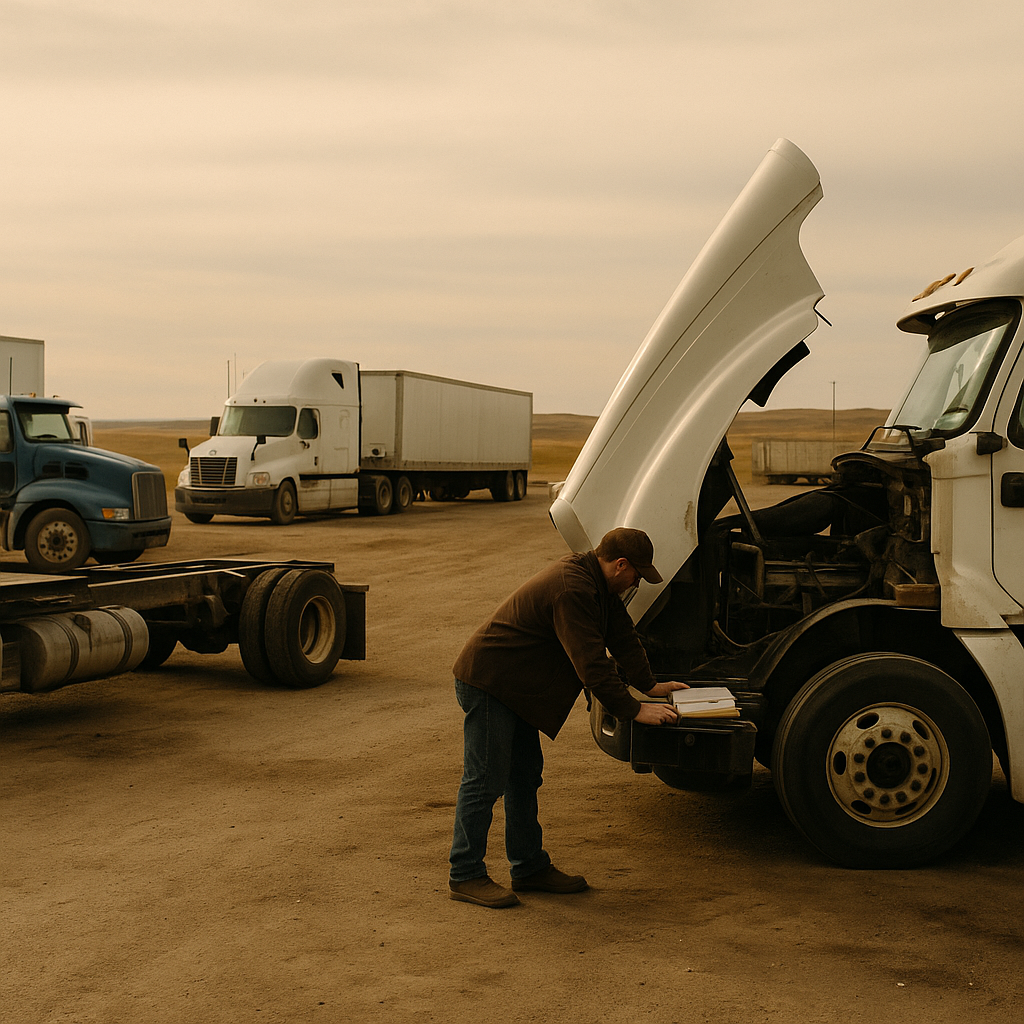
If you’re shopping for fleet truck insurance North Dakota, the first thing to clear up is simple: a usable trucking policy is not the same thing as a personal auto policy with a business label. For North Dakota owner-operators and 1–5 truck fleets, the right setup depends on how you run, what you haul, where you go, and whether you operate interstate or intrastate.
Fleet Truck Insurance in North Dakota: What It Covers and Who Needs It#
Fleet truck insurance in North Dakota is commercial insurance built for trucks used in business, and it usually becomes relevant once you have multiple power units, multiple drivers, or a business setup that no longer fits a single-truck owner-operator policy. Even at two to five trucks, the structure can change because insurers rate the operation, driver mix, equipment schedule, and authority differently than a one-truck risk.
A fleet policy is commercial coverage for multiple trucks used in business. Personal auto insurance is built for private driving, not for hauling freight, running under authority, or satisfying shipper and broker requirements.
That distinction matters because small fleets often try to compare themselves to personal auto or even to a friend’s one-truck setup. That usually leads to bad assumptions about liability limits, driver listing, and what happens when you add a second or third unit mid-policy. For a broader foundation, it helps to understand fleet insurance basics before comparing quotes.
Fleet coverage vs. personal auto#
Personal auto coverage generally won’t match a trucking operation that hauls for money. If a North Dakota operator is running loads, using a USDOT number, or moving freight under a business, the insurance has to reflect commercial use.
A USDOT number is the federal identifier tied to a commercial carrier’s safety record and operations. An MC number is operating authority used by for-hire interstate carriers that need FMCSA authority to transport regulated freight.
Which North Dakota trucking operations usually need it#
A two-truck hotshot operation may start with one truck under a simple owner-operator structure, then hit problems when the second unit comes on and a second driver needs to be scheduled correctly. A three-truck regional carrier hauling general freight across North Dakota, Minnesota, and South Dakota usually needs a policy built around interstate commerce, driver selection, and filings. Interstate commerce means hauling freight across state lines or as part of a movement tied to another state.
Intrastate commerce means hauling only within one state. Even then, the operation is still commercial trucking, and the insurance still needs to match the trucks, cargo, and business use.
How 1-5 truck fleets differ from single-truck policies#
A one-truck owner-operator expanding into a second unit often finds that the quote process changes fast. The insurer now wants to evaluate the whole operation, not just one truck and one driver.
That means operation type, cargo, radius, authority status, and driver history all carry more weight. A small fleet hauling oilfield support work near western North Dakota may look very different to an underwriter than a small fleet hauling dry van freight on longer regional lanes.
North Dakota Rules That Shape Your Coverage Stack#
North Dakota fleet truck insurance is shaped by two separate rule sets: federal rules for interstate trucking and state-level rules for intrastate operations. If you cross state lines or haul regulated freight as a for-hire carrier, FMCSA rules, filings, and authority issues usually drive the liability side of your policy first, while North Dakota rules matter more for state context and intrastate operations.
FMCSA rules for interstate trucking#
FMCSA sets federal minimum financial responsibility rules for many interstate motor carriers. Under 49 CFR Part 387 and FMCSA guidance at fmcsa.dot.gov, for-hire interstate carriers hauling general freight in vehicles over 10,001 lbs must carry at least $750,000 in public liability. Public liability is the federal term often shortened to BIPD, meaning bodily injury and property damage liability to others.
BIPD is liability coverage for injury or property damage your truck causes to other people. For some operations, the minimum goes higher, including certain hazmat and auto hauler risks, so there is no one-size-fits-all federal number.
That’s why a North Dakota carrier running interstate loads needs to scope commercial auto liability correctly before buying. An MCS-90 is a federally required endorsement that shows proof of minimum financial responsibility for certain interstate motor carriers.
North Dakota intrastate and state minimum considerations#
North Dakota-specific insurance questions often come up when a carrier only hauls within the state. The North Dakota Insurance Department is the right state-level source for insurance guidance, but state baselines and commercial vehicle rules should never be assumed to replace federal requirements when the operation is actually interstate.
Here’s the practical example. A truck hauling grain equipment only within North Dakota may face a different compliance path than a truck based in Fargo that picks up in North Dakota and delivers in Minnesota. The first may be mainly dealing with intrastate rules and contract requirements. The second is in interstate commerce, so FMCSA rules and federal filings become much more important.
When filings and authority matter#
Minimums alone may not be enough to make a quote usable. Brokers, shippers, and lenders often expect higher limits or additional coverages before they’ll work with you, finance equipment, or dispatch loads.
That’s where carriers get burned. A quote can technically meet a baseline and still fail in real life because the filing isn’t right, the named insured is wrong, or the limit doesn’t meet a broker contract.

Coverage Types North Dakota Fleets Commonly Use#
Most North Dakota fleets need a coverage stack built around commercial auto liability first, then add other coverages based on cargo, equipment, contracts, and how the trucks are used. The right setup for a one-truck owner-operator adding a second truck is often different from a three-truck regional fleet, even if both are based in the same state.
Auto liability#
Auto liability is the core commercial trucking coverage that pays for injuries or property damage you cause to others in a covered accident. For fleets, this is the piece most directly tied to FMCSA rules, state requirements, contracts, and lender expectations.
If the truck is hauling for-hire freight, this is not optional in any practical sense. It has to match your operation, territory, and authority.
Motor truck cargo#
Motor truck cargo covers damage to freight you’re hauling for others, subject to policy terms and exclusions. A flatbed hauling construction materials may need motor truck cargo coverage that fits the actual commodity and tie-down exposures, while a dry van hauling packaged goods may need a different cargo profile.
Cargo may not be federally required the same way liability is, but many brokers and shippers treat it as non-negotiable. A cheap quote missing cargo can leave you unable to book the loads you planned to haul.
Physical damage#
Physical damage covers your truck itself, usually through collision and comprehensive or fire and theft with combined additional coverage. If you finance newer equipment, lenders commonly require physical damage coverage.
A three-truck fleet with newer sleepers and financed trailers has a very different equipment exposure than an older two-truck hotshot setup with lower unit values. The truck value, deductible choice, and storage setup all matter here.
General liability and non-trucking liability#
General liability covers certain non-driving business exposures, not road accidents caused by the truck itself. For-hire carriers often add it because some contracts, warehouses, and business partners expect it.
Non-trucking liability is coverage for non-business use of a truck when you are not under dispatch or hauling a load. Bobtail is commonly used loosely in conversation, but the real issue is whether the policy covers non-business use only, which is why it helps to review how non-trucking liability actually works.
Trailer and refrigeration options#
Trailer interchange covers a trailer you use under a signed interchange agreement. Non-owned trailer physical damage is usually the better fit when a fleet regularly pulls trailers it does not own but does not have that interchange agreement.
A reefer hauling food may also need reefer breakdown coverage for temperature-control equipment failure. A fleet using non-owned trailers, drop-and-hook freight, or refrigerated loads can have major gaps if those options are skipped because they looked “optional” on the quote.
How Much Fleet Truck Insurance Costs in North Dakota#
Fleet truck insurance in North Dakota depends more on the operation than on the truck count alone. Two fleets with the same number of trucks can get very different quotes because underwriters price the drivers, cargo, territory, authority, equipment value, losses, and coverage structure, not just the fact that both fleets have three units.
The biggest pricing drivers#
The biggest drivers are usually truck value, driver history, MVRs, cargo type, operating radius, authority status, prior claims, garaging, and chosen limits. An MVR is a motor vehicle record showing a driver’s license status, violations, and accident history.
A fleet parked in one part of North Dakota may also price differently from a similar fleet elsewhere because weather exposure, theft patterns, repair access, and route mix change the risk. If you want a deeper breakdown of how trucking insurance is priced, focus on the rating inputs before you focus on the premium alone.
Why small fleets can see different quotes than solo trucks#
A solo owner-operator with one clean driving record may look straightforward. Add a second truck, a second driver, and a broader hauling radius, and the underwriting picture changes fast.
Sometimes the higher quote is not because the insurer is “expensive.” It may be because that quote actually includes the right liability structure, the right truck schedule, and the right optional coverages for the work being done.
A low premium can mean missing cargo, missing trailer coverage, wrong radius, or a policy built around one unit when the fleet really operates three.
…if you’re not sure what fits,
Practical examples of cost differences by operation#
Consider two North Dakota three-truck fleets. One hauls general dry freight on regional interstate lanes with experienced drivers and clean loss history. The other hauls tougher freight, runs longer hours, has a recent accident, and added drivers with weaker records. Even if both are headquartered in the same city, the quotes can separate quickly.
The same thing happens with equipment. A fleet with newer financed tractors and tight lender requirements will often need a broader protection stack than an older paid-off setup. The lower-priced quote is only better if it still works for your dispatch, contracts, and equipment obligations.
How to Compare Quotes So the Policy Is Actually Usable#
A usable fleet truck insurance quote in North Dakota matches your actual business, not just your budget. Before binding, verify the named insured, truck schedule, drivers, radius, cargo, filings, endorsements, and exclusions, because a quote can look complete on the first page and still fail when a broker asks for a certificate or a claim exposes a gap.
Quote inputs to verify before binding#
Start with the basics: who is insured, which power units are listed, which drivers are approved, and what operating radius the quote assumes. A three-truck fleet should not be comparing a quote that accidentally rates only one power unit against a quote that correctly schedules all three.
A practical cross-check is to use a truck insurance quote checklist while reviewing each proposal. That keeps the comparison grounded in what the policy actually covers.
Questions to ask about filings and exclusions#
Ask whether the filing requirements match your authority and whether the policy reflects your dispatch model. If you haul interstate for-hire freight, make sure the liability setup, endorsements, and any required filings line up with that operation.
You should also verify your carrier status on SAFER before finalizing coverage details tied to authority and operating status. SAFER is FMCSA’s Safety and Fitness Electronic Records system used to verify carrier status and authority details.
Red flags in a too-simple quote#
Watch for quotes that feel fast because they skipped hard questions. If nobody asked about cargo, trailers, driver experience, garaging, or interstate travel, the quote may be too thin to trust.
Another red flag is a quote that solves the premium problem by quietly shrinking the coverage stack. Missing endorsements, commodity exclusions, or an incorrect named insured can turn a “good deal” into a policy you can’t actually use.
Ways North Dakota Fleets Can Lower Risk Without Cutting Needed Coverage#
North Dakota fleets usually improve quote quality by improving risk, not by stripping out important coverage. Clean driver files, better maintenance records, tighter cargo handling, and better documentation can make an operation easier to underwrite, while random coverage cuts often just create gaps that show up later.
Driver and maintenance practices#
Keep MVRs clean, document experience clearly, and fix small maintenance issues before they become claims. A two-truck fleet that uses dashcams consistently, tracks inspections, and documents brake, tire, and lighting checks presents a cleaner story than a similar fleet with weak records.
Telematics can help too if it shows better speed control, route discipline, and driver coaching. Underwriters often respond better to organized operations than to vague assurances.
Coverage choices that should be reviewed carefully#
Higher deductibles can make sense, but only if the business can actually absorb them after a loss. Narrowing cargo or trailer coverage might lower premium, but it can also knock you out of certain lanes or contracts.
Common mistakes that raise risk#
Common problems include adding drivers without updating the policy, hauling freight outside the quoted commodity class, and assuming occasional interstate work “doesn’t count.” Another one is treating non-trucking liability like all-purpose extra coverage when it only applies to non-business use.
If you’re not sure what coverage fits your operation, LogRock can help you scope it.
North Dakota Fleet Insurance FAQ#
Does Geico do fleet insurance?#
Maybe, but the real issue is whether a carrier offers commercial trucking fleet coverage for your exact operation in your state. Availability can vary by truck count, business type, driver profile, and whether the risk is personal auto, general commercial auto, or true trucking. For a North Dakota fleet, don’t assume a personal auto-style quote will fit a for-hire trucking operation. Confirm that the quote is meant for commercial trucking, matches your equipment and drivers, and can support the filings or coverages your operation needs.
Is North Dakota a PIP state?#
PIP, or personal injury protection, is mainly a personal auto concept, not the main way commercial trucking policies are evaluated. If you’re asking about a semi, hotshot, or small fleet policy, the more useful question is which commercial coverages apply to injuries, liability, and medical-related loss exposures in that operation. So yes, people ask about PIP, but for trucking, you should focus on the commercial liability structure and any state or federal requirements tied to the truck’s use.
What is the cheapest state for trucking insurance?#
There isn’t a reliable “cheapest state” shortcut for trucking insurance. Premiums depend much more on what you haul, how far you run, your drivers, your claims history, your authority status, and the value of your trucks than on a simple state ranking. A safer buying approach is to compare usable quotes for your exact operation. A North Dakota fleet with clean drivers hauling ordinary freight may beat the price of a fleet in another state with tougher cargo, but the reverse can happen just as easily.
What is the cheapest auto insurance in North Dakota?#
That question usually mixes up personal auto with commercial trucking insurance. The cheapest personal auto policy in North Dakota is not a useful comparison if you’re insuring a truck used for hauling freight, operating under authority, or working under shipper or broker contracts. The better question is whether the quote includes the commercial trucking coverages, limits, drivers, equipment, and filings your business actually needs. A lower price only helps if the policy is usable when dispatch starts and when a claim happens.





