
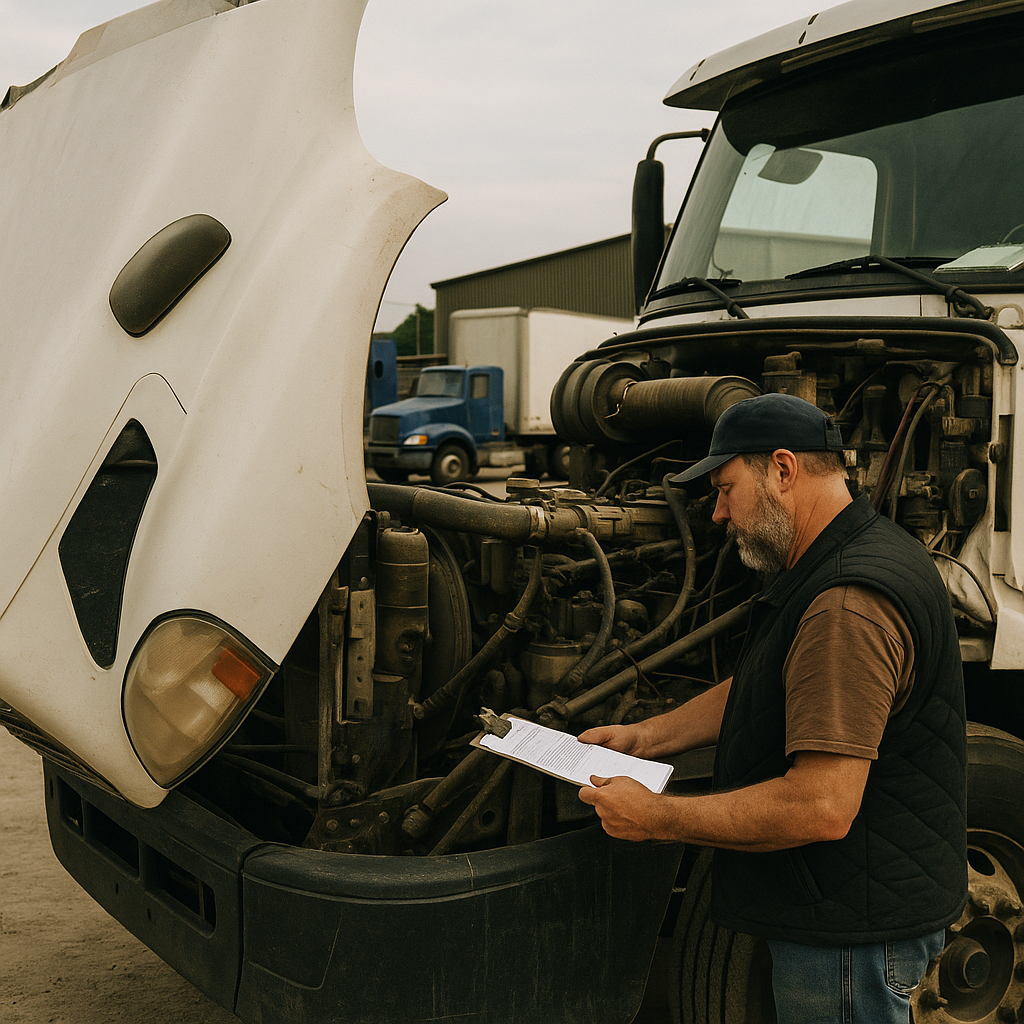

If you’re running under new interstate authority, the FMCSA Safety Audit Checklist isn’t busywork. It’s how a new carrier proves it has the records, controls, and insurance documentation FMCSA expects under the New Entrant program. For a one-truck owner-operator, that matters just as much as it does for a small fleet.
What Is an FMCSA New Entrant Safety Audit?#
A New Entrant Safety Audit is FMCSA’s review of a recently authorized interstate motor carrier’s safety management controls and required records. It checks whether your company has the systems and documentation needed to operate compliantly, not just whether one truck looked fine on one day.
The Federal Motor Carrier Safety Administration (FMCSA) is the federal agency that regulates commercial motor carrier safety. Under the New Entrant Safety Assurance Program, FMCSA reviews new interstate carriers because a fresh authority often means new compliance risk, not just new business.
Why FMCSA uses the New Entrant program#
FMCSA uses the New Entrant program to check whether a carrier built the basics early: driver files, hours-of-service controls, maintenance records, and required financial responsibility. The goal isn’t to trap new carriers. It’s to catch serious gaps before they turn into crashes, out-of-service orders, or loss of authority.
A safety management control is the written process and actual practice you use to stay compliant, such as reviewing driver logs, fixing defects, and keeping qualification records current.
Which motor carriers may be subject to an audit#
Recently authorized interstate motor carriers should treat the Safety Audit as a real compliance obligation. If you have a new USDOT number tied to interstate commercial operations, or new operating authority where the program applies, don’t assume being small puts you under the radar.
A USDOT number is the identification number FMCSA uses to track a carrier’s safety records and regulatory status. An MC number is operating authority that allows certain for-hire interstate transportation when required.
Being a single-truck owner-operator doesn’t remove the need for records. If the rules apply to your operation, FMCSA expects the paperwork and the process.
Safety Audit vs. roadside inspection#
A Safety Audit is not the same thing as a roadside inspection. A roadside inspection looks at a driver, vehicle, and trip at a point in time. A Safety Audit looks at whether the carrier has the required systems, files, and documentation behind the operation.
That’s where new carriers get tripped up. A clean inspection sticker doesn’t prove your company is audit-ready.

When Does the FMCSA Safety Audit Happen?#
FMCSA generally conducts a New Entrant Safety Audit during a carrier’s initial 12-month monitoring period. The agency can perform the review onsite, offsite, or by another allowed method, so the smart move is to build your records before any notice arrives.
FMCSA explains the program and monitoring period through its FMCSA website. The New Entrant process is real, and recently authorized carriers should plan for it early instead of waiting for a letter and scrambling.
The New Entrant monitoring period#
The New Entrant Safety Assurance Program is FMCSA’s process for monitoring newly authorized interstate carriers during their first year. That initial period is when the agency typically schedules the Safety Audit.
Treat that first year like an open-book test you have to be ready for at any time. If records only exist in your head, on loose papers in the cab, or half-finished in an app, you’ll have a hard time proving compliance.
How the audit may be conducted#
FMCSA may handle the audit in different ways. Some carriers deal with an onsite review. Others may be asked to submit documents through an offsite process or another format the agency allows.
The format matters less than the outcome. However it’s conducted, the auditor is still looking for the same thing: whether your safety controls exist and whether your records back them up.
What to do when you receive an audit notice#
Read the notice carefully, find the deadline, and follow the requested submission method. Then gather records by category instead of hunting one file at a time.
Don’t wait for the notice to start organizing. A compliant practice you can’t document can still create a problem during an audit.
FMCSA Safety Audit Checklist: Records to Prepare Before the Review#
A practical FMCSA Safety Audit Checklist starts with the records that match your actual operation: authority, driver qualification, testing, logs, maintenance, crash records, and any cargo-specific requirements. The exact list depends on whether you’re for-hire or private, interstate or intrastate, what you haul, what you drive, and who drives it.
Use this as a preparation tool, not a substitute for the regulations that apply to your carrier.
Company, authority, and insurance records#
Start with company-level documents. That usually includes your USDOT and MC information, operating authority details, business identification records, and process-agent designation where applicable.
Proof of required financial responsibility matters here too. Under 49 CFR Part 387, federal financial responsibility rules depend on your operation, vehicle weight, and cargo. They are not automatically the same as a state minimum, and they are never the same as personal auto coverage.
A process-agent designation is the filing that names legal representatives in each state for service of process when required for interstate authority.
Driver qualification and drug-and-alcohol records#
A driver qualification file is the set of records showing a driver is legally and medically qualified for the job when those rules apply. That file may include hiring records, motor vehicle record reviews, license verification, and medical qualification documents.
A Commercial Driver’s License (CDL) is the license required to operate certain commercial motor vehicles based on vehicle type and use. If a CDL is required for your operation, the file should support that the driver holds the right class and endorsements.
For carriers subject to testing rules, keep controlled-substances and alcohol program records current. That includes pre-employment testing, random testing records, and required queries of the Drug and Alcohol Clearinghouse, which is FMCSA’s database for CDL drug and alcohol violation information.
Hours-of-service records#
Hours of service are the federal limits on when and how long drivers may drive and work. FMCSA expects carriers to show both the records and the process used to monitor compliance.
An Electronic Logging Device (ELD) is the device used to record driving time and duty status when the ELD rule applies. Keep log records, supporting documents, and any written internal process for reviewing driver hours.
Vehicle inspection, maintenance, and repair records#
Maintenance files should show that your truck and any applicable equipment are being inspected, maintained, and repaired. That includes driver vehicle inspection reports where required, annual inspection documents, repair records, and proof that out-of-service defects were corrected before the vehicle returned to service.
A clean truck on audit day won’t fix missing maintenance history. The auditor wants to see a pattern of control, not just one good-looking unit.
If you’re unsure whether your authority type, cargo, or vehicle use changes what insurance filing or compliance records you need,
Crash and hazardous-materials records when applicable#
Keep an accident register if your operation requires one, along with post-accident testing records where applicable. If you haul hazardous materials, add the hazmat records that apply to that operation.
Not every carrier needs every hazmat document. That’s the point: match the checklist to your real operation, not to a random PDF passed around in a forum.
| Record group | What FMCSA may look for | Why it matters |
|---|---|---|
| Company and authority | USDOT, MC, authority, process agent, insurance filings | Proves legal operating status |
| Driver qualification | License, MVRs, qualification and medical records | Shows drivers are qualified |
| Drug and alcohol | Pre-employment, random, Clearinghouse records | Shows testing compliance |
| Hours of service | Logs, ELD data, supporting documents, review process | Shows drivers are managed legally |
| Maintenance and inspections | DVIRs, annual inspections, repairs, defect correction | Shows equipment is controlled |
| Crash or hazmat records | Accident register, post-accident, hazmat documents | Covers operation-specific duties |
What Can Cause an Automatic Failure of a Safety Audit?#
Certain violations in the New Entrant rules can cause an automatic failure of the Safety Audit, even for a one-truck carrier. The controlling source is the regulatory list in 49 CFR Part 385, not a generic checklist from a blog, forum, or downloadable PDF.
See 49 CFR Part 385 for the New Entrant rules and automatic-fail categories under Subpart E. That’s the standard FMCSA uses.
Automatic-fail violations under the New Entrant rules#
The big risk areas include missing or inadequate drug-and-alcohol testing controls, using unqualified drivers, serious hours-of-service violations, operating out-of-service vehicles, and lacking required financial responsibility. That’s not an exhaustive list, but it’s the right level of concern.
The size of your fleet doesn’t change the rule. One truck with one driver can still fail if the carrier can’t show the required controls.
Common documentation gaps that create risk#
A missing record can hurt just as much as a missing process. If you say you review logs but can’t show records of review, or you say defects were fixed but have no repair documentation, FMCSA may treat that as a failure to demonstrate compliance.
This is where carriers get blindsided. They may actually be doing part of the job but never built a system to prove it.
How to correct a problem before the audit#
Fix known gaps before you submit records. That may mean removing an unqualified driver from service, correcting out-of-service vehicle issues, enrolling properly in a testing program, or confirming your insurance filings match your operation.
Don’t assume every carrier needs the same liability limit. Under federal rules, required financial responsibility depends on the operation, vehicle, and cargo, not on trucking folklore.
How the Safety Audit Is Conducted and What Happens Next#
A Safety Audit is a review of your safety management controls and supporting records, not a contest to build the prettiest compliance binder. If your records are organized and your processes are real, the review is usually more manageable than carriers expect.
What the auditor evaluates#
The auditor is looking for whether your company has the required controls in place and whether the records support them. That can include driver qualification, hours-of-service management, maintenance oversight, drug and alcohol compliance, crash recordkeeping, and required financial responsibility.
You don’t need polished marketing-style documents. You do need complete, current, and consistent records.
What passing the audit means#
Passing supports your continuation in the New Entrant program. It means FMCSA found enough evidence that your carrier has the required controls for the audit stage.
It does not mean you’re done with compliance. You still have to follow the rules after the audit, during inspections, and as your operation changes.
What happens after a failed audit#
If a carrier fails, FMCSA may issue notice and allow a corrective action plan depending on the circumstances and the regulatory process. But that isn’t something to gamble on.
If deficiencies aren’t corrected, FMCSA can move toward loss of operating authority and an out-of-service order. That’s why preparation matters before the deadline, not after it.
Why audit preparation should continue after passing#
Keep records organized after the audit. Review them any time you hire a driver, add equipment, change cargo, or expand your operating area.
A monthly compliance check is usually enough to catch problems early for most owner-operators and small fleets.
Common FMCSA Safety Audit Mistakes New Carriers Can Avoid#
Most new-carrier audit mistakes come from false shortcuts: assuming one truck means fewer duties, confusing state insurance minimums with federal filing rules, and waiting until the notice arrives to get organized. A clean roadside inspection also doesn’t prove the company is ready for a Safety Audit.
Assuming a single-truck carrier has fewer recordkeeping duties#
One-truck carriers often have fewer people, not fewer obligations. If a rule applies to your operation, FMCSA still expects the file, the process, and the proof.
Confusing state minimum insurance with federal filing requirements#
Personal auto insurance is not commercial motor carrier coverage. And state minimums are not automatically your federal minimum if you’re operating in interstate commerce.
For-hire or private, interstate or intrastate, vehicle weight, cargo, and authority type all affect what applies. Under 49 CFR Part 387, required financial responsibility varies with the operation.
Waiting until the notice arrives to organize records#
This is the mistake that turns a manageable review into a panic. By the time the notice arrives, you want to be sorting records, not creating them from scratch.
Treating an inspection as proof that the company is audit-ready#
A roadside inspection focuses on the truck, driver, and trip in front of the officer. A Safety Audit reaches behind that trip into the carrier’s files and systems.
Using generic checklists without checking applicability#
Generic checklists help you organize, but they can’t decide what rules apply to your operation. Review your actual setup each month: driver files, logs, inspections, maintenance, testing, crash records, and insurance documentation.
If you want practical help confirming how your operating scope affects your commercial insurance documentation and audit readiness before a deadline lands in your lap,
FAQ#
How to pass a dot safety audit?
Pass a DOT safety audit by setting up the applicable FMCSA safety controls before the review, then keeping complete and current records that prove those controls are real. For most new carriers, that means organized driver qualification files, hours-of-service records, maintenance documentation, testing records where required, and proof of required financial responsibility.
Don’t rely on memory or verbal explanations. Check the automatic-fail categories in 49 CFR Part 385, correct any gaps before the audit, and respond quickly to the audit notice with the records FMCSA requests.
What are the requirements for an FMCSA audit?
The requirements for an FMCSA New Entrant Safety Audit depend on your actual operation, but the audit generally evaluates safety management controls and supporting records. FMCSA may review driver qualification, controlled-substances and alcohol testing compliance, hours-of-service controls, vehicle inspection and maintenance records, crash history records, and required financial responsibility.
The key point is scope. Requirements vary by carrier type, vehicle weight, cargo, driver setup, and whether you operate interstate or intrastate. The audit is not one universal checklist that applies the same way to every trucking business.
What is a safety audit checklist?
A safety audit checklist is an organized preparation tool that helps a carrier confirm which records, controls, and documents should be ready before FMCSA reviews the company. It usually groups items by topic, such as authority, driver files, testing, logs, maintenance, crash records, and insurance documentation.
It’s useful because it keeps you from missing categories. But it does not replace the actual regulations. The checklist should point you back to the FMCSA rules that apply to your operation, especially if you haul specialized cargo or run a different authority type.
What does the FMCSA inspection checklist include?
An FMCSA inspection checklist usually focuses on the driver, vehicle, and trip being checked at that moment. That can include credentials, duty status or hours-of-service status, brakes, lights, tires, cargo securement, and other vehicle or trip items the inspector reviews at roadside.
That is different from a Safety Audit checklist. A roadside inspection asks, “Is this truck and driver compliant right now?” A Safety Audit asks, “Does this carrier have the records and systems required to operate compliantly over time?” Both matter, but they are not interchangeable.
Is the New Entrant Safety Audit a real requirement for one-truck carriers?
Yes. A one-truck operation should treat the New Entrant Safety Audit as a real compliance obligation if the carrier falls under the interstate new entrant rules. FMCSA does not waive the audit just because the business is small or owner-operated.
That’s why new authorities get into trouble when they rely on forum advice saying the audit may never happen. The safer assumption is that it can happen, and your records should be ready before FMCSA contacts you. Small carriers usually do best when they build simple systems early and review them every month.