
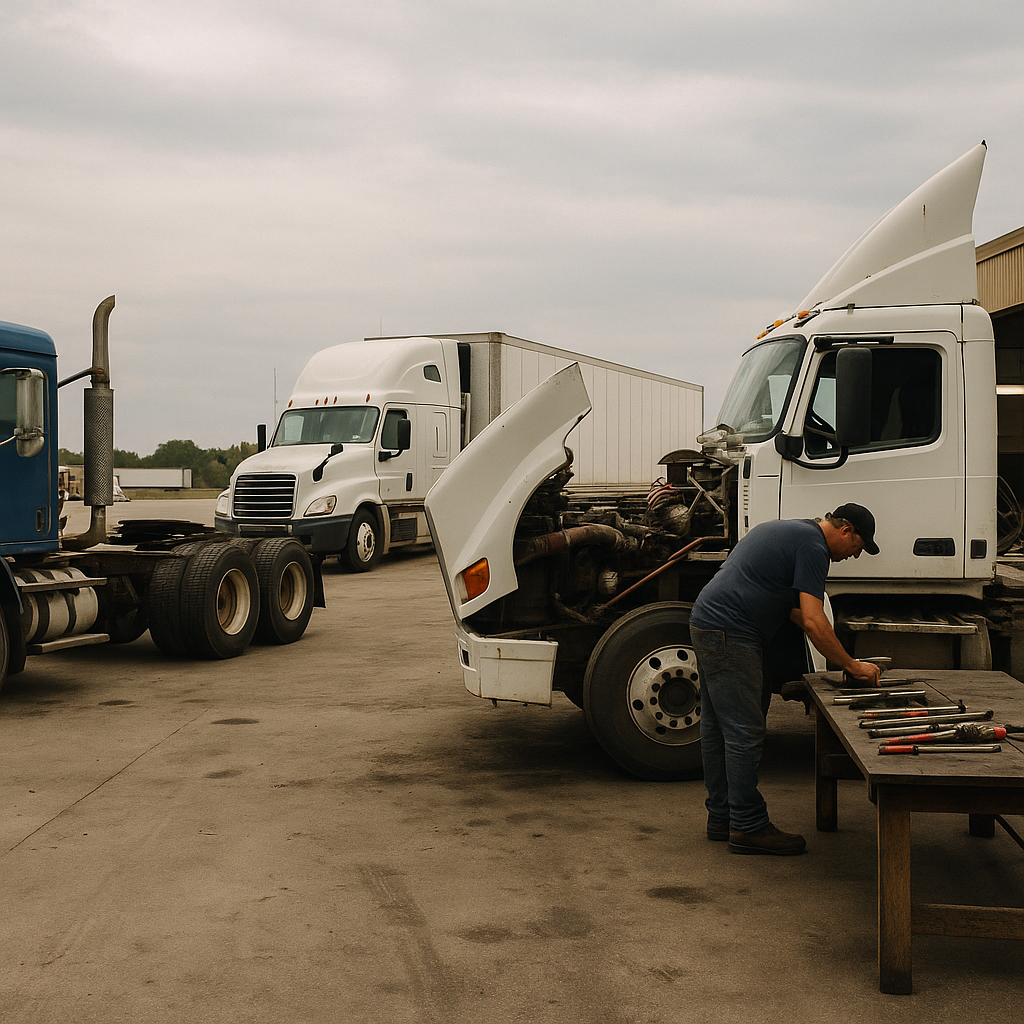

Food truck driver jobs usually mean something different than people expect. In most California searches, you’ll see a mix of route driver, beverage driver, food-service distributor, and local commercial driving roles — not just jobs driving a retail food truck to festivals or lunch stops.
What Food Truck Driver Jobs Actually Mean#
Food truck driver jobs usually refer to local route-based work moving food, drinks, or supplies for an employer, not owning and running your own food truck business. Search results often blend together food-service distributor jobs, beverage route jobs, delivery roles, and actual food truck operations, so the title alone can be misleading.
If you search “food truck driver jobs near me” or “food truck driver jobs in California,” you’ll probably get a messy mix. Some listings are for drivers who deliver restaurant supplies. Others are for beverage route drivers stocking accounts. A few may be for branded food trucks serving customers directly.
Food truck driver vs. food truck owner#
A food truck owner runs a business. That means revenue, inventory, permits, labor, fuel, maintenance, and insurance all hit the same operation.
A food truck driver job is usually just that — a job. You’re paid wages or route-based compensation by an employer, and you’re not carrying the full business risk of the truck.
Food truck driving vs. food delivery apps#
Food delivery app work is usually gig work using a personal vehicle. Food truck driver jobs are more likely to involve a commercial vehicle, scheduled routes, product handling, and employer rules around safety, attendance, and customer stops.
That’s a big difference if you’re comparing income, benefits, or schedule stability. A route driver role may offer steadier hours, but it also usually asks more physically and operationally than app delivery.
Common employer types in this search#
The jobs in this search bucket usually come from:
- Food-service distributors
- Beverage distributors
- Catering companies
- Commissary or mobile kitchen operators
- Local delivery fleets serving restaurants, schools, or events
That’s why searches around Sacramento or Folsom often show mixed results. Employers use terms like route driver, box truck driver, delivery driver, or local truck driver more often than “food truck driver.”

Typical Requirements: CDL, No-CDL, and Experience Levels#
Whether a food truck driver job requires a CDL depends on the vehicle, its weight, the operation, and the employer’s rules — not just the job title. Some local roles are non-CDL, while others require a commercial driver’s license because the truck meets federal or state thresholds for a commercial motor vehicle.
A CDL, or commercial driver’s license, is the license required to operate certain heavier or specialized commercial vehicles. A commercial motor vehicle is a vehicle defined by regulation based on factors like weight, passenger count, or hazardous materials use.
FMCSA sets the federal framework for commercial driving, and the CDL rules sit under FMCSA and 49 CFR Part 383. In plain terms, the vehicle size and use matter more than the label in the job post.
When a CDL is likely required#
A CDL is more likely when the employer uses larger straight trucks or combination vehicles. It can also come up when a company expects interstate work or has stricter internal hiring standards.
In California, local employers may still prefer or require a CDL even when some smaller vehicles technically fall into non-CDL territory. That’s because insurance, fleet policy, and route flexibility often shape hiring.
When a non-CDL role may be possible#
Non-CDL roles are common in lighter local delivery trucks, vans, or smaller box trucks. These jobs may still involve commercial-style work, just without the CDL threshold.
That doesn’t mean the job is casual. You may still need a clean MVR, or motor vehicle record, which is the history of your driving violations, accidents, and license status. You may also need to pass a background check, drug screening, road test, or employer safety review.
What “no experience” usually means in listings#
“No experience” rarely means “show up with nothing.” It usually means the employer may train the route, equipment, or customer process if you already have the basics.
Those basics often include:
- Valid license for the vehicle class
- Clean or acceptable driving record
- Ability to lift and carry product
- Reliability for early starts
- Comfort dealing with customers at stops
If a listing says no experience but mentions pallet jacks, hand trucks, repeated unloading, or tight route windows, take that seriously. This is often entry-level only in the sense that you don’t need years in the exact same job.
Pay, Schedules, and What Affects Earnings#
Pay for food truck driver jobs varies widely because these roles can mean anything from a small local non-CDL route to a physically demanding commercial delivery job with overtime. The best way to judge a listing is to look past headline numbers and focus on the route, vehicle, schedule, product, and whether overtime is realistic.
Job boards often inflate expectations by mixing different categories together. A beverage driver with heavy unloading, union benefits, and long days is not the same job as a light local delivery driver.
What pay signals to look for in listings#
Look for whether the employer shows hourly pay, daily route pay, salary, or a base-plus-overtime structure. Also check whether the posting mentions seasonal spikes, incentive pay, commission components, or guaranteed hours.
Better listings usually explain the route type and physical demands. Vague listings that promise high earnings without saying what kind of truck, what kind of product, or how many stops you’ll run should make you cautious.
If you’re sorting through mixed listings and not sure what kind of commercial driving role actually fits,
Hourly vs. route pay vs. overtime#
Hourly roles are easier to compare, especially if overtime is common. Route-based or productivity-based pay can look strong on paper, but you need to know how many stops, how much unloading, and how often delays happen.
Food-service and beverage work can include long days, especially in busy seasons. Overtime can lift take-home pay, but it also means more physical wear and less predictability.
How schedules affect take-home pay#
Early starts are common. Some routes begin before sunrise so deliveries land before restaurants, cafeterias, or retail accounts get busy.
Weekend work, holidays, and peak event seasons can also change earnings. A stable five-day route may pay less than a tougher schedule with more stops and longer unloading time, but some drivers prefer the predictability.
This is also where confusion creeps in. Employee route-driver pay is different from owner income, and both are different from app-based delivery income. Don’t compare them as if they’re the same job.
How to Find Real Openings in California#
The fastest way to find real food truck driver jobs in California is to search the employer language, not just the phrase “food truck driver.” In practice, better results usually come from terms like route driver, beverage driver, food-service distributor driver, box truck driver, and local truck driver plus your city.
That matters in places like Sacramento and Folsom, where generic searches pull in everything from app delivery to warehouse jobs. To narrow the list, filter by vehicle type, local route work, and whether the employer is a distributor, caterer, or mobile food operator.
Search terms that surface better results#
Try combinations like:
- Food-service distributor driver Sacramento
- Beverage route driver Folsom
- Local box truck driver California
- Non-CDL route driver Sacramento
- CDL delivery driver food service California
This surfaces more serious employer listings and fewer gig-style results. It also helps separate restaurant supply routes from consumer food truck jobs.
Which employer types to check first#
Start with company career pages for food-service distributors, beverage companies, catering groups, and regional delivery fleets. Job boards are useful, but direct employer pages are usually clearer about route details, benefits, vehicle class, and schedules.
California license filters also matter. Use the California Department of Motor Vehicles as a reference point if you’re unsure whether a listing lines up with your current license or a commercial license path.
How to spot a real local opening#
A real opening usually tells you the city, route area, truck type, shift time, and physical expectations. If it doesn’t, assume you’ll need to ask more questions before applying.
Watch for red flags like:
- No mention of vehicle size or class
- No pay structure at all
- “No experience” with unrealistic earnings claims
- No mention of lifting, stops, or route length
- Generic descriptions with no California city detail
If a listing feels vague, it may still be real — but it’s not a good use of your time until the employer explains the basics.
What the Work Is Like on a Typical Route#
Most food truck driver jobs involve much more than driving. A typical route includes loading, unloading, checking product, managing timed stops, and dealing with traffic, weather, and customer issues throughout the day.
That’s why these jobs can feel stable but demanding. If you want a role where you stay in the cab all day, many food-service and beverage jobs won’t be a fit.
Loading, unloading, and physical demands#
Many routes require repeated lifting, rolling carts, moving cases, or working with dollies and pallet jacks. Even non-CDL jobs can be physically tough because the real work is at the stop, not just on the road.
Some employers describe this clearly. Others bury it in the posting, so read the full description.
Customer stops and route timing#
Route driver work is often customer-facing. You may check in product, get signatures, handle returns, or solve small delivery issues on the spot.
That means speed matters, but so does professionalism. Drivers who can stay organized at busy stops tend to last longer in these roles.
Early shifts, weather, and traffic#
A lot of these jobs start early, especially when delivering to restaurants, schools, or event sites. California traffic can turn a short route into a long day if the stop order is tight.
Heat, rain, and loading dock conditions also change the job. It’s local work, but it’s still real commercial work with deadlines.
What to Check Before You Apply#
Before you apply, make sure the job matches your license, driving record, physical ability, and schedule. A few minutes checking the posting can save you from chasing roles that were never a fit.
Start with license class, route type, and lifting requirements. Then look at benefits, schedule rules, weekends, and whether the posting actually explains the truck and pay structure.
License and driving record#
Confirm whether the role is CDL or non-CDL. Then check whether the employer wants a clean MVR, prior route experience, medical certification, or specific endorsements.
If the posting is fuzzy on any of that, ask. The wrong match can waste your time fast.
Benefits and work rules#
Benefits can matter almost as much as hourly pay. Health coverage, paid time off, retirement plans, meal discounts, predictable routes, and overtime rules all change what the job is really worth.
For insurance language around employer coverage and related terms, NAIC is a useful plain-language reference. In most employee driving jobs, the employer carries the commercial insurance on the vehicle, but you still want to understand what the role expects from your record and compliance history.
Questions to ask the employer#
Ask these before moving forward:
- Is this CDL or non-CDL?
- What kind of truck will I drive?
- How many stops are on a normal route?
- How much lifting is required?
- Are weekends or holidays part of the schedule?
- Is pay hourly, route-based, or overtime-heavy?
If the employer can’t answer basic route questions, that’s a warning sign.
Food Truck Driver Jobs vs. Food Truck Ownership Income#
Food truck driver wages and food truck ownership income are completely different things. A driver earns pay from an employer, while an owner is trying to keep what’s left after expenses like fuel, labor, permits, repairs, equipment, and insurance.
That’s why articles about “how much food trucks make” can be misleading for job seekers. Gross sales are not take-home income.
Why job pay and business revenue are different#
An employee can compare wages, overtime, and benefits. An owner has to think about sales volume, downtime, staffing, food cost, maintenance, and event access.
A truck can post strong revenue and still leave a thin profit once the real operating costs show up.
When ownership can look more profitable on paper#
Ownership can look better in headlines because revenue numbers are bigger than wages. But revenue isn’t the same as profit, and profit isn’t the same as steady weekly cash flow.
That’s the main reason job seekers should avoid comparing an employee route role to a food truck business post on social media.
Why operating costs change the math#
Fuel, permits, labor, kitchen access, equipment upkeep, and insurance all take a cut. So can slow seasons, bad weather, and event cancellations.
If you’re comparing driving jobs and want help understanding the commercial side of the work,
FAQ#
Can you make a living off of a food truck?
Yes, some owners can make a living off a food truck, but only if the business consistently brings in more than it spends. That means looking past gross sales and focusing on what’s left after food cost, fuel, labor, permits, maintenance, commissary fees, equipment repairs, and insurance. A busy truck can still struggle if margins are thin or downtime is frequent. For job seekers, this matters because food truck ownership income is not the same as employee pay. A driver job offers wages and sometimes benefits, while ownership means taking on business risk and variable profit.
Can a truck driver make $5000 a week?
It can happen in some parts of trucking, but it’s not typical for standard food truck driver jobs or most employee local route jobs. Numbers that high usually involve specialized hauling, very long hours, unusual pay structures, overtime-heavy weeks, or owner-operator economics rather than a normal local food-service route. Even then, gross pay and net income are different things. If you see claims like this in job content, check whether they refer to employee wages, contractor revenue, or one-off peak weeks. For most food-related local driving jobs, your pay depends on route type, hours, product handling, and employer.
What food delivery driver gets paid the most?
Specialized commercial route roles often outpay app-based food delivery, but they also demand more. A beverage driver, food-service distributor driver, or CDL route driver may earn more than a gig driver because the job includes heavier vehicles, scheduled routes, unloading, customer service, and stricter hiring standards. App delivery can offer flexibility, but income is less predictable and usually depends on market demand, tips, and hours worked. The highest-paying category for one person may not be the best fit for another. If you want stability, benefits, and regular routes, employer-based commercial delivery roles are usually worth a closer look.
What food trucks make the most money?
The trucks that make the most money usually win on location, menu margin, speed, repeat demand, and access to strong events or high-traffic stops. It’s less about the truck itself and more about whether the concept can move volume without wasting labor or inventory. High-revenue categories can still underperform if food costs are high or the schedule is inconsistent. That’s why “what food trucks make the most money” doesn’t have one clean answer. For a job seeker, the better question is whether you want wage income from driving or the risk and upside of owning a mobile food business.
Do food truck driver jobs usually require a CDL in California?
Not always. Some food truck driver jobs in California are non-CDL roles, especially when the vehicle is smaller and the employer’s operation stays below CDL-triggering thresholds. Others do require a CDL because of the truck’s size, weight, or company policy. Under the federal CDL framework in 49 CFR Part 383, the vehicle and operation matter more than the title in the posting. In practice, many listings use broad terms like delivery driver or route driver, so you need to confirm the actual truck class. If the posting doesn’t say whether it’s CDL or non-CDL, ask before spending time on the application.





