$25–$400/mo is the typical 2026 food truck insurance cost range. See GL, BOP & commercial auto price drivers—and cut costs. Get quotes.
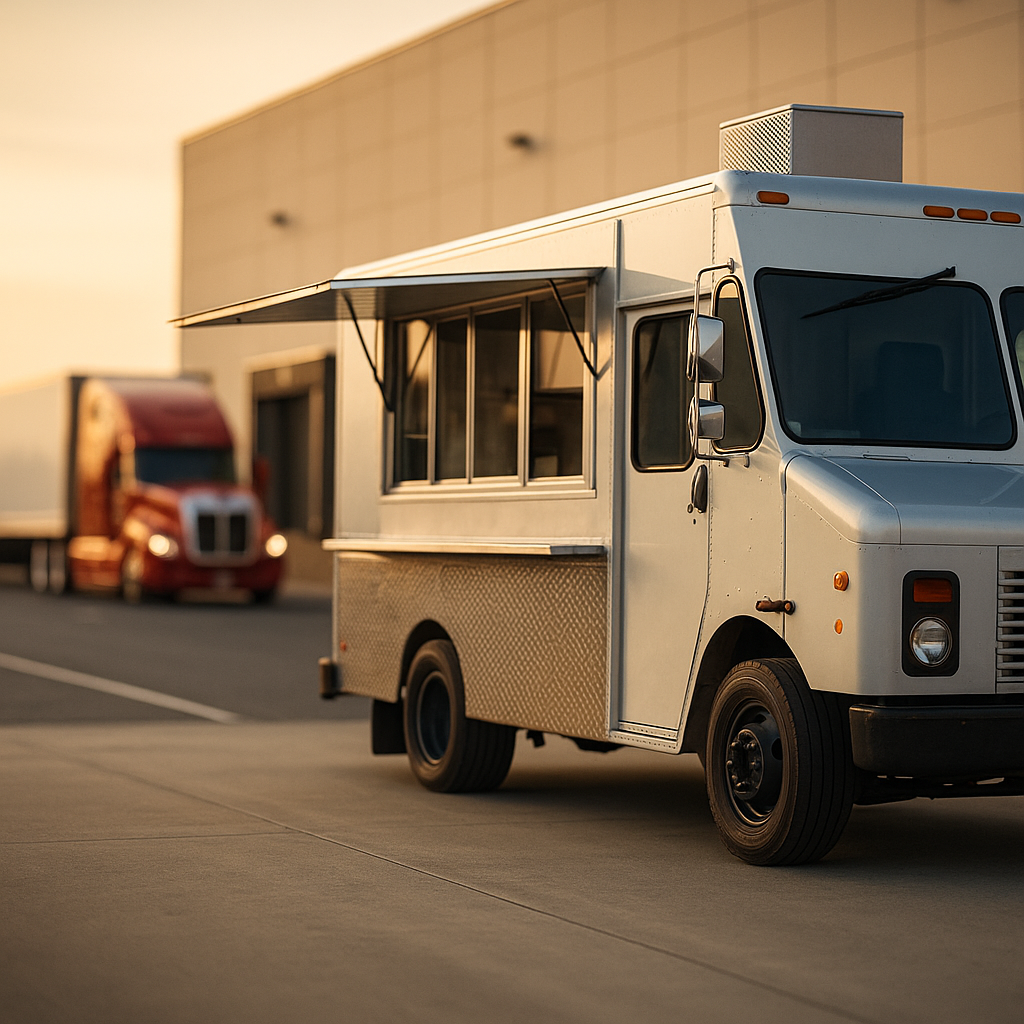
Food truck insurance cost is usually $25–$400 per month in 2026, depending on whether you buy GL-only (cheapest) or an operating bundle that includes general liability, commercial auto, and property/equipment coverage. Your menu (fryers/open flame), driving exposure, staff, and event requirements can move the number fast.
If you want a quick foundation on how these policies fit together, start with Small business insurance basics for new operators. Want a faster estimate? Jump to the calculator in How to Lower Food Truck Insurance Costs (15 Practical Levers) + a Simple 3-Step Estimate.
Table of Contents
Reading time: 8 minutes
- Key Takeaways
- Average Food Truck Insurance Cost in 2026 (Monthly + Annual Ranges)
- Cost Breakdown by Coverage Type (What You Pay For)
- Permits, Venues, and COIs: What Coverage Is Commonly Required
- How to Lower Food Truck Insurance Costs (15 Practical Levers) + a Simple 3-Step Estimate
- Frequently Asked Questions
- Conclusion: Budget Before You Sign Permits
Key Takeaways
Most full-time food truck operators should budget for three core lines—general liability, commercial auto, and some form of property/equipment coverage—because venues and road exposure typically require more than GL-only.
- Plan on a “real operating” bundle: GL-only can be cheap, but many full-time trucks end up needing GL + commercial auto + property/equipment.
- Commercial auto is usually the biggest line item: ZIP code, drivers, mileage, and truck value can swing pricing hard.
- Menu and cooking method matter: fryers/open flame/grease load increase fire and burn exposures (and often your premium).
- You can often cut 15–30%: tighter deductibles, better driver controls, correct equipment values, and shopping 3–5 markets are the levers that actually move the price.
Average Food Truck Insurance Cost in 2026 (Monthly + Annual Ranges)
Average food truck insurance cost in 2026 typically falls between $25 and $400 per month, because most operators combine general liability, commercial auto, and equipment/property coverage based on how they drive and where they vend.
There isn’t one “standard” food truck policy—most owners piece together coverage that looks like commercial auto (because the truck is used for business) plus premises/operations liability (because customers line up at your service window).
If you’re wondering why your quote is higher than someone else’s, rating factors are usually the reason. A solid explainer is What drives business insurance pricing.
Quick cost table (use this to budget)
| Coverage / Package | Typical Monthly Range | Typical Annual Range | Best For |
|---|---|---|---|
| General Liability (GL) only | $25–$100 | $300–$1,200 | Pop-ups, light events, low driving exposure |
| BOP (GL + property, varies) | $70–$200 | $840–$2,400 | Full-time trucks with real equipment value |
| Commercial Auto (liability ± comp/collision) | $100–$300+ | $1,200–$3,600+ | Most drivable food trucks (often required) |
| “Operating Bundle” (GL + BOP + Auto) | $200–$400+ | $2,400–$4,800+ | Typical full-time city routes + events |
| Workers’ comp (if employees) | $60–$200+ | $720–$2,400+ | Any truck with staff on payroll |
| Add-ons (liquor, cyber, spoilage, equipment breakdown) | $10–$150+ | $120–$1,800+ | Depends on your operations |
Why the ranges are wide
Insurance pricing varies by garaging ZIP, claims history, driver MVRs, annual mileage/radius, truck value/build-out cost, cooking method (heat/grease), and venue contract limits.
Two trucks can look “identical” on Instagram and still price very differently once underwriting sees the drivers, radius, and equipment schedule.
Why 2026 can feel higher than it used to
U.S. inflation has been measurable in recent years, and the Bureau of Labor Statistics publishes CPI trend data that reflects changes in parts, labor, and replacement costs over time.
CPI isn’t the same thing as insurance pricing, but higher repair and replacement costs tend to show up in underwriting. You can review CPI data directly from the U.S. Bureau of Labor Statistics (BLS): https://www.bls.gov/cpi/.
Cost Breakdown by Coverage Type (What You Pay For)
Food truck insurance is typically built from separate coverages—general liability, commercial auto, and optional property/equipment lines—because each coverage insures a different type of loss with different underwriting rules.
This is where owners accidentally overpay for one line (often auto) while leaving a gap in another (often equipment/property or contract-required wording).
General liability (GL): the coverage venues actually care about
General liability insurance commonly carries $1,000,000 per occurrence and $2,000,000 aggregate limits for food truck events, because festivals, landlords, and commissaries often require those limits in writing.
GL helps pay for claims that your business caused bodily injury or property damage to others—think a customer slip-and-fall, a burn at the pickup window, or a damaged venue surface.
- Why it’s essential: It’s the most-requested coverage for events and locations.
- Who needs it: Everyone, even “weekend-only” trucks.
- What changes the price: foot traffic, cooking method, claims, and required limits.
For real examples and limit breakdowns, see General liability insurance details (limits, examples).
BOP (Business Owner’s Policy): often the best value for full-timers
A Business Owner’s Policy (BOP) usually bundles general liability with some form of business property coverage, but the exact property insured depends on the carrier’s form and endorsements.
If your build-out includes a hood system, refrigeration, generator, POS tablets, or signage, a GL-only policy typically won’t address damage to your gear. A BOP (or a similar property/equipment approach) is often where you protect that investment.
- Best fit: full-time operations, frequent events, meaningful equipment value, commissary/storage exposure.
- Common mistake: guessing equipment values instead of documenting them.
Commercial auto: usually the biggest check you write
Commercial auto insurance is commonly the largest monthly premium for a food truck because underwriting prices driver history, garaging ZIP, mileage/radius, and the truck’s physical damage value.
Your food truck is a business-use vehicle, and many personal auto policies exclude or restrict coverage for vehicles used primarily for business. The NAIC provides consumer guidance on auto insurance basics here: https://content.naic.org/consumer/auto-insurance.
- Liability: injuries or damage you cause with the truck.
- Comprehensive/collision: damage to your truck (often required if financed).
- Cash-flow tip: If the truck is paid off, liability-only can be a choice—but only if you can replace the truck quickly after a total loss.
If you want the plain-English breakdown, read Commercial auto insurance explained (business-use vehicles).
Workers’ comp + optional add-ons (the “budget accelerators”)
Workers’ compensation pricing is commonly driven by payroll, job duties, and state rating rules, and it may be required by state law or by contract when you have employees.
- Workers’ comp: Often required if you have employees (even part-time), depending on your state and contracts.
- Liquor liability: If you sell/serve alcohol, expect underwriting to treat that as a meaningful exposure.
- Cyber: POS and card payments create data exposure, even for small operators.
- Spoilage/refrigeration failure: Food loss can be a real hit after a breakdown.
- Equipment breakdown: Generator, refrigeration, and electrical failures can stop service on a high-revenue day.
Permits, Venues, and COIs: What Coverage Is Commonly Required
A Certificate of Insurance (COI) is a document that shows your active coverages, limits, policy dates, and certificate holder, and many festivals and commissaries require it before you can vend.
This is where insurance becomes a sales tool: if you can’t produce the right COI quickly, you can lose the spot—even if you’re fully paid up and “covered.”
Common requirement patterns (plan for these)
Event organizers commonly require general liability limits (often $1M/$2M) and may require “Additional Insured” wording that must appear correctly on your COI.
- Cities/counties & event organizers: GL with specified limits and dates.
- Commissaries, landlords, venues: often request Additional Insured status.
- Lenders/lessors: commonly require comp/collision and may dictate deductibles.
- Catering clients: may require higher limits or special COI wording.
COI checklist you can copy/paste
A COI request should confirm seven items: named insured, address, coverages shown, limits, certificate holder, additional insured, and effective dates.
- Named insured matches your legal entity (LLC name, not a nickname).
- Mailing address is correct (some venues verify it).
- Coverage types match the contract (GL + auto, sometimes both).
- Limits match the requirement (don’t assume $1M is always enough).
- Certificate holder is correct (exact entity name matters).
- Additional insured is included when requested (and on the correct policy).
- Effective dates cover the actual event dates (weekend festivals trip people up).
For a clean, non-jargony explanation, use Certificate of insurance (COI) and additional insured.
Example state resource (use as a model)
State motor vehicle agencies sometimes publish commercial insurance guidance for carrier-type operations, but your city permit office and event contracts can be more demanding than a statewide overview.
Example (Texas): https://www.txdmv.gov/motor-carriers/insurance-requirements
How to Lower Food Truck Insurance Costs (15 Practical Levers) + a Simple 3-Step Estimate
Food truck owners can often reduce insurance premiums by 15–30% by shopping 3–5 markets, tightening driver controls, selecting realistic deductibles, and documenting truck/equipment values accurately.
This section is about saving money without creating the kind of gap that turns one claim into a business-ending event.
15 levers that actually move your premium
- Shop 3–5 markets: don’t rely on one carrier option.
- Re-shop at renewal: inertia is expensive.
- Avoid lapses: lapses shrink options and can spike pricing.
- Pay in full if you can: it can reduce fees and sometimes earns a discount.
- Pick deductibles you can pay tomorrow: not “after a good month.”
- Document truck value + build-out: don’t guess; don’t overinsure.
- Limit drivers: every added driver is another MVR and another variable.
- Run MVRs first: before you hand someone the keys.
- Control radius/mileage: underwriting cares how far and how often you run.
- Fire controls: keep suppression maintained; keep hood cleaning documented.
- Injury prevention basics: burns/cuts/slips training reduces claims.
- Event setup discipline: cord covers, cones, mats, and clean surfaces prevent losses.
- Secure equipment in transit: theft and damage controls matter.
- Bundle when it fits: fewer gaps; sometimes discounts.
- Raise limits only when required: buy what contracts demand—not what “sounds good.”
If you want a deeper checklist you can run at renewal, use How to lower business insurance costs (practical levers).
Bundle vs. separate policies (fast rule of thumb)
Bundling often makes sense when you’re full-time and have meaningful equipment value, while separate policies can be smarter when you’re truly GL-only or your auto needs a specialty market.
- Bundling tends to win: full-time, frequent events, equipment value, fewer gaps.
- Separate can be smarter: micro operators or unusual auto underwriting needs.
Food truck insurance cost calculator (simple 3-step estimate)
A simple estimating method is to pick your operating profile, choose your coverages, and then select limits/deductibles—because those three inputs typically explain most of the premium spread.
Step 1 — Choose your operation profile
- Profile A (Micro): 1–2 events/week, limited driving, no employees
- Profile B (Full-time): regular routes + festivals, moderate driving, may have 1–2 employees
- Profile C (Growth): multiple trucks or heavy catering, multiple drivers, payroll
Step 2 — Select coverages (what you’re actually buying)
- GL (almost always)
- BOP/property (if equipment value matters)
- Commercial auto (if the truck drives)
- Workers’ comp (if employees)
- Add-ons (liquor/cyber/spoilage/equipment breakdown)
Step 3 — Choose limits + deductibles (the cash-flow decision)
Higher deductibles usually reduce premium, but they increase your out-of-pocket cost after a claim, so the “right” deductible is one you can pay immediately. For a practical framework, read Choosing insurance deductibles without wrecking cash flow.
Example output bands (planning ranges)
Planning ranges are useful for budgeting, but final premium depends on underwriting inputs like ZIP code, drivers, mileage, and equipment schedule.
- Profile A (GL-only, low driving): $25–$150/mo
- Profile B (GL + BOP + commercial auto): $200–$450/mo
- Profile C (higher auto exposure + payroll + higher limits): $350–$800+/mo
A quick note for readers crossing over from “trucking” insurance
Food trucks are commonly underwritten more like commercial auto plus premises/operations liability, while for-hire trucking insurance is typically built around motor carrier exposures like hauling, cargo, and filings.
- Trucking insurance / semi truck insurance: focused on for-hire hauling, cargo, and carrier filings.
- Food trucks: focused on customer injury/property damage + business-use vehicle exposure.
- Trailers/secondary rigs: may need separate structures (especially with towing, long radius, or multiple vehicles).
If your revenue depends on the truck’s equipment (generator, refrigeration, electrical), consider reading Equipment breakdown insurance (generators, refrigeration, POS).
Frequently Asked Questions
Most food trucks budget $25–$400 per month for insurance in 2026. The low end is usually a general liability (GL)-only policy for limited events and low driving exposure, while full-time trucks usually pay more because they need GL + commercial auto + some property/equipment coverage. The biggest drivers are the garaging ZIP code, driver MVRs, annual mileage/radius, truck value (especially if you carry comp/collision), and menu/cooking method (open flame, fryers, grease load). Your venue contract limits can also force higher premiums overnight.
A food truck typically needs general liability and commercial auto because you have customer foot traffic and a business-use vehicle on public roads. Many operators also need a BOP or other property/equipment coverage when the build-out (hood, refrigeration, generator, POS) has meaningful value. If you have employees, workers’ compensation may be required based on your state rules and on contract requirements from venues or commissaries. Optional coverages like liquor liability, cyber, spoilage, and equipment breakdown depend on what you sell and how you operate day-to-day.
General liability for a food truck is often around $25–$100 per month for smaller or lower-risk operations, but it can increase with higher foot traffic, frequent festivals, prior claims, riskier cooking methods (open flame/fryers), or higher required limits. A very common venue request is $1M per occurrence / $2M aggregate, and many locations also require Additional Insured status shown correctly on the COI. If you’re getting pushed to higher limits (like $2M+), it’s usually because the contract requires it, not because the agent “prefers” it.
Commercial auto insurance for food trucks commonly costs $100–$300+ per month and is often the biggest line item on the account. The pricing is driven by whether you carry liability-only or add comprehensive/collision (truck value matters), plus underwriting inputs like garaging ZIP, driver MVRs, annual mileage, and your operating radius. If the truck is financed, the lender often requires physical damage coverage, which can push the monthly cost up. For a full breakdown, see Commercial auto insurance explained (business-use vehicles).
Affordable food truck insurance providers exist, but “affordable” depends on your ZIP code, drivers, mileage, truck value, and the coverages your venues require. The most reliable way to lower cost is to compare quotes across 3–5 carriers, avoid coverage lapses, tighten driver controls (limit drivers and check MVRs), and choose deductibles you can actually pay immediately after a claim. Bundling can also reduce gaps and sometimes helps pricing, especially when GL, property/equipment, and auto are coordinated. If you want a renewal playbook, read How to lower business insurance costs (practical levers).
Conclusion: Budget Before You Sign Permits
Food truck insurance cost is rarely just the cheapest GL quote; for most full-time operators, the real budget is GL + commercial auto + equipment/property protection, with workers’ comp and add-ons as you add staff and contracts.
If you want to protect cash flow, build your coverage around how you actually operate, keep COI requests frictionless, and shop renewals like you shop food costs.
Key Takeaways:
- Budget realistically: many full-time trucks land around $200–$450/month when GL, BOP/property, and auto are included.
- Control the big drivers: drivers, mileage/radius, garaging ZIP, and truck value typically decide the auto premium.
- Don’t let COIs slow you down: correct named insured, limits, dates, and additional insured wording keeps you bookable.
When you’re ready, get quotes from multiple markets so you’re not stuck with one price and one set of terms.