
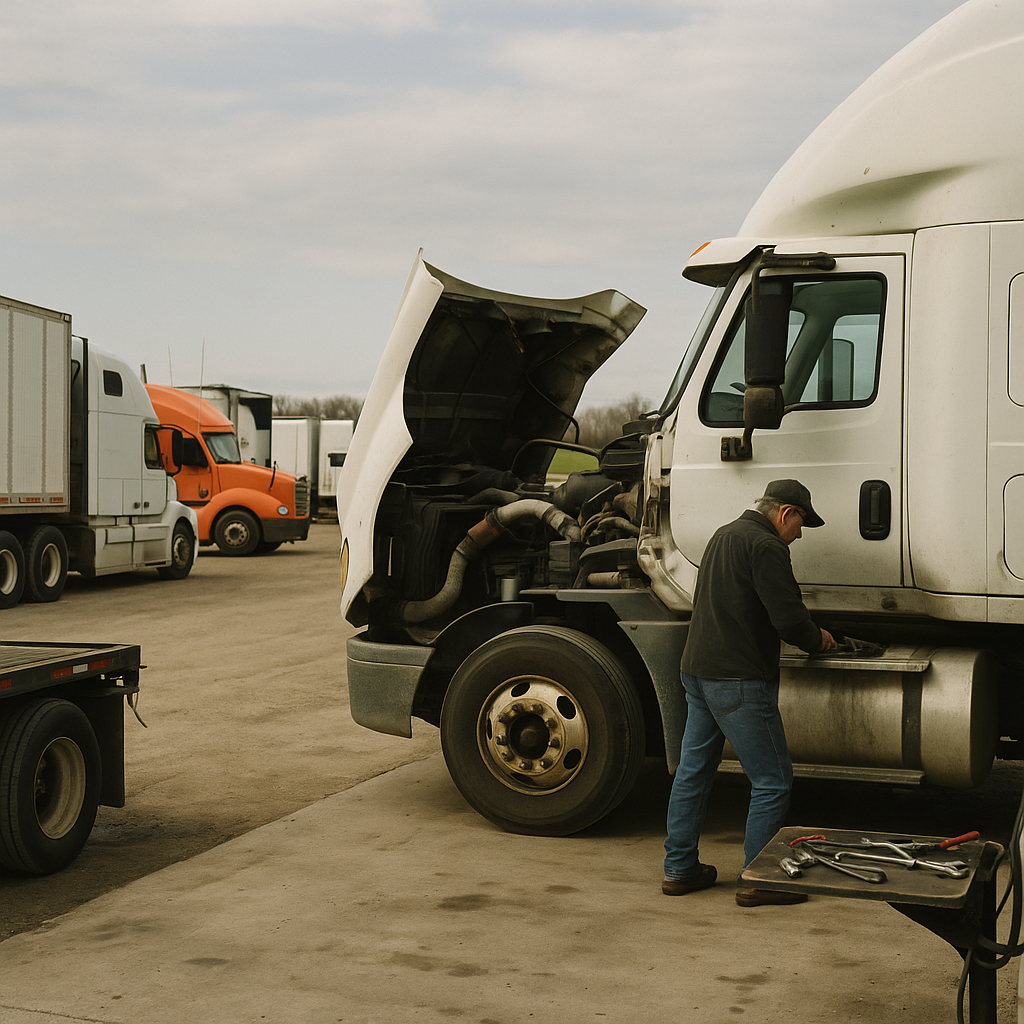

If you’re shopping for food truck insurance Illinois operators actually need, the biggest mistake is assuming it’s one policy. It usually isn’t. A food truck can need vehicle coverage, business liability coverage, and protection for equipment or inventory, and the right mix changes if you run a self-propelled truck, a towable trailer, or both.
What Food Truck Insurance Covers in Illinois#
Food truck insurance is usually a package of commercial coverages built around how your mobile food business actually operates in Illinois. One part covers road risk, another covers customer injury or property damage, and another can protect equipment, inventory, or spoilage. The setup matters because a truck and a trailer don’t create the same insurance problem.
A premium is the amount you pay for insurance. A deductible is the amount you pay out of pocket on a covered claim before the policy starts paying.
Commercial auto vs. general liability#
Commercial auto insurance covers business-use vehicle risks like crashes, certain vehicle damage, and liability from operating the truck on the road. General liability covers non-auto claims, like a customer slipping near your service window or damage you cause to someone else’s property while operating at an event.
That split matters more than most new operators expect. If you rear-end someone while driving to a festival in Peoria, that’s a vehicle claim. If a customer trips over your extension cord while ordering in Chicago, that’s usually a general liability issue instead.
A lot of operators also hear "food truck insurance" and think general liability handles everything. It doesn’t. General liability doesn’t replace the commercial auto side of the policy.
Food-service risks that change the policy#
Underwriting is how an insurer reviews your operation and decides how to price and structure coverage. Food trucks bring risks that a regular work van doesn’t, including cooking equipment, hot oil, generators, propane, refrigeration, and customer foot traffic around the vehicle.
Practical example: if your refrigeration unit fails before a weekend event and ingredients spoil, that isn’t the same kind of loss as hitting a parked car. If your policy includes spoilage-related protection or equipment coverage, that may help. If it doesn’t, the loss may be yours.
The same goes for cash handling, expensive point-of-sale gear, and custom kitchen build-outs. Those details can change what coverage makes sense and what the insurer asks during quoting.
When a trailer is involved#
A food trailer is a towable unit used for food service, while a food truck is self-propelled. That one difference changes how the vehicle side and business side get insured.
With a food truck, the same unit is both the moving vehicle and the kitchen. With a trailer, the towing vehicle, the trailer itself, and the vending operation may each raise separate coverage questions.
If that sounds like a lot to sort through, that’s because it is. A bad mismatch can leave you paying for the wrong policy while still exposed where it counts.
What Illinois Food Truck Operators Usually Need to Carry#
Illinois food truck operators usually need to separate legal requirements from business requirements. State law may drive the vehicle insurance side, while cities, venues, landlords, lenders, and event organizers can add their own insurance conditions. That means "required" often depends on where and how you operate, not just on the truck itself.
Required by law vs. required by contracts#
At the state level, the vehicle generally needs proper business-use insurance if it’s being used as part of a commercial operation. But many operators run into extra requirements through contracts instead of statutes.
For example, a downtown festival may require a certificate of insurance, which is a document proving certain coverage is in force. It may also require additional insured status, which extends some liability protection under your policy to another party, such as a landlord, festival organizer, or property owner.
So the question isn’t only "What does Illinois require?" It’s also "What does this city, event, commissary, lender, or property owner require before I can operate?"
Vehicle coverage obligations#
A food truck used for business shouldn’t rely on a personal auto policy. Personal auto coverage is built for personal driving, not a revenue-generating vehicle carrying commercial equipment and serving the public.
That distinction also lines up with broader federal insurance concepts. FMCSA guidance explains that commercial motor vehicle use can trigger different regulatory and insurance treatment than personal use, and federal financial responsibility rules under 49 CFR Part 387 apply to certain motor carriers, not ordinary personal vehicles. For most food truck operators, the main takeaway is simple: business use changes the insurance conversation, even when FMCSA filing rules don’t apply the same way they do in trucking.
You can review federal carrier guidance at FMCSA and verify broader carrier status concepts through SAFER, but most Illinois food vendors will be dealing more with commercial auto and local vending rules than with freight-carrier filings.
Business license and vendor permit considerations#
Municipal rules can vary a lot in Illinois. Chicago may ask different things than a suburb, fairground, park district, or county event.
Some local permit programs and vending rules can require proof of insurance before issuing approval, and event contracts often spell out minimum liability limits or certificate language. That’s why it’s smart to check the municipality or permit office directly, such as through Illinois or local government licensing guidance, instead of assuming one statewide rule covers every stop.
Food Truck vs. Food Trailer: Why the Setup Changes Coverage#
The physical setup changes what insures the vehicle, what insures the business, and what happens when something goes wrong in transit or at a job site. A self-propelled truck combines driving risk and kitchen risk in one unit, while a towable trailer separates them. That usually means different questions about liability, physical damage, storage, and towing.
Self-propelled truck#
With a self-propelled food truck, the road exposure is built into the same unit you use to cook and serve. If you’re driving daily between commissaries, office parks, and weekend events, the vehicle policy becomes a central part of the insurance program.
Physical damage covers damage to your own vehicle from causes like collision or other covered losses. On a food truck, that can matter because the unit itself may include a costly custom kitchen build-out.
Towable trailer#
With a food trailer, the trailer isn’t driven under its own power. Instead, the towing vehicle and the trailer need to be looked at together.
The towing vehicle may need its own commercial auto treatment, while the trailer may need separate physical damage consideration. The business liability side still matters too, because customers interact with the trailer as a food-service operation whether it moves that day or not.
Ownership and hitching risk#
Trailer setups also raise practical questions a lot of operators miss. Who owns the trailer? Where is it stored overnight? Is it parked most of the week and moved only for events? Is someone else’s vehicle ever towing it?
If a trailer is backed into a lot Friday night and stays there all weekend, the exposure isn’t the same as a truck that drives every morning and parks every evening. If the trailer is borrowed, leased, or stored at another location, the coverage review gets even more important because liability and physical damage responsibilities may split differently.
Core Coverages for Mobile Food Businesses#
Most Illinois mobile food businesses should review three buckets first: vehicle coverage, business liability coverage, and property or equipment protection. Those cover different claim types, and one doesn’t replace the others. The right mix depends on whether you drive a truck, tow a trailer, carry costly equipment, or operate at venues that impose contract requirements.
Commercial auto liability#
Commercial auto liability covers bodily injury or property damage you cause to others while operating a business vehicle. If your food truck clips another car on the way to Springfield or backs into a pole at a county fair, this is the part of the policy that generally responds.
This is also where operators often confuse personal and business use. A branded food truck with cooking equipment, business signage, and regular vending activity is not the same risk as a personal pickup used on weekends.
General liability and product-related claims#
General liability covers common third-party business claims not caused by operating the vehicle itself. Think slip-and-fall claims near the serving area, damage to a rented event space, or some everyday customer injury allegations.
Product-related claims can also matter for food businesses. If a customer alleges your food caused illness or your service caused harm, that’s a different exposure than an auto crash. General liability is often the first place operators look for that kind of protection, but the exact scope depends on the policy.
If you serve alcohol, liquor liability may need a separate review because it’s not automatically handled the same way as standard general liability.
Cargo, equipment, and spoilage-related protection#
Physical damage can help protect the truck or trailer itself. Separate equipment or property-related protection may matter for grills, fryers, refrigeration units, generators, point-of-sale systems, and other built-in or movable business gear.
Some operators also ask about motor truck cargo, which is insurance used in freight hauling for property being transported for others. For a food truck, that usually isn’t the core coverage issue unless the operation has a separate transportation exposure that fits that policy type. In most cases, your own inventory, ingredients, and equipment are a different conversation than freight cargo coverage.
Spoilage-related protection can matter if refrigeration failure ruins ingredients before a major event. Cash-sensitive businesses may also want to ask about crime-related options. These aren’t automatic must-haves for every operator, but they can be practical add-ons when they match the actual operation.
How Much Food Truck Insurance Costs in Illinois#
Food truck insurance costs in Illinois depend more on your operation than on any one average. The biggest price drivers are usually vehicle use, value, location, claims history, equipment, payroll, and coverage limits. That’s why two food trucks that look similar from the street can get very different quotes.
Main cost drivers#
Your limit is the maximum amount a policy will pay for a covered claim. Higher limits can mean higher premiums, but lower limits can leave you exposed if a serious claim happens.
A few factors move the price quickly:
- Driving radius and annual mileage
- Truck or trailer value
- Custom kitchen equipment and refrigeration
- Garaging location and theft exposure
- Driver history and prior claims
- Number of employees and payroll
- Requested liability limits and deductibles
The NAIC offers general consumer guidance on comparing policies and understanding deductibles, which is helpful when you’re looking at two quotes that seem similar but aren’t built the same way.

Why quotes vary so much#
One Illinois operator might run a single truck close to home, park in a secured location, and have a clean driving record. Another might travel statewide for events, use a higher-value custom unit, hire seasonal staff, and work crowded venues all summer.
Those aren’t the same risk. Even if both say "food truck" on the application, the insurer sees different road exposure, different liability exposure, and different property values.
Examples of what raises or lowers the price#
A one-truck owner-operator who serves a regular local route may look more predictable than a unit that bounces between festivals across Illinois every week. A trailer stored indoors may present a different risk than a truck parked on the street with expensive cooking equipment inside.
The cheapest quote isn’t always the best fit. A lower premium can come from stripped-down coverage, higher deductibles, lower limits, or missing protection for equipment and operations that matter to your business.
How to Lower Your Premium Without Leaving Gaps#
You can lower food truck insurance costs without gutting the policy, but the safest approach is tightening the risk profile, not just deleting coverage. Better records, safer storage, cleaner driver information, and sensible deductibles often help more than blindly chasing the lowest quote. The goal is to pay for what your operation actually needs and cut what it doesn’t.
Bundle carefully, not blindly#
Bundling can help when the policies actually fit together, but it can also hide gaps. If one quote covers the truck only and another covers the truck plus general liability and equipment, the cheaper number may not be the better deal.
Make sure you’re comparing the same thing. "Food truck insurance" should be broken into the actual pieces included.
Improve underwriting signals#
Insurers look for signs that your operation is controlled and documented. Good maintenance records, secure overnight storage, clean driver histories, and organized claims documentation can all support a stronger underwriting picture.
Simple examples help. A truck parked in a fenced, lit location may present a different theft risk than one left curbside every night. A business with documented driver screening may look different than one that lets different people drive informally.
Choose limits and deductibles strategically#
Higher deductibles can lower premium, but only if you can comfortably absorb the out-of-pocket cost after a loss. Lowering limits to save money can backfire if a venue, landlord, or serious claim outgrows the policy.
The better move is usually to match the policy to the real operation. Tighten who drives, where the unit is stored, how far it travels, and what equipment really needs protection.
How to Get a Quote and Buy the Right Policy#
The fastest way to get an accurate quote is to gather the facts before you shop. Most delays happen when the vehicle details, driver details, use pattern, or equipment list are incomplete. The more clearly you describe the operation, the easier it is to tell whether the quote covers just the vehicle or the full business.
Information to gather before shopping#
Have these basics ready:
- Vehicle or trailer type and value
- Garaging address
- Where and how often you operate
- Estimated driving radius and mileage
- Driver information and loss history
- Equipment list and approximate values
- Prior insurance details
- Any permit, venue, lender, or landlord requirements
Questions to ask a broker or carrier#
Ask whether the quote covers only commercial auto or also includes general liability and equipment-related protection. Ask whether certificates of insurance can be issued for events and whether additional insured requests can be handled when needed.
Also ask how the policy treats a trailer, attached equipment, refrigeration-related losses, and seasonal changes in operation. Those details are where a lot of quote surprises show up later.
Common quote mistakes to avoid#
The biggest mistake is comparing quotes that don’t insure the same thing. Another common one is describing a business vehicle too loosely and ending up with a policy that doesn’t match the real use.
Avoid these errors:
- Using personal auto as a stand-in for commercial use
- Forgetting to list custom equipment
- Leaving out drivers
- Ignoring venue contract requirements
- Assuming trailer setups work like self-propelled trucks
Bottom Line for Illinois Food Truck Owners#
Illinois food truck owners should verify four things before buying insurance: what kind of unit they operate, what local rules apply, which core coverages protect the real business, and what contract requirements others may impose. Required coverage and recommended coverage are not always the same. The best policy is the one that matches how the truck or trailer actually works day to day.
What to verify before you drive#
Confirm whether you’re insuring a self-propelled truck, a towable trailer, or both. Then verify your local permit expectations, event requirements, and any lender or landlord insurance conditions.
What to ask before you sign#
Ask whether the quote includes commercial auto, general liability, and any equipment or spoilage-related protection you actually need. Check deductibles, limits, exclusions, and whether certificates of insurance or additional insured requests are part of your routine operating reality.
When to get help from a broker#
If your setup involves a trailer, custom equipment, multi-location vending, or changing event requirements, getting help is usually worth it. LogRock specializes in trucking insurance for owner-operators and small fleets, and if you’re not sure what coverage fits your operation, LogRock can help you scope it.
FAQ#
Do I need commercial auto insurance for a food truck in Illinois?
Yes, a food truck used as part of a business operation generally needs commercial auto insurance rather than personal auto coverage. The truck isn’t just transportation. It’s part of how you earn income, carry equipment, travel to jobs, and serve customers. That changes the risk.
Personal auto policies typically aren’t built for a vehicle outfitted as a business unit. If the truck is branded, used for vending, or carries cooking equipment and inventory, commercial auto is usually the safer and more appropriate starting point.
What insurance is required for a food truck in Illinois?
The answer depends on whether you’re talking about state law, local permits, or private contract requirements. The vehicle side usually needs proper business-use insurance, but cities, festivals, landlords, commissaries, and lenders may require more than that.
For example, one location may ask for general liability and a certificate of insurance, while another may also require additional insured status. That’s why Illinois operators should check both the vehicle insurance need and the local vending or event requirements before assuming they’re fully compliant.
Is general liability insurance the same as food truck insurance?
No. General liability is only one part of a typical food truck insurance setup. It helps with non-auto business claims, like a customer slip-and-fall or certain property damage claims related to operations.
It does not replace commercial auto insurance for crashes involving the truck. It also may not handle equipment losses, spoilage, or trailer-related physical damage issues. When people say "food truck insurance," they usually mean a bundle of policies, not one standalone liability form.
How is food trailer insurance different from food truck insurance?
A food trailer changes the vehicle side of the insurance problem because the trailer is towable rather than self-propelled. That means the towing vehicle, the trailer itself, and the food-service operation may all need to be reviewed separately.
With a food truck, the same unit is driving and serving. With a trailer, storage, towing arrangements, ownership, and physical damage questions can become more complicated. A trailer parked at an event overnight creates a different risk than a truck driven daily between stops.
How much does food truck insurance cost in Illinois?
There isn’t one flat price that fits every Illinois food truck. Your actual premium depends on your operation, cargo, radius, driving history, and other factors. For food trucks specifically, vehicle value, equipment value, mileage, location, claims history, payroll, and requested limits all matter.
A local one-truck operator with a clean record may look very different to an insurer than a higher-mileage event business serving locations across the state. The only useful quote is one built around your actual setup and coverage needs.
Can I use personal auto insurance for my food truck?
Usually no, or at least not safely. Personal auto coverage generally isn’t designed for a truck that operates as a business, carries food-service equipment, and generates income on the road and at vending sites.
Even if the vehicle still looks like a truck from the outside, the business use changes the exposure. If a claim happens and the insurer finds commercial use that wasn’t properly disclosed or covered, you could face major gaps at the worst time.
What coverages should a mobile food business review first?
Start with commercial auto, general liability, and property or equipment-related protection. Those three categories usually answer the biggest questions first: road accidents, customer injury claims, and damage to the truck, trailer, or business equipment.
After that, review add-ons that fit your real operation, such as spoilage-related protection, liquor liability if alcohol is involved, or employee-related coverage if you have staff. Not every operator needs every extra, but most need a clear review of the core buckets first.
How can I lower food truck insurance costs without losing protection?
The safest way is to improve the quality of the risk instead of cutting out important coverage. Better driver screening, secure storage, clean maintenance records, accurate equipment lists, and thoughtful deductible choices can all help without creating obvious gaps.
You should also compare quotes carefully to make sure they insure the same things. A lower premium may simply mean lower limits, missing equipment protection, or no general liability. That’s not real savings if it leaves the business exposed.
What information do I need before requesting a quote?
Have your vehicle or trailer details, garaging address, driver information, operating area, estimated mileage, equipment list, prior claims, and prior insurance ready. If you serve events, gather any contract insurance requirements too.
That helps the broker or carrier tell whether the quote is only for the vehicle or for the broader business operation. It also reduces the odds of having to revise the quote later because a trailer, custom kitchen equipment, or extra driver was left out.
Do Illinois cities have their own food truck insurance rules?
Yes, they can. Local permit rules, event requirements, and property-use agreements often add insurance conditions beyond what you’d think of as the basic state-level vehicle requirement.
One Illinois city or event organizer may ask only for proof of liability coverage, while another may want a certificate of insurance, additional insured wording, or other documentation before approving your application. That’s why local verification matters every time you add a new place to operate.





