
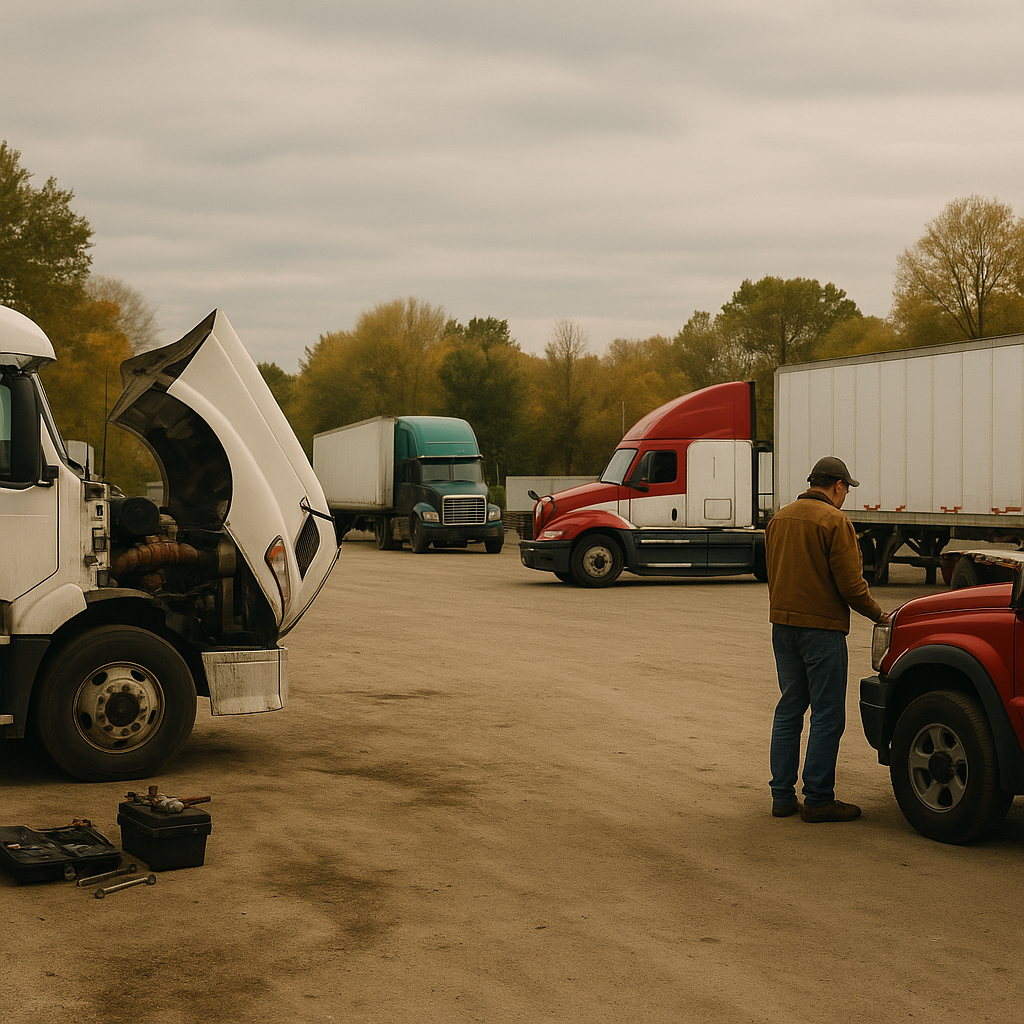

Food truck insurance in Michigan usually means two separate risk buckets: the truck itself and the food business running out of it. If you mix those up, it’s easy to buy a policy that handles a crash but not a customer injury, or covers business liability but not the vehicle on the road.
What Food Truck Insurance Actually Covers#
Food truck insurance in Michigan usually combines protection for the vehicle, the business operation, and the equipment that keeps the business running. The short version: a crash claim and a customer injury claim are not the same thing, and they often sit under different coverages.
A food truck isn’t just a restaurant, and it isn’t just a vehicle. It’s a mobile business with driving exposure, cooking exposure, customer exposure, and property exposure all packed into one unit.
Vehicle coverage vs. food-service coverage#
Commercial auto is insurance for a vehicle used in business, including liability for road accidents and, if selected, damage to the truck itself. General liability is insurance for third-party bodily injury or property damage tied to business operations, like a customer slipping near the service window.
Here’s the practical split. If your driver backs into a parked car leaving a festival in Grand Rapids, that’s a vehicle-side claim. If a customer trips over your power cord while waiting for tacos in Detroit, that’s usually an operations-side claim.
That distinction matters because many owners start by asking for “food truck insurance” as if it’s one simple box. In real life, the insurer needs to know what needs protection: the truck, the cooking setup, the business liability, or all of it.
What a policy may include#
A typical setup may include commercial auto liability, physical damage for the truck, general liability, and coverage for attached equipment, contents, or spoilage depending on the operation. A deductible is the amount you pay out of pocket before covered damage insurance begins paying on certain claim types.
If you have a generator, refrigeration unit, grill line, point-of-sale system, or permanently attached kitchen gear, don’t assume the base vehicle policy automatically covers all of it the way you expect. Attached and movable items often need to be scheduled or valued correctly.
Where food trucks differ from restaurants and trailers#
A food truck is self-propelled, so the vehicle side is a major part of the risk. A food trailer has no engine of its own, which changes the insurance questions toward trailer damage, towing, setup liability, and contents protection.
A restaurant with a fixed location may not deal with road claims, event contracts, or changing service sites every week. A Michigan food truck might serve lunch downtown, then move to a brewery event, then a county fair. Each move changes the exposure.
If you’re not sure whether your setup needs truck coverage, restaurant-style liability, or both,

What Coverage Most Michigan Food Trucks Need#
Most Michigan food trucks need a combination of commercial auto, general liability, and property-style protection for equipment or contents. The exact mix depends on whether the unit is self-propelled, where it operates, what it serves, and whether events, landlords, or lenders require specific limits.
Commercial auto for the truck#
If the unit is a motorized truck used for business, it usually needs commercial auto coverage, not personal auto. Personal auto policies are built for private use, and business use involving food service, inventory, equipment, and regular commercial operation can fall outside what a personal policy is meant to handle.
Underwriting is the insurer’s process for evaluating risk before offering terms and pricing. For a food truck, underwriting usually looks at the truck’s VIN, value, garaging location, driver history, mileage, service radius, and how the vehicle is actually used.
If the truck crosses state lines or operates in a way that fits interstate commercial motor vehicle rules, the vehicle side may also raise federal compliance questions. FMCSA rules can apply to interstate commercial vehicle operations, so operators should confirm whether USDOT registration, and in some cases an MC number, is relevant to their setup through FMCSA.
General liability for customer and site risks#
Even if your truck hardly moves during service hours, general liability coverage still matters because customers, venues, and property owners care about what happens around the business, not just on the road.
Think about real-world claims: a customer burns a hand on a hot service counter, grease damages a host site’s pavement, or someone slips on spilled sauce near the order window. Those aren’t crash claims. They’re business liability claims.
Many Michigan events and private venues also ask for proof of liability insurance before they’ll let you set up. So even if no one from the state tells you “buy this exact policy,” your contracts may effectively do it for you.
Equipment, contents, and downtime considerations#
Your fryers, refrigerators, prep tables, generators, and attached kitchen systems may represent a big chunk of the business value. Physical damage coverage protects the truck itself against covered damage like collision or other covered losses, but equipment and contents may need separate attention depending on how the policy is built.
Spoilage matters too. If a refrigeration failure ruins a full weekend’s inventory before an Ann Arbor event, the issue isn’t just the repair bill. It’s the lost food and the missed revenue.
That’s where business interruption coverage or other downtime-related protection can become worth reviewing. A truck that’s down for repairs after a kitchen fire or covered loss may also be a business that’s missing its busiest dates.
Michigan Licenses and Compliance Basics#
Michigan food truck licensing and insurance are related, but they are not the same thing. Licensing tells you whether you can legally operate in a given place; insurance helps protect the business and may be required by contracts, lenders, events, or local rules tied to that operation.
State and local permissions#
Michigan operators may need approvals at more than one level depending on how and where they serve. That can include business setup, food establishment oversight, and location-specific permissions.
The Michigan Department of Agriculture and Rural Development, or MDARD, is the state agency that oversees many food-safety and food-establishment rules in Michigan. If you’re launching a mobile food unit, start by confirming your food-operation requirements with MDARD.
Health department and local permitting#
A health department is the local or regional public agency that enforces food-safety rules for preparation and service. A local permit is permission from a city, county, township, or event organizer to operate in a specific place or under certain conditions.
That means one operator may be cleared to serve in one city but still need separate approvals for another event, fairground, or downtown zone. Parking, commissary expectations, inspections, fire-related rules, and temporary event requirements can all be separate from the insurance purchase itself.
Insurance as part of readiness, not the license itself#
Here’s where operators get tripped up: you can be fully lined up on food permits and still be underinsured. For example, a truck might have the right health paperwork but only a personal auto policy, or it might carry restaurant-style liability that doesn’t match mobile vehicle exposure.
Michigan doesn’t boil food truck insurance down to one universal rule that fits every operator. In practice, requirements often come from the place you’re serving, the lender financing the truck, or the event contract in front of you more than from a single statewide food-truck insurance mandate.
What Affects Food Truck Insurance Cost#
Food truck insurance cost in Michigan depends more on your operation details than on any single industry average. The biggest drivers are usually the truck, the drivers, the cooking setup, where you operate, the limits you choose, and whether you add equipment or downtime protection.
Vehicle value and driving profile#
A newer truck with a higher replacement cost usually brings different pricing than an older unit with limited value. A truck that puts on more miles across Southeast Michigan every week also presents a different risk than one that mostly parks at the same brewery lot.
Driver history matters too. Insurers commonly ask who will drive, how long they’ve been licensed, whether there have been accidents or violations, and whether multiple employees may operate the truck.
Garaging location matters because where the truck is stored can affect theft, vandalism, weather, and claim patterns. A VIN is the vehicle identification number used to identify the exact unit being insured.
Food type, operations, and service setup#
What you cook changes the risk. A fryer-heavy menu with open-flame cooking can raise different underwriting questions than a coffee truck or prepackaged dessert setup.
The same goes for how you serve. A high-traffic downtown lunch route, late-night festival schedule, or regular event circuit means more customer foot traffic, more setup-and-breakdown activity, and more chances for claims tied to lines, cords, spills, and equipment.
If you sell alcohol or host alcohol service in any form, liquor liability is a separate issue to review closely. Liquor liability is insurance for claims arising from alcohol-related service exposures, and it is not automatically included in standard food truck coverage.
Limits, deductibles, and optional coverages#
Liability limits are the maximum amount a policy may pay for covered liability claims, subject to the policy terms. Higher limits can change premium, especially when a venue or city contract requires a certain amount.
A deductible affects what you absorb before certain property claims are paid. Choosing a higher deductible may lower premium on some coverages, but it also means more out-of-pocket cost if the truck is damaged or equipment is stolen.
Optional coverages can move the final number too. Equipment values, spoilage, employee use, borrowed trailers, seasonal pauses, and downtime concerns all shape pricing.
If you want a fast comparison signal, expect insurers to ask these first:
- What is the unit: truck, trailer, or stand?
- What year, make, model, and VIN is it?
- Where is it garaged?
- Who drives it, and what is their driving history?
- What food is prepared on board?
- Does it have fixed cooking equipment?
- Where does it operate: private lots, public streets, festivals, breweries, or multiple cities?
- What limits do contracts or lenders require?
How to Get a Quote Faster#
The fastest food truck insurance quotes in Michigan usually come from clean, specific information. If the business details, vehicle details, and operating facts line up the first time, the insurer can usually sort coverage options much faster and with fewer corrections.
Information insurers usually ask for#
Have the basics ready: business name, garaging location, years in business, driver names, license details, and loss history if you’ve had prior claims. For the truck, expect to provide the VIN, year, make, model, estimated value, and whether the kitchen equipment is permanently attached.
Insurers may also ask what food you serve, whether frying or open-flame cooking is involved, how often the truck moves, and whether you operate seasonally or year-round. If the setup includes a trailer, generator, or separate commissary relationship, mention that up front.
Documents that speed up quoting#
A quote usually moves quicker if you have your registration details, driver’s license information, prior insurance history, and any event or landlord insurance requirements in one place. If the business entity is already formed, that can help too.
The Michigan Department of Licensing and Regulatory Affairs, or LARA, handles many business registration functions in the state. If you’re still finalizing the entity side, confirm your setup with LARA so your insurance application matches your operating business name.
Common mistakes that slow the process#
The biggest delays usually come from mixed-up classifications. Calling a self-propelled kitchen a trailer, leaving out attached cooking equipment, or saying the truck is for “personal use” when it’s a full-time business can lead to wrong quotes or rewrites.
Another common problem is treating licensing and insurance as the same question. They overlap, but they are not interchangeable. If you’re trying to sort out the right policy structure without wasting time,
Food Truck vs. Food Trailer vs. Other Mobile Food Businesses#
Food trucks, food trailers, and other mobile food businesses do not all fit the same insurance structure. The unit type changes the risk: who drives, what gets towed, which equipment is attached, and whether the business needs vehicle insurance, premises-style liability, or both.
Self-propelled truck differences#
A self-propelled truck creates a road exposure every time it moves. That means commercial auto is usually a core part of the setup, along with liability and property protections tied to the kitchen and service operation.
Trailer-specific coverage questions#
A food trailer has a different profile because another vehicle tows it. The trailer may need its own physical protection, and the operator also has to think about hitching, unhitching, site setup, stored contents, and what happens if the trailer is damaged while parked at an event.
For example, a barbecue trailer serving at county fairs may not need the same vehicle policy structure as a motorized taco truck. But it may need stronger attention on trailer value, contents, towing arrangements, and on-site liability.
Why bakery or cottage food searches are not the same thing#
Cottage food is a legal category for certain low-risk foods made in a home kitchen under state rules. That is very different from a food truck with a commercial vehicle, installed cooking equipment, and public service at multiple locations.
The same goes for home bakeries, farmers market sellers, and pop-up stands. Some may need liability only. Some may need inland property or event-related coverage. They should not assume a food truck policy is automatically the right fit, or vice versa.
How to Review a Policy Before You Buy#
Before you buy food truck insurance in Michigan, check whether the policy actually matches how the business operates day to day. The key review points are what is covered, what is excluded, which equipment is listed, and whether your service locations and business changes fit the policy terms.
Coverage limits and exclusions#
The NAIC notes that policy terms, exclusions, and endorsements can vary by insurer and policy form, which is why reading the details matters. An endorsement is a policy change that adds, removes, or modifies coverage.
Use NAIC as a reference point for understanding how insurance language and policy forms can differ. A policy that looks fine at a glance may handle auto liability but exclude certain equipment, event requirements, or operational details you assumed were covered.
Questions to ask an agent or broker#
Ask simple, direct questions:
- Does this cover the truck while driving for business?
- Does it cover customer injury around the service window?
- Are permanently attached cooking systems included?
- What about spoilage, generator loss, or downtime?
- Does seasonal storage change the policy?
- Are employees covered if they drive?
When to revisit coverage#
Review the policy any time the operation changes. That includes adding a trailer, changing the route, hiring drivers, upgrading kitchen equipment, starting festival work, or taking on contracts that require different liability limits.
FAQ#
What is the best insurance for a food truck?
The best insurance for a food truck is usually a combination, not one standalone policy. Most operators need commercial auto for the vehicle itself and general liability for customer and site-related claims. Depending on the setup, it can also make sense to add protection for attached equipment, contents, spoilage, or downtime after a covered loss.
The right setup depends on how the truck operates. A truck that drives daily to events, uses fryers, and serves large crowds has different needs than a dessert truck that stays close to one location. The best policy is the one that matches the actual operation without leaving gaps between the vehicle side and the food-service side.
What licenses do I need for a food truck in Michigan?
Michigan food truck licensing can involve more than one layer. Operators may need state food-establishment compliance, health-related approvals, and local permits depending on where they serve. Cities, counties, event organizers, and property owners may each have separate rules for parking, inspections, fire safety, or temporary operation.
The exact mix depends on the business model and service area. A truck serving across multiple cities may face more moving parts than one working a fixed private site. Start with MDARD and your local health or municipal authorities, then confirm any event-specific requirements before opening. Insurance supports readiness, but it does not replace the licensing process.
How much is $1,000,000 liability insurance a month?
There isn’t one universal monthly price for $1,000,000 liability insurance on a food truck. That limit is usually part of a broader policy, and the premium depends on the truck, drivers, menu, service radius, claim history, locations served, and any added coverages.
For example, a newer truck with attached fryers, multiple drivers, and busy event work may price differently than a lower-mileage coffee truck with a simpler setup. Deductibles, contract requirements, and whether the quote includes only liability or also vehicle and equipment protection can all change the number. Your actual premium depends on your operation, cargo, radius, driving history, and other factors.
Is a food truck a tax write-off?
A food truck itself may be treated as a business asset, and many insurance costs tied to running the business may be deductible business expenses. But tax treatment depends on how the business is structured, how the truck is owned, and how the expenses are recorded.
For example, a sole proprietor may handle deductions differently than an LLC or corporation. Equipment purchases, depreciation, fuel, repairs, insurance, and licensing costs can each have different treatment. Because tax rules depend on your books and entity setup, it’s smart to confirm the details with a qualified tax professional rather than relying on a generic answer online.
Do I need both vehicle insurance and liability insurance for a food truck?
In many cases, yes. Vehicle insurance handles road-related exposure tied to the truck, while general liability handles third-party claims tied to the business operation, such as customer injury or property damage at a service site.
A common mistake is assuming one policy does both automatically. If your truck is involved in a collision on the way to a festival, that’s a different claim path than a customer slipping near your order window after you arrive. Many operators need both sides addressed so the business is protected while moving and while serving.





