
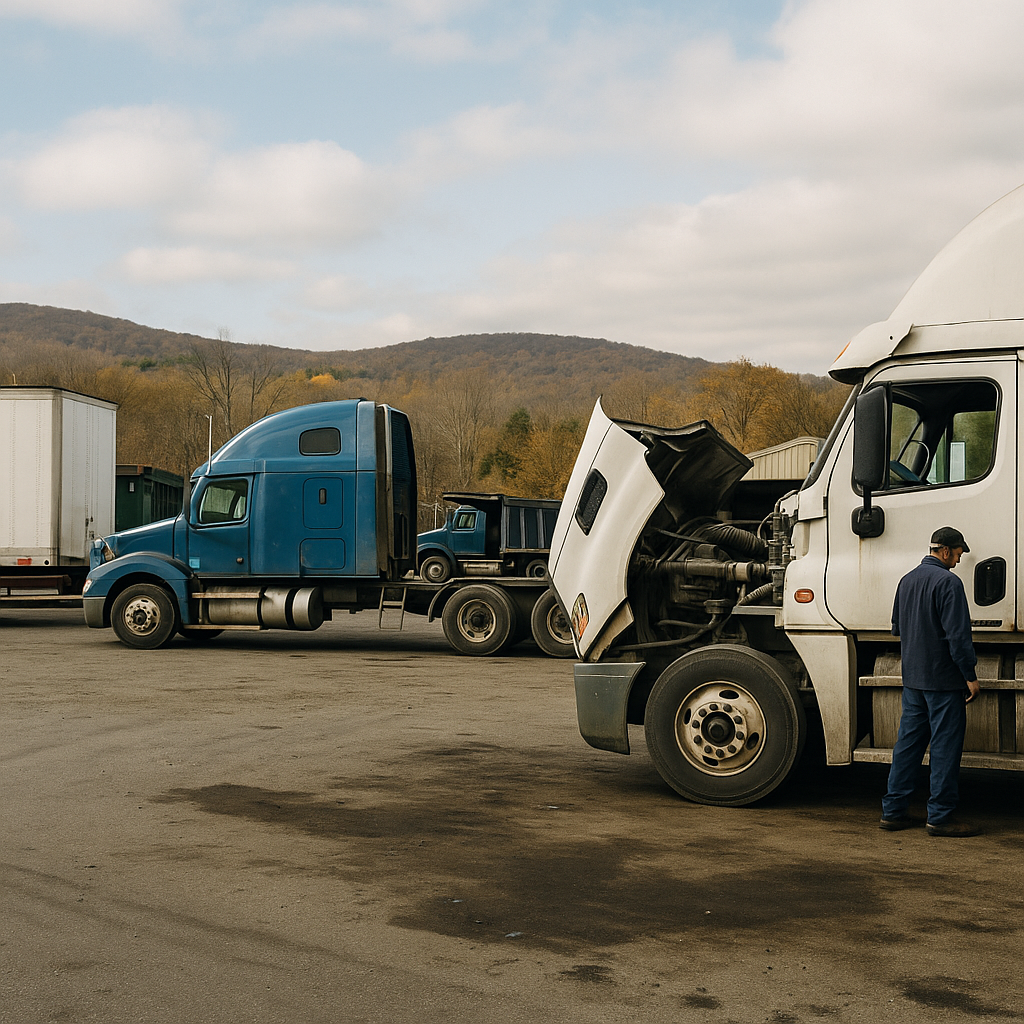

If you’re shopping for food truck insurance New York operators actually need, the first thing to know is this: you’re usually not buying one magic policy. You’re building a set of coverages that protect the truck, the driving, the food business, and the contracts that let you park, cater, or vend.
What Food Truck Insurance Covers in New York#
Food truck insurance in New York is usually a bundle of policies, not a single policy. Most operators need some mix of commercial auto, general liability, property or equipment coverage, and sometimes workers’ compensation. The right setup depends on whether you drive the unit, employ staff, cater events, store food off-site, or work under venue contracts.
A food truck insurance bundle is a group of policies combined to cover different parts of the same business. That’s why a quote can look simple on the front page but still include several separate coverages behind it.
Why food trucks need more than one policy#
A food truck has two risk buckets at the same time: it’s a vehicle on public roads, and it’s also a business serving the public. One policy usually won’t handle both well.
Say you rear-end another vehicle on the way to a street fair in New York City. That’s a commercial auto issue, not a general liability issue. Then picture a customer slipping near your service window because of spilled grease or melted ice. That’s more likely a general liability claim, which covers third-party bodily injury or property damage tied to your business operations.
The split matters because many new operators assume a business policy covers driving, or that vehicle insurance covers customer injuries at the window. It usually doesn’t work that way.
Core coverages: liability, auto, property, and workers’ comp#
The core food truck setup usually starts with the coverages that match the biggest risks. A commercial auto policy covers the truck’s road use, including liability from at-fault crashes. A property policy helps protect business property like cooking equipment, generators, POS systems, tools, and sometimes inventory, depending on the form.
Practical examples make this easier:
- A fender-bender on the way to an event points to commercial auto.
- A customer burn or slip-and-fall points to general liability.
- A stolen grill or generator points to property or equipment coverage.
- Spoiled inventory after refrigeration failure may call for equipment breakdown, refrigeration breakdown, or spoilage-related protection, depending on the policy setup.
If you have employees, the insurance picture changes again. Workers’ compensation is coverage for employee job-related injuries or illness, and New York employers should review requirements with the New York State Department of Labor.
What insurance proof venues and commissaries may ask for#
New York operators may also need insurance proof long before a claim ever happens. A certificate of insurance is a summary document showing active coverage, dates, and key limits. An additional insured is a person or business added to your liability policy for certain claim protection tied to your work for them.
Event organizers, landlords, commissaries, caterers, and private venues may ask for a certificate of insurance before they let you operate. They may also ask for a declarations page, which is the policy summary page showing who is insured, what is covered, and the limits.
This is where many operators get stuck: the cheap quote looked fine until the commissary asked for proof of auto liability, or the event host required additional insured status and specific liability limits. If you’re trying to sort that out before you buy,
If your operation crosses into broader commercial vehicle questions, keep in mind that vehicle regulation and operating authority are separate from insurance structure. FMCSA rules at fmcsa.dot.gov mainly apply to commercial motor carrier operations, and many local food truck businesses are dealing more with city, state, venue, and insurance requirements than federal trucking authority.

Which Coverage Does a New York Food Truck Actually Need?#
The coverage a New York food truck actually needs depends first on the setup. A drivable truck usually needs commercial auto plus business liability, while a cart or stationary setup may lean more on general liability and property coverage. Add employees, catering contracts, or alcohol service, and the insurance stack usually gets broader.
Truck vs. cart vs. trailer setup#
A food cart is usually a smaller mobile vending setup that may not carry the same road-use exposure as a drivable truck. That difference changes the policy structure in a big way.
A truck that drives to multiple boroughs, festivals, office parks, or private events usually needs commercial auto because it’s operating as a business vehicle. A cart may not need that same auto policy if it isn’t road-driven in the same way, but it can still need general liability, property coverage, and contract-ready proof of insurance.
A trailer setup sits somewhere in the middle. If it’s towed, you may need to think separately about the towing vehicle, the trailer itself, attached equipment, and where the trailer is stored between jobs.
Solo operator vs. crewed truck#
A solo operator has a simpler insurance footprint than a crewed truck, but “simpler” doesn’t mean “minimal.” Once you bring on employees, payroll and injury exposure change the picture.
A truck with staff may need workers’ compensation coverage based on how the business is structured and who is actually working for you. New York employer obligations can be reviewed through the New York State Department of Labor, and this is one of the first places where a quote for a solo owner can look very different from a quote for the same truck with a team.
Events, commissaries, and liquor service#
Contracts often create insurance needs that permits don’t spell out line by line. A catering client may ask for higher liability limits. A commissary may require proof that your policy is active before you can use the space. An event organizer may want to be listed as an additional insured.
If you serve alcohol, liquor liability becomes a separate issue worth reviewing. Liquor liability is coverage for claims tied to alcohol-related harm connected to your business service. Not every food truck needs it, but the ones that do shouldn’t assume general liability automatically fills that gap.
How Much Food Truck Insurance Costs in New York#
Food truck insurance costs in New York vary widely because the price reflects your actual operation, not just the words “food truck.” The biggest drivers are vehicle value, where and how often you drive, your claims history, your menu, your employee count, your revenue, and the limits and deductibles you choose. NYC operations often face extra pressure from dense traffic, tighter contract expectations, and more frequent certificate requests.
A deductible is the amount you pay out of pocket before covered insurance benefits apply. A limit is the maximum amount the policy will pay for a covered claim. An exclusion is something the policy does not cover. For plain-language insurance term explanations, NAIC resources at naic.org are a solid baseline.
Main cost drivers#
The truck itself matters. A newer, higher-value truck with built-in kitchen equipment usually costs more to insure than an older setup with less equipment value. The same goes for how much property you carry: generators, fryers, refrigeration units, custom wrap work, and payment systems all affect exposure.
Then there’s how you operate. A truck parked at a regular office-lunch route may look different from one that drives long days across the city for festivals, night events, and private catering. Menu risk matters too. Deep frying, open flame, heavy propane use, and perishable inventory can all change how underwriters view the account.
Employees, prior claims, and your driving history also matter. If one owner drives the truck and has a clean record, that profile is different from multiple drivers rotating through event work on weekends.
What changes in NYC#
NYC creates cost pressure in ways upstate operators may not feel as strongly. Traffic density increases accident exposure. Parking, overnight storage, and theft concerns can be different. Venue contracts may be stricter, and more operators end up needing certificates of insurance quickly for commissaries, private properties, and events.
A practical example: two taco trucks might have similar sales, but the one working Manhattan office catering, private events, and late-night service could face a different insurance picture than a truck doing lighter seasonal work in a smaller market. The limit requirement may be higher. The auto exposure may be heavier. The paperwork demands may also be more frequent.
Monthly cost examples by coverage type#
There isn’t one standard monthly price for food truck insurance in New York. A lean package focused mostly on basic business liability can cost less than a broader package that combines commercial auto, property or equipment protection, and workers’ compensation. Your actual premium depends on your operation, cargo, radius, driving history, employee setup, and other factors.
A good way to think about cost is by layers:
- General liability may be one layer.
- Commercial auto may be another, often a major one for a drivable truck.
- Property or equipment coverage adds another layer.
- Workers’ compensation can materially change the total once employees are involved.
The common “$1,000,000 liability” question needs context. A $1,000,000 liability limit is just the maximum covered amount under that liability policy section; it does not create one universal monthly price. A truck serving simple daytime routes with no staff is not rated the same way as a truck handling busy city catering jobs with employees and higher contract demands.
That difference is why a “cheap” quote from a quick online flow can fall apart once you ask whether it includes the truck itself, attached equipment, spoilage exposure, or proof acceptable to a venue.
New York Permits, Licenses, and Proof of Insurance#
New York permit and license rules vary by city and county, so operators should verify local requirements before they buy insurance. Permits and insurance do different jobs: permits help you operate legally in a jurisdiction, while insurance helps cover financial loss and satisfy contracts. In practice, many operators need both lined up before they can really start working.
What permits and licenses usually come before opening#
A food truck may need local vending approvals, health-related approvals, vehicle-related registrations, and other city or county paperwork before opening. In New York City, local vending rules are handled through city agencies rather than through your insurance policy.
That matters because operators often search for one “food truck license package” and assume insurance is folded into it. Usually, it isn’t. You should verify local permit rules directly with the relevant New York City government office or your municipality if you’re outside NYC.
Why insurance proof matters for applications and contracts#
Even when a permit office doesn’t ask for every policy detail, third parties often do. A commissary might ask for a certificate of insurance. An event organizer may want additional insured status. A landlord or private venue might want proof of auto liability, general liability, or workers’ compensation before access is approved.
The documents people commonly ask for include:
- certificate of insurance
- declarations page
- evidence of commercial auto liability
- workers’ compensation proof, if you have employees
That distinction saves headaches. Your permit file and your insurance file may overlap, but they are not the same thing.
NYC vs. the rest of New York#
NYC tends to involve denser contracting and stricter operational logistics, while smaller municipalities may have a simpler local process. But no operator should assume the rest of New York is uniform.
One county fair, private brewery lot, or town event can impose its own contract insurance requirements even if local permit rules seem lighter. That’s why the smartest move is to confirm both tracks separately: local operating permission and insurance proof.
How to Save Money Without Buying the Wrong Policy#
The safest way to save money on food truck insurance is to match coverage to how the business actually runs, not to chase the lowest number on the first quote. Smart savings usually come from cleaner underwriting, better risk controls, and accurate information. Bad savings usually come from skipped coverages, lowball property values, or buying a cart-style policy for a truck operation.
Ways to lower premium responsibly#
Start with what underwriters care about most. Safer driving habits, cleaner driver records, secure overnight storage, and solid theft prevention can all help your account look better. Accurate revenue reporting matters too, because inflated or sloppy estimates can distort pricing.
Bundling the right coverages can also simplify things, as long as the bundle actually fits the operation. Review deductibles carefully. A higher deductible can lower premium, but only if you could realistically handle that out-of-pocket cost after a covered loss.
Storage practices matter more than many operators think. If your truck is kept in a more secure location, equipment is documented, and expensive items are locked or inventoried, that can support better quote discussions.
Common gaps that look cheap upfront#
The most common cheap-policy mistake is skipping commercial auto because the operator thinks the business liability policy covers road use. Another is underinsuring custom equipment because the truck value and kitchen value weren’t broken out correctly.
A third gap shows up when someone buys coverage built more for a food cart than a drivable truck. On paper it looks affordable. In practice, it may not satisfy a venue contract, and it may leave the actual driving exposure uncovered.
Picture this: you book a private event, send over your certificate, and the venue rejects it because there’s no acceptable liability wording or no additional insured option. Or your refrigerator unit fails overnight and the policy doesn’t address spoilage or breakdown-related loss. That’s when the “savings” disappear fast.
If you’re unsure whether a lower-priced quote is missing a key coverage,
When to review your quote#
Review your insurance anytime the operation changes in a real way. New staff, a new truck, expanded catering, alcohol service, new boroughs or counties, or higher-value equipment can all change what a quote should include.
You should also review when a contract lands on your desk. A policy that worked for daily vending may not be enough for a wedding venue, corporate campus, or seasonal festival.
Food Truck Insurance Checklist Before You Buy#
Before you buy food truck insurance in New York, gather enough detail to compare quotes apples-to-apples. The key items are vehicle information, drivers, menu risk, staffing, storage, and any contract insurance requirements. You should also check exclusions early so you don’t discover a gap after a crash, theft, equipment failure, or spoiled inventory loss.
Information to gather for quotes#
Start with the truck basics. Have the VIN, year, make, model, and estimated equipment value ready. A VIN is the vehicle identification number used to identify the specific truck.
Then gather operator details:
- driver records for anyone who will drive
- where the truck operates and driving radius
- menu type and cooking methods
- estimated sales or revenue
- employee count
- storage and commissary locations
- event or venue contract requirements
The more accurate this info is, the easier it is to compare real coverage instead of vague package names.
Questions to ask about exclusions#
Ask directly what’s excluded. Specifically, ask about driving use, overnight storage, equipment left in the truck, food spoilage, refrigeration breakdown, liquor service, and whether attached equipment is valued correctly.
Also ask whether the quote assumes solo operation or includes employees. If it doesn’t match your real setup, the price comparison isn’t clean.
Documents to keep on hand#
Keep your declarations page, certificate of insurance, vehicle details, contract insurance requirements, and workers’ compensation proof if applicable in one place. That makes permit, commissary, and venue requests much easier to handle.
FAQ#
How much is insurance for a food truck in NYC?
Insurance for a food truck in NYC depends on how the truck is used, what coverages you buy, whether you have employees, and what venues or commissaries require. Dense traffic, theft concerns, frequent event work, and higher proof-of-insurance demands can all push pricing higher than in some upstate markets. A truck with only basic liability needs will usually price differently from one needing commercial auto, equipment coverage, and workers’ compensation. The practical next step is to price the truck, business liability, and any employee-related coverage separately so you can see what’s driving the total.
What is the best insurance for a food truck?
The best insurance for a food truck is the coverage set that matches how the business actually operates. For most operators, that means reviewing commercial auto for road use, general liability for customer and venue-related claims, property or equipment coverage for the truck’s contents, and workers’ compensation if there are employees. Some operators also need liquor liability, spoilage-related protection, or contract-ready additional insured options. The best policy is not the broadest or cheapest by default. It’s the one that covers your real exposures and will satisfy the places where you plan to work.
How much is $1,000,000 liability insurance a month?
A $1,000,000 liability limit does not have one standard monthly price. The premium depends on the type of business, how often and where you operate, your claims history, whether the policy is packaged with commercial auto or other coverages, and whether outside contracts require special wording or endorsements. For a food truck, the limit alone tells only part of the story. Ask for the monthly cost to be broken out by policy type so you can tell whether the price is for general liability only or for a larger package that includes other protections.
How much is a food truck permit in NY?
A food truck permit in New York does not have one statewide price because permit fees and processes vary by city and local jurisdiction. New York City has its own rules, and other counties or municipalities may have different vending, health, and operating requirements. That means you should check the exact city or county where you plan to operate rather than relying on a statewide average. Also keep permit cost separate from insurance cost. Paying a permit fee does not mean your insurance requirements are handled, and buying insurance does not replace local permit approval.





