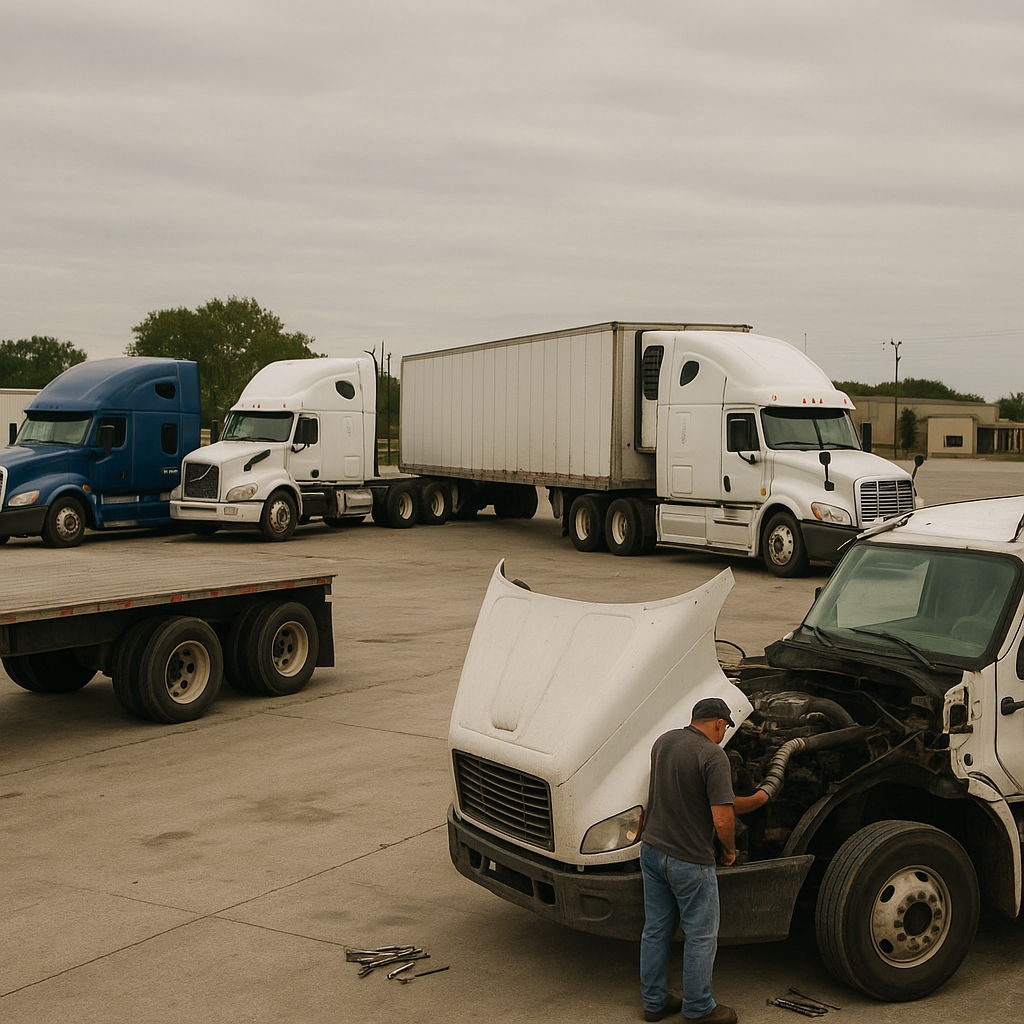

A hail damage truck insurance claim usually falls under comprehensive coverage, not liability. For owner-operators, the real question isn’t just “is this covered?” It’s whether your policy includes physical damage, what unit was hit, how the deductible compares to repairs, and how much downtime the claim could create.
Consumer car-insurance advice often misses the trucking part. A one-truck operation has to think about tractors, trailers, reefer units, scheduling, and whether the damage is cosmetic or bad enough to affect safe operation and revenue.
What hail damage usually means for a truck claim#
A hail damage truck insurance claim usually means weather-related damage to insured equipment, and it’s typically handled under comprehensive coverage rather than liability. On a commercial truck policy, what gets paid depends on whether the damaged unit is actually scheduled on the policy and what kind of coverage that unit carries.
Hail damage means physical damage caused by falling hail, such as dents, cracked windshields, broken marker lights, damaged mirrors, and battered fairings or body panels. On a truck, that can range from ugly but drivable cosmetic damage to glass or lighting damage that needs immediate repair.
Hail damage vs. other storm damage#
Hail claims often look straightforward, but storms can cause more than dents. Wind may tear fairings loose, flying debris may crack glass, and water intrusion may create separate repair issues. That’s why good photos matter from the start.
Why coverage type matters on commercial trucks#
Comprehensive coverage is the part of physical damage coverage that usually responds to non-collision losses like hail, theft, fire, or vandalism. Liability coverage pays for damage or injury you cause to others, not damage to your own truck.
That distinction matters because federal and state liability rules don’t automatically give you hail coverage. FMCSA financial responsibility rules under 49 CFR Part 387 deal with public liability minimums for certain carriers, not optional repairs to your own equipment. FMCSA also makes clear through its regulatory framework at fmcsa.dot.gov that liability filings are separate from physical damage protection. If you’re only carrying commercial auto liability, hail repairs to your truck generally won’t be paid by your policy.
The same goes for non-trucking liability and general liability for trucking. Those cover different exposures, and neither is a substitute for comprehensive coverage on the truck itself.
Tractor, straight truck, trailer, and reefer differences#
A tractor may be insured one way, while a trailer or reefer unit may be handled another way. Some owner-operators assume “my truck is covered” means every attached piece is covered the same way, but that isn’t always true.
If the hail hit the tractor, trailer skin, separate refrigeration unit, or other scheduled equipment, each item may need its own coverage review. That’s where commercial trucking gets different from personal auto fast.
What comprehensive coverage may pay for#
Comprehensive coverage may pay for hail damage repairs after your deductible, including common items like glass, lights, mirrors, and body panels. If the damage is severe enough that repair costs approach the truck’s value, the claim may turn into a total-loss discussion instead of a repair estimate.
According to NAIC, comprehensive coverage generally applies to damage from events other than a collision, and the deductible is the amount you pay before insurance pays the rest of a covered loss. For truck owners, that means hail usually falls under the right coverage only if your policy includes it.
Repairs vs. replacement parts#
Many hail claims end in repair, not replacement of the whole unit. Dent repair, panel work, glass replacement, lights, mirrors, and surface components are common claim items when the truck is still structurally sound.
But the details depend on how the adjuster evaluates the damage. An adjuster is the insurance professional who inspects a loss and helps determine what the policy may pay. If panels can be repaired reasonably, that’s different from needing major replacement work across multiple parts of the truck.
Glass, panels, and cosmetic damage#
Some hail losses are mostly cosmetic, but cosmetic doesn’t always mean cheap. A windshield, side glass, hood, roof cap, fairings, and lighting can all add up, especially on a working commercial unit.
This is where truckers should separate cargo and liability from truck damage. Physical damage coverage is what usually matters for the truck itself. Cargo claims involve the freight, not dents in your hood or cracked glass in your cab.
If you’re staring at a truck that got hammered overnight and need help sorting out what coverage even applies,
When a total loss becomes possible#
Actual cash value is the truck’s market value right before the loss, taking age, condition, and depreciation into account. A total loss means the insurer determines the unit isn’t economical to repair compared with that value.
Hail can total a truck, but it’s usually because the damage is widespread and expensive relative to the unit’s value, not because of a few dents alone. Older units with extensive glass, body, roof, and component damage are more likely to hit that conversation sooner than newer, higher-value equipment.
How to decide whether to file the claim#
Whether you should file a hail damage truck insurance claim depends on your deductible, likely repair cost, downtime, and how badly the damage affects operations. For many owner-operators, the right answer isn’t just about visible dents—it’s about whether the claim helps the business more than it slows it down.
A deductible is the amount you pay out of pocket before the insurance company pays on a covered claim. If your repair estimate is barely above the deductible, filing may not make much sense once you factor in time, paperwork, and possible renewal impact.
Deductible versus estimated repairs#
Start with rough numbers. If the hail only left minor cosmetic dents and the truck is safe, paying out of pocket may be cleaner than opening a claim that brings little net benefit after the deductible.
If the damage includes windshield cracks, broken lights, damaged mirrors, or body damage that affects operation, the claim math changes fast. Safety-related repairs and larger bills usually justify a closer look.
Downtime and missed revenue#
Downtime is lost working time while the truck is being inspected or repaired. For a one-truck business, downtime can hurt more than the repair bill itself.
Ask practical questions: Can the truck stay on the road while you wait for inspection? Does the repair shop understand commercial equipment? Will parts delays keep you parked during a busy stretch?
Cosmetic damage versus business-critical damage#
Some hail damage looks terrible but doesn’t stop the truck from earning. Other damage seems minor until you realize cracked glass, broken lights, or water intrusion can create DOT and maintenance problems later.
The best decision depends on the truck, your schedule, your cash position, and how quickly repairs can be completed. If the damage is borderline, ask your broker how the policy handles comprehensive claims before you decide.
How to file a hail damage truck insurance claim#
To file a hail damage truck insurance claim, document the loss immediately, report it promptly, and be ready for an adjuster review and repair estimate. The faster you organize photos, dates, unit details, and policy information, the smoother the process usually goes.
Texas Department of Insurance guidance at tdi.texas.gov supports the basics: document damage carefully, contact the insurer promptly, and keep records of claim communications and estimates. That advice applies well to commercial trucks too, especially when more than one unit or piece of equipment may be involved.
Document the damage right away#
Take clear photos and video before you repair anything. Capture wide shots of the full truck and close-ups of dents, cracked glass, broken lights, mirror damage, roof impact points, fairings, and any trailer or reefer damage.
Write down the date, location, and approximate storm timing. Note whether the affected unit was the tractor, trailer, refrigeration unit, or another insured piece of equipment.

Contact your broker or insurer promptly#
Have your policy number, VIN, unit number, USDOT information, and a short description of the damage ready. VIN stands for vehicle identification number, the unique serial number used to identify the truck.
Ask who should handle the first report and whether photos can be uploaded right away. If you run multiple units, be specific about which unit was damaged and whether attached equipment was affected too.
Prepare for inspection and repair approval#
Most claims follow a basic flow:
- Report the loss.
- Share photos and unit details.
- An adjuster reviews the damage.
- A repair estimate is prepared.
- The insurer confirms covered damage and payment handling.
- Repairs move forward once authorized.
Keep notes on every call, email, and claim number. If you’re not sure how to scope the policy before you file,
What to document before the adjuster looks at it#
Before the adjuster inspects the truck, gather photos, unit identifiers, policy details, and all repair communications in one place. Good documentation speeds up review and reduces confusion, especially when the storm may have damaged more than one commercial unit or attached piece of equipment.
Photos and video that help the claim#
Get all sides of the truck, the roof if possible, glass, lights, mirrors, fairings, hood, and trailer surfaces. Include close-ups and wider shots so the adjuster can connect the detail damage to the full unit.
If hail hit more than one asset, separate the files by unit. That avoids mixing tractor photos with trailer or reefer photos.
VIN, unit numbers, and policy details#
Include the VIN, unit number, plate if relevant, policy number, and claim number once assigned. Underwriting is the insurer’s process for evaluating risk and policy terms, and clear records help everyone review the right unit under the right coverage.
Repair-shop estimates and communication records#
Save every estimate, email, text, and claim update. If a shop points out hidden damage after teardown, keep that in writing too.
Commercial claims get messy when several assets are involved. Consistent records can save you from repeat phone calls and conflicting repair discussions later.
Will a hail claim raise your rate at renewal?#
A hail claim may affect your rate at renewal, but there is no universal answer. Insurers may look at claim history, location, loss patterns, underwriting rules, and the size of the loss when they review a commercial truck policy for renewal.
Renewal is the point when your policy term ends and the insurer offers new terms for the next term. Some comprehensive claims may have less impact than at-fault losses, but that doesn’t mean they never matter.
What insurers usually consider#
An insurer may look at the severity of the hail claim, whether you’ve had prior losses, and whether the truck operates in areas with repeated storm exposure. They may also consider repair history, garaging patterns, and the overall account.
Why prior claim history matters#
One weather claim isn’t the same as several claims in a short period. If you’ve had multiple losses, the underwriter may see a different risk picture than they would from a single isolated hailstorm.
That’s why no one should promise that “rates won’t go up” or “they always go up.” Commercial truck underwriting is more operation-specific than most personal auto advice suggests.
When asking first is smarter than guessing#
If the damage is minor, call before you commit. Ask how the carrier generally handles comprehensive losses, whether a filed claim stays on record even if you don’t proceed, and what documentation they want.
A short conversation can help you avoid guessing wrong. That’s especially useful when the truck is drivable and the decision is close.
How to protect your truck from future hail damage#
You can’t eliminate hail risk on the road, but you can reduce your exposure with smarter parking, weather tracking, and basic storm planning. For owner-operators, prevention is mostly about avoiding repeat hits that create more downtime and more claim decisions.
Parking and route planning#
Use covered parking when it’s realistically available. Pay attention to weather apps, truck-stop alerts, and route changes that let you get out of a storm track before the hail starts.
Temporary coverings and shelter#
A full shelter isn’t always possible, but even partial protection can help if you’re parked during a warning. If you know severe weather is coming, prioritize glass and the most exposed surfaces when choosing where to stop.
Planning for repeat exposure#
If you run the same hail-prone lanes often, build storm checks into your routine. Prevention won’t solve every storm, but fewer losses usually means fewer repair disruptions and fewer renewal questions later.
When hail damage is only part of the problem#
A hailstorm can damage the tractor, trailer, reefer unit, and even create cargo concerns, but those don’t always fall under the same coverage. One storm can trigger several insurance questions at once, so it’s important to separate truck damage from trailer, cargo, and refrigeration exposures.
Trailers and attached equipment#
If the trailer was damaged, confirm whether it was scheduled and how it was insured. Trailer skin, roof damage, and attached equipment may be handled differently from the tractor.
If the freight was affected because the storm created a separate cargo issue, that’s a different question from dents in the equipment. Motor truck cargo insurance addresses freight exposures, not body damage to the truck.
Reefer units and temperature-sensitive cargo risks#
A reefer unit is a refrigeration unit used to keep temperature-sensitive freight within range. If hail damaged the unit housing, controls, or related components, ask whether that equipment has separate protection and how the policy treats resulting loss.
If the concern is the refrigeration equipment itself, review reefer breakdown coverage separately from the truck’s physical damage claim.
Separate coverage questions to ask#
Ask three simple questions right away:
- Which damaged unit is listed on the policy?
- Does the policy cover that specific equipment under comprehensive or another form?
- Is there a separate claim issue for trailer, reefer, or cargo damage?
FAQ#
Is it worth claiming hail damage on car insurance?
It can be worth claiming hail damage if the repair bill is meaningfully higher than your deductible and the damage affects safe use or value. If the damage is minor and mostly cosmetic, some people choose to pay out of pocket instead. On a commercial truck, add one more factor: downtime. A one-truck owner-operator has to think about inspection delays, repair scheduling, and missed loads, not just the body-shop bill. The best call usually comes from comparing deductible, estimated repairs, and how badly the damage affects operations.
Does my car insurance go up if I claim hail damage?
A hail claim can affect renewal pricing on some policies, but there isn’t one rule that fits every insurer or every claim. Commercial truck insurers may consider prior claim history, where the truck operates, the size of the loss, and their own underwriting guidelines. Some weather-related comprehensive claims may be treated differently than at-fault losses, but that doesn’t mean they have no impact. If the damage is minor, it’s smart to ask your broker or carrier how they generally handle comprehensive claims before you decide whether to file.
What is the average payout for hail damage?
There isn’t a useful single average payout for hail damage because claim amounts vary too much by unit, severity, deductible, and repair method. A truck with a cracked windshield, damaged lights, and a few dented panels is very different from an older unit with widespread roof, hood, fairing, and glass damage. The payout also depends on actual cash value if the insurer determines the truck is a total loss. For commercial equipment, trailer or reefer damage can add separate complexity, so estimate quality matters more than headline averages.
Is it worth making a claim for hail damage?
It depends on the deductible, the seriousness of the damage, and what the claim would do to your schedule. If the truck is still safe and the damage is mostly cosmetic, paying out of pocket may be simpler. If hail damaged glass, lights, mirrors, or other business-critical parts, filing a claim may make more sense. Commercial trucking adds another layer because even a valid claim can cost time while the truck is inspected and repaired. Think through repair cost, downtime, cash flow, and possible renewal impact before deciding.
How long do you have to file a hail damage claim on a truck?
The deadline depends on your policy terms and sometimes state rules, so don’t assume you have plenty of time. Report the damage as soon as you reasonably can, even if you’re still deciding whether to move forward with repairs. Fast reporting helps preserve evidence, tie the damage to the storm event, and avoid disputes about when the loss happened. For a commercial truck, quick notice also helps when multiple units were exposed in the same storm. If you’re unsure, notify your broker or insurer promptly and ask what deadline applies to your policy.