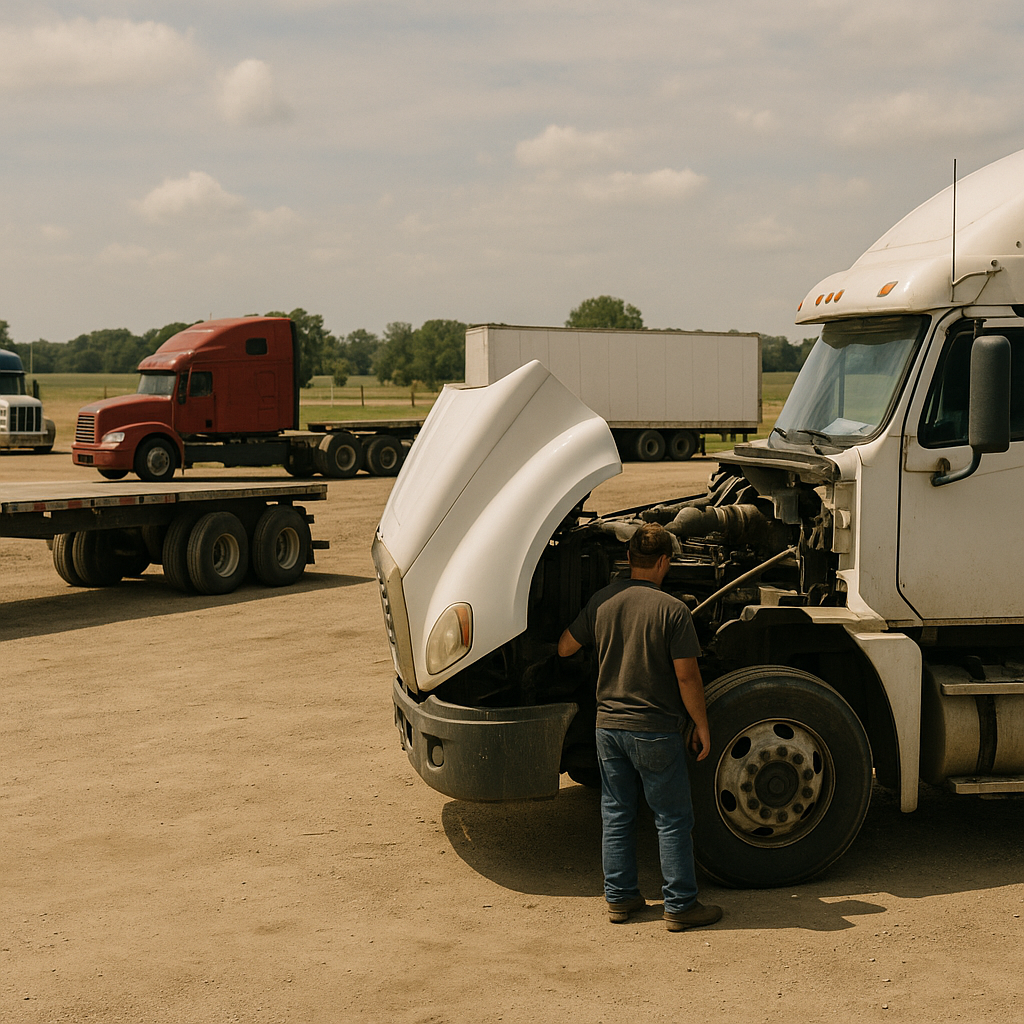
If you’re shopping for hotshot truck insurance Iowa operators actually need, the first thing to clear up is this: a hotshot setup isn’t personal auto insurance with a trailer added on. It’s commercial trucking insurance built around how you haul, what you haul, where you run, and whether you’re operating under your own authority or someone else’s.
This guide breaks down what hotshot insurance covers, when Iowa rules stop mattering and FMCSA rules take over, what drives cost in 2026, and how to avoid the coverage mistakes that burn new operators.
What Iowa hotshot truck insurance actually covers#
Iowa hotshot truck insurance usually means a group of commercial policies built for hauling freight with a pickup-and-trailer setup or similar light-duty combination. The exact package depends on whether you’re for-hire, what cargo you haul, who owns the trailer, and whether you run interstate or intrastate.
Hotshot trucking insurance is commercial coverage built for hauling freight for business, not a personal auto policy with business use stretched onto it. For most Iowa operators, the starting point is auto liability, which pays for bodily injury and property damage you cause to other people in a covered crash.
Motor truck cargo covers damage to the freight you’re hauling, subject to the policy terms and exclusions. Physical damage covers your insured truck and usually includes collision and comprehensive-type causes of loss; in trucking, collision should pair with comprehensive or fire and theft with combined additional coverage rather than stand alone.
General liability covers certain non-driving business liability exposures, not damage from operating the truck on the road. Non-trucking liability, often called bobtail by drivers, covers certain non-business use and does not cover paid hauling. Trailer interchange covers a trailer in your possession under a signed interchange agreement, while non-owned trailer physical damage is often the better fit when you’re using a trailer you don’t own without that formal interchange setup.
The core coverages most hotshot operators look at#
Most hotshot operators look first at:
- Auto liability
- Motor truck cargo
- Physical damage
- General liability
- Non-trucking liability when applicable
- Trailer-related coverage when they don’t own every trailer they pull
What each policy pays for in a claim#
One wreck can trigger more than one policy. If you rear-end another vehicle, auto liability may respond for the other party’s injuries or property damage, while physical damage may respond to your truck, and cargo coverage may respond if the freight was damaged too.
That split is where a lot of new operators get tripped up. The truck, trailer, cargo, and third-party damage are not all handled by one catch-all policy.
What is usually optional versus required#
Some coverages are tied to authority, contracts, lenders, or shippers rather than one universal rule. Requirements vary by carrier type, vehicle weight, cargo, and whether you operate interstate or intrastate.
If you’re not sure which pieces actually fit your operation, that’s where a clean intake matters more than a fast but sloppy quote. LogRock specializes in trucking insurance for owner-operators and small fleets, and if you’re unsure how to scope a hotshot setup,
Iowa rules vs FMCSA rules for hotshot operators#
Iowa insurance rules and FMCSA insurance rules are not the same thing, and hotshot operators often mix them together. If you haul for-hire freight across state lines or run an operation that falls under federal authority, FMCSA requirements can control your liability setup even if Iowa’s basic vehicle minimums are lower.
The FMCSA is the Federal Motor Carrier Safety Administration, the federal agency that regulates interstate commercial motor carriers. A USDOT number identifies carriers and commercial operations for safety oversight, and an MC number is operating authority for certain for-hire interstate carriers.
Why state minimums are not the same as federal authority requirements#
Your state minimum isn’t automatically your federal minimum. Under FMCSA registration and operating rules, interstate for-hire carriers can face federal insurance filing requirements that don’t match ordinary state auto insurance rules.
Under 49 CFR Part 387, for-hire interstate carriers hauling general freight in vehicles over 10,001 lbs must carry at least $750,000 in public liability. That doesn’t mean all truckers need $750,000. The correct minimum depends on carrier type, vehicle weight, and commodity. Under 10,000 lbs, the minimum can be lower; auto haulers and hazmat operations can require more.
An MCS-90 is the federal endorsement tied to certain public liability filings for motor carriers. It’s not a substitute for understanding what your policy actually covers day to day.
When FMCSA rules matter more than Iowa minimums#
FMCSA rules matter most when you’re operating for-hire in interstate commerce under your own authority. That’s the point where federal financial responsibility and filing issues move to the front of the conversation.
If you’re leased onto another carrier, the insurance setup can look different because some coverages may be handled through the motor carrier you’re leased to, while other coverages stay your responsibility. If you’re intrastate only, Iowa-specific rules may matter more, but you still need a policy built for commercial hauling, not personal use.
How weight, interstate hauling, and carrier type change the setup#
The 26,001-lb threshold comes up all the time in hotshot conversations because it can affect CDL questions and how the operation is classified. But insurance placement doesn’t turn on CDL status alone. Underwriters also care about whether you’re for-hire, what the truck and trailer combination looks like, where you run, and what cargo you carry.
A non-CDL hotshot setup can still be a commercial trucking risk that needs the right liability, cargo, and equipment coverage. A heavier combination, interstate operation, or own-authority setup usually brings more scrutiny and more documentation.
What affects Iowa hotshot insurance cost in 2026#
Hotshot insurance cost in Iowa is driven by risk, not by one standard rate for every pickup-and-trailer operation. Your actual premium depends on your operation, cargo, radius, driving history, equipment values, authority status, and other underwriting details.
Vehicle and trailer factors#
The truck itself matters a lot. A newer, higher-value dually with more financed value usually changes the physical damage conversation compared with an older truck carrying less value.
The trailer matters too. Gooseneck type, value, ownership, and how it’s used all affect pricing and coverage structure. If you’re hauling with a non-owned trailer or switching among trailers, that can create extra underwriting questions.
Driver and operating history factors#
Underwriters look hard at who is driving and what their record shows. CDL status, years of commercial experience, motor vehicle reports, prior claims, gaps in insurance history, and any major violations all shape how easy the risk is to place.
Startup friction is real in hotshot. New authority, limited commercial insurance history, or a first-year operation can make quotes harder to get and narrower in terms.
Cargo, route, and authority factors#
What you haul changes everything. General freight is different from higher-risk commodities, oversized items, or cargo that creates theft, spoilage, or damage concerns. Your operating radius matters because local, regional, and multi-state runs don’t present the same exposure.
Higher liability limits, higher cargo limits, and higher stated equipment values generally increase premium. So can running under your own authority instead of staying leased on, because the insurance structure is broader and the underwriting burden is heavier.
A lot of operators lose time here because they ask for “full coverage” without being able to explain the load type, operating states, or trailer setup. That’s how you end up paying for the wrong protection or getting quoted on assumptions that don’t match your actual work.
How to get a hotshot insurance quote fast#
The fastest hotshot insurance quote is the one built from accurate operating details the first time. If your cargo, trailer, authority status, or driver history is vague, underwriting slows down fast and the quote may not fit the operation anyway.
Information to gather before you shop#
Before you ask for quotes, have these details ready:
- Truck VIN and year, make, and model
- Trailer year, make, type, value, and ownership status
- Driver license details and recent driving history
- Cargo description and typical load value
- Operating states and radius
- Garaging address
- USDOT and MC information, if applicable
- Whether you’re leased on or operating under your own authority
- Desired coverages, including cargo, physical damage, and trailer-related protection
What underwriters ask about hotshot operations#
Underwriters usually want the plain-English version of your business, not just a class code. They want to know what kind of freight you haul, whether you cross state lines, whether the setup stays under or over common weight thresholds, and whether the truck is used only for business.
They may also ask whether the trailer is owned, financed, borrowed, or leased. If you have authority, they may verify your public record on SAFER, which is FMCSA’s carrier lookup system.
How to avoid delays or declined quotes#
The biggest delay triggers are simple: incomplete cargo descriptions, unclear authority status, missing driver history, and confusion over who owns the truck or trailer. New authority and leased equipment can add friction too.
Clear intake saves time. If you need help sorting out what to disclose and what coverage matches it,
Ways Iowa hotshot operators can save without underinsuring#
You can lower insurance pressure by tightening the risk, not by blindly stripping coverage. The practical goal is to pay for the protection your operation actually needs while avoiding limits, values, or add-ons that don’t fit how you run.
Coverage choices that change the bill#
Physical damage values matter. If your truck or trailer value is overstated, you’re paying to insure numbers that may not reflect the equipment. Deductibles matter too, because choosing a higher deductible can lower premium but raises what you’d pay out of pocket after a loss.
Cargo limits should match what you really haul. Cutting them too far just to reduce the quote can leave you exposed when a shipper loss hits.
Risk controls that help with placement#
Clean MVRs, safer operating habits, accurate garaging, and stable equipment make an operation easier to place. Simpler operations also help: clearly described freight, consistent lanes, and well-documented ownership reduce underwriting uncertainty.
That matters even more for startups. A clean, narrow, well-explained operation is usually easier to quote than a vague “we haul a little bit of everything” answer.
When to review limits and deductibles#
Review limits and deductibles when the business changes. New equipment, different cargo, wider radius, or shifting from leased-on work to your own authority can all change what “right-sized” insurance looks like.
Don’t confuse lower premium with better value. Cheap-looking coverage can become expensive the first time the wrong loss shows up.
Best hotshot insurance structure for Iowa operators#
The best insurance for hotshot trucking isn’t one carrier or one package for everybody. The best setup is usually the one that matches your operation closely: auto liability at the right level, cargo if you’re hauling freight, physical damage on insured equipment, and trailer or general liability coverage where the business model actually calls for it.
Startup hotshot setups#
Startups usually need the most guidance because the underwriting questions are stricter. If you’re brand new, details like cargo class, authority status, and whether you’re under or over common weight thresholds can make the difference between a workable quote and a dead end.
Owner-operators hauling under their own authority#
Own-authority operators usually center the package on auto liability, motor truck cargo, and physical damage. Depending on the setup, they may also need trailer-related coverage or general liability for business exposures beyond the road.
Small fleets with 2 to 5 trucks#
Small fleets usually need more consistency across vehicles, drivers, and scheduled equipment. Driver tracking, unit-by-unit values, and matching limits across trucks matter more once the operation grows beyond one unit.
Is hotshot trucking worth it in 2026?#
Hotshot trucking can still be worth it in 2026, but only if the business math works after insurance, equipment, maintenance, and downtime are all counted honestly. It isn’t a shortcut business just because the truck is smaller than a semi.
When the business model can make sense#
It can make sense when you have reliable freight access, disciplined expenses, and a compliant setup that doesn’t leave obvious gaps. Operators who know their lanes, cargo, and customer base usually have a better shot at steady margins.
When insurance and operating costs can squeeze margins#
Margins get tight fast when rates soften, loads get inconsistent, or downtime stacks up. Wrong coverage choices can make that worse, especially if a claim hits and the policy you bought doesn’t respond the way you assumed.
Questions to answer before you commit#
Before you jump in, compare likely freight demand against truck and trailer costs, insurance requirements, fuel, repairs, and deadhead. If the numbers only work on a perfect month, that’s a warning sign.
How to avoid common hotshot insurance mistakes#
Most hotshot insurance mistakes come from trying to force a commercial freight operation into the wrong insurance box. The big ones are treating the truck like personal auto, assuming one policy covers truck-trailer-cargo-everything, and starting a new authority without being able to clearly explain the operation.
Personal auto vs commercial auto confusion#
Personal auto policies are not designed for for-hire freight hauling. If you’re using a pickup and trailer to move loads for money, the fact that the truck looks familiar doesn’t make the risk personal.
That misunderstanding causes claim problems and quote problems. The policy has to match the actual business use.
Cargo, trailer, and liability gaps#
Cargo coverage handles freight, not damage to another driver’s vehicle. Auto liability handles damage you cause to others, not your own truck. Trailer damage may need its own solution depending on ownership and agreements.
The NAIC has plain-language consumer definitions for basic insurance concepts, but trucking adds another layer because multiple policies can respond to one event. That’s why “full coverage” isn’t a technical answer in hotshot.
New authority and hard-to-place risks#
New ventures get stuck when they can’t clearly state what they haul, where they run, or whether they’re leased on or using their own authority. Leased equipment, mixed cargo, and thin commercial history can all make placement harder.
The goal isn’t just to buy a policy. It’s to make sure the policy fits the operation you actually have.
FAQ#
What is the best insurance for hotshot trucking?
The best insurance for hotshot trucking is usually a coverage structure, not a single brand or one-size-fits-all policy. Most operators need auto liability as the base, then motor truck cargo if they’re hauling freight for others, plus physical damage if they want protection on the truck or trailer they own or finance.
From there, the right package depends on the operation. Some hotshot businesses also need general liability, non-trucking liability for certain leased-on situations, or trailer-related coverage if they pull non-owned trailers. The best setup is the one that matches your authority, cargo, trailer ownership, and operating radius without leaving gaps.
How much does hot shot trucking insurance cost?
Hot shot trucking insurance cost varies too much to boil down to one number. Your premium depends on the truck and trailer, cargo type, operating radius, liability limit, cargo limit, physical damage values, driver experience, claims history, and whether you’re a startup or an established operation.
Authority status matters too. New authority and short commercial history can make quoting harder and sometimes more expensive because underwriters have less operating history to work with. If two operators have different cargo, different records, and different equipment values, they should expect very different premiums even if both call themselves hotshot drivers.
What kind of insurance do you need to be a hotshot driver?
A hotshot driver usually needs commercial auto liability first, because that’s the foundation for causing bodily injury or property damage to others in a crash. If you’re hauling freight for customers, motor truck cargo often becomes part of the package. If you want your own truck or trailer protected, you’ll usually look at physical damage.
Some operators also need general liability, non-trucking liability, trailer interchange, or non-owned trailer physical damage depending on how the business is set up. If you’re interstate and for-hire under your own authority, FMCSA-related filing and minimum liability rules may apply under 49 CFR Part 387. Requirements vary by carrier type, vehicle weight, cargo, and whether you operate interstate or intrastate.
Is Hotshot trucking worth it in 2026?
Hotshot trucking can be worth it in 2026 if the numbers hold up after real costs are counted. The model tends to work better for operators who have dependable freight access, a clear niche, disciplined maintenance, and insurance that actually matches how they run.
It gets harder when margins are thin, downtime is frequent, or the business depends on random load board luck to stay moving. Insurance isn’t the only cost, but the wrong insurance decision can erase months of profit after one bad claim. Before investing, compare likely freight demand, equipment costs, compliance requirements, and downtime risk against the income you realistically expect.
Do I need commercial insurance if my hotshot setup is non-CDL?
Yes, a non-CDL hotshot setup can still need commercial trucking insurance if you’re hauling freight for business. CDL status and insurance need are not the same question. If you’re operating for-hire, crossing state lines, or using the pickup-and-trailer combination in a commercial freight business, personal auto coverage is not the right fit.
Underwriters care about the actual exposure: business use, cargo, trailer setup, operating radius, and authority status. Even if your combination stays under common CDL thresholds, you may still need commercial auto liability and other trucking coverages that match the work you’re doing.