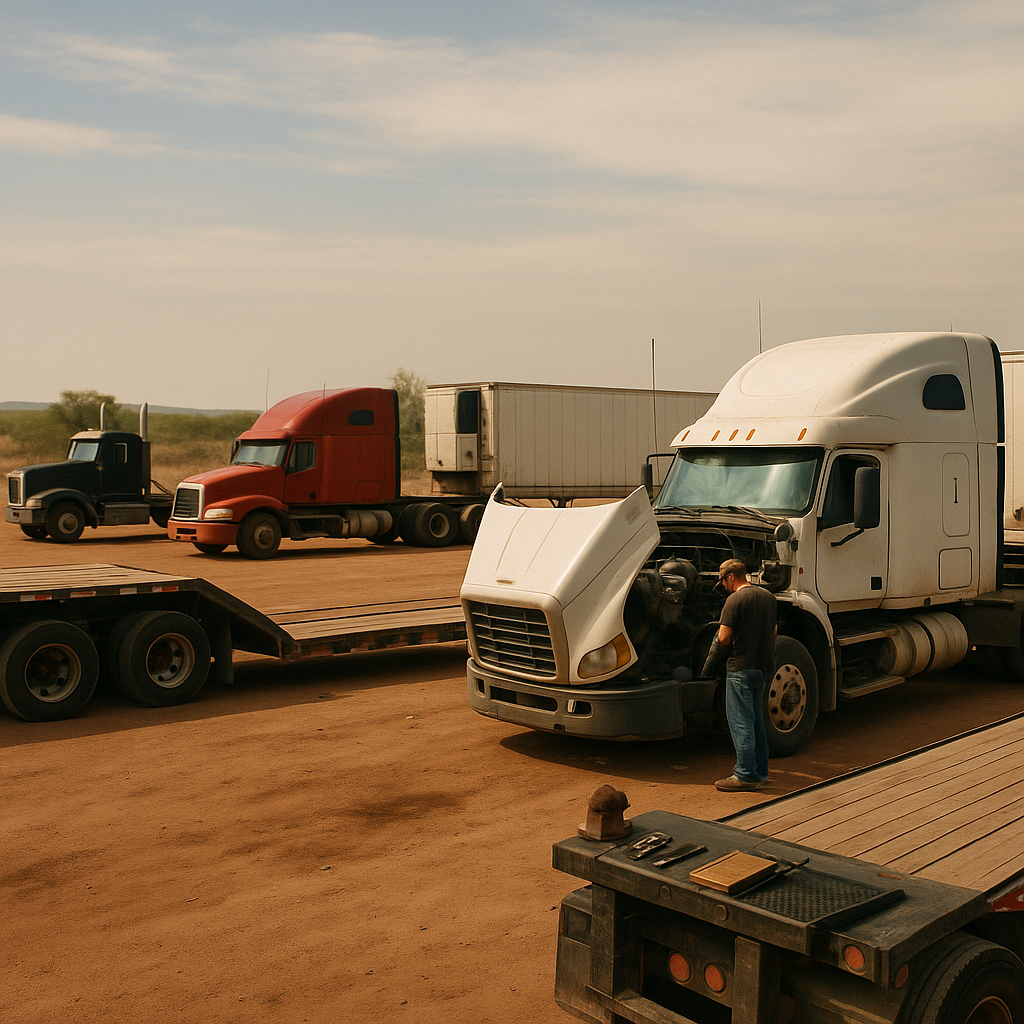

If you’re shopping for hotshot truck insurance Oklahoma operators actually need, the biggest mistake is treating it like personal auto or assuming one limit fits every truck. Hotshot insurance depends on how you haul, what you haul, where you run, and whether your operation falls under Oklahoma rules, FMCSA rules, or both.
This guide breaks down what hotshot insurance usually covers, who needs it, how federal filings fit in, what changes between CDL and non-CDL setups, and how to read a quote without missing a gap that bites you later.
What Oklahoma hotshot truck insurance covers#
Hotshot truck insurance in Oklahoma is commercial coverage for a pickup, dually, or similar truck used to haul freight for business. It usually starts with auto liability, then adds other coverages based on your cargo, trailer use, truck value, and whether you run intrastate or interstate.
What counts as a hotshot setup#
Hotshot trucking usually means hauling time-sensitive or smaller freight loads with a pickup or medium-duty truck and a trailer, often for-hire. For insurance, the key issue isn’t whether drivers call it “hotshot.” The key issue is that the truck is being used for business hauling, which pushes you out of personal auto territory.
A for-hire operation means you’re paid to haul someone else’s freight. Interstate commerce means the load crosses state lines or is part of a shipment moving across state lines. Intrastate commerce means the movement stays within one state.
Core coverages most operators compare#
Auto liability pays when your truck causes bodily injury or property damage to others in a covered crash. Motor truck cargo covers the freight you’re hauling, subject to causes of loss, exclusions, and policy terms. Physical damage covers damage to your truck from collision and other covered causes like theft, fire, or weather.
General liability covers certain business-related third-party claims outside the truck’s driving exposure. Non-trucking liability covers non-business use only, not paid hauling. Trailer interchange covers a non-owned trailer when you have a signed interchange agreement, while non-owned trailer physical damage is often the better fit when you use someone else’s trailer without that kind of agreement.
Some hotshot operators also need reefer breakdown, which covers loss tied to refrigeration unit failure on temperature-controlled loads. NAIC offers plain-language consumer guidance on insurance terms at naic.org.
Common add-ons and exclusions#
Not every policy includes every coverage, and not every operation fits every market. Scope depends on vehicle use, cargo type, operating radius, and whether you’re running interstate or intrastate.
Some classes are commonly restricted or excluded, including intermodal, household goods movers, driveaway, and other operations that don’t fit a standard hotshot risk. That’s why the same truck can get two very different quote structures depending on what it’s actually doing.

Who needs hotshot insurance in Oklahoma#
If you use a truck commercially to haul freight for hire in Oklahoma, you typically need commercial trucking insurance, even if you’re running a single dually and small trailer. CDL status matters for regulation, but it does not make personal auto coverage acceptable for business hauling.
Owner-operators hauling for hire#
Most Oklahoma hotshot operators are owner-operators hauling loads for someone else. If that’s your setup, insurers and regulators care about business use, cargo, radius, and authority status much more than whether the truck looks like a personal pickup from the outside.
A commercial auto insurance policy is coverage written for business vehicle use. Personal auto policies are built for personal driving, commuting, and light incidental use, not for hauling freight for compensation.
CDL vs non-CDL hotshot setups#
A CDL is a commercial driver’s license required for certain vehicle and operation types. A non-CDL hotshot setup usually refers to an operation structured to stay below the licensing threshold for a CDL, but it’s still a commercial operation if you’re hauling freight for pay.
That matters because non-CDL doesn’t mean non-commercial. It can change underwriting, truck class, and sometimes filing needs, but it doesn’t turn a freight-hauling truck back into a personal auto risk.
When personal auto is the wrong policy#
This is where a lot of drivers get burned. They hear “it’s just a pickup” or “I stay local” and assume a personal policy will do the job. Then a claim happens and the carrier points to business-use exclusions.
Forum advice is especially messy here because it often mixes Oklahoma vehicle rules, CDL thresholds, and FMCSA insurance rules into one bad answer. If you’re hauling for hire, don’t assume a local or non-CDL setup means simple coverage. If you’re not sure how your operation should be scoped,
Oklahoma hotshot insurance requirements and federal filing basics#
Oklahoma state minimums and FMCSA requirements are not the same thing, and hotshot operators get in trouble when they mix them together. Your actual requirement depends on whether you’re for-hire or private, your vehicle weight, your cargo, and whether you operate only in Oklahoma or across state lines.
State minimums versus FMCSA requirements#
This is the part most drivers hear half-right. Under 49 CFR Part 387, for-hire interstate carriers hauling general freight in vehicles over 10,001 pounds must carry at least $750,000 in public liability. Carriers under 10,000 pounds can fall under a different minimum, auto haulers can require more, and hazmat can require much more.
So no, “all truckers need $750K” isn’t right. Oklahoma registration and proof-of-insurance rules are one thing. Federal financial responsibility rules are another, and FMCSA rules control when your operation falls into that interstate for-hire bucket.
When MCS-90 and filings matter#
An MCS-90 is a federal endorsement attached to a motor carrier policy to show proof of required public liability for certain interstate operations. If you’re operating with authority that requires a federal filing, your policy may need that filing attached and submitted properly.
FMCSA is the source to verify interstate authority and filing expectations at fmcsa.dot.gov. The broad rule is simple: if you’re crossing state lines or hauling freight in a way that puts you under federal motor carrier rules, filings matter. If you’re purely intrastate, the picture can be different.
What to confirm before you bind coverage#
Before you buy, confirm five things: your liability limit, whether a filing is needed, whether the policy matches your actual cargo, whether the stated radius is accurate, and whether the operation is marked interstate or intrastate correctly.
Also confirm how the truck is classified and whether the policy matches your trailer use. A quote that looks cheap can still be wrong if the filing is missing, the cargo is misdescribed, or the operation was submitted as lighter-duty than it really is.
How much hotshot truck insurance costs in 2026#
Hotshot truck insurance cost in 2026 varies widely because insurers price the whole operation, not just the truck. Monthly cost depends on driver history, cargo, operating radius, truck value, filings, authority status, and how much loss exposure the underwriter sees in your setup.
Why quotes vary so much#
Two Oklahoma hotshot operators can have the same dually and get very different pricing. One may stay intrastate, haul lower-risk freight, and have a cleaner record. The other may cross state lines, haul higher-risk cargo, finance a more expensive truck, and need broader coverage.
Underwriting is the insurer’s process for evaluating risk and deciding terms and price. Hotshot operations swing in price because small details change the risk picture fast.
Main cost drivers#
The biggest drivers usually include:
- Driving history and years of commercial experience
- Interstate versus intrastate use
- Cargo type and how claims-prone it is
- Truck value and physical damage need
- Trailer type and whether it’s owned or non-owned
- Authority status and filing requirements
- Radius, lanes, and frequency of use
Non-CDL hotshot setups can price differently from CDL operations, but not always for the reason drivers expect. Sometimes the lighter setup helps. Sometimes limited experience, mixed-use confusion, or mismatched underwriting details make the quote worse instead of better.
What makes a quote look higher or lower#
A lower monthly number isn’t always a better quote. One policy may be cheaper because it stripped out cargo, used a higher deductible, limited radius, excluded certain loads, or skipped a coverage you actually need.
A higher quote may include better-scoped coverage, correct filings, stronger cargo terms, or physical damage on a truck you’re still paying off. Compare what the policy does, not just what the payment looks like.
How to compare Oklahoma hotshot insurance quotes#
A good Oklahoma hotshot insurance quote should show more than a monthly payment. It should clearly spell out coverages, limits, deductibles, filings, endorsements, and exclusions so you can tell whether the policy actually fits your operation before you bind it.
What a complete quote should show#
At minimum, look for the liability limit, cargo limit if included, physical damage deductible, trailer-related coverage, and any filing requirement. You should also see how the operation is described: commodity, radius, garaging location, truck unit, and whether the policy is interstate or intrastate.
If you already have a USDOT or MC number, verify the registration details on SAFER before binding coverage. That helps catch authority or status issues before they slow down your start date.
Gaps to check before buying#
Common quote gaps include cargo mismatches, excluded operations, the wrong radius, missing filings, and confusion over trailer coverage. Another big one is assuming non-trucking liability helps while you’re under dispatch. It doesn’t.
Watch for physical damage assumptions too. Collision should pair with comprehensive or fire and theft with combined additional coverage, not stand alone as a fake shortcut.
Questions to ask the broker#
Ask whether the quote matches your actual freight, whether it assumes interstate or intrastate use, whether any loads are excluded, and whether the trailer coverage fits your real setup. Ask what documents are still needed to finalize the file and whether anything in the submission could change price after review.
Time matters when you’re running from the cab. A broker who can explain the gaps plainly is usually more useful than a fast screen quote that leaves you guessing.
Ways Oklahoma hotshot operators can lower insurance friction#
You can lower insurance friction by tightening up your information and avoiding coverage mismatches before you bind. That won’t guarantee the lowest premium, but it does reduce wasted back-and-forth, prevent bad quotes, and make it easier to compare real options side by side.
Reduce avoidable coverage mistakes#
Start by being exact about what you haul, how far you run, and whether you’re for-hire interstate, for-hire intrastate, or something else. A vague submission often comes back with vague terms.
Don’t add coverage just because somebody in a group said everyone needs it. Match the policy to your operation. That’s especially true for general liability, trailer interchange, non-owned trailer physical damage, and reefer-related add-ons.
Keep the policy aligned with the operation#
Operations drift over time. Maybe you started local and now cross state lines. Maybe you switched freight types. Maybe you bought a different trailer or financed a newer truck.
When the policy doesn’t keep up, problems show up at claim time or during a filing check. That kind of mismatch creates the exact headache most owner-operators were trying to avoid.
Shop with the right information ready#
Have your VIN, driver’s license details, prior loss history, cargo description, operating radius, and authority information ready before you ask for quotes. Clean submissions often give brokers a better shot at returning tighter, more accurate options fast.
If you want help sorting out filings, radius, cargo, and the right coverage stack without piecing it together from forums,
Is hotshot trucking worth it in 2026?#
Hotshot trucking can still make sense in 2026, but only if your lanes, freight access, equipment costs, and insurance burden line up. The smart way to judge it is as a business model, not a social media idea.
What to weigh before buying a truck#
Look at where the freight comes from, how often you can stay loaded, and what kind of downtime your market tolerates. A truck payment looks very different when lanes are inconsistent.
Insurance as part of the operating budget#
Insurance is only one piece of the stack. You also have fuel, maintenance, tires, repairs, tags, compliance, and lost revenue when the truck is down.
When the numbers make sense#
Hotshot works best when the equipment fits the freight and the freight fits your lanes. If you’re forcing the model into a market that doesn’t support it, insurance won’t be the only problem you’ll feel.
Get an Oklahoma hotshot insurance quote#
A useful hotshot quote starts with clean information and a clear picture of your operation. Have your VIN, driving history, cargo details, operating radius, and authority status ready so the policy can be scoped correctly from the start.
What to have ready#
Bring your truck and trailer details, where the unit is garaged, what you haul, and whether you run interstate or intrastate. If you’ve already filed for authority, have those details handy too.
How fast help works#
A good quoting process should identify the coverage stack, filing needs, and obvious red flags early. That saves time and cuts down on avoidable revisions.
What happens after you apply#
After review, the broker should walk you through what fits, what doesn’t, and what’s still needed to bind. If you’re not sure what coverage fits your operation, LogRock can help you scope it.
FAQ#
What is the best insurance for hotshot trucking?
The best insurance for hotshot trucking is the policy that matches your actual operation, not the one with the lowest headline payment. Most hotshot operators start with auto liability, then add cargo, physical damage, and trailer-related coverage depending on what they haul and what equipment they use.
The right setup depends on your truck class, cargo type, operating radius, and whether you’re intrastate or interstate. A non-CDL pickup hauling paid freight still needs commercial coverage if it’s being used for business. The best policy is the one that correctly matches those facts and doesn’t leave a gap around filings, cargo, or trailer use.
How much does hotshot trucking insurance cost per month?
Hotshot trucking insurance cost per month varies based on the whole risk profile. Insurers look at driving history, years of experience, truck value, cargo, operating radius, garaging, authority status, and whether you need filings for interstate work.
That means two trucks that look similar can get very different monthly numbers. One quote may also seem cheaper because it includes less coverage, higher deductibles, or narrower terms. Compare quotes by liability limits, cargo terms, deductibles, exclusions, and filing needs before you compare them by payment amount. Your actual premium depends on your operation, cargo, radius, driving history, and other factors.
Is Hotshot trucking worth it in 2026?
Hotshot trucking can be worth it in 2026 if the freight is there, the truck matches the work, and your operating costs leave enough margin after insurance, fuel, maintenance, and downtime. It usually works best for operators who understand their lanes and can stay disciplined on cost control.
It tends to work poorly when people buy equipment first and figure out the business later. Before jumping in, estimate your fixed costs, likely deadhead, maintenance cycle, and how often you’ll realistically be loaded. Insurance matters, but it’s only one line in the budget. The bigger question is whether your market supports the model consistently enough to carry the whole operation.
What kind of insurance do you need to be a hotshot driver?
Most hotshot drivers need commercial auto liability at a minimum, and many also need motor truck cargo, physical damage, and some form of trailer-related coverage. Some operations also compare general liability, non-trucking liability for personal-use exposure, and reefer breakdown if they haul temperature-controlled freight.
What is actually required depends on whether you’re hauling for hire, what the truck weighs, what commodity you haul, and whether you operate interstate or intrastate. If you’re subject to federal rules, filings and endorsements can matter too. The safest approach is to scope coverage around the real operation instead of buying a generic “hotshot package.”
Do non-CDL hotshot drivers still need commercial insurance?
Yes. Non-CDL hotshot drivers still usually need commercial insurance if they’re hauling freight for pay. Non-CDL only describes the licensing side of the setup. It doesn’t change the fact that the truck is being used in business.
This is one of the most common misunderstandings in hotshot insurance. A dually used to haul loads for hire is still a commercial risk, even if it stays under a CDL threshold. Coverage still needs to reflect freight hauling, business use, and the right operating scope. The insurance question is about the operation, not just the license class.