
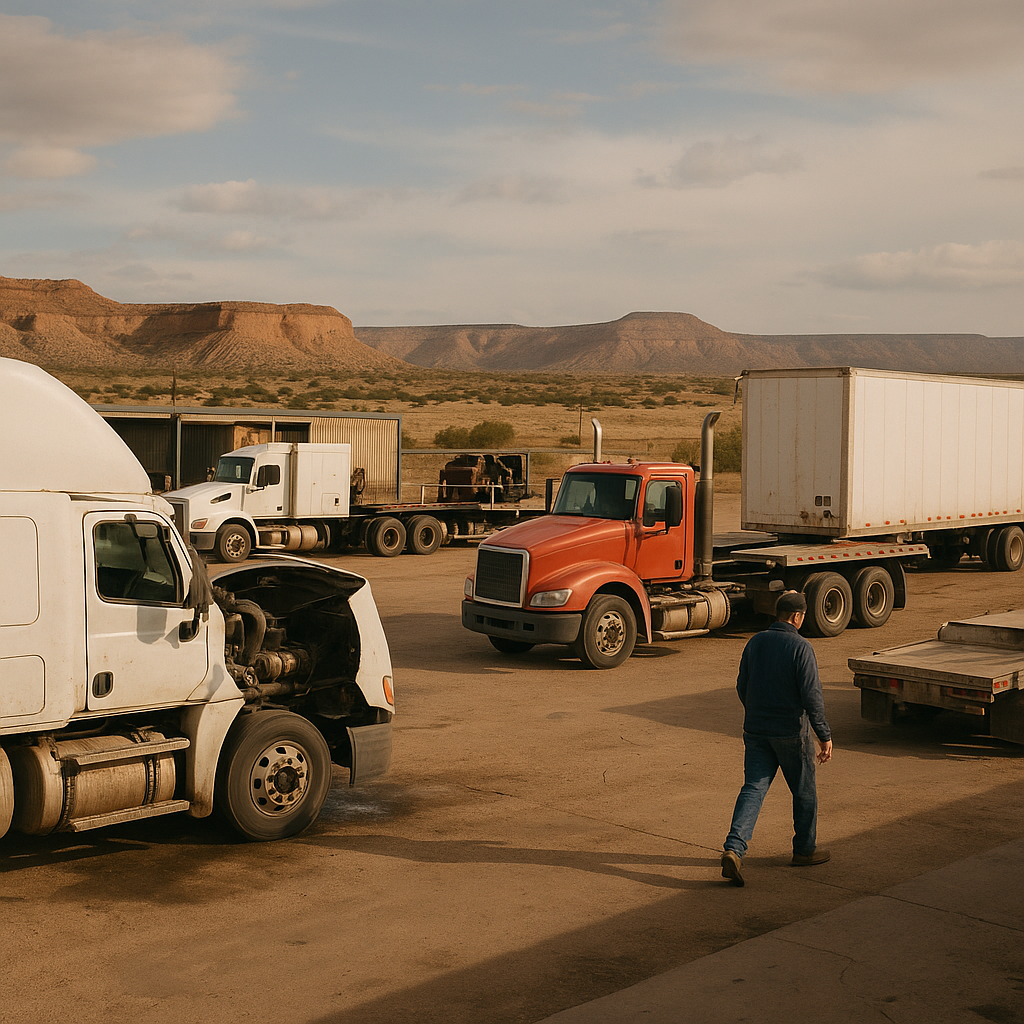
Hotshot trucking insurance in New Mexico is commercial coverage for hauling freight for pay with a pickup and trailer setup. If you’re running loads with a pickup, dually, and gooseneck, your personal auto policy usually isn’t built for that risk. This guide breaks down what coverage matters, what rules may apply, and how to compare quotes without buying the wrong policy.
👉 Ready to save on your hot shot truck insurance?
Watch the video below for a quick overview of hot shot insurance rules, how much it costs, and practical ways to save. Or give us a call: (704) 290-3630
What hotshot trucking insurance covers in New Mexico#
Hotshot trucking insurance in New Mexico usually means commercial coverage for expedited freight moved with a pickup truck, often paired with a gooseneck trailer. It typically starts with auto liability, then adds physical damage, motor truck cargo, and sometimes general liability depending on how the operation runs. The right setup depends on what you haul, where you run, and whether you’re hauling for hire.
Hotshot trucking insurance is commercial insurance for freight hauled for compensation with equipment like a pickup truck, dually, and gooseneck trailer.
Hotshot vs. personal auto coverage#
A personal auto policy covers normal personal driving, not hauling freight for somebody else as a business. Once you’re moving loads for pay, most personal policies either exclude the exposure outright or leave you with major gaps when a claim happens.
That’s where a lot of New Mexico operators get burned. The truck still looks like a pickup, so it feels like pickup insurance should apply. But if you’re loaded with equipment, parts, or other freight for a customer, the insurance question changes from personal driving to commercial hauling.
Core coverages for pickup and gooseneck setups#
Auto liability pays for injuries or property damage you cause to others in an at-fault accident. Physical damage covers your own truck or trailer for losses like collision, theft, fire, or certain weather events, subject to the policy terms and deductible.
Motor truck cargo covers damage to freight you’re hauling for others, subject to the commodity scope and exclusions. General liability usually covers certain non-driving business exposures, like damage claims tied to operations away from the truck, if that policy is part of the package.
The NAIC has plain-language consumer guidance on how coverages, deductibles, and exclusions work, and that’s useful because the names sound simple while the policy details aren’t.
Think about a hotshot owner-operator hauling a skid steer attachment from Albuquerque to a jobsite near Carlsbad. If he rear-ends another vehicle, auto liability may handle the damage he caused. If his own pickup is damaged, physical damage matters. If the hauled equipment is damaged in a covered loss, cargo matters. If a shipper requires separate business liability wording, general liability may come into play.
When shipper or broker demands go beyond the minimum#
Legal minimums and contract requirements aren’t always the same thing. A broker, shipper, or load board may require higher limits, cargo coverage, or specific certificates before they’ll release a load.
That matters because a policy can be technically legal for one operation and still unusable for the freight you’re trying to book. If you’re not sure what coverage fits your operation, LogRock can help you scope it.
Who needs hotshot insurance and when New Mexico operations cross into commercial use#
If you’re using a pickup and trailer to haul freight for compensation, you usually need commercial hotshot insurance even if you don’t think of yourself as a “big truck” operation. What matters is the business use, haul type, and operating setup, not whether the vehicle looks like a semi. Interstate work, weight, and cargo can all change the insurance and compliance picture.
An owner-operator is an independent truck operator who owns or finances the truck used in the business.
Owner-operators hauling for hire#
If you haul goods for somebody else and get paid, you’re in commercial territory. That applies to many hotshot operators whether they’re moving small equipment, construction materials, oilfield-related freight, or brokered partial loads.
You do not need to be a traditional tractor-trailer carrier for commercial insurance to matter. A pickup doing for-hire work still creates a business auto exposure, and insurers underwrite it that way.
Pickup, dually, and gooseneck equipment#
A gooseneck trailer is a trailer that connects over the rear axle area of the pickup bed, which helps with stability and weight distribution.
A one-ton dually and gooseneck setup may look lighter-duty than a semi, but it can still create serious claim exposure. Underwriters look at the truck, trailer, combined use, value, and what you’re hauling rather than just the body style.
Common examples that often need commercial policies include:
- Oilfield and energy-related deliveries
- Equipment and machinery moves
- Brokered freight hauled across town or across state lines
Interstate versus intrastate work#
Interstate means transportation that crosses state lines or is part of interstate commerce. Intrastate means transportation staying within one state and not tied to an interstate movement.
That distinction matters in New Mexico because a Roswell operator hauling only local contractor equipment may face a different compliance setup than a hotshot operator running from New Mexico into Texas or Arizona. Cargo type and weight can also affect whether federal filings, medical qualification, or a different underwriting approach come into play.

New Mexico and federal rules hotshot operators should check#
Hotshot operators in New Mexico need to check both state and federal rules because the requirement depends on whether the operation is for-hire or private, interstate or intrastate, and what the truck hauls. Federal insurance minimums are not one-size-fits-all, and authority or filings may be required before a load ever moves. Weight, commodity, and operating status all matter.
FMCSA is the Federal Motor Carrier Safety Administration, the agency that oversees many commercial motor carrier registration and safety rules.
FMCSA authority and filings#
An MC number is a motor carrier operating authority number used for certain for-hire interstate operations. An MCS-90 is an insurance endorsement tied to federal financial responsibility rules for certain motor carriers.
For-hire interstate carriers often need authority and proof of financial responsibility before dispatching commercially. FMCSA explains authority, registration, and insurance filing basics at fmcsa.dot.gov.
Under 49 CFR Part 387, for-hire interstate carriers hauling general freight in vehicles over 10,001 pounds must carry at least $750,000 in public liability. Carriers under 10,000 pounds can fall under a different minimum, and some operations like auto hauling or certain hazmat have higher requirements. That’s why “all hotshot truckers need the same limit” is bad advice.
Weight, CDL, and carrier-type considerations#
Public liability is the federal term for liability coverage that includes bodily injury, property damage, and environmental restoration where applicable under the rule.
Weight can change more than licensing. It can affect whether federal motor carrier rules apply, how underwriters classify the risk, and whether the setup fits a given insurer’s appetite. The same goes for cargo type. General freight, oilfield-related equipment, and specialty hauled items do not always underwrite the same way.
A practical example: a Farmington operator hauling equipment only within New Mexico may be dealing mainly with intrastate requirements and customer contract demands. A similar operator crossing into Texas under for-hire interstate authority may need federal filings and must match coverage to interstate rules and cargo scope.
State registration and insurance proof#
New Mexico operators should also confirm state registration and proof requirements through the proper state agencies. Federal authority does not replace state-level vehicle registration, titling, or other state obligations.
Before you haul your first commercial load, make sure the insurance policy, filings, and registration status line up with the way the business actually operates. That’s usually where preventable delays happen.
What drives hotshot trucking insurance cost in New Mexico#
Hotshot trucking insurance cost in New Mexico depends on the truck, trailer, cargo, route, driver history, and business profile. A local operator with a clean record hauling a narrow type of equipment is a different risk from a brand-new interstate authority chasing mixed brokered freight across several states. That’s why quote fit matters more than any single monthly number.
Vehicle and equipment factors#
Physical damage pricing usually changes with the value of the pickup and trailer. A newer dually with a high stated value costs more to insure than an older paid-off truck with a lower insured value, all else equal.
Trailer setup matters too. A heavy gooseneck used regularly for equipment hauling presents a different exposure than a lighter trailer used occasionally for simpler loads. If the truck is financed, the lender may also require certain physical damage terms.
Driver and operating history#
Insurers look closely at motor vehicle reports, prior claims, years of commercial experience, and whether the operation is brand new. A clean record doesn’t guarantee an easy placement, but violations and losses can narrow options fast.
A new venture is a business with little or no operating history under its own authority. New ventures are often harder to place because the insurer has less proof of how the business will operate.
Cargo, radius, and authority status#
Operating radius is the usual distance range your truck runs from its base. Longer radius usually means more exposure time, more unfamiliar roads, and more claim opportunity.
A hotshot operator doing local equipment moves around Las Cruces may underwrite differently than one hauling brokered freight from New Mexico into multiple states every week. Cargo scope matters just as much. If the application says general freight but the real loads lean toward harder-to-place commodities, the quote may not hold up at bind time or claim time.
Some carriers also view first-year authority as higher risk, especially when combined with wide radius, mixed cargo, or limited experience. That can mean higher pricing, tighter terms, or outright declines.
Why new ventures are harder to place#
Declination means the insurer chooses not to offer coverage for that risk.
Hotshot risks often get declined for reasons that have nothing to do with one magic number. Common issues include unclear cargo descriptions, mismatch between stated use and actual loads, inexperienced drivers, broad interstate radius, or equipment values that don’t line up cleanly with the application.
That’s why comparing only the premium can backfire. A quote that looks lower may be lower because it covers less, excludes key freight, or is built on assumptions that don’t match your business.
How to compare hotshot quotes without buying the wrong policy#
The best hotshot quote is the one that matches your real operation, not the one with the lowest headline premium. Compare what freight is covered, what limits apply, how the trailer is handled, what deductibles you carry, and whether filings are included when needed. A cheaper policy can still be the wrong policy.
Coverage fit versus headline price#
Commercial auto insurance is insurance for vehicles used in business operations rather than personal driving.
If one quote assumes local hauling and another assumes interstate freight, those quotes are not equal even if the monthly payment looks close. The same goes for cargo. A policy that’s fine for one type of hauled equipment may not fit broader freight picked up from load boards.
Look closely at auto liability, motor truck cargo, physical damage, trailer treatment, and any general liability offered. Make sure the quote actually fits a pickup-and-gooseneck hotshot setup, not just a generic commercial auto shell.
Questions to ask before binding#
Ask direct questions before you pay:
- What cargo is covered, and what cargo is excluded?
- What operating radius is the quote based on?
- Is the gooseneck trailer covered, and how?
- Are filings provided if the operation needs them?
- Are there restrictions on interstate travel or specialty loads?
- How are deductibles applied to truck, trailer, and cargo claims?
You can also verify your authority and operating status through SAFER, especially if you’re trying to make sure the registration side matches the insurance side.
Common exclusions to watch#
An exclusion is a policy provision that says a certain loss or situation is not covered.
For hotshot operators, common problem areas include hauling cargo outside the declared commodity scope, improper loading issues, unauthorized or specialty hauls, and business use that doesn’t match the application. A cheap quote isn’t a win if it leaves your actual loads outside the fence.
Ways New Mexico hotshot operators can reduce insurance friction#
The cleanest way to reduce insurance friction is to make the application match the real operation. Clear equipment details, accurate values, honest cargo descriptions, and consistent operating patterns make a hotshot risk easier to understand and easier to place. That doesn’t guarantee a low premium, but it does cut down on surprises.
Match coverage to actual use#
Don’t insure a hotshot operation like a personal pickup, and don’t buy broad coverage you don’t need just because somebody in a forum said everybody should. Too little coverage creates claim gaps. Too much unrelated coverage can increase cost without solving a real problem.
A good example is cargo scope. If you mainly haul contractor equipment and light machinery, describe that clearly instead of using a vague catch-all that may trigger the wrong underwriting read.
Improve underwriting inputs#
Underwriting is the insurer’s review process for deciding whether and how to insure a risk.
Strong submissions usually have clean VINs, correct garaging address, realistic equipment values, complete driver information, and a plain-English description of what the truck does. “General freight, anywhere” is often weaker than a truthful, tighter description of actual lanes and loads.
Avoid avoidable declines#
A lot of hotshot friction comes from mismatched paperwork. If your authority status, radius, cargo, and trailer details all tell different stories, the carrier may walk away. If you’re not sure how to present the operation accurately,
Step-by-step: how to get a hotshot insurance quote in New Mexico#
Getting a hotshot insurance quote in New Mexico goes smoother when you bring the right details up front. Underwriters need the truck, trailer, driver, cargo, and operating information to match the business you actually plan to run. If the facts are fuzzy, the quote is usually weaker or slower.
Gather vehicle, trailer, and driver details#
Start with the basics: truck VIN, trailer VIN, year, make, model, and current value for each piece of equipment. Have driver license information, prior experience, and loss history ready too.
If you’re quoting a pickup plus gooseneck setup, be specific. “2022 dually with a 40-foot gooseneck” is better than “pickup and trailer.”
List freight, radius, and authority status#
Tell the broker what you actually haul, where you run, and whether you’re operating under your own authority. If you’re new, say that clearly. It’s better to quote the real startup risk than to force a cleaner story that falls apart later.
For example, a new owner-operator based in Hobbs might tell the underwriter he plans to haul contractor equipment and brokered general freight in New Mexico and West Texas with a pickup and gooseneck. That gives the market something real to underwrite.
Review filings and policy documents before binding#
Before you pay, read the declarations page, confirm insured equipment, check deductibles, and review exclusions. Make sure any required filings are included where applicable and that the named insured matches your business structure.
A declarations page is the summary page showing the named insured, covered vehicles, limits, and key policy terms.
Is hotshot trucking worth it in 2026?#
Hotshot trucking can still be worth it in 2026, but only when the freight, equipment, and insurance setup work together. If loads are consistent and the business runs a defined lane or customer base, the model can make sense. If the truck is chasing random spot freight with thin margins, insurance and operating costs can squeeze the business hard.
A pickup that’s booked regularly for equipment moves around a known region usually has a clearer path than an operator bouncing between mixed loads just to keep the trailer moving. The real question isn’t just policy price. It’s whether total cost, downtime, claims exposure, and freight access leave enough margin to justify the work.
FAQ#
What is the best insurance for hotshot trucking?
The best insurance for hotshot trucking is the policy that matches your actual operation. For many owner-operators, that means a combination of auto liability, physical damage for the pickup and trailer, motor truck cargo for the freight, and general liability if customers or contracts require it. The right fit depends on whether you haul for hire, what cargo you move, whether you run interstate, and whether you need filings tied to authority. A policy isn’t “best” if it looks cheap but excludes your real freight, radius, or trailer setup.
How much is hotshot trucking insurance per month?
Hotshot trucking insurance per month varies widely, so there is no honest one-size-fits-all number. Your actual premium depends on the truck and trailer value, cargo type, operating radius, driving record, authority status, experience, and claims history. A new venture hauling mixed interstate freight will usually underwrite differently from an experienced operator doing narrower local work. That’s why two pickup-and-gooseneck setups that look similar from the outside can get very different quotes. The useful comparison is not just monthly payment, but whether the quote fits the loads you actually plan to haul.
Is Hotshot trucking worth it in 2026?
Hotshot trucking can be worth it in 2026 for the right operator, but it’s not automatically a strong business just because entry equipment may look simpler than a semi. Profit depends on load consistency, rate quality, fuel, maintenance, downtime, financing, claim exposure, and insurance fit. An operator with repeat customers, defined lanes, and a realistic cargo scope usually has a better shot than someone relying only on inconsistent spot freight. Before launching, look at total operating cost and how insurance affects the plan. A cheap policy won’t fix a weak freight model, and a strong freight model still has to survive real expenses.
What is the cheapest full coverage insurance in New Mexico?
There isn’t one universal “cheapest full coverage” option for New Mexico hotshot operators, and chasing that phrase can lead to the wrong policy. Full coverage usually means physical damage on your own equipment plus liability, but that still doesn’t tell you whether the policy fits commercial hauling, cargo, trailer exposure, or filing needs. A low-price policy that treats the truck like personal use is not a bargain if the claim happens during for-hire work. For hotshot operations, the better question is whether the quote covers the pickup, gooseneck, freight, and business use you actually have.
Do I need commercial insurance if I’m using a pickup for hotshot loads?
Yes, if you’re hauling freight for compensation, you generally need commercial insurance built for that business use. The fact that the vehicle is a pickup does not make it personal-use exposure. Once you’re transporting goods for others as part of a business, insurers usually treat that as commercial hauling. Depending on the operation, you may also need cargo coverage, physical damage, and filings tied to authority. The key issue is how the truck is used, not whether it looks smaller than a tractor-trailer. That’s the line many new hotshot operators in New Mexico miss at the start.





