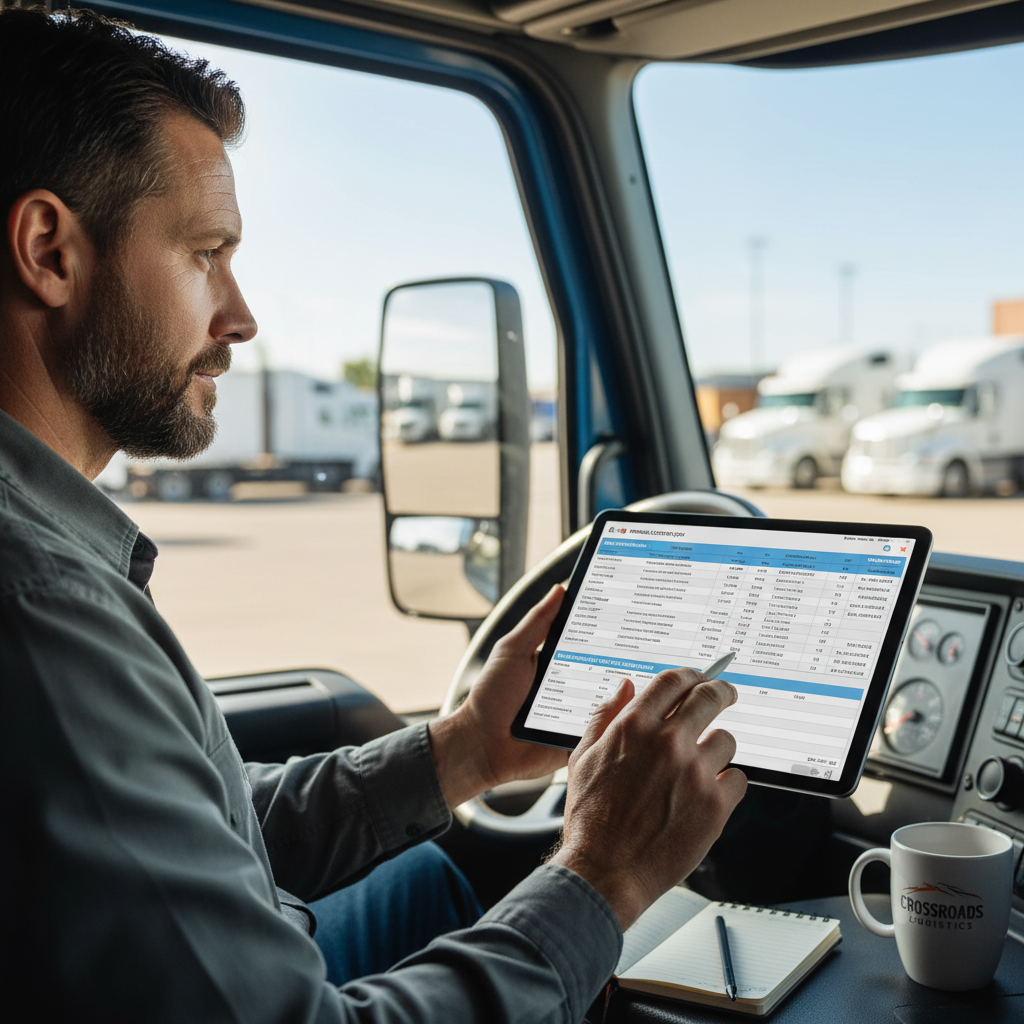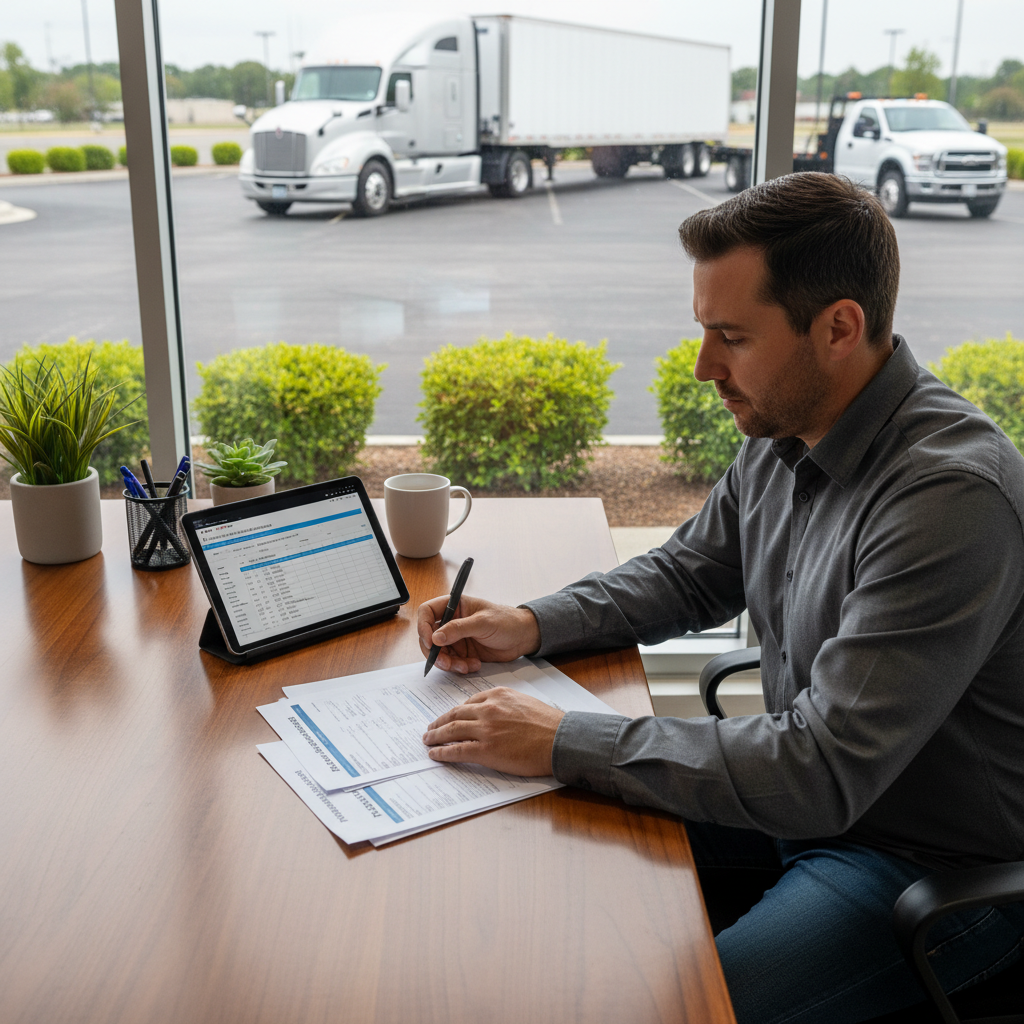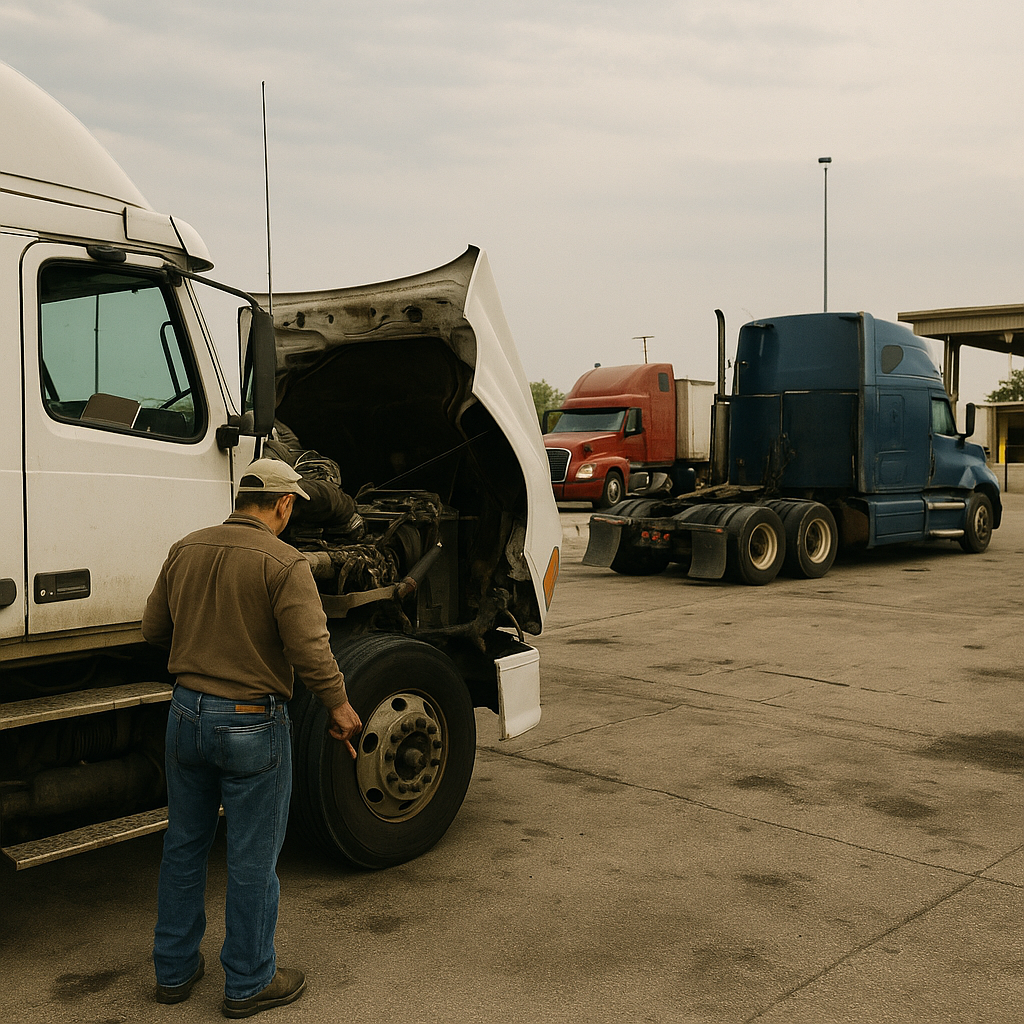

Houston truck insurance depends less on your ZIP code than on how you run your truck. If you’re an owner-operator or small fleet in Houston, the right starting point is your operation: for-hire or private, interstate or Texas-only, what you haul, where the truck is garaged, and whose authority you run under.
Houston Truck Insurance Starts With How You Operate#
Houston truck insurance is built around business use, truck type, cargo, operating territory, and garaging address. A Houston address matters, but it doesn’t decide your limits by itself. For most owner-operators and fleets with one to five trucks, the first job is to document exactly how each truck is used.
A lot of drivers get tripped up by labels. “Commercial auto” can mean very different things depending on whether you’re hauling freight for hire, leased on to another carrier, or running your own authority.
Why personal auto insurance is not a substitute#
Personal auto insurance is coverage written for private household driving, not for hauling freight or running a trucking business. If the truck is used in business, especially for-hire trucking, personal auto coverage usually isn’t the policy you should be relying on.
That’s one of the biggest misunderstandings in Houston and everywhere else. A pickup used for errands is one thing. A power unit, straight truck, or business-use vehicle hauling loads is another.
The operating details insurers need#
Insurers usually want the same basic facts before they can even tell whether a quote fits. That includes whether you’re for-hire, whether you cross state lines, what vehicle you run, what cargo you haul, your radius, your drivers, and where the truck is parked.
Garaging matters because claims patterns and theft exposure can differ by area. But again, Houston alone doesn’t answer the big coverage questions.
Who this guide is designed to help#
This guide is for Houston owner-operators, new authorities, leased operators, and small fleets with one to five trucks. It’s especially for drivers trying to sort out Texas intrastate rules versus FMCSA-related interstate requirements before buying the wrong policy.

Separate Texas Intrastate Rules From Federal Interstate Requirements#
Texas-only trucking and interstate trucking can trigger different registration, insurance, and filing requirements. Interstate for-hire carriers may be subject to FMCSA financial responsibility rules, while Texas intrastate operations can face separate state obligations. Before you compare limits or prices, confirm whether your operation is intrastate, interstate, private, or for-hire.
A USDOT number is the federal identifier used to track a carrier’s safety and regulatory information. An MC number is operating authority associated with certain for-hire interstate transportation.
When interstate commerce can trigger FMCSA requirements#
If you haul freight for hire across state lines, or in some cases haul freight tied to interstate commerce, federal rules may apply. Under FMCSA requirements and 49 CFR Part 387, the minimum public liability requirement depends on carrier type, vehicle weight, and commodity.
For example, under 49 CFR Part 387, for-hire interstate carriers hauling general freight in vehicles over 10,001 lbs must carry at least $750,000 in public liability. That doesn’t mean every Houston trucker needs that same limit. Auto haulers, lighter vehicles, and hazmat operations can fall under different requirements.
Texas intrastate registration and insurance considerations#
Texas intrastate means you operate within Texas rather than crossing state lines as an interstate carrier. Texas carriers may still have state-level registration and compliance obligations even when federal interstate authority doesn’t apply.
The Texas Department of Motor Vehicles is a key source for Texas motor carrier registration details. If you’re staying intrastate, don’t assume FMCSA authority rules automatically control your setup. Texas may require a different registration path and insurance handling.
Why authority, weight, and cargo affect the answer#
A carrier hauling exempt commodities under another company’s authority is not in the same position as a new authority hauling general freight under its own MC number. Weight matters, cargo matters, and whether you’re for-hire matters.
That’s why blanket advice from social media causes problems. “State minimum” and “federal minimum” are not the same thing, and neither tells the whole story unless you scope the operation correctly.
How insurance filings fit into operating authority#
An MCS-90 endorsement is a federally required endorsement in certain situations that helps satisfy public financial responsibility rules. It is not a substitute for the underlying policy terms, exclusions, or actual coverages you buy.
Before dispatching under new authority, verify your status and filings through official sources. Check SAFER for public carrier status and use the FMCSA and Texas sources above to confirm what applies to your operation.
Choose Coverage Around Your Trucking Operation#
The right Houston truck insurance package depends on what you haul, whose authority you run under, whether you own or borrow trailers, and whether the truck ever operates off dispatch. Most owner-operators need a mix of coverages, not one generic policy label. The goal is to match each coverage to a real loss your operation could cause or suffer.
An insurance endorsement is a policy change or add-on that modifies how the base policy works.
Auto liability for for-hire trucking#
Auto liability covers bodily injury and property damage you cause to others in a covered trucking accident. For a for-hire carrier, this is the core coverage tied to operating authority and third-party claims.
If you’re a new authority in Houston running interstate general freight, this is usually the first policy people ask about. But the correct limit still depends on the operation, not a one-size-fits-all shortcut.
Motor truck cargo for customers’ freight#
Motor truck cargo covers certain loss or damage to freight you’re hauling for a customer, subject to the policy’s terms, limits, and exclusions. If you haul someone else’s load, cargo is often one of the first coverages brokers and shippers ask to see.
Cargo needs to match the freight you actually haul. General dry van freight, higher-theft goods, and temperature-sensitive loads can create very different underwriting questions.
Physical damage and collision losses#
Physical damage covers damage to your insured truck from collision, comprehensive causes, or fire and theft, depending on how the policy is written. CAC means combined additional coverage, a bundled set of extra physical-damage-related protections that can vary by policy.
Collision pays for impact losses to your truck. Comprehensive or fire and theft handles non-collision losses like theft, vandalism, weather, or fire. Deductible choices matter because they change what you’d need to pay out of pocket after a loss.
Non-trucking liability for limited off-dispatch use#
Non-trucking liability, often called bobtail coverage, covers certain qualifying non-business use of the truck. It does not replace primary liability while you are under dispatch or otherwise using the truck in business.
This is where leased owner-operators get burned. If you think non-trucking liability covers you during paid hauling, deadheading under dispatch, or business errands, that misunderstanding can turn into a denied claim.
If you’re not sure whether your off-dispatch use matches the policy you’re looking at,
Trailer interchange and non-owned trailer physical damage#
Trailer interchange covers damage to a trailer in your care, custody, or control when a signed interchange agreement applies. Non-owned trailer physical damage is coverage for certain trailer damage exposures when you don’t own the trailer, often without the interchange agreement setup required for trailer interchange.
A lot of non-intermodal owner-operators really need the second conversation, not the first. If you pull someone else’s trailer, make sure the policy matches how you take possession of it.
Reefer breakdown for temperature-controlled freight#
Reefer breakdown covers certain loss exposures tied to refrigeration unit failure on temperature-controlled loads. If you haul produce, frozen goods, or other sensitive freight, this can matter a lot.
A small fleet hauling mixed freight around Texas may not need it. A reefer operator running long distances out of Houston probably needs to review it closely.
Do You Need an LLC to Get Commercial Truck Insurance?#
No, an LLC is not universally required to get commercial truck insurance. Many operators can seek coverage as sole proprietors or through another business structure. What matters is that the named insured, authority details, and actual vehicle use are represented accurately on the application and policy.
A named insured is the person or business entity listed on the policy as the insured party.
Sole proprietor versus LLC applications#
An LLC can help organize the business side of your operation, but it doesn’t automatically change what coverages you need. The policy still has to match who owns the truck, who operates it, and whose authority is being used.
If you’re a sole proprietor, that doesn’t automatically block you from getting commercial trucking insurance. If you’re an LLC, that doesn’t automatically prove you meet shipper, broker, Texas, or FMCSA requirements either.
Business details insurers typically review#
Insurers usually review the named insured, vehicle information, driver history, cargo, operating radius, garaging address, prior coverage, and loss history. If applicable, they’ll also look at your USDOT number, MC number, and business setup.
This is why incomplete applications often come back revised. If the first quote assumes local business use and the final operation is Houston-based OTR for-hire trucking, the result can change fast.
Why accurate ownership and authority information matters#
Forming an LLC does not create operating authority. It also doesn’t guarantee the policy is written in a way that matches your contracts or filings.
Bad paperwork creates expensive problems at claim time. Before you start quote shopping, gather your truck, driver, authority, and contract details so the coverage review is based on the real operation, not a guess.
Compare Houston Truck Insurance Quotes Beyond the Payment Terms#
The best way to compare Houston truck insurance quotes is to keep the operation identical across every submission and then compare coverage details, not just the payment. A low advertised installment can hide different limits, exclusions, deductibles, or missing coverages. If the quote isn’t built for the way you actually run, it’s not really cheaper.
A Certificate of Insurance is a document showing evidence of insurance, but it does not replace the actual policy wording.
Confirm the operation quoted is the operation you run#
Keep these facts consistent across every quote request:
- named insured
- truck and trailer details
- driver list
- cargo type
- operating radius
- garaging address
- authority status
- requested effective date
If one quote assumes intrastate and another assumes interstate, you’re not comparing the same thing. Same problem if one quote includes cargo and another doesn’t.
Compare liability, cargo, and physical-damage limits#
Look at liability limits, cargo limits, and physical-damage valuations side by side. If one quote has a lower cargo limit than your contracts require, or a stated truck value that won’t help much after a total loss, the lower payment can be misleading.
| Quote item | What to confirm | Why it matters |
|---|---|---|
| Liability | Operation, limit, filings | Must fit authority and hauling setup |
| Cargo | Cargo class, limit, exclusions | Cheap quotes may underinsure freight |
| Physical damage | Truck value, deductibles, CAC | A loss can expose cash-flow gaps |
| Trailer coverage | TI or NOTPD, trailer type | Borrowed trailer exposure is often missed |
| Off-dispatch use | NTL terms and restrictions | Does not replace primary trucking liability |
Review deductibles, exclusions, and endorsements#
Read the exclusions and endorsements carefully. The Texas Department of Insurance is a good consumer resource for reviewing policy documents and insurer information before you rely on a headline payment number.
Ask what happens if the cargo changes. Ask whether unattended theft, certain commodities, or trailer types are restricted. Ask whether your deductible is realistic if the truck is down and revenue stops.
Check certificates, filings, and claims support#
A certificate can satisfy a broker’s request for proof of coverage, but it should be reviewed alongside the actual policy and any required filings. Also ask practical claims questions: who do you call after hours, what documents are needed, how are certificates handled, and who helps with endorsements during a busy week?
Common gaps to investigate include cargo limits that don’t match the loads, uninsured trailer exposure, non-trucking liability misunderstandings, and physical-damage deductibles that are too high to absorb after a major loss.
Ways Houston Owner-Operators Can Manage Insurance Costs#
The most reliable way to manage truck insurance cost is to give accurate operating details, choose deductibles you can actually handle, keep records clean, and review coverage when the business changes. There is no single cheapest option for every Houston trucking operation. Your actual premium depends on your operation, cargo, radius, driving history, and other factors.
Give accurate operating information from the start#
Wrong or vague details can produce a quote that looks fine until underwriting corrects it. Be clear about drivers, garaging, radius, cargo, authority, and prior losses from day one.
That cuts down on last-minute revisions. More important, it reduces the chance of binding coverage that doesn’t fit the work.
Match deductibles to available cash reserves#
A higher deductible can lower the upfront payment, but it also means more risk stays with you. That’s a cash-flow decision, not just a shopping trick.
If a deductible would be impossible to cover after a crash, theft, or weather loss, it may not be the right choice. Cheap on paper can get expensive fast when the truck is down.
Maintain driver and vehicle records#
Keep driver qualification files, inspection records, maintenance records, and loss runs organized. Underwriting and claims discussions go smoother when the paperwork is complete.
This matters even more for small fleets. One missing document can slow a quote, a filing, or a claim when you least need the delay.
Review coverage when your operation changes#
A coverage setup that fit last year may not fit now. Add a truck, change cargo, expand radius, start running interstate, or begin taking trailers under agreement, and you should revisit the policy.
That review is especially important for Houston operators growing from one truck to a small fleet. New exposures show up before most people notice them.
Build a Houston Truck Insurance Plan Before You Request Quotes#
Before requesting Houston truck insurance quotes, assemble the facts that actually drive coverage: business structure, truck and trailer ownership, drivers, cargo, operating radius, authority status, garaging address, certificates, and loss history. That gives you a cleaner comparison and helps prevent avoidable gaps. It also separates personal auto issues, Texas intrastate obligations, and FMCSA-related requirements the right way.
Start with a short checklist:
- business structure and named insured
- truck and trailer ownership
- driver list and history
- cargo type
- operating radius
- USDOT and MC status, if applicable
- garaging address
- certificate and contract requirements
- current and prior loss history
You can also verify public carrier details on SAFER before you move forward. Once your operation is documented, the next step is reviewing complete proposals, not chasing the lowest advertised payment.
FAQ#
Who is the cheapest truck insurance?
There isn’t one insurer that is always the lowest-cost choice for every trucking operation. A single-truck owner-operator hauling dry van freight under lease is a different risk than a new authority running interstate loads out of Houston, and both are different from a small fleet hauling refrigerated freight. The only fair comparison is between equivalent proposals with the same drivers, truck details, cargo, radius, limits, deductibles, and endorsements. Also compare claims handling, filing capability, and trailer-related coverage so the lower payment doesn’t come with bigger gaps.
What is the cheapest commercial truck insurance in Texas?
There is no universal cheapest commercial truck insurance in Texas because the cost depends on the actual operation and the coverage required. Texas intrastate business use, interstate for-hire trucking, leased owner-operators, and small fleets can all be priced differently. The best approach is to request comparable quotes using the same vehicle, driver, cargo, radius, garaging, and effective-date details. Then compare liability, cargo, physical damage, deductibles, exclusions, and filings instead of focusing only on the advertised down payment or installment amount.
Who has the cheapest auto insurance in Houston?
That question usually mixes personal auto shopping with commercial trucking insurance. If you run a trucking business, haul freight, or use the vehicle in for-hire work, personal auto comparisons won’t answer the real problem. You need a commercial policy built for your operation. For Houston truck operators, the right comparison is between commercial trucking quotes that match the business use, drivers, radius, cargo, and authority setup. A personal auto policy may look cheaper, but it is not a substitute for properly structured trucking coverage.
Do I need an LLC to get commercial insurance?
No, you do not always need an LLC to get commercial insurance. Many operators apply as sole proprietors, while others insure through an LLC or corporation. The key is that the named insured, truck ownership, business structure, and authority details are shown accurately on the application and policy. An LLC can affect how the policy is issued and documented, but it does not create FMCSA authority, satisfy shipper requirements by itself, or prove that the policy fits your actual operation. Accuracy matters more than the business label alone.