
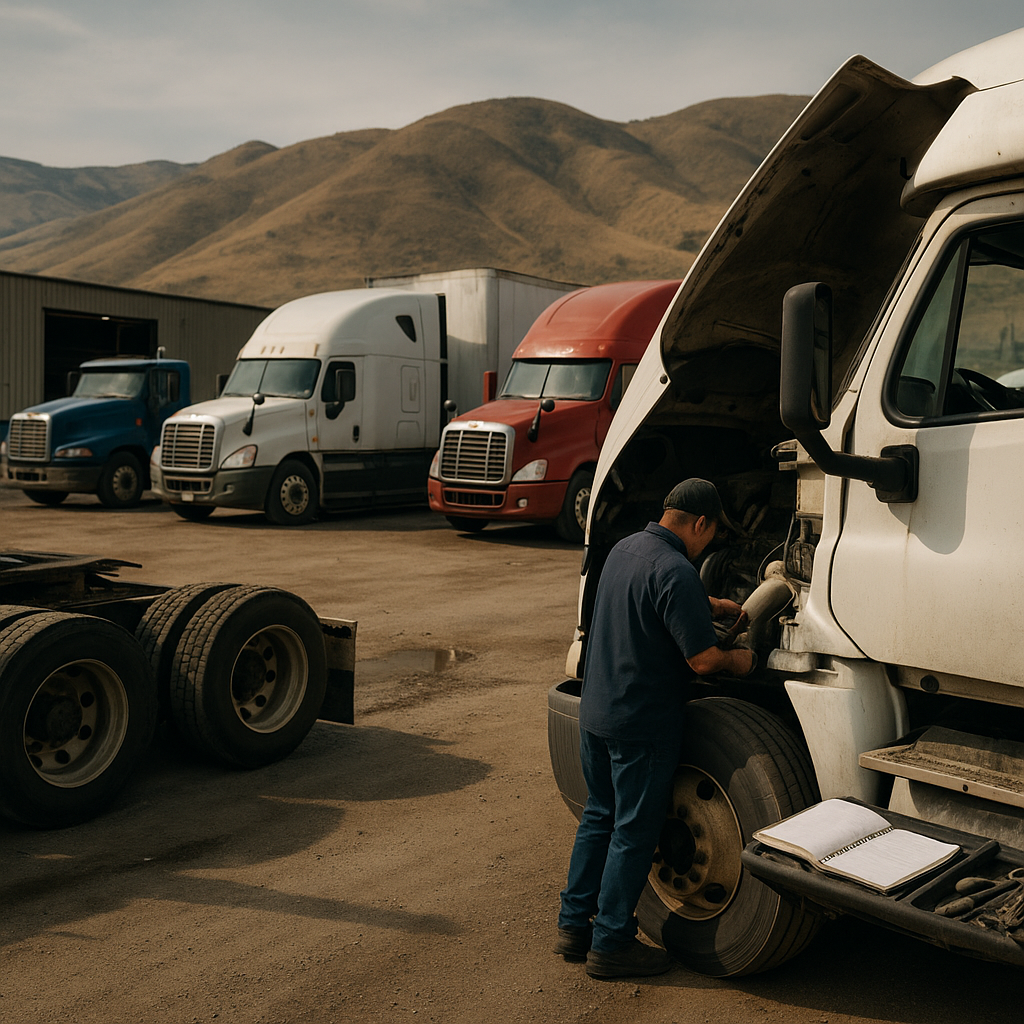

If you’re shopping for idaho dump truck insurance, the biggest mistake is treating a work truck like a personal vehicle or assuming one liability number fits every operation. Dump truck coverage depends on how you haul, where you run, whether you have your own authority, and what your contracts require.
What Idaho Dump Truck Insurance Covers#
Idaho dump truck insurance is commercial insurance for a truck used in business, not everyday personal driving. Most operators need a mix of auto liability plus optional coverages like physical damage, cargo, or general liability based on how the truck is used, what it hauls, and whether it runs under its own authority or leased on.
A gravel hauler working local jobs in Boise doesn’t have the same exposure as an owner-operator hauling for several customers across state lines. The truck may look similar, but the insurance setup can be very different. That’s why a dump truck policy should match the operation, not just the vehicle.
Why a dump truck needs commercial coverage#
A dump truck used to haul dirt, gravel, asphalt, demolition debris, or other job-related material is a business vehicle. Once the truck is being used for paid work, hauling for customers, or supporting a business, personal auto usually stops fitting the risk.
That’s where commercial auto insurance vs personal auto matters. A personal policy is built for private driving, not contractor jobs, job sites, loaded trucks, or business liability tied to hauling.
Core coverages in a dump truck policy#
Auto liability pays for injury or property damage you cause to others in a covered accident. This is the coverage tied to state rules, FMCSA rules, and many contract requirements.
Physical damage pays for damage to your truck from collision, theft, fire, weather, and similar losses, depending on the coverage selected. If your dump body and truck are valuable, financed, or hard to replace, this usually matters.
Motor truck cargo covers damage to covered cargo while you’re transporting it, subject to the policy terms. Not every dump truck operator needs motor truck cargo insurance, but some do if they haul material for others and the load creates a real cargo exposure.
General liability covers certain non-driving business risks, like some third-party bodily injury or property damage claims away from truck operation. It can matter if a contract, yard, or customer requires it.
Non-trucking liability covers certain personal-use driving when you’re not under dispatch or hauling for business. It’s mainly relevant for some leased-on operators, not for loaded work use.
When personal auto stops fitting#
Personal auto usually stops fitting once the truck is part of business operations, even if the owner still drives it home at night. If the truck is titled to a business, used on jobs, or hauling for pay, the exposure is commercial.
A simple example: a one-truck owner-operator hauling gravel between a pit and local job sites needs commercial coverage because the truck is working for income. A leased-on operator may need carrier-provided primary liability for dispatched work, but still need separate off-dispatch protection depending on the lease setup.
Idaho Requirements: State Rules, FMCSA Rules, and Contract Minimums#
Idaho dump truck insurance requirements depend on whether you operate intrastate or interstate, whether you’re for-hire or private, what the truck weighs, and what you haul. Idaho registration rules are one layer, but FMCSA rules under federal law can add another layer once you cross state lines or run interstate for-hire.
Start by separating state compliance from federal compliance. An Idaho dump truck working only inside the state on local dirt or aggregate jobs may face a different insurance setup than a truck crossing into Oregon, Utah, or Wyoming under its own authority.
Idaho registration and insurance basics#
Idaho expects commercial vehicles to be properly registered and insured for their use. The Idaho Department of Transportation and the Idaho Department of Insurance are the places to verify state-level rules and consumer insurance guidance.
For many operators, the confusion starts here: state minimums and federal minimums are not the same thing. A local dump truck doing purely intrastate work may be dealing mostly with Idaho requirements, while an interstate for-hire carrier may trigger additional federal filings and liability standards.
When FMCSA rules matter#
FMCSA is the Federal Motor Carrier Safety Administration, the federal agency that regulates interstate commercial carriers. If your dump truck runs interstate, operates for-hire, or requires federal authority, FMCSA rules can control your minimum liability requirements and filings.
Under 49 CFR Part 387, for-hire interstate carriers hauling general freight in vehicles over 10,001 pounds must carry at least $750,000 in public liability. That rule changes with carrier type, weight, and commodity, so it is not accurate to say every trucker needs the same amount. You can learn more about auto liability coverage before assuming the minimum that applies to your operation.
An MC number is federal operating authority for for-hire interstate carriers, while a USDOT number identifies commercial carriers subject to federal oversight under rules such as 49 CFR Part 390. An MCS-90 is an endorsement tied to certain federally regulated liability policies that helps satisfy financial responsibility requirements.
Why shipper and contract requirements can exceed the minimum#
Minimum legal limits are only one part of the picture. A pit, contractor, broker, lender, or customer may require more liability than the law’s floor, along with physical damage, cargo, or general liability.
A practical example: an Idaho intrastate gravel truck may be legal with one setup, but a road-construction contract might require higher limits or extra insured language. An interstate dump truck crossing state lines under its own authority may need federal compliance plus contract-driven limits that go beyond the minimum.
If you’re not sure which layer applies,
How Much Idaho Dump Truck Insurance Costs#
Idaho dump truck insurance cost varies based on the operation, the truck, the driver, and the coverages attached to the policy. Two dump trucks with similar values can price very differently if one stays local on dirt jobs and the other runs longer radius work, carries tougher loads, or has a weaker loss history.
That’s why a quote should never be judged on premium alone. Your actual premium depends on your operation, cargo, radius, driving history, and other factors.
The main pricing drivers#
The biggest pricing drivers are usually:
- Driving record
- Operating radius
- Cargo or material hauled
- Truck and dump body value
- Years in business
- Fleet size
- Claims history
A clean, experienced driver with a short local radius may look very different to underwriting than a newer operator with violations and a wider territory. One driver’s record can move a quote more than a small change in truck specs.
Why dump trucks can cost more to insure#
Dump trucks often work in tougher environments than many other commercial vehicles. They back into uneven job sites, move around heavy equipment, haul shifting material, and operate where rock damage, rollovers, and loading accidents are real risks.
A truck hauling dirt between two steady local stops may price differently than one doing demolition debris, road work, or mixed job-site hauling. Even if both are based in Idaho, the one with rougher exposures can draw tighter underwriting or higher rates.
How to estimate your quote before shopping#
Before you shop, build a rough picture of your own risk. Ask yourself:
- Is the truck local or long radius?
- Are you intrastate only or crossing state lines?
- Are you leased on or running your own authority?
- What exactly do you haul?
- What is the truck, including the dump body, worth?
- Do you need filings, cargo, or general liability?
Then compare quotes on more than price. A lower quote may carry a higher deductible, narrower coverage, or missing protection for the dump body, attached equipment, or actual business use.
A practical example: if Driver A has years of clean experience and Driver B has a recent violation, swapping the driver can affect the quote more than changing from one similar used dump truck to another. That’s why the operation profile matters as much as the iron.

Choosing the Right Coverages for Your Operation#
The right dump truck insurance package depends more on your operating model than on the fact that the truck has a dump body. A one-truck dirt hauler, a leased-on operator, and a two-truck excavation support fleet can all need different coverage mixes even if they work in the same part of Idaho.
Start with how the truck earns money, then build coverage around that. That approach helps avoid paying for the wrong protection while still covering the exposures that could actually hurt the business.
Local owner-operator#
A local owner-operator hauling dirt, gravel, or aggregate around one metro or county often starts with liability and then adds physical damage coverage if the truck is financed, valuable, or hard to replace. An older paid-off truck may still need physical damage if a total loss would put the business down.
If the owner hauls material for others, cargo may or may not matter depending on the exposure and contract language. General liability can matter when a customer or job site asks for it.
Leased-on operator#
A leased-on operator runs under another carrier’s authority instead of their own. In that setup, primary liability for dispatched work is often handled through the motor carrier, but the operator may still need off-dispatch protection depending on the lease.
Bobtail insurance covers liability when the truck is being driven without a trailer, while non-trucking liability covers certain personal-use driving when you’re not working. If you’re comparing bobtail insurance to non-trucking coverage, the difference matters because neither one replaces primary liability while hauling.
Own-authority small fleet#
A two-truck excavation support fleet with its own authority has a broader insurance picture. That may include liability, physical damage, general liability, and possibly cargo if the operation creates a true covered cargo exposure.
If one truck is newer and financed while the other is older and paid off, the physical damage decision may differ by unit. The point isn’t to make both trucks identical on paper. It’s to match each truck’s coverage to its real replacement risk and role in the business.
How to Compare Quotes Without Missing Hidden Gaps#
The best Idaho dump truck insurance quote is the one that matches your operation without hiding exclusions, missing filings, or classing the truck wrong. Dump truck policies can look similar at the top line but differ in deductibles, territory, covered equipment, and whether the carrier actually understands how dump trucks are used.
That matters most when a claim hits. A cheap quote can get expensive fast if the policy doesn’t match the truck’s real work.
What to compare on every quote#
Compare these items side by side:
| Item | What to confirm | Why it matters |
|---|---|---|
| Liability limit | Meets legal and contract needs | Low limits can fail a contract |
| Filings | Any state or federal filing needed | Wrong filing can delay startup |
| Physical damage | Truck, dump body, and valuation basis | Equipment gaps cause claim fights |
| Deductibles | Collision and comprehensive amounts | Lower premium may mean more out of pocket |
| Use class | Matches dump truck business use | Misclassification can create problems |
You should also verify your operating status and authority details through SAFER when federal information applies. That helps catch mismatches in USDOT status, authority, or business details before binding coverage.
Common coverage gaps to watch for#
One common gap is assuming the dump body is automatically covered the way you expect. Another is buying a policy class meant for lighter commercial use when the truck is actually doing heavy work on job sites.
A low quote can also miss hired or non-owned exposure if employees use other vehicles for business, or ignore the difference between leased-on status and own-authority status. Those gaps often show up only after a loss.
Questions to ask before you bind#
Before you buy, confirm:
- What business use is listed on the policy
- Whether filings are included if needed
- Whether physical damage applies to the full truck setup
- Whether cargo or general liability is included or excluded
- What territory and radius the policy assumes
- Whether the insurer understands your exact dump truck operation
Ways Idaho Dump Truck Operators Can Lower Risk and Control Cost#
Idaho dump truck operators can usually improve insurability by tightening operations, records, and maintenance habits over time. You may not control every market condition, but you do control how the truck is maintained, how drivers are managed, and how clearly the operation is presented to underwriting.
Clean MVRs matter. Consistent maintenance logs matter. Secure parking, dash cams, and accurate garaging information also help because they show the operation is being run deliberately, not loosely.
Good documentation can help even with an older truck. Keep service records, equipment details, prior coverage information, and a clean explanation of what the truck hauls and where it runs.
Claim readiness matters too. If something happens, take photos, protect the scene if safe, document damage right away, and report the claim quickly. Better records won’t prevent every loss, but they can make underwriting and claims go much smoother.
Claims and Coverage Gaps Idaho Dump Truck Owners Should Plan For#
Dump truck claims often come from job-site backing, rollover exposure, rock damage, theft, and disputes over what was being hauled or how the truck was being used. Claim handling is usually smoother when the policy matches the real operation, the equipment list is accurate, and the driver and territory were disclosed correctly from the start.
Think through the losses that are actually likely for your work. A local dirt hauler may worry about backing into equipment, while a truck parked at a remote site may have more theft exposure.
Common loss scenarios#
Common examples include backing into a loader, cracking a windshield with flying rock, rolling a truck on uneven ground, or finding damage after a job-site theft. Some disputes aren’t dramatic wrecks at all. They’re questions about whether the load, equipment, or business use was covered the way the owner assumed.
What to document after an accident#
Keep policy declarations, truck and driver information, photos, repair estimates, and police reports when needed. If cargo or material is involved, document what was being hauled, where it came from, and where it was going.
How to avoid claim delays#
Report the loss promptly and make sure the facts given at claim time match the operation described when the policy was written. A truck insured as one thing but used as another is where delays and coverage fights start.
Final Takeaway: Buy Coverage That Fits the Way You Haul#
Idaho dump truck insurance works best when the policy matches the truck’s real job, not when it’s treated like generic commercial auto. The right setup depends on your operating model, cargo, authority status, financing, and contract requirements.
Before you request quotes, gather your VINs, garaging address, operating radius, cargo type, driver details, and loss history. That makes quote comparisons cleaner and helps avoid surprises later.
FAQ#
How much does it cost to insure a dump truck?
The cost to insure a dump truck depends on the operation more than the truck alone. Insurers usually look at the driver’s record, years in business, claims history, operating radius, the type of material hauled, the value of the truck and dump body, and whether you need only liability or additional coverages like physical damage and cargo. A local Idaho dirt hauler can price differently than a truck doing demolition debris or interstate work. The best way to judge a quote is by coverage scope, deductible, exclusions, and business fit, not just the premium.
What kind of insurance do I need for a dump truck?
Most dump truck operators start with auto liability, which covers injury or property damage you cause to others in a covered accident. From there, many also consider physical damage for the truck itself, motor truck cargo if they haul covered material for others, and general liability if a customer or contract requires it. Some leased-on operators also look at non-trucking liability for certain personal-use driving when they are off dispatch. The right mix depends on whether you’re local or interstate, leased on or own authority, and what the truck actually does each day.
How much does a $1,000,000 liability insurance policy cost?
A $1,000,000 liability policy doesn’t have one standard price because the limit is only one part of the rating. Underwriting still looks at the truck type, business use, garaging, radius, driver history, authority status, claims record, and the materials being hauled. Two operators can both buy the same limit and still get very different quotes. One may be a clean local owner-operator, while the other may have wider territory or tougher exposures. That’s why you should compare the full policy structure, not assume the liability limit alone tells you what the premium should be.
What is the cheapest full coverage insurance in Idaho?
There isn’t one universal cheapest full coverage option for Idaho dump trucks, and the lowest premium is not always the safest choice. In commercial trucking, a cheap quote may come with higher deductibles, missing physical damage detail, restrictive exclusions, or a use class that doesn’t really fit dump truck work. “Full coverage” also means different things to different people. For one operator it may mean liability plus physical damage, while another also needs cargo or general liability. The smarter move is to compare limits, exclusions, deductibles, filings, and whether the policy actually matches the operation.
Do I need FMCSA insurance limits for an Idaho dump truck?
Not always. FMCSA requirements usually matter when you’re operating interstate and the truck falls into the federal category that triggers those rules, such as for-hire interstate operation over the applicable weight threshold. An Idaho dump truck staying strictly intrastate may be dealing mainly with state requirements and contract terms instead. The key is to scope the operation correctly: for-hire or private, intrastate or interstate, what the truck weighs, and what it hauls. Contract requirements can also be higher than legal minimums, so legal compliance alone may not be enough for the work you want.





