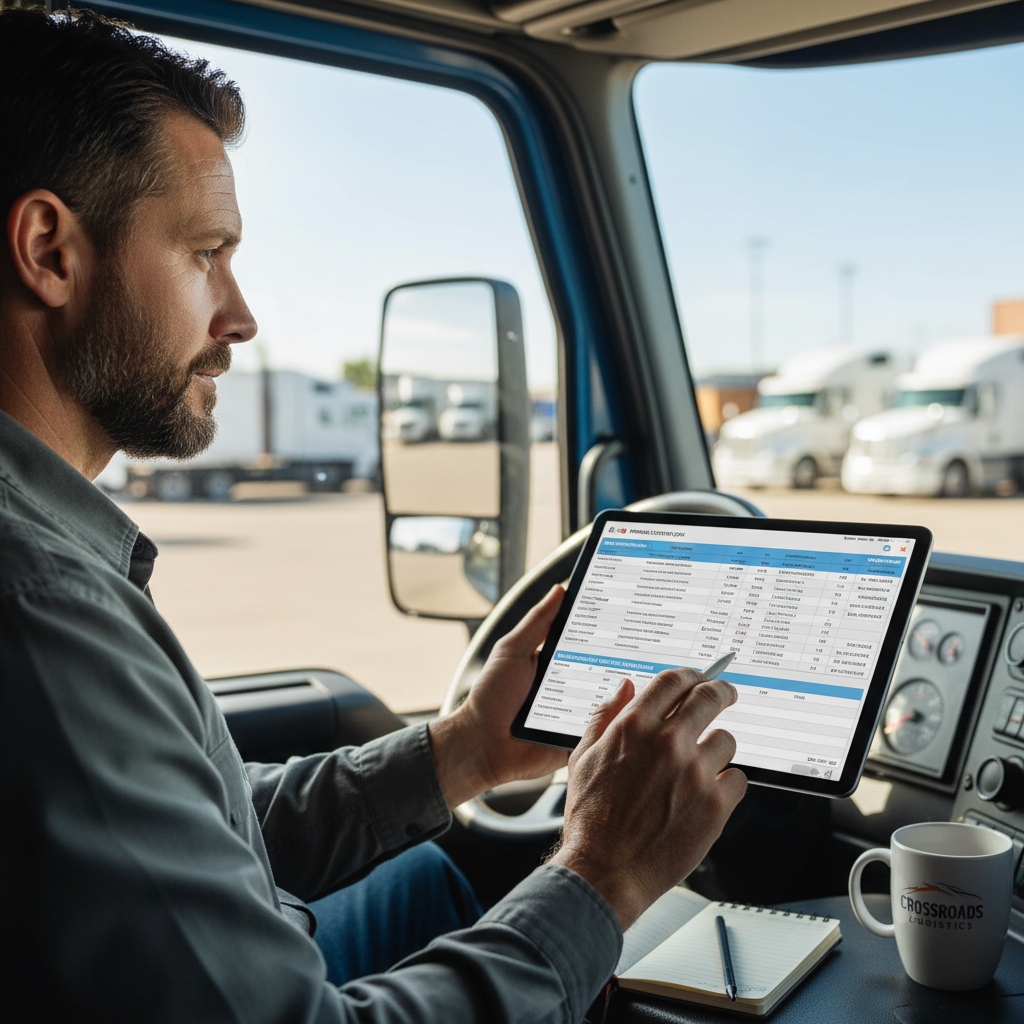
Independent truckers: learn 2026 pay reality, cost control, compliance, and commercial truck insurance basics—plus 7 practical tips. Get ready.

Independent truckers make (or lose) money on the business side: fuel swings, downtime, slow pay, and insurance renewals that jump when rates soften. The simple truth is this: independent trucking can pay well, but only when you control cost-per-mile, keep compliance clean, and buy commercial truck insurance that matches how you actually operate.
This guide breaks down the independent models, a practical 2026 startup checklist, and the insurance decisions that decide whether you protect your margins or bleed them. If you want the full “how-to” path and requirements, start with the pillar guide on becoming an independent truck driver.
Table of Contents
Reading time: 8 minutes
- Key takeaways
- What is an independent trucker (and what changes vs a company driver)?
- How to become an independent trucker: a 10-step startup checklist (2026)
- Commercial truck insurance for independent truckers: what you need (and what brokers expect)
- Top challenges for independent truckers in 2026 (and 7 moves that protect margins)
- Frequently Asked Questions
- Conclusion
Key takeaways for independent truckers in 2026
Independent trucking income is determined by net profit (after expenses), not gross revenue, and a $0.10 per mile swing in cost can change annual results by $12,000+ at 120,000 miles.
- “Independent” is a business structure, not a pay rate: gross revenue and net income are two different worlds.
- Your operating model drives everything: lease-on vs own authority changes compliance load, risk, and insurance setup.
- Commercial truck insurance is often the “gate” to hauling freight: authority activation and broker onboarding usually depend on correct filings and clean COIs.
- Winning in 2026 is cost-per-mile discipline: know your floor rate, control risk, and keep paperwork clean.
What is an independent trucker (and what changes vs a company driver)?
An independent trucker is a driver operating as a business entity (often a one-truck carrier) who earns load/percentage/contract revenue rather than W-2 wages and who typically carries direct responsibility for insurance, maintenance, taxes, and compliance.
Quick definition (plain English)
What it is: You’re running a small trucking business. You control more of the operation (equipment, lanes, schedule), and you also absorb more of the risk (cash flow, claims, breakdowns, renewals).
Why it matters: “Independence” shifts the burden: insurance, maintenance, compliance, taxes, and reserves land on you. That freedom is real—but so is the exposure.
Two common “independent” models
- Lease-on: You operate under another carrier’s authority. Less admin, less control, and the carrier often dictates insurance structure.
- Own authority: You are the motor carrier. More control, more compliance, and more up-front and ongoing costs.
If you’re choosing between them, read lease-on vs own authority before you pay for filings, plates, or a down payment.
Pay reality check: gross vs net (the part that matters)
“Pay” for independents is often gross revenue, but profit is what’s left after fuel, insurance, repairs, tires, permits, payments, and downtime. You can book strong weeks and still lose money if your cost-per-mile is unmanaged.
For employee wage context (not owner-operator profit), see BLS data: https://www.bls.gov/.
How to become an independent trucker: a 10-step startup checklist (2026)
Starting under your own authority typically involves DOT/MC registration, insurance filings, and compliance setup that can take weeks, and small errors can delay activation or prevent loads from tendering.
1) Pick the model first: lease-on or own authority
What it is: Lease-on = operate under another carrier’s authority; own authority = you are the carrier.
Why it matters: Your choice determines filings, broker onboarding, safety exposure, and how insurance is built.
2) Build the business “back office” before you roll
Open a separate bank account, set up bookkeeping, plan taxes, and create a maintenance reserve. Cash flow kills independents faster than bad freight.
3) Map your fixed costs and your true cost-per-mile (CPM)
Build a simple CPM baseline: fuel + maintenance + tires + insurance + truck payment + permits + dispatch/factoring + your pay target. If you don’t know your floor rate, you’ll stay busy and still go broke.
4) Handle authority and filings (if going own authority)
DOT/MC registration steps, insurance filings, and compliance setup need to be correct the first time to avoid delays.
Use this prep guide to reduce rework: how to prepare for the FMCSA authority application.
For federal insurance filing requirements, use FMCSA directly: https://www.fmcsa.dot.gov/registration/insurance-filing-requirements.
5) Choose equipment that matches your freight (don’t overbuy)
Spec the truck and trailer for freight you can reliably book (dry van vs reefer, regional vs OTR). Overbuying increases fixed costs and forces you to chase cheap freight.
6) Get compliance and recordkeeping tight
ELD/HOS discipline, maintenance files, and organized documentation reduce enforcement risk and help protect insurability and broker confidence.
7) Line up insurance early (it’s often the bottleneck)
Certificates, filings, and correct classifications (radius, cargo, garaging) often decide whether you can activate authority and get onboarded by brokers.
8) Set freight sources (and a payment strategy)
Load boards, direct customers, brokers, and payment terms (quick pay vs factoring vs net-30/45) determine how fast revenue becomes cash.
9) Set a 30–60 day buffer
A cash reserve covers uneven weeks, repairs, deductibles, and slow pay. Without a buffer, you’re forced into desperate decisions.
10) Run weekly reviews (not monthly)
Track weekly revenue, deadhead %, fuel mpg, maintenance spend, detention/layover collected, and CPM. Independent trucking moves too fast to wait 30 days to correct course.
Verify authority snapshots using FMCSA SAFER: https://safer.fmcsa.dot.gov/.
Commercial truck insurance for independent truckers: what you need (and what brokers expect)
FMCSA financial responsibility rules for for-hire interstate property carriers typically start at $750,000 in public liability (49 CFR 387.9), but brokers and shippers often require higher limits and specific cargo terms.
Independent truckers hear “minimum required” and assume that means “good to go,” but insurance is both a legal requirement and a business credential. If your priority is lowering premiums without creating dangerous gaps, start with Affordable trucking insurance cost levers.

Primary liability (the foundation)
What it is: Coverage for bodily injury and property damage you cause to others while operating.
Why it matters: It’s the core requirement tied to filings for many for-hire operations, and it’s the first thing brokers look for on a COI.
Cargo insurance (the broker conversation)
What it is: Coverage for damage to or loss of the freight you’re hauling.
Why it matters: Many brokers and shippers won’t tender loads without it, and high-value, temperature-controlled, or specialized freight usually tightens requirements.
Physical damage (protect the truck that makes the money)
What it is: Comprehensive and collision coverage for your power unit (and sometimes trailer), often required by lenders.
Why it matters: If your truck is totaled and you’re uninsured, your business can be over in one day.
Bobtail / non-trucking liability (common for lease-on)
What it is: Coverage when you’re driving without a trailer or not under dispatch, depending on policy definitions.
Why it matters: It can fill a gap when you’re in the tractor but not covered by the motor carrier’s policy terms.
Hotshot insurance (pickup + trailer operations)
What it is: A package tailored to hotshot operations, commonly combining liability, cargo, and physical damage structured for that equipment class.
Why it matters: Hotshot underwriting is different than a Class 8 semi; misclassifying equipment, radius, or usage can create claim and renewal problems.
Semi truck insurance vs “general trucking insurance”
What it is: “Semi truck insurance” usually means the commercial package for a Class 8 tractor + trailer operation.
Why it matters: Underwriting is driven by equipment type, operating radius, cargo, experience, and safety history—not just the label you use.
Top challenges for independent truckers in 2026 (and 7 moves that protect your margins)
ATRI consistently ranks insurance and fuel among trucking’s top cost categories, which is why margin protection starts with weekly cost tracking and risk control instead of “hoping rates rise.”
A big part of staying insurable (and priced fairly) is keeping a clean safety and compliance profile; this guide connects the dots: DOT record and trucking insurance.
Challenge: fuel price swings
- Move #1 — Run a weekly CPM floor rate: If the load doesn’t beat your floor, it isn’t “work,” it’s debt.
- Move #2 — Control idle and route discipline: Use ELD and fuel data to watch idle %, mpg, and unplanned detours.
Challenge: rate volatility + slow pay
- Move #3 — Vet brokers like you vet trucks: Credit risk is real; cheap freight + slow pay can break a one-truck operation fast.
- Move #4 — Negotiate accessorials and document everything: Detention, layover, TONU—get it in writing and keep screenshots/emails.
Challenge: maintenance and downtime
- Move #5 — Treat downtime as a line item: Preventive maintenance protects revenue weeks and keeps you from “emergency repairs” at the worst time.
- Move #6 — Build a repair reserve you don’t touch: If you can’t float a deductible or repair, dispatch becomes desperation.
Challenge: insurance renewals and risk pricing
- Move #7 — Avoid coverage gaps and sloppy classifications: Lapses and mismatches (radius, garaging, cargo type) can derail renewals and broker onboarding.
Benchmark the industry, then track your own numbers weekly: ATRI research is here—https://truckingresearch.org/.
Associations and community (not fluff—leverage)
Associations won’t run your business for you, but they can help with advocacy, education, discounts, and staying ahead of regulatory changes. If you’re solo, the network effect is often worth real dollars over a year.
Frequently Asked Questions
An independent trucker is a driver operating as a business who earns load/percentage/contract revenue instead of W-2 wages and who is responsible for major operating costs like fuel, maintenance, taxes, and insurance.
Most independents fit into one of two setups: (1) lease-on, where you haul under another carrier’s authority, or (2) own authority, where you are the motor carrier and handle filings, compliance, and broker onboarding. The model you choose changes what insurance you need and how much administrative work lands on you.
The most common challenges for independent truckers are cost volatility (fuel, repairs, insurance), rate and volume swings, and cash-flow pressure from slow pay and downtime.
Independents also carry more compliance and paperwork burden (ELD/HOS discipline, IFTA/IRP, maintenance records, organized documentation), which can affect enforcement risk and insurability. The fix is usually boring but effective: track cost-per-mile weekly, build a 30–60 day buffer, document accessorials (detention/layover/TONU), and keep safety and compliance clean to protect renewal pricing.
Yes, independent truckers operating for-hire typically need commercial truck insurance built for their exact operation, and FMCSA public liability minimums for interstate for-hire property carriers commonly start at $750,000 under 49 CFR 387.9.
In the real world, brokers and shippers often require more than minimums (plus specific cargo terms) before they’ll tender loads. If you’re ready to shop, use the commercial truck insurance hub and make sure your COIs and filings match your equipment, radius, garaging location, and cargo.
In 2026, autonomous trucking mostly impacts independent truckers through wider use of driver-assist, cameras, and telematics rather than widespread fully driverless trucks replacing drivers overnight.
The opportunity is that safety tech plus clean records can support claims defense and underwriting decisions, which may help insurability over time. The risk is that enforcement and insurance are getting more data-driven, with less tolerance for sloppy logs, poor maintenance documentation, and inconsistent operating details. If you want a clean baseline on terms and coverages, read Trucking insurance 101.
Conclusion: Protect the business, not just the load
Independent truckers can still build real, durable businesses in 2026, but the winners run tight numbers and treat compliance and insurance like profit tools. Choose the right operating model, know your CPM floor, keep documentation clean, and structure trucking insurance to match reality.
Key Takeaways:
- Know your floor: Track cost-per-mile weekly so you stop buying “busy” loads that pay broke.
- Stay insurable: Avoid coverage gaps and keep classifications accurate (radius, cargo, garaging, usage).
- Shop with context: Minimums may satisfy regulations, but broker requirements often decide what freight you can actually haul.
If you want a state-specific example of why pricing varies so much, see Commercial truck insurance cost in Texas, then tighten your operation before renewal.