
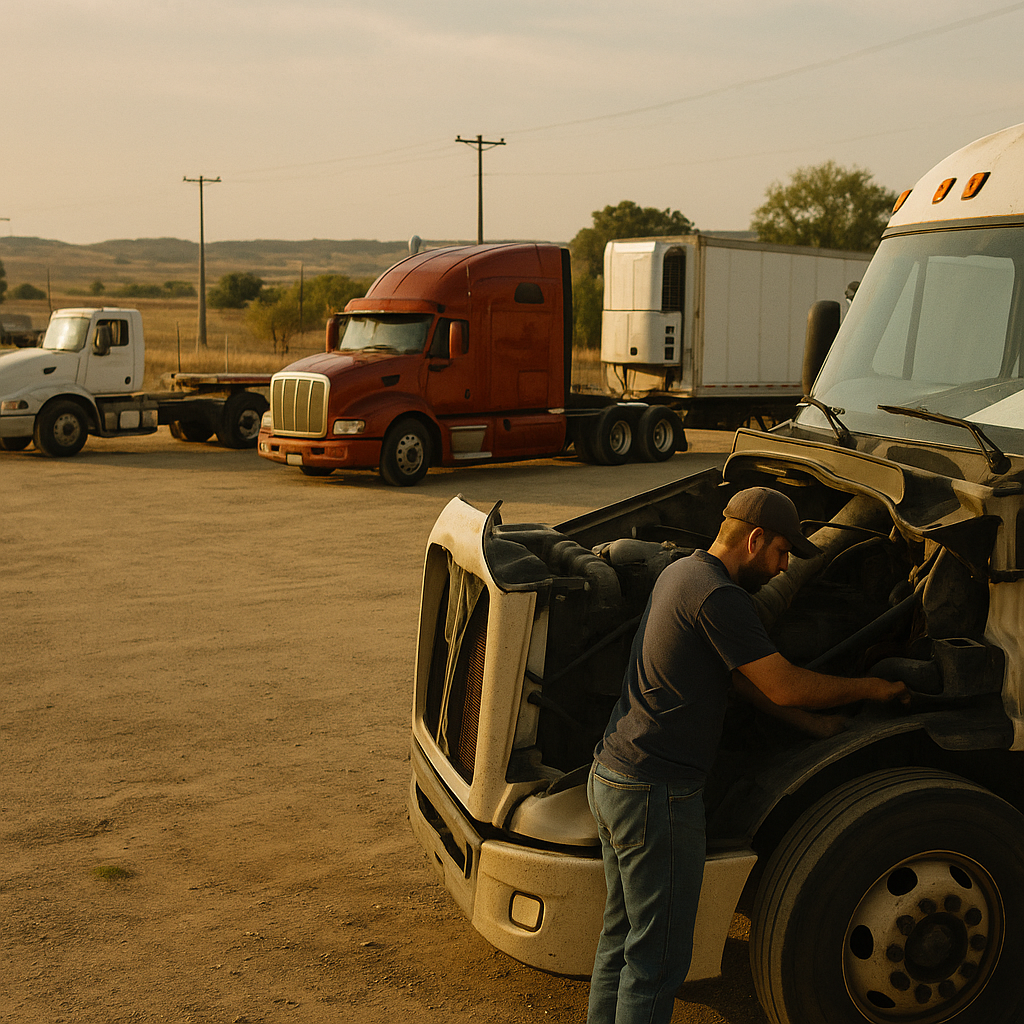

If you’re shopping for Kansas City truck insurance, the first mistake to avoid is assuming one rule fits every truck. A Kansas City owner-operator might garage in Kansas, pick up in Missouri, run interstate loads, and lease to a carrier that adds its own insurance requirements. This guide breaks down what actually applies, what coverage does, and how to compare quotes without missing something expensive.
Kansas City Truck Insurance: Start With How and Where You Operate#
Kansas City truck insurance depends on how you run, where you run, what you haul, and whose authority or contract controls the job. A truck based around Kansas City can trigger Kansas rules, Missouri rules, federal rules, or lease and customer requirements at the same time. Start with the operation, not the premium.
Kansas City trucking can involve two state rule sets because the market itself crosses a state line. You might live or garage the truck in Kansas, dispatch from Missouri, and pick up or deliver on both sides of the metro. That matters because requirements vary by carrier type, vehicle weight, cargo, and whether you operate interstate or intrastate.
Why Kansas City trucking can involve two state rule sets#
A Kansas City operation isn’t always a one-state operation just because most of your loads stay local. If the truck crosses from Kansas into Missouri or handles freight tied to interstate commerce, your insurance and compliance questions can change fast.
That also means you shouldn’t assume a state minimum you heard from another driver applies to your setup. A one-truck owner-operator leased to a carrier may face different insurance responsibilities than an owner-operator with their own authority, even if both trucks run the same lanes.
Commercial truck insurance is not personal auto insurance#
Commercial truck insurance is insurance built for business vehicle risk, including covered trucking use, heavier vehicles, cargo exposure, and required filings when they apply. A personal auto policy generally isn’t designed for for-hire trucking operations, commercial equipment, or motor-carrier insurance filings.
That’s a common Kansas City mistake, especially for someone moving from pickup work or local gig driving into CDL trucking. If you’re hauling for pay, using a tractor commercially, or operating under authority, personal auto usually isn’t the right tool for the job.
The four sources of coverage requirements#
Your coverage requirements usually come from four places: federal rules, Kansas or Missouri intrastate rules, the motor carrier you’re leased to, and the shipper or broker contract. The practical job is figuring out which of those applies to your operation before you request quotes.
For example, one policy may need to satisfy a lease requirement, a filing requirement, and a customer certificate request all at once. This guide won’t assume one universal answer for every trucker. It will help you ask the right questions before you bind coverage.

Confirm Whether Federal, Kansas, or Missouri Requirements Apply#
The first compliance question is whether your operation falls under federal interstate rules, Kansas or Missouri intrastate rules, or both at different times. Interstate for-hire carriers may be subject to federal financial responsibility rules, while intrastate operators need to confirm current state requirements with the right regulator. Don’t guess based on another driver’s setup.
Interstate for-hire operations and FMCSA financial responsibility#
Under 49 CFR Part 387, interstate for-hire motor carriers may need minimum public liability limits based on the operation, vehicle weight, and cargo. For-hire means you’re transporting property or passengers for compensation. Public liability is liability coverage for bodily injury, property damage, and environmental restoration in covered operations.
For example, under 49 CFR Part 387, for-hire interstate carriers hauling general freight in vehicles over 10,001 lbs must carry at least $750,000 in public liability. That is not a universal rule for every trucker. Auto haulers, hazmat operations, lighter vehicles, private carriage, and intrastate-only operations can land in different categories.
Kansas and Missouri intrastate authority questions#
If you operate only within Kansas or only within Missouri, state rules may control more of the picture. Intrastate means transportation that starts and ends within one state. Kansas intrastate operators should confirm current motor-carrier requirements with the Kansas Corporation Commission, and Missouri-only operators should confirm current state requirements with the Missouri Department of Transportation.
That matters in Kansas City because a business can look local but still drift into interstate exposure. One regular cross-border lane can change the compliance conversation, and a shipper contract can be stricter than the bare legal minimum anyway.
USDOT numbers, MC numbers, and insurance filings#
A USDOT number is a federal identification number used to track safety and compliance information for certain carriers and commercial vehicles. An MC number is operating authority that FMCSA requires for certain for-hire interstate operations. Not every owner-operator needs both.
FMCSA explains the difference in its USDOT number and operating authority overview. If your authority or regulatory setup requires an insurance filing, the insurer may need to submit that filing electronically before the authority shows active. An MCS-90 is an endorsement tied to federally required public liability for certain motor carriers, not a substitute for understanding the actual policy.
How to verify an operating authority record#
SAFER is FMCSA’s public system for reviewing basic carrier identification and authority information. You can check a record through the SAFER Company Snapshot to review public details tied to a USDOT number or carrier name.
A SAFER lookup helps you verify what’s on the public record, but it doesn’t replace current confirmation of insurance, filings, or contract requirements. Before you accept a dispatch, don’t assume a policy is ready just because a quote exists or a number appears in a system.
Build the Coverage Package Around Your Kansas City Operation#
A solid Kansas City truck insurance package usually starts with primary auto liability and then adds cargo, physical damage, and other coverages based on your truck, freight, lease, and trailer situation. The right package depends on the actual exposure, not a canned bundle. For many owner-operators, the gaps matter more than the headline premium.
Primary auto liability for trucking exposures#
Primary auto liability is coverage for third-party bodily injury and property damage arising from covered trucking operations, subject to policy terms and limits. This is the core coverage tied to the truck’s on-road liability exposure.
For owner-operators with their own authority, this is usually the foundation of the policy. For leased-on drivers, the motor carrier may provide some primary liability while the owner-operator still needs other coverages independently. The lease language matters.
Motor truck cargo for property you haul#
Motor truck cargo is coverage for covered freight in your care, custody, or control while you’re hauling it. Cargo coverage is where operators often learn the hard way that not all freight, causes of loss, temperature claims, or theft situations are treated the same.
Review cargo limits, deductibles, commodity exclusions, unattended-truck terms, and claims handling details. If you’re hauling higher-value freight or refrigerated loads, those details matter more than a quick quote summary.
General liability for non-driving business exposures#
General liability is coverage for certain non-auto business liability exposures, such as some premises or operations claims, subject to policy terms. It does not replace commercial auto liability, and it does not insure cargo just because your business hauls freight.
This is where owner-operators can get confused by a certificate request asking for general liability and assume their truck liability policy already covers it. It usually doesn’t. If a broker, shipper, or terminal contract asks for it, you need to compare that request against the actual policy being offered.
Physical damage and combined additional coverages#
Physical damage is coverage for damage to your insured truck, typically through collision and comprehensive, or fire and theft with combined additional coverage where available. Collision covers impact damage to your truck. Comprehensive generally covers non-collision losses like theft, weather, or vandalism.
Combined additional coverages can include things like towing or rental reimbursement where available. Physical damage is especially important when the truck is financed or when a long repair downtime would put your cash flow in a bind.
Bobtail, trailer interchange, and non-owned trailer coverage#
Non-trucking liability, often called bobtail by drivers, is liability coverage intended for limited non-business use when the truck isn’t under dispatch or otherwise engaged in covered business hauling. It does not cover paid hauling, and it has to match your lease and dispatch arrangement.
Trailer interchange is physical damage coverage for a non-owned trailer in your possession under a written interchange agreement. Non-owned trailer physical damage covers a different exposure and is often what non-intermodal owner-operators actually need when they’re pulling someone else’s trailer without a formal interchange setup.
A lot of quote gaps happen right here. Drivers think “I haul a trailer” means any trailer loss is covered, then find out the policy needed a different form or a written agreement requirement wasn’t met. If you’re not sure what fits your operation,
Match Coverage to Your Equipment, Cargo, and Lease Arrangement#
Your lease status, authority setup, truck and trailer details, and commodity mix change what coverage belongs in the policy. A leased-on owner-operator, an authority holder, and a small fleet may all buy very different insurance for similar-looking trucks. Start with who is responsible for what.
Owner-operator under permanent lease#
A permanent lease is a long-term lease arrangement where an owner-operator provides equipment and driving services to a motor carrier under that carrier’s authority. If you’re leased on, read the lease closely to see who provides primary liability, when that coverage applies, and what you still need to insure yourself.
A lot of owner-operators still need physical damage, occupational or business-related protections outside the carrier’s policy, and possibly non-trucking liability depending on the arrangement. Don’t assume “the carrier covers me” answers every question.
Owner-operator with own authority#
If you operate under your own authority, you’re usually coordinating primary auto liability, cargo, any needed filings, and contract-driven coverages yourself. That puts more control in your hands, but it also means more ways to miss something if the quote is built on incomplete facts.
This is where accurate details about radius, commodity, garaging, trailer use, and dispatch patterns matter. Kansas City cross-state operations should make sure the stated operating area matches what the truck really does each week.
Two-to-five-truck fleet considerations#
A small fleet needs current information on drivers, units, garaging locations, trailers, cargo categories, and safety practices. One outdated driver list or one unreported unit change can create trouble when you need a certificate, endorsement, or claim response.
Fleets also tend to face more variation in usage. One truck may stay local while another runs regional freight, and that can affect underwriting, pricing, and what endorsements matter.
Cargo and equipment details that can change coverage needs#
Commodity type, refrigerated freight, truck value, trailer ownership, operating radius, and hazardous-material involvement can all change the coverage conversation. Reefer or refrigeration breakdown is coverage for certain cargo loss tied to a covered refrigeration-unit failure, subject to policy terms.
That’s separate from standard cargo coverage and worth discussing if freight can spoil because the unit fails. It isn’t relevant to every operation, but when it matters, it matters a lot.
Understand What Drives Kansas City Truck Insurance Costs#
Kansas City truck insurance costs vary based on the driver, truck, cargo, operating radius, authority setup, and policy terms. There is no responsible universal price for trucking coverage because two similar trucks can produce very different premiums once filings, losses, and contract requirements are added. Your actual premium depends on your operation, cargo, radius, driving history, and other factors.
Driver and claims history#
Insurers commonly evaluate driving history, years of commercial experience, prior losses, and overall safety profile. A clean MVR doesn’t guarantee a low premium, but serious violations, recent claims, and limited experience can change eligibility and pricing quickly.
If loss runs are available, keep them complete and current. Loss runs are records of prior insurance claims used during underwriting.
Truck value, trailer use, and deductible choices#
The truck’s value, age, repair cost, financing status, and trailer use all affect the quote. A higher-value tractor usually means a bigger physical damage exposure, while trailer arrangements can trigger separate coverage questions.
Deductibles matter too. A higher deductible can change premium, but it also changes what you must pay out of pocket before coverage responds. Only raise deductibles if the business can absorb that hit.
Operating radius, cargo, and lanes#
Operating radius is the geographic distance or territory where the truck usually runs. Local metro work, regional freight, interstate lanes, and specialized cargo don’t underwrite the same way.
Cargo type changes both liability and cargo discussions. General freight, higher-theft commodities, refrigerated goods, and hazardous materials create different risk profiles and contract expectations.
Authority, filings, and contract requirements#
Authority structure can affect both what coverage is needed and how a quote is built. If a filing is required, if a shipper demands certain certificates, or if a lease requires specific endorsements, that can make one quote look different from another even before you compare limits.
Why two quotes can differ even for similar trucks#
Two quotes can differ because one includes broader cargo terms, lower deductibles, fewer driver restrictions, or the ability to handle required filings and certificates. Another may look cheaper only because something important is excluded, limited, or missing.
The best way to improve quote readiness is simple: give accurate truck, cargo, radius, garaging, driver, and authority details up front. That won’t guarantee a lower premium, but it does reduce the chance of comparing quotes built on different assumptions.
Compare Quotes for Coverage Gaps, Not Premium Alone#
The only fair way to compare Kansas City truck insurance quotes is to hold the operating facts constant and then compare forms, limits, deductibles, exclusions, and required endorsements. A lower premium can be real, but it can also mean narrower coverage or a missing piece you needed. Quote comparison should be a checklist, not a gut call.
Use the same operating facts for every quote#
Give every broker or insurer the same truck details, VIN, drivers, garaging address, operating radius, commodities, authority status, requested limits, and deductible assumptions. If one quote assumes local dry-van work and another assumes broader regional operations, you aren’t comparing the same risk.
That same rule applies in Kansas City when the truck crosses state lines more often than the application suggests. A mismatch there can create trouble later.
Compare limits, deductibles, and endorsements#
An endorsement is a policy change that adds, removes, or modifies coverage terms. Don’t stop at the declarations page. Ask what limits apply, what deductibles apply, what endorsements are attached, and whether the policy can accommodate named drivers, permissive drivers, additional insured requests, waiver requests, certificates, and filings if relevant.
Those details often decide whether the policy actually works for your contracts and dispatch pattern.
Check cargo, trailer, and physical damage details#
Cargo, trailer, and physical damage terms often create the biggest hidden gaps. Review commodity restrictions, theft conditions, deductible structure, trailer coverage triggers, stated values, and any special limits that could matter in a real claim.
If the lower quote leaves out a trailer exposure you actually have, it isn’t really lower. It’s incomplete.
Confirm filings, certificates, and effective dates#
Before you bind, confirm the effective date, certificate details, and any required filing status. Don’t accept a dispatch or sign a contract assuming the paperwork will “probably catch up.”
A filing delay or certificate mismatch can stop a load just as fast as no policy at all. When you’re comparing options and want someone to pressure-test the details,
Decide What to Do When Your Truck Is Parked or Not Running#
A parked truck can still have insurance exposure from theft, weather, fire, vandalism, finance obligations, or lease requirements. Cutting coverage just because the truck isn’t dispatched can create a bigger problem than the premium you were trying to avoid. Review the exposure before making changes.
Do not assume a parked truck has no exposure#
If the truck is financed, stored outdoors, or holding value you can’t replace easily, physical damage still matters. Liability questions can also linger depending on where the truck is stored, what status the policy is in, and what obligations still exist under a lease or contract.
Review storage, financing, and lease obligations#
Before reducing, suspending, or canceling coverage, review physical damage, liability, cargo, filing, finance-company, and motor-carrier requirements. A lender, lessor, or carrier may require coverage even during a shutdown period.
Ask before changing or canceling coverage#
A temporary shutdown, storage period, or dispatch change should be discussed before the policy is changed. That gives you a chance to understand what can be adjusted and what shouldn’t be touched.
Why self-insurance is rarely a simple option for small fleets#
Self-insurance is not just going without a policy and hoping nothing happens. Regulated operations may involve formal financial responsibility and approval requirements that generally aren’t practical for a one-truck owner-operator or small fleet.
A Kansas City Truck Insurance Checklist Before You Bind Coverage#
Before you bind Kansas City truck insurance, gather the documents and details that let a broker or insurer build the quote around your real operation. The goal is simple: make sure the policy matches your truck, authority, lease, cargo, and dispatch pattern before the first load moves. A complete checklist helps you catch gaps early.
Information to gather before requesting quotes#
Pull together your USDOT and MC information when applicable, lease documents, truck and trailer details, VINs, driver lists, loss runs, cargo descriptions, operating radius, garaging location, requested limits, and any certificate or filing requirements. If you’re crossing between Kansas and Missouri, make sure that operating area is stated accurately.
If the truck is financed, include lender insurance requirements too. If you pull non-owned trailers, note whether they’re borrowed casually or under a written interchange agreement.
Questions to ask about your policy#
Ask: Who provides primary liability? What cargo is covered? Are trailers owned, leased, or exchanged? Does the policy match the lease or shipper contract? What happens if the truck is parked for a period? Can the insurer handle the needed filing or certificate timing?
Those questions do more to protect you than chasing the lowest top-line number.
When to get dedicated help#
If your Kansas City operation crosses the Kansas-Missouri line, changes between lease and authority setups, or handles cargo with special requirements, it helps to have a trucking-focused review before binding. Small wording differences can matter when a claim or certificate request lands.
FAQ#
Who has the cheapest insurance for a truck?
No insurer is always the cheapest for every truck or every owner-operator. Pricing and eligibility vary by driving history, claims history, truck type and value, cargo, operating radius, garaging location, authority status, limits, deductibles, and other underwriting details. A quote that looks cheaper can also be missing cargo terms, trailer coverage, or filing capability you actually need.
The better question is whether you’re comparing equivalent coverage. Use the same operating facts for every quote, then compare limits, deductibles, exclusions, endorsements, and contract fit. The right policy is the one that meets your real requirements without leaving material gaps.
Which insurance companies are based in Kansas City?
For most owner-operators and small fleets, headquarters location matters less than whether the insurer or broker can handle your operation correctly. A Kansas City trucker should evaluate licensed insurers and trucking-focused brokers based on policy fit, filing capability, claims support, certificate handling, and understanding of leased-on versus own-authority setups.
If you run on both the Kansas and Missouri sides of the metro, local familiarity can help, but it shouldn’t be the only filter. Focus on whether the coverage matches your operation, whether the paperwork can support your dispatch needs, and whether someone can explain the differences clearly before you bind.
How much does $1,000,000 general liability insurance cost?
There isn’t a responsible flat price for $1,000,000 general liability because cost depends on the business’s operations, claims history, payroll or revenue details where relevant, locations, subcontracting exposure, deductible choices, and any contract-driven requirements. A trucking business that only needs limited non-auto business protection can price very differently from one with broader premises or operations exposure.
It’s also important to separate general liability from commercial auto liability. General liability does not replace truck liability coverage for on-road accidents, and it doesn’t stand in for cargo coverage either. If a contract asks for general liability, compare that request to the actual policy terms being quoted.
How much should I pay for truck insurance?
You should pay for a policy that fits your operation and meets applicable regulatory, lease, shipper, broker, lender, and risk-management needs without creating a serious coverage gap. There is no universal right dollar amount because one-truck owner-operators and small fleets can have very different exposures even with similar equipment.
Instead of targeting a number, compare what you’re getting: liability limits, cargo terms, physical damage values, deductibles, endorsements, trailer coverage, driver restrictions, payment terms, and filing capability. Your actual premium depends on your operation, cargo, radius, driving history, and other factors. A lower premium isn’t better if it leaves you exposed where your business actually runs.
Do I need both a USDOT number and an MC number?
No. A USDOT number and an MC number are not the same thing, and not every operator needs both. A USDOT number is a federal identifier used for safety and compliance tracking for certain carriers and commercial vehicles. An MC number is operating authority for certain for-hire interstate operations.
Whether you need one, both, or neither depends on what you haul, whether you’re for-hire or private, whether you run interstate or intrastate, and how the business is structured. That’s why it’s smart to confirm your status with FMCSA guidance and, if you’re intrastate only, with the Kansas or Missouri regulator that applies to your operation.





