
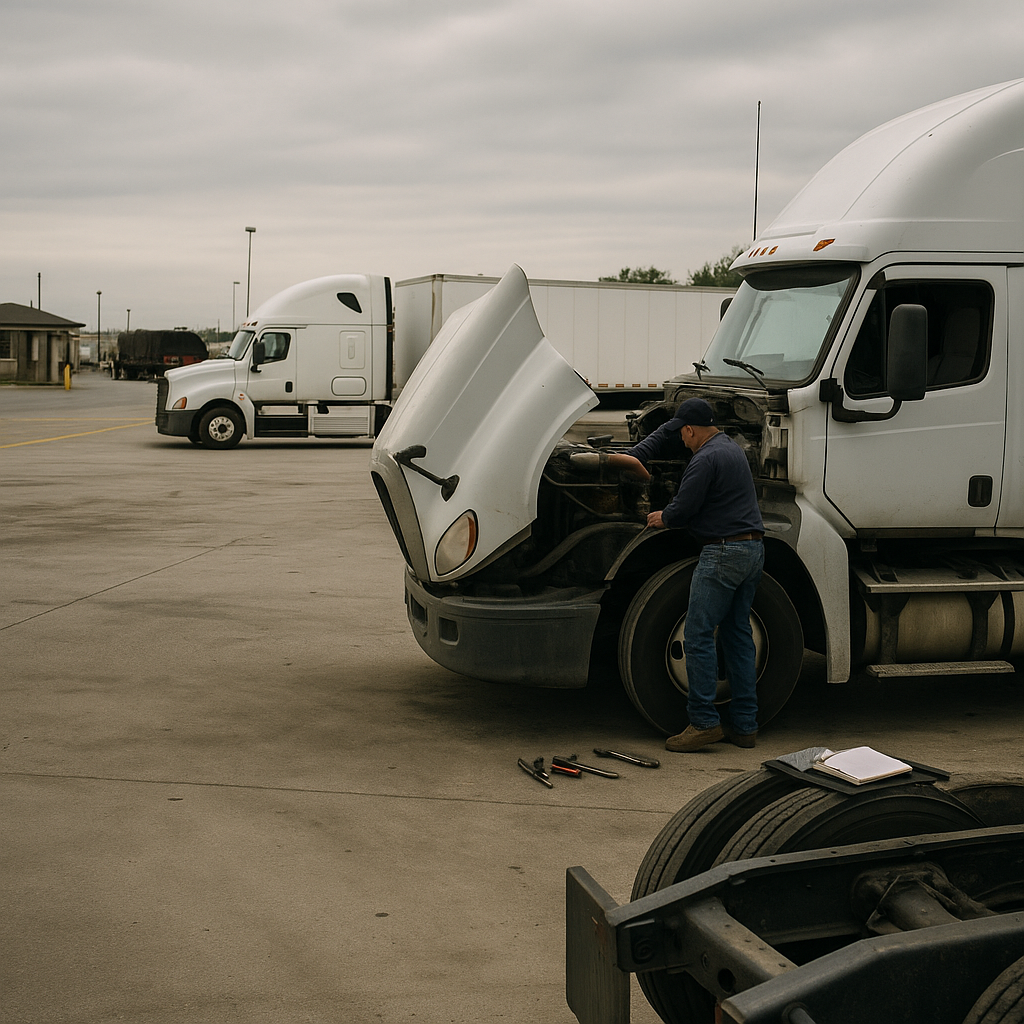

Memphis truck insurance gets confusing fast because your real requirement depends on how you operate, not just where you park the truck. If you run local Tennessee loads, cross into Arkansas or Mississippi, or haul under your own authority, the insurance and compliance picture can change. This guide breaks it down in plain English.
Start With the Trucking Operation You Actually Run#
Memphis truck insurance should start with the operation you actually run, not with a generic “trucker policy.” The right setup depends on whether you haul for-hire or private, run interstate or intrastate, what the truck weighs, what cargo you haul, how far you run, and how you use trailers.
A for-hire carrier transports property for someone else in exchange for payment. A private carrier hauls its own property as part of its own business.
The details that change a trucking insurance decision#
Before anyone can size up coverage, they need the basics: whether you have a USDOT number, whether you need or already hold an MC number, the truck’s weight class, your cargo, your operating radius, and whether you pull owned, borrowed, or swapped trailers.
A USDOT number is the identifier tied to a carrier’s safety and operating record. An MC number is operating authority used for certain for-hire interstate operations.
Those details affect more than price. They also affect filings, minimum liability rules, cargo expectations, and whether add-on coverages like trailer interchange or non-trucking liability even make sense.
Memphis-based does not automatically mean Tennessee-only#
A Memphis owner-operator can look local on paper and still run interstate in practice. If you regularly cross into Arkansas, Mississippi, or beyond, that can move you from a Tennessee-only conversation into a federal FMCSA compliance conversation.
That’s why two trucks parked in the same Memphis yard may need very different insurance setups. Same city, different operation.

Separate Tennessee Rules, FMCSA Requirements, and Personal Auto Insurance#
Tennessee intrastate rules, FMCSA interstate rules, and personal auto insurance are three different things. If you mix them together, you can end up underinsured, carrying the wrong filing, or assuming another driver’s setup applies to your truck when it doesn’t.
Tennessee intrastate operations#
A intrastate operation stays within one state. If your trucking work stays inside Tennessee, you still need to verify what Tennessee requires for your operation instead of assuming federal interstate rules are the only rules that matter.
The Tennessee Department of Revenue’s motor carrier information is a good place to confirm Tennessee-specific motor-carrier credentialing and compliance details. That matters for local and in-state operators who hear “FMCSA requires this” and assume it automatically applies the same way to every Memphis truck.
Interstate for-hire operations#
An interstate operation crosses state lines or hauls freight connected to interstate commerce. For certain for-hire interstate carriers, federal financial responsibility rules apply under 49 CFR Part 387.
Here’s the part many drivers get wrong: there is no one-size-fits-all federal minimum for every trucker. Under 49 CFR Part 387, for-hire interstate carriers hauling general freight in vehicles over 10,001 lbs must carry at least $750,000 in public liability. Other operations can fall under different minimums depending on carrier type, weight, and cargo, including higher requirements for auto haulers and certain hazmat operations.
An MCS-90 endorsement is a federal endorsement attached to certain liability policies to help satisfy public financial responsibility rules. It is not a substitute for understanding what your actual operation requires.
| Operation type | Typical scope | Federal minimum reference |
|---|---|---|
| Under 10,000 lbs | Certain for-hire interstate operations | $300,000 |
| Over 10,001 lbs general freight | For-hire interstate carriers | $750,000 |
| Auto haulers | For-hire interstate auto transport | $1,000,000 |
| Hazmat | Certain hazardous materials operations | $5,000,000 |
Why a personal auto policy is not a trucking policy#
A personal auto policy is built for personal driving, not a commercial trucking operation. In plain terms, it generally is not designed for covered business hauling exposures, federal filings, cargo issues, leased-on arrangements, or the liability that comes with running a truck for work.
That’s where owner-operators get burned. Your state minimum, your lender’s requirement, your broker’s contract, and your shipper’s insurance requirement are not always the same thing. Verify your own operating status and filings instead of copying what another driver says he carries.
Build a Coverage Plan Around Your Memphis Trucking Work#
The best Memphis truck insurance setup is a coverage map tied to what your truck does all week. Start with core trucking liability, then add cargo, general liability, physical damage, or specialty coverages only when they match the work, contracts, equipment, and trailer setup you actually have.
Auto liability for the trucking operation#
Commercial auto liability covers bodily injury or property damage you cause to others in a covered trucking accident, subject to the policy’s terms, exclusions, and limits. For most trucking operations, this is the foundation policy because it addresses the road risk regulators, shippers, brokers, and customers care about first.
But “liability” is too broad to discuss without context. A Memphis owner-operator under lease to a motor carrier may have a different primary liability setup than a new venture operating under its own authority.
Motor truck cargo and general liability#
Motor truck cargo covers certain loss or damage to freight you haul, subject to the policy wording, covered causes of loss, deductibles, and exclusions. Cargo needs depend heavily on what you haul because contract requirements, freight value, and excluded commodities can vary a lot.
General liability covers certain non-driving business exposures, like a covered incident at a loading dock or office setting. It does not replace commercial auto liability, and it does not step in for highway accident exposure.
If you haul freight for brokers or direct shippers, these distinctions matter. A cheap-looking quote that misses the needed cargo terms or required liability setup can create a bigger problem than a higher payment.
…if you’re not sure what fits,
Physical damage and combined additional coverages#
Physical damage pays for damage to your insured truck, usually through collision and comprehensive coverage. Collision covers damage from impact or overturn. Comprehensive covers non-collision losses like theft, weather, or vandalism. Fire and theft with combined additional coverage, often shortened to CAC, is a more limited option sometimes used instead of full comprehensive.
Physical damage is about protecting your truck investment, not satisfying public liability rules. Whether it makes sense depends on equipment value, loan terms, your cash reserves, and how much downtime your operation can absorb.
Check the Owner-Operator Gaps That Basic Coverage Can Miss#
Basic liability and cargo are not the whole picture for many owner-operators. The common gaps show up when you use the truck off-dispatch, pull someone else’s trailer, or haul temperature-controlled freight that can be ruined by equipment failure even when there was no crash.
Non-trucking liability for off-dispatch use#
Non-trucking liability, often called bobtail coverage, covers certain liability exposures when the truck is used for non-business or off-dispatch driving. It is not a replacement for primary liability while hauling under dispatch, and it does not cover paid freight movement.
That distinction matters for leased-on owner-operators. If you think bobtail automatically means “I’m covered anytime the trailer is off,” that misunderstanding can leave a serious gap.
Trailer interchange and non-owned trailer physical damage#
Trailer interchange covers certain physical damage to a trailer you do not own when you have it under a written interchange agreement. The written agreement part matters.
Non-owned trailer physical damage covers certain physical damage exposure to a trailer you do not own, usually when no signed interchange agreement exists. For many non-intermodal owner-operators, this is the trailer coverage question that actually comes up in real life.
Reefer or refrigeration breakdown#
Reefer breakdown covers certain loss tied to refrigeration unit failure in temperature-controlled hauling, subject to policy wording. If you haul produce, frozen freight, or other temperature-sensitive cargo, this can matter as much as the truck itself.
One mechanical issue can spoil a load, trigger a claim, and damage a shipper relationship. Before you bind coverage, it helps to review the holes, not just the headline limits.
What Drives Memphis Truck Insurance Costs—and How to Control What You Can#
Memphis truck insurance cost is individualized. Your quote can change based on driving history, claims, years of experience, authority age, garaging location, equipment value, cargo, operating radius, requested limits, deductibles, and even how you choose to pay the policy.
Underwriting factors that affect a quote#
Underwriters look for a full picture, not one number. A newer authority with limited prior coverage history can be viewed differently than an established operator with clean loss runs and consistent insurance.
Garaging also matters. So do truck value, trailer use, and whether the operation description stays consistent across the application, authority records, and prior policy history.
Lower risk before shopping for coverage#
You can’t control every factor, but you can control how clean the file looks. Keep driver and vehicle records accurate, avoid coverage lapses, document prior insurance and loss history, and choose deductibles that fit your cash flow instead of just chasing the smallest down payment.
Compare coverage terms, not just the payment#
A lower payment can hide narrower cargo terms, bigger deductibles, missing filings, stricter exclusions, or tougher installment obligations. Compare limits, exclusions, cargo wording, deductibles, and required filings side by side before you decide.
Prepare for a Memphis Truck Insurance Quote Before You Apply#
A good Memphis truck insurance quote starts with complete, consistent information. Have your driver details, truck details, authority details, cargo description, prior insurance history, and trailer information ready before you apply, because incomplete or mismatched information can slow underwriting or limit your options.
Information a trucking insurer or broker will need#
Most trucking applications ask for driver license details, years of CDL experience, prior violations or losses, VIN, unit value, garaging address, operating radius, commodities hauled, requested limits, and whether you use owned or non-owned trailers.
If you operate under your own authority, have your USDOT and MC details ready. You should also verify your public carrier information through the FMCSA SAFER Company Snapshot so your quote details match what regulators and business partners can see.
New authority and prior coverage history#
A new authority is a recently granted operating authority with limited operating history. New authority, recent lapses, or patchy prior coverage history can affect underwriting review because insurers have less history to evaluate.
That does not mean you can’t get covered. It means accuracy matters more. If your cargo, radius, or garaging setup changes, say so upfront.
Does an LLC change the insurance requirement?#
An LLC is a limited liability company, a legal business structure. It can matter for contracts, banking, tax planning, and how your business is organized, but it does not by itself determine the insurance required for a commercial trucking operation.
Insurance still tracks the actual operation. If the truck is hauling for-hire interstate freight, the federal and policy requirements don’t disappear because the business is or is not an LLC. Make sure the entity name, authority details, driver info, and vehicle information stay consistent across applications and filings.
Verify the Policy Before You Bind Coverage#
Before you bind Memphis truck insurance, review the policy like it will be tested tomorrow. Confirm the named insured, listed drivers, VINs, garaging address, operating radius, cargo description, deductibles, limits, and effective dates so the policy matches the operation you actually run.
Confirm the named insured and vehicles#
Small errors can turn into big headaches later. If the truck, business name, or driver list is wrong, fix it before the policy starts.
Review filings, certificates, and exclusions#
Certificates and insurance filings should match your authority and contract needs where applicable. Review exclusions carefully so you know what is not covered, not just what appears on the summary page.
Know who will support claims and policy changes#
Ask how endorsements, vehicle swaps, certificates, claims reporting, and renewals are handled. Fast support matters when a truck is parked and a load is waiting.
Memphis Truck Insurance FAQs#
Who is the cheapest truck insurance?#
There isn’t one carrier that is cheapest for every trucker. Trucking insurance pricing changes based on the driver, truck, authority age, cargo, radius, claims history, requested limits, deductibles, and payment plan. A quote that looks cheapest at first can also carry tighter exclusions, weaker cargo terms, or higher out-of-pocket costs after a loss.
The better move is to compare equivalent quotes. Make sure the liability setup, cargo terms, physical damage deductibles, filings, and payment obligations are actually the same before you judge price.
Who has the cheapest insurance in Memphis, Tennessee?#
There is no universal cheapest option for Memphis truck insurance because local pricing still depends on the operation behind the truck. Garaging details, where the truck runs, whether it crosses state lines, what it hauls, and how long the business has been insured all affect the result.
Instead of trying to find a single cheapest provider, compare quotes built on the same facts. Look at coverage terms, exclusions, filings, claims support, and installment structure along with the payment amount so you are comparing real value, not just a headline number.
Do I need an LLC to get commercial insurance?#
No. You do not automatically need an LLC to get commercial trucking insurance. The key issue is that the policy has the correct named insured and reflects the actual trucking operation, whether that business is a sole proprietorship, LLC, or another entity type.
An LLC may help with business structure, contracts, banking, or tax planning, but it does not replace commercial trucking coverage and does not decide federal or state compliance by itself. Confirm entity details with your broker, insurer, and business advisers so the application and policy match how the business is actually set up.
How much should I pay for truck insurance?#
There is no responsible universal amount because trucking insurance cost is individualized. Your actual premium depends on your operation, cargo, radius, driving history, truck value, authority status, limits, deductibles, and other factors.
A practical way to budget is to start with required liability and filing needs, then add the coverages your contracts, equipment, and freight exposure justify. Review deductibles, payment terms, cargo needs, and the financial hit of downtime or an uncovered loss. The goal is not the lowest advertised number. It’s coverage that fits the business you’re really running.





