
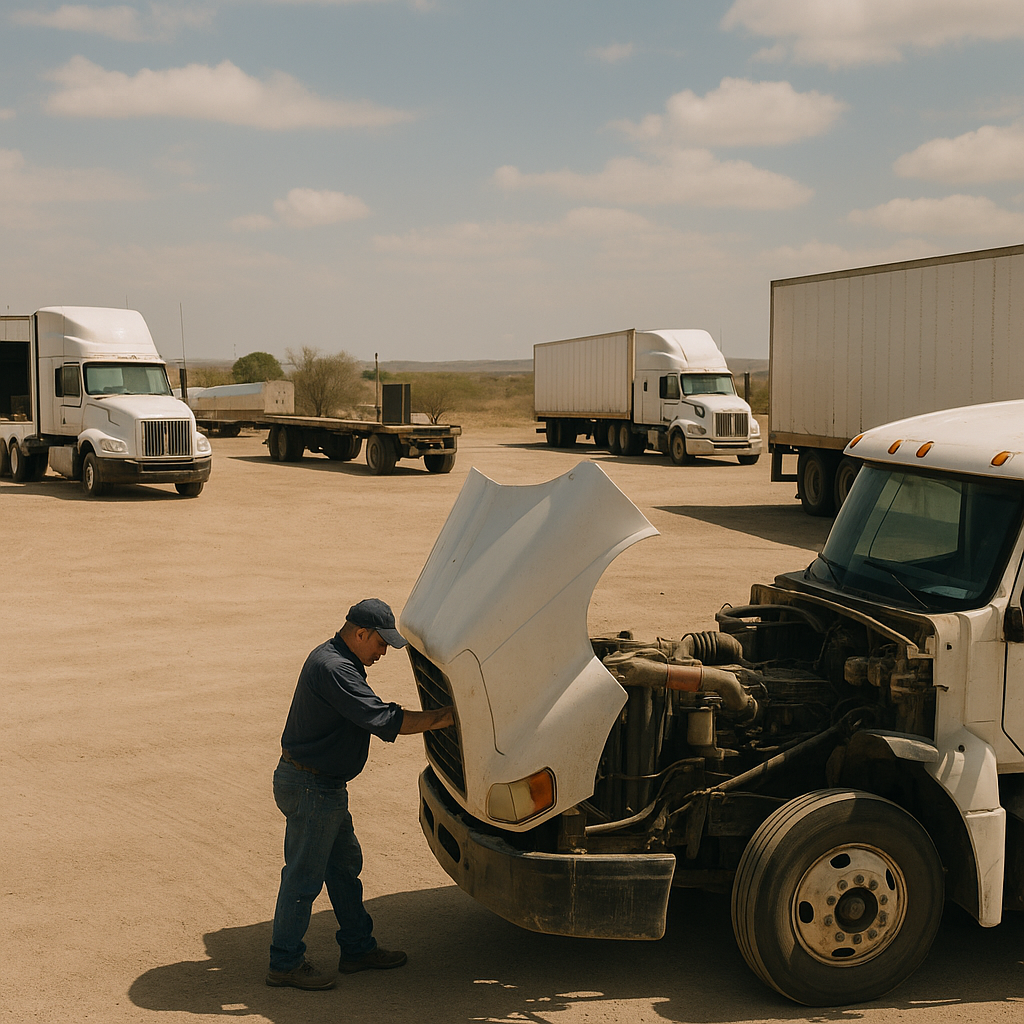

If you’re shopping for motor truck cargo insurance Texas owner-operators actually use, the first thing to clear up is simple: cargo insurance protects the load, not the truck, and not your legal liability for injuries or property damage from a crash. In Texas, that confusion causes a lot of bad assumptions and expensive coverage gaps.
This guide breaks down what motor truck cargo insurance does, when Texas truckers usually need it, what it commonly excludes, what affects pricing, and how to choose limits that fit your freight instead of just checking a box.
What Motor Truck Cargo Insurance Does for Texas Truckers#
Motor truck cargo insurance covers freight while it’s being hauled when that freight is damaged, lost, or destroyed by a covered cause of loss. It does not insure your tractor or trailer, and it does not replace auto liability, which covers bodily injury and property damage you cause to others in an accident.
Cargo insurance in plain English#
Direct answer: Motor truck cargo insurance pays for covered damage to the load you’re hauling while it’s in transit. In plain language, it protects the customer’s freight from covered loss, not the truck itself and not every problem that can happen around a load.
Motor truck cargo insurance is coverage for freight in transit when it is damaged, lost, or destroyed. If you’re hauling a customer’s goods from Dallas to Houston and a covered event ruins the load, this is the policy that may respond.
That makes it different from physical damage coverage, which protects your truck or trailer for collision or other covered damage. It’s also different from auto liability, which covers injury or property damage you cause to other people and is part of the federal financial responsibility framework for many for-hire carriers.
A quick Texas trucking example#
Direct answer: A simple Texas example is a dry van load moving across the state that gets damaged in a crash, a trailer fire, or a cargo theft event. If the loss fits the policy terms, motor truck cargo insurance may help pay for the freight loss.
Say an owner-operator picks up electronics near Fort Worth and heads toward San Antonio. On the way, a wreck shifts the load and destroys part of the shipment. In another scenario, a trailer fire damages packaged goods. In a third, a thief breaks into a parked trailer and steals freight.
Those are the kinds of situations people usually mean when they ask what cargo insurance covers. The key word is covered. The cause of loss, the type of freight, where the truck was parked, and whether the load was attended can all matter.
Why carriers and shippers ask for it#
Direct answer: Many Texas truckers carry cargo insurance because brokers, shippers, and carrier contracts require it before they’ll tender freight. Even when state law doesn’t impose a blanket cargo rule, your business partners often do.
A lot of owner-operators first discover this when a broker packet asks for proof of cargo coverage with a certain limit. Others run into it when a shipper’s contract requires evidence before pickup.
That’s why cargo insurance is often a business requirement before it’s a legal one. If you haul for-hire freight, there’s a good chance somebody in the chain will want to see your certificate before you can move the load.
Is Cargo Insurance Required in Texas?#
Direct answer: Texas does not impose one universal cargo-insurance rule for every trucking operation. In practice, cargo insurance is often driven by shipper, broker, or carrier contract requirements, while FMCSA rules focus more on federal auto liability and operating authority than on a blanket cargo mandate.
Texas rules versus FMCSA rules#
Direct answer: Texas rules and FMCSA rules are not the same thing, and cargo insurance sits in a different bucket from federal auto liability requirements. Don’t assume a Texas insurance requirement and a federal operating requirement are talking about the same coverage.
The FMCSA is the Federal Motor Carrier Safety Administration, the federal agency that oversees interstate motor carrier safety and operating authority. If you run interstate for-hire freight, your operation may be tied to federal filings and minimum liability rules, but that does not mean there is a universal FMCSA cargo requirement for every trucker.
Under FMCSA rules and the financial responsibility framework in 49 CFR Part 387, liability requirements depend on carrier type, vehicle weight, and commodity. For example, for-hire interstate carriers hauling general freight in vehicles over 10,001 lbs must carry at least $750,000 in public liability under 49 CFR Part 387. That’s auto liability context, not cargo coverage.
Texas insurance oversight is separate. The Texas Department of Insurance handles state insurance regulation, which is different from federal trucking authority rules.
When cargo coverage is contract-required#
Direct answer: Even when there isn’t a blanket Texas cargo mandate for your exact operation, contracts often make cargo insurance functionally mandatory. If a broker, shipper, or motor carrier requires it, you may not get the load without it.
A broker may require a certain cargo limit before they’ll set you up. A direct shipper may require higher limits for higher-value freight. A carrier leasing on owner-operators may also spell out cargo expectations in the agreement.
That’s why the real question usually isn’t just “Does Texas require it?” It’s also “What does the freight contract require?”
Who should double-check policy evidence#
Direct answer: Before you accept freight, verify what your broker packet, shipper agreement, load board setup, or carrier contract requires and make sure your policy evidence matches it. A mismatch can delay dispatch or leave you uncovered for the load you thought you had.
Use your USDOT number, which is the identifier tied to your safety and operating record, and your MC number, which is the docket number commonly tied to for-hire operating authority, consistently across your paperwork. If you need to confirm your operating status, use SAFER.
If you’re not sure whether a cargo requirement is legal, contractual, or both, sort that out before pickup, not after a claim.

What Motor Truck Cargo Insurance Covers and What It Usually Excludes#
Direct answer: Motor truck cargo insurance usually covers freight loss or damage from events like crashes, fire, theft, and certain accidental losses during transit. But policies also carry exclusions, conditions, and cargo-specific limitations that matter a lot for Texas owner-operators hauling different types of freight.
Common covered losses#
Direct answer: Common covered losses include cargo damage from collision, overturn, fire, theft, and other accidental transit-related events named in the policy. The exact wording matters, but the basic idea is protection for the freight while you’re moving it.
If a dry van load tips and product gets crushed, that’s a common cargo claim scenario. If a trailer catches fire and the freight is destroyed, cargo coverage may respond. If thieves steal a shipment from the trailer and the policy covers that type of theft loss, that can also fall under cargo insurance.
The NAIC offers plain-language insurance guidance that’s useful here: coverage depends on the policy form, definitions, exclusions, and endorsements. In trucking, those details matter more than the label on the certificate.
Typical exclusions and gaps#
Direct answer: Cargo policies usually do not cover every possible reason a load is damaged. Common exclusions include wear and tear, improper packing, intentional loss, and some cargo-specific hazards unless the policy is built for them.
If produce spoils because of a refrigeration problem, standard cargo may not be enough by itself. Refrigerated freight is temperature-sensitive cargo that can suffer loss from breakdown, temperature change, or delayed response, and it often needs closer review.
Other common trouble spots include freight that was already damaged before pickup, poor securement, gradual deterioration, and certain high-value or theft-prone commodities. An underwriter is the insurance company decision-maker who evaluates the risk and decides how a policy can be priced and structured. Underwriters look hard at commodity type because not all freight fits a standard cargo form.
Parked-load and loading-unloading questions#
Direct answer: Parked loads, unattended trailers, and loading or unloading activity are some of the most common cargo gray areas. Many claims turn on exactly when the loss happened, where the truck was, and whether the policy extends to that part of the trip.
A parked trailer at a truck stop outside Dallas is not the same risk as an attended truck parked briefly at a secured shipper yard. If a theft happens overnight, the policy may look closely at location, security, and attendance requirements.
Loading and unloading can also create confusion. Some losses happen before the freight is fully in your care, custody, and control. Others happen after delivery starts. In Texas heat, vulnerable freight can also be damaged fast if timing slips, seals break, or temperature control fails.
If you haul electronics, alcohol, pharmaceuticals, or food products, don’t assume “cargo” means all scenarios are covered the same way.
How Much Is Cargo Insurance in Texas?#
Direct answer: Cargo insurance pricing in Texas varies based on what you haul, how much it’s worth, where you run, your claims and safety history, and how the policy is structured. Your actual premium depends on your operation, cargo, radius, driving history, and other factors.
What drives the quote#
Direct answer: Freight type and cargo value are usually the biggest quote drivers, followed by operating radius, loss history, and requested limits. A policy insuring low-value boxed goods is a different risk than one insuring high-theft or temperature-sensitive freight.
A deductible is the amount you pay out of pocket on a covered claim before insurance pays the rest. Higher deductibles can change quote options, but they also increase your share of loss if a claim happens.
Think about the difference between hauling standard packaged dry freight and hauling copper, consumer electronics, or refrigerated food. High-theft, high-value, or spoilage-prone freight often gets closer underwriting review than ordinary dry goods.
Why one-truck and small-fleet pricing differs#
Direct answer: A one-truck owner-operator and a small fleet can price differently because insurers look at exposure across units, drivers, lanes, and operational consistency. More trucks can mean more scale, but it can also mean more moving parts and more claim opportunities.
A single-truck operator with one consistent lane and one commodity may be easier to underwrite than a three-truck fleet hauling mixed freight across several states. On the other hand, a small fleet with clean controls, stable dispatch, and clear cargo procedures may present better than a one-truck startup with limited history.
The point is that “fleet” doesn’t automatically mean better or worse. It changes the risk picture.
Ways to improve the odds of a cleaner quote#
Direct answer: The best way to improve quote quality is to present clean, accurate information about your freight, routes, values, and operations. Good details reduce back-and-forth and help the underwriter match the policy to what you actually haul.
If you say you haul general freight but sometimes take higher-value electronics or temperature-sensitive food, that mismatch can cause problems later. If you know your average load value, your maximum load value, where the truck is parked, and what anti-theft steps you use, that helps.
A vivid problem shows up fast after a loss: the certificate looked fine, but the commodity, limit, or exclusions didn’t match the load. If you’re not sure what policy structure fits your freight,
How to Choose the Right Cargo Limit and Policy Structure#
Direct answer: Choose cargo limits based on the highest realistic value of the freight you haul, not just the lowest requirement you can get by with. Then make sure the policy structure fits your commodity, lane, and handling risks so a claim doesn’t expose a hidden gap.
Match limits to freight value#
Direct answer: A good cargo limit starts with the maximum value of a typical load, not the cheapest certificate a broker might accept on a random shipment. If your load can exceed your limit, the shortfall can land on you.
If your usual freight is modest in value, a standard structure may work. But if one load every month carries a much higher invoice value, that exception matters. One underinsured load can undo a lot of “savings.”
Separate standard freight from specialty freight#
Direct answer: Standard dry freight and specialty freight should not be treated the same way when you’re buying cargo insurance. Temperature-sensitive, theft-prone, fragile, or high-value loads often need closer policy review and sometimes different terms.
Refrigerated loads are the obvious example. A reefer claim may involve spoilage, equipment issues, or temperature excursion questions, not just visible damage from a wreck.
High-value freight creates a different problem. Even if it moves in a normal van, the theft exposure and limit need can be very different from ordinary packaged freight.
Small-fleet versus owner-operator decisions#
Direct answer: A single-truck owner-operator can often keep cargo structure simpler if the freight is consistent, but a 2–5 truck fleet should think more about consistency across drivers, trucks, lanes, and customer requirements. More variation usually means more need for careful setup.
For a one-truck operation, the main question is often: “What’s the highest-value freight I actually haul?” For a small fleet, it becomes: “Do all trucks haul the same kind of freight, and are the same rules being followed every time?”
That matters because uneven dispatch and mixed commodities can create uneven coverage needs.
How to Reduce Cargo Insurance Friction Before You Buy#
Direct answer: You can make the quote and binding process smoother by gathering the right information before you apply and by describing your operation honestly and consistently. Clean submissions usually move faster and lead to fewer surprises during policy review.
What information to gather first#
Direct answer: Most cargo applications move faster when you have your core operation details ready up front. That usually includes your company identifiers, freight profile, load values, and driver information.
Have your DOT and MC details ready. Know what you haul, your average load value, your maximum load value, your operating area, and whether you run mostly intrastate Texas freight or cross state lines.
Also gather driving history, loss history, and basic equipment information. If you haul refrigerated or unusually high-value freight, say so early.
Common application mistakes#
Direct answer: The most common mistakes are understating freight type, omitting occasional specialty loads, and assuming another policy already covers the cargo. Those errors can slow the quote or create claim trouble later.
A trucker may describe the operation as general freight but regularly accept loads that are theft-prone or temperature-sensitive. Another may assume physical damage on the truck also protects the freight. It doesn’t.
Some also leave out where the truck is parked or how loads are secured. Underwriters ask because those details affect the risk.
Questions to ask before binding#
Direct answer: Before you bind, ask what commodities are covered, what exclusions apply, how parked loads are handled, and whether loading or unloading creates any gap. Price matters, but scope matters more when a claim hits.
Ask whether your maximum load value matches the policy limit. Ask whether refrigerated exposure needs special handling. Ask how theft claims are treated if the truck is unattended.
A quote that looks fine on price but misses your real freight profile can be the expensive choice later.
How LogRock Helps Texas Owner-Operators and Small Fleets#
Direct answer: LogRock helps Texas owner-operators and small fleets sort out cargo coverage based on what they actually haul, how they run, and what their contracts require. The goal is a cleaner fit, less back-and-forth, and fewer surprises during setup.
Faster intake without guesswork#
Direct answer: Time matters when you’re running a truck, so faster intake only helps if the information is accurate. A trucking-specific process can cut down on repeated questions and missed details.
LogRock specializes in trucking insurance for owner-operators and small fleets. That matters when the conversation needs to get specific about freight type, operating radius, limits, and contract requirements.
Human guidance for coverage fit#
Direct answer: Technology helps move faster, but cargo insurance still needs human review when freight types and exclusions start to matter. That’s where practical guidance can prevent mismatched coverage.
If you’re trying to sort out dry freight versus refrigerated freight, standard limits versus higher-value loads, or what a broker packet is really asking for, a trucking-focused review is useful.
Why trucking-specific support matters#
Direct answer: Trucking insurance gets messy when people confuse cargo, physical damage, and auto liability or assume Texas and FMCSA rules are the same. Operation-specific support helps separate those pieces before they cause a problem.
If you’re not sure what coverage fits your operation, LogRock can help you scope it.
FAQ#
How much is cargo insurance in Texas?
Cargo insurance in Texas varies by operation, not by one flat number. The biggest pricing drivers are the type of freight, the value of the cargo, the limit you need, your claims history, your operating radius, your deductible, and whether you run one truck or a small fleet. A carrier hauling standard dry freight on stable lanes is a different risk than one hauling refrigerated, high-theft, or high-value loads. Your actual premium depends on your operation, cargo, radius, driving history, and other factors, so the cleanest way to compare options is to line up coverage terms first and price second.
What does motor truck cargo insurance cover?
Motor truck cargo insurance generally covers freight that is damaged, lost, or destroyed by a covered cause while it is in transit. Common examples include cargo damage from a crash, overturn, fire, theft, or another accidental loss named in the policy. What catches people off guard are the exclusions and conditions. Wear and tear, improper packing, intentional loss, and some commodity-specific hazards may be excluded. Parked-load situations, unattended theft, and loading or unloading can also create gray areas. That’s why it’s smart to review what freight is covered and how the policy handles real-world scenarios before you bind.
Is cargo insurance required in Texas?
Texas does not impose one universal cargo-insurance rule for every trucking operation. In many cases, cargo coverage is driven more by contracts than by a blanket state requirement. Brokers, shippers, and motor carriers often require proof of cargo insurance before they’ll release freight or complete setup. That is separate from FMCSA-related federal auto liability requirements, which apply based on carrier type, vehicle weight, commodity, and whether the operation is interstate. So the practical answer is: maybe not as a universal Texas rule for every trucker, but often yes as a business requirement if you want to haul certain loads.
Does motor truck cargo insurance cover damage to my truck or trailer?
No. Motor truck cargo insurance is for the freight you are hauling, not for damage to your tractor or trailer. If your truck is damaged in a wreck, that usually falls under physical damage coverage, not cargo coverage. If you damage someone else’s property or cause bodily injury in an accident, that usually falls under auto liability, not cargo. This is one of the most common mix-ups for newer owner-operators. A single crash can involve all three buckets at once, but they each serve different purposes. That’s why it helps to review your full insurance setup instead of buying cargo in isolation.
Do I need special cargo coverage for refrigerated or high-value freight?
Often, yes. Refrigerated freight and high-value freight create risks that standard cargo forms may not handle the same way as ordinary dry goods. Refrigerated loads can involve spoilage, temperature excursion, or equipment-related issues. High-value freight can create bigger theft exposure and may push you toward higher limits or tighter underwriting. Even if two loads move in the same trailer, the insurance treatment may not be the same. If you occasionally haul freight outside your “normal” description, mention that before binding. Specialty exposures are exactly where a policy that looked fine on paper can fail in a real claim.





