
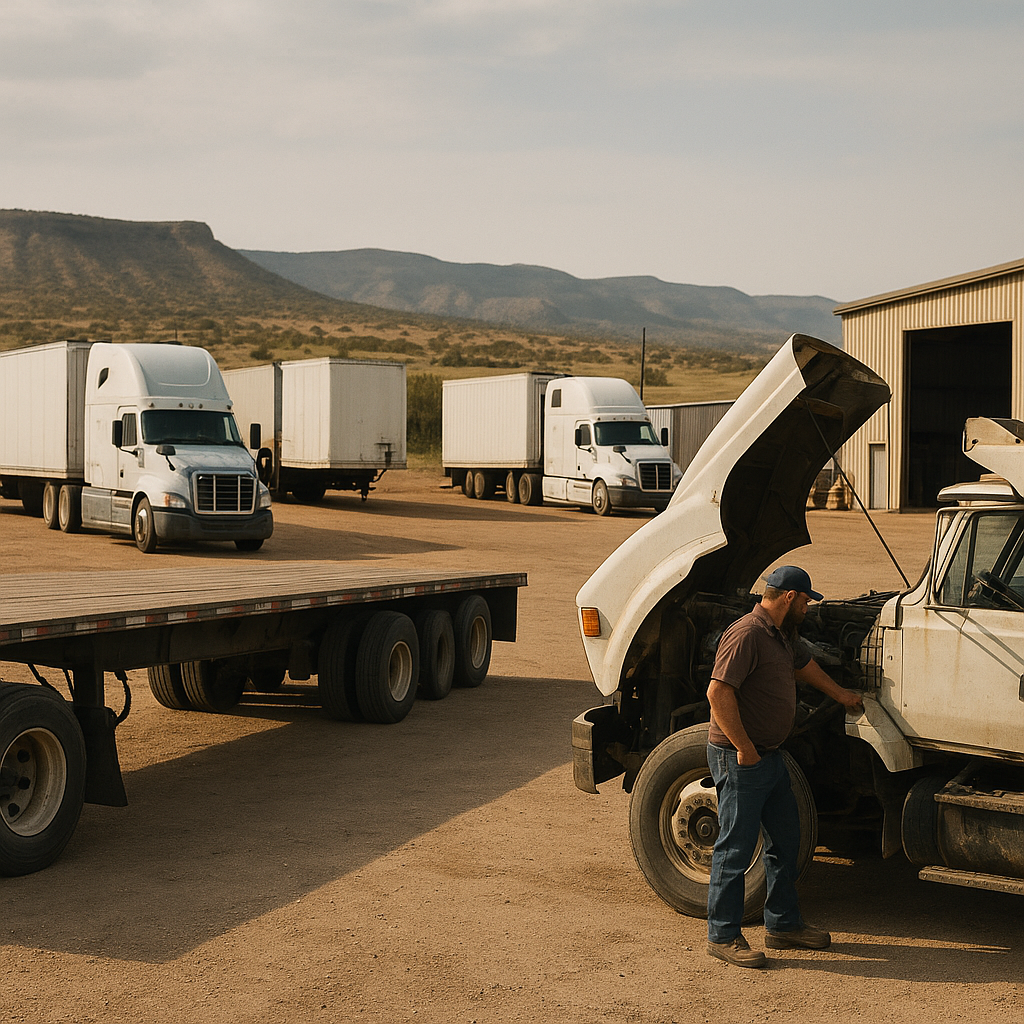

New Mexico dump truck insurance is commercial insurance built for a truck doing paid hauling work, not personal driving. If you run gravel, dirt, asphalt, debris, or subcontracted construction loads, the right policy depends on how you operate, what rules apply, and what your customers require.
New Mexico Dump Truck Insurance Basics#
New Mexico dump truck insurance is a commercial policy package built around the truck, the work it does, and the legal or contract requirements tied to that work. A dump truck used for business should not sit on a personal auto policy, and the right setup can look different for a one-truck owner-operator than for a small fleet crossing state lines.
Dump truck insurance means commercial coverage designed for a dump truck’s hauling operation, liability exposure, equipment value, and job requirements. That’s the starting point, because a dump truck isn’t insured like a pickup used to commute.
What makes dump trucks different from other trucks#
Dump trucks usually work in tighter spaces, around jobsites, loaders, backing hazards, and uneven ground. That changes the risk. A tractor running dry van freight on the highway has one exposure pattern; a tri-axle backing into a construction site with aggregate has another.
The loads are different too. Rock, sand, gravel, millings, asphalt, and debris don’t always fit the same cargo assumptions used for long-haul freight. Some operators need cargo coverage that matches the material being hauled, while others need to focus more on auto liability, truck value, and contract language.
Who typically needs this coverage#
Most buyers are owner-operators with a single truck, but small fleets with 2 to 5 units need the same core thinking with more moving parts. A one-truck operator hauling gravel locally around Albuquerque may need a simpler policy structure than a fleet doing subcontracted site work around Las Cruces, Santa Fe, and nearby state lines.
If the truck earns money, it needs commercial treatment. That includes independent owner-operators, leased-on operators depending on contract terms, and small construction-hauling businesses.
How New Mexico operations can differ by route and cargo#
A local intrastate operator may mainly worry about New Mexico rules, vehicle use, and contractor requirements. Intrastate commerce means hauling that starts and ends within one state without crossing state lines as part of the shipment.
Interstate commerce means the transportation crosses a state line or is part of a shipment moving across state lines. A small fleet that starts local but picks up subcontracted work into Texas, Arizona, or on border-connected routes can trigger a very different insurance conversation.
What Insurance a Dump Truck Usually Needs#
Most New Mexico dump truck operations start with auto liability, then add physical damage and other coverages based on truck value, cargo, contracts, and jobsite exposure. The key is matching the policy to actual dump-truck work instead of buying a generic commercial auto package that leaves gaps or includes coverage you may never use.
Auto liability#
Auto liability is the core coverage that pays when your truck causes bodily injury or property damage to others in an accident. For most dump truck businesses, this is the foundation because it’s the coverage tied most directly to legal operation and contract review.
If your driver rear-ends a pickup on I-25, clips a gate entering a site, or damages another vehicle while backing, auto liability is the part of the policy that responds to third-party injury and property damage claims. This is also the coverage most often tied to state rules, FMCSA requirements, and certificate requests.
Physical damage#
Physical damage is coverage for damage to your own truck, usually through collision and comprehensive options. Collision pays for damage from impact or overturn, while comprehensive covers non-collision losses like theft, vandalism, weather, or some fire losses.
If a driver rolls a truck on a soft shoulder or backs into heavy equipment, collision is the issue. If hail hits the cab in eastern New Mexico or the truck is stolen from a yard, that’s a comprehensive-type problem. A financed newer unit usually needs this structure more than an older paid-off truck running liability only.
Motor truck cargo#
Motor truck cargo is insurance for covered property you haul for others. For dump trucks, this needs extra care because hauling gravel, dirt, asphalt, aggregate, or debris does not always fit the same cargo profile as palletized long-haul freight.
Some dump truck operators need cargo because they’re hauling material for hire and contract language requires it. Others may find the form offered doesn’t match spoil, construction debris, or a specific commodity well. That’s why “just add cargo” can be bad advice if nobody has checked what the truck actually hauls.
General liability#
General liability covers certain non-auto business claims, such as some premises or operations exposures, that auto liability does not cover. It’s separate from truck driving liability.
Example: a contractor may want proof of general liability before letting you onto a commercial or municipal project. If someone claims damage from your business operations off the road and outside direct truck use, general liability can matter in a way auto liability doesn’t.
If a missed coverage detail could cost you a job or leave a claim uncovered, it helps to talk through the operation before binding anything. If you’re not sure what fits,
Optional coverages that may fit certain dump truck jobs#
Some coverages are useful only in narrower situations. Reefer coverage applies to refrigeration breakdown and usually isn’t relevant for dump truck work. Trailer interchange applies when you use a trailer under a signed interchange agreement, which is not typical for many dump truck owner-operators.
Non-owned trailer physical damage can matter if you pull trailers you don’t own and need protection for the trailer itself. A contractor may also ask for higher limits, added insured status, or specific endorsements before awarding a municipal paving or site-prep job.

New Mexico Requirements: State Rules, FMCSA, and Contract Demands#
New Mexico state rules, FMCSA rules, and customer contract requirements are three separate layers. A dump truck can be legal for one type of work but still fail a bid, miss a filing, or carry the wrong liability limit for another job, especially when the operation shifts from intrastate hauling to interstate for-hire work.
State minimums vs federal requirements#
State minimums are not the same as FMCSA federal minimums. This is where a lot of dump truck operators get bad advice.
Under 49 CFR Part 387, for-hire interstate carriers hauling general freight in vehicles over 10,001 pounds must carry at least $750,000 in public liability. Carriers under 10,000 pounds can fall under a $300,000 federal minimum, auto haulers are different, and certain hazmat operations can require $5,000,000. The point is simple: there is no one-size-fits-all “all truckers need X” rule.
A New Mexico operator working only intrastate may be governed differently under state law and contract terms. That’s why you have to scope the operation first: for-hire or private, weight, cargo, and whether the work is interstate or intrastate.
Intrastate versus interstate operations#
Intrastate operations stay within New Mexico and may follow a different compliance path than interstate operations. Interstate work can trigger federal insurance and authority issues through the FMCSA, especially if you’re operating as a for-hire motor carrier across state lines.
A practical example: a single dump truck hauling base course around Farmington for local contractors may stay intrastate most of the year. But if that same operator starts taking subcontracted loads connected to projects across state lines, the compliance picture can change fast.
Border-area work adds confusion. Running near the Mexico border or near another state doesn’t automatically mean interstate status, but the actual shipment path and business arrangement can.
When filings may matter#
A filing is proof sent by an insurer to show required coverage is in place for certain regulated operations. If you operate as a for-hire motor carrier in interstate commerce, filings can matter as part of authority and compliance.
This is different from simply carrying an ID card in the truck. You may need proof tied to your authority, your MC number, or customer contract language. If you’re unsure what your operating status shows, the question isn’t just “Do I have insurance?” It’s “Do I have the right insurance and the right filing structure for this operation?”
Why permits are not the same as insurance#
Permits and registration handle operating permission, tax, route, or vehicle-use issues. They do not replace liability insurance.
The New Mexico Department of Transportation deals with state transportation and road-use matters, but a permit is not a substitute for an auto liability policy. A truck can have registration, weight credentials, or permit obligations and still be uninsured for a loss.
The same problem shows up on public works jobs. A bid package may ask for proof of insurance, certain endorsements, and higher limits even after the truck’s registration and permit side is already handled.
How Much Dump Truck Insurance Costs in New Mexico#
New Mexico dump truck insurance costs vary based on the truck, the work, the radius, the driver, and the coverage structure. Two dump trucks that look similar on paper can quote very differently if one stays local with liability only and the other runs newer equipment, broader coverage, and more complex subcontracted hauling.
The biggest cost drivers#
The largest price drivers are usually truck value, hauling radius, cargo type, driver history, garaging location, and requested limits. A newer financed dump truck with physical damage will usually rate differently than an older paid-off truck carrying liability only.
A local dirt-hauler making short runs between pit and jobsite presents one profile. A truck moving among multiple commercial sites, pulling occasional trailers, and taking subcontracted work farther from home presents another.
A deductible is the amount you pay out of pocket before certain coverages start paying. Higher deductibles can lower premium, but they also raise what you have to absorb after a covered loss.
Why two similar trucks can quote differently#
Even if both trucks are dump trucks in New Mexico, insurers look at more than body style. VIN details, stated use, annual mileage, years of CDL experience, prior losses, and whether the truck is garaged in a higher-claim area can all move the quote.
Example: Truck A is an older single unit based outside a small market, driven by the owner, used for local aggregate runs, and carries no lender-required physical damage. Truck B is a newer financed unit, drivers change occasionally, the radius is wider, and the truck works municipal and commercial jobs that require broader certificates. Those are not the same risk to an insurer.
How claims history and driving record affect price#
One at-fault loss, a pattern of roadside issues, or major moving violations can change pricing fast. A clean MVR and cleaner loss history usually give you more options than a record with recent accidents or frequent claims.
Fleet size matters too. A two- to five-truck operation can spread some fixed costs, but it also adds driver management risk. One bad hire can affect the whole account.
Practical ways owner-operators and small fleets can manage cost#
There isn’t a flat answer to “How much does it cost to insure a dump truck?” because the premium depends on your operation, cargo, radius, driving history, and other factors. The better way to think about it is by cost drivers you can control and those you can’t.
Practical ways to manage cost include:
- Report mileage and operating radius accurately
- Carry the coverages your operation actually needs
- Review deductibles against what you could really pay after a loss
- Keep driver records, MVRs, and loss runs clean
- Update garaging address and truck details when they change
- Avoid adding contract coverages “just in case” unless the work truly requires them
A cheap-looking quote can get expensive if it fails a contract review or leaves the truck uncovered after a rollover, theft, or job-related dispute.
What Affects the Right Policy Mix for Owner-Operators and Small Fleets#
The right policy mix depends on whether you run one truck or several, whether the truck is financed, and what type of dump-truck jobs you actually take. Owner-operators usually need to keep the policy lean and practical, while small fleets have to think harder about driver variation, scheduling pressure, and contract consistency across units.
Single-truck owner-operator decisions#
A one-truck owner-operator often starts with auto liability and then decides whether physical damage makes sense based on truck value and financing. If the truck is older and paid off, liability-only may be part of the discussion, but that also means absorbing your own truck damage after a wreck.
Cargo may or may not fit depending on what you haul. General liability may matter more if customers, site owners, or municipalities require it before they’ll hand over work.
2-5 truck fleet considerations#
A small fleet needs consistency. If one truck pulls a trailer, one driver crosses state lines, or one customer requires higher limits, the account gets more complicated.
Fleets also need to think about who is driving each unit, whether all equipment is reported correctly, and whether certificates can be issued quickly for multiple job types. One coverage oversight on one truck can create a contract problem for the whole business.
When to add contract-driven coverages#
Municipal work, private construction, and subcontracted hauling often drive coverage decisions. A contractor may ask for higher auto liability limits, general liability, or specific endorsements before your first load.
That doesn’t mean every dump truck needs every add-on. It means the policy should match the jobs you actually pursue.
When to leave a coverage off#
Some generic trucking advice pushes coverages that aren’t central to many dump truck operations. Reefer usually isn’t relevant. Trailer interchange may not apply if you never operate under a signed interchange agreement.
Even cargo can be wrong if the form doesn’t fit the material hauled. The goal isn’t to stack on everything available. It’s to keep the policy aligned with how the truck earns money.
Ways to Save Without Creating Coverage Gaps#
You can lower insurance spend without gutting the policy, but only if you trim carefully. The safest savings usually come from better structure, cleaner records, and accurate reporting, not from dropping core protection your lender, customer, or operation still depends on.
Review only the coverages you actually need#
Start with what the truck really does. If you never haul under conditions that need a certain add-on, don’t carry it just because someone said all trucking accounts should have it.
But don’t confuse “not typical” with “never needed.” A financed truck may still need physical damage, and a contractor-driven book of business may still require general liability or higher limits.
Use deductibles strategically#
A deductible change can lower premium, but it shifts more risk back to you. If raising the collision deductible saves money, make sure that savings is worth the out-of-pocket hit after a rollover, backing loss, or struck-object claim.
Keep records and safety habits clean#
Accurate garaging address, clean driver files, and correct annual mileage matter. So does reporting driver changes before renewal, not after a claim.
Quote changes to watch for before you renew#
Watch for operating changes like longer routes, added drivers, different materials hauled, or a switch from purely local hauling to broader subcontracted work. Those changes can affect whether the current quote still fits.
How to Compare Quotes and Choose a Broker#
The best dump truck quote isn’t just the lowest invoice. You need to compare limits, exclusions, deductibles, filings, and whether the person quoting the policy actually understands construction hauling, local jobsite exposure, and how New Mexico dump truck work differs from generic commercial auto.
What to compare beyond price#
Look at what each quote actually covers. Does it include only liability, or does it also include physical damage? Does the cargo form make sense for aggregate, asphalt, or debris? Is general liability included because a customer requires it, or was it left out?
Also confirm whether the policy structure supports any filing needs. If you operate under interstate authority, you can verify operating status through SAFER.
Questions to ask before binding#
Ask direct questions:
- Does this policy fit local construction hauling?
- How is subcontracted work treated?
- Are trailers covered, and if so, which ones?
- Are there exclusions that would matter on jobsites?
- Are any endorsements needed for customer contracts?
When a trucking specialist matters#
Dump truck work is specific. A generic commercial auto quote can miss the difference between for-hire hauling and incidental business use, or between a contract-driven add-on and unnecessary extra premium.
A trucking specialist is useful when the account needs nuance around filings, route changes, dump-truck commodities, and customer insurance requirements. Before you bind anything, it helps to have someone pressure-test the details.
Quick Answers for Common New Mexico Dump Truck Questions#
Most common New Mexico dump truck questions come down to four things: cost, required coverages, whether “full coverage” is actually enough, and how permits fit in. The short answer is that insurance depends on the work, while permits and registrations are separate compliance items that don’t replace the policy.
Cost question#
Dump truck insurance cost depends on the truck’s value, the radius, the material hauled, the driver’s record, prior claims, and the coverages selected. A local owner-operator with an older paid-off truck can rate very differently from a newer financed unit doing wider subcontracted work.
Coverage question#
Most dump truck operators start with commercial auto liability. Many also consider physical damage, and some need motor truck cargo or general liability depending on the hauling model and contract requirements.
Cheapest full coverage question#
“Full coverage” usually means liability plus physical damage, but the cheapest version of that may still leave gaps. A low-priced policy with the wrong deductibles, exclusions, or missing contract-driven coverages can create problems fast.
Truck permit question#
New Mexico truck permit costs are separate from insurance premiums and can vary by vehicle weight, use, registration, route, and permit type. A permit may let you operate legally in a certain way, but it does not replace liability coverage.
FAQ#
How much does it cost to insure a dump truck?
Dump truck insurance cost depends on the truck’s value, hauling radius, cargo type, driver history, garaging location, and selected coverages. A local dump truck hauling dirt between a pit and nearby jobsites may quote differently than a newer financed truck taking broader subcontracted work, even if both are based in New Mexico. Physical damage, higher liability limits, prior claims, and driver violations can all push pricing up. The useful question isn’t “What’s the one number?” It’s “What parts of my operation are driving the quote, and which of those can I improve before renewal?”
What insurance do I need for a dump truck?
Most dump truck businesses start with commercial auto liability because that’s the core protection for bodily injury and property damage claims caused by truck operation. Many operators also need physical damage if they want protection for the truck itself, especially when the unit is financed. Motor truck cargo can matter when you’re hauling covered material for others, though it needs to match the commodity. General liability is separate from auto liability and often shows up when contractors, municipalities, or commercial customers require it for site access or bid eligibility.
What is the cheapest full coverage insurance in New Mexico?
The cheapest full coverage policy isn’t automatically the right one. In this context, “full coverage” usually means liability plus physical damage, but that phrase doesn’t guarantee the right limits, deductibles, endorsements, or treatment of your actual dump-truck work. A cheaper policy may leave out contract-required general liability, use cargo wording that doesn’t fit aggregate hauling, or carry deductibles that are hard to absorb after a loss. Compare the whole structure, not just the invoice, and make sure the policy matches whether you’re local, interstate, for-hire, or contract-driven.
How much is a New Mexico truck permit?
Truck permit cost in New Mexico is separate from insurance and depends on the type of permit, vehicle weight, registration status, route, and how the truck is used. The key point is that permits handle operating permission or road-use compliance, while insurance handles financial protection for covered losses and liability claims. One does not replace the other. If you’re sorting out permit questions, check state transportation sources first, then separately confirm that your insurance matches the truck’s use, operating radius, and any contract or FMCSA-related requirements.
Do New Mexico dump trucks always need FMCSA filings?
No. FMCSA filings generally matter when you’re operating in a way that triggers federal authority and interstate requirements, especially as a for-hire motor carrier. A dump truck working only intrastate in New Mexico may not face the same filing obligations as an interstate carrier. But once the operation changes, such as hauling across state lines or under a different authority structure, the insurance and filing question can change too. That’s why it helps to confirm for-hire versus private status, weight, commodity, and whether the work is intrastate or interstate before assuming your current setup is enough.





