2026 non cdl hotshot insurance cost: $6K–$30K/yr. Commercial truck insurance tables by package, state & 5 ways to save—get quotes.
Non cdl hotshot insurance cost in 2026 usually falls between $6,000 and $30,000 per year, depending on whether you buy liability-only, add cargo, or carry a full package (liability + cargo + physical damage + common endorsements). In practice, pricing is driven more by authority vs leased-on status, garaging state/ZIP, operating radius, cargo type, and equipment value than by whether you hold a CDL.
If that range feels wide, you’re not wrong—hotshot quotes can swing fast when one detail changes (radius, garaging, financed equipment, or a “local” operation that’s really multi-state). For a broader baseline on package pricing, start with 2026 hotshot trucking insurance cost ranges.
Key takeaways:
- Budget $6K–$15K/yr for liability-only in many scenarios; $8K–$20K/yr with cargo; and $12K–$30K/yr for a fuller package.
- “Non-CDL” doesn’t automatically mean cheap. Underwriters price authority status, driving history, radius, commodity, and equipment value.
- Own authority typically costs more upfront (primary liability + filings); leased-on often shifts primary liability to the carrier while dispatched (but you may still need bobtail/non-trucking and physical damage).
- The fastest ways to cut cost are usually radius discipline, deductible strategy, and clean paperwork (no lapses, consistent garaging, accurate filings).
Table of Contents
Reading time: 9 minutes
- 2026 cost ranges for non-CDL hotshot insurance (annual + monthly)
- What coverage is required for non-CDL hotshot trucking (and what brokers demand)
- What drives non-CDL hotshot insurance cost the most
- State-by-state examples (monthly + annual)
- How to lower non-CDL hotshot insurance premiums (5 high-impact moves)
- Frequently Asked Questions
2026 cost ranges for non-CDL hotshot insurance (annual + monthly)
Non-CDL hotshot insurance in 2026 is commonly quoted at $6,000–$15,000+ per year for liability-only, $8,000–$20,000+ with cargo, and $12,000–$30,000+ for a full package, with final pricing based on underwriting and filings.
This is your realistic commercial truck insurance budget for running a pickup/dually + trailer as a for-hire hotshot operation (often under CDL thresholds, but still insured and underwritten as commercial).
If you want a clean “what’s included” breakdown, use the pillar explainer: hotshot trucking insurance. Most operators don’t buy “one policy”—they buy a stack of coverages that has to match broker and lender requirements.
Cost table: common package ranges (2026)
These are typical market ranges for many non-CDL hotshot setups; your quote can land outside them based on driver history, commodity, radius, garaging ZIP, and equipment value.
| Package (typical structure) | Common annual range | Rough monthly equivalent* | Best fit |
|---|---|---|---|
| Liability-only (primary liability + required filings when on authority) | $6,000–$15,000+ | $500–$1,250+ | Tight budget, lower-risk lanes/cargo, older paid-off equipment |
| Liability + Cargo (adds motor truck cargo) | $8,000–$20,000+ | $665–$1,665+ | Most brokered general freight setups |
| Full package (liability + cargo + physical damage + common endorsements) | $12,000–$30,000+ | $1,000–$2,500+ | Financed truck/trailer, higher cargo values, broader radius |
*Monthly billing often includes fees and down payments, so “monthly” can feel higher than annual ÷ 12.
Pro tip: avoid the “non-CDL = personal auto” trap
Don’t expect non-CDL pricing to look like personal pickup insurance. The moment you’re hauling for-hire, you’re in commercial auto underwriting—closer to semi truck insurance logic than personal auto pricing, even if you’re not in a Class 8 tractor.
What coverage is required for non-CDL hotshot trucking (and what brokers demand)
For most for-hire interstate property carriers, federal public liability minimums start at $750,000 under 49 CFR §387.9, but many brokers and shippers still require $1,000,000 liability and $100,000 cargo for onboarding.
If you want a deeper “packet-ready” checklist, use this: hotshot insurance requirements checklist.
Primary liability (federal minimums vs real-world requirements)
Primary liability pays for bodily injury and property damage you cause to others, and it’s the core policy brokers and FMCSA filings revolve around when you run your own authority.
If you’re operating under your own authority, you generally need liability in place before you can haul brokered freight consistently, because the filing and certificate requirements are often part of dispatch and onboarding workflows.
FMCSA’s insurance filing requirements and minimum financial responsibility levels are published here: https://www.fmcsa.dot.gov/registration/insurance-filing-requirements.
- Legal minimum: Often $750,000 for non-hazardous interstate property carriers (varies by operation and cargo).
- Market minimum: Commonly $1,000,000 because many brokers treat it as a standard requirement.
Cargo insurance (often required by brokers/shippers)
Motor truck cargo insurance pays for covered loss or damage to freight while it’s in your care, custody, and control, and it’s one of the most common broker packet requirements.
Many general freight setups are asked to carry $100,000 cargo, but higher-value commodities can push limits upward. Cargo price isn’t just “limit = cost”; underwriters rate the commodity, theft exposure, lanes, and even overnight parking habits.
- Common broker target: $100,000 cargo for general freight (varies by broker and commodity).
- Big pricing driver: Commodity type (tools vs electronics vs metals) and theft exposure.
Physical damage (when it becomes “required”)
Physical damage insurance is comp + collision for your truck (and sometimes trailer), usually rated on stated value and deductible, and lenders commonly require it on financed equipment.
If your truck is financed, the lienholder usually requires physical damage. If it’s paid off, it’s a business decision: can you survive a total loss without losing your income?
For a deeper deductible/value walkthrough, see: physical damage coverage for hotshot trucks.
Add-ons that commonly change price (and why they matter)
Endorsements like bobtail/non-trucking, trailer interchange, and general liability can change the “real” premium because they fill coverage gaps your broker, carrier, or facility cares about.
| Coverage / endorsement | What it does | Who usually needs it | Typical cost impact |
|---|---|---|---|
| Non-trucking / bobtail | Covers certain use when not under dispatch (form wording matters) | Leased-on operators | Often smaller add-on vs primary liability |
| Trailer interchange | Covers non-owned trailers you’re responsible for | If you pull someone else’s trailer | Can add meaningful cost depending on limits |
| General liability | Premises/operations liability (think slip-and-fall claims) | Some facilities/shippers require it | Often modest, but contract-driven |
What drives non-CDL hotshot insurance cost the most
Non-CDL hotshot insurance pricing is mainly driven by underwriting variables—driver history, radius, garaging ZIP, commodity, equipment value, and authority status—rather than the CDL question.
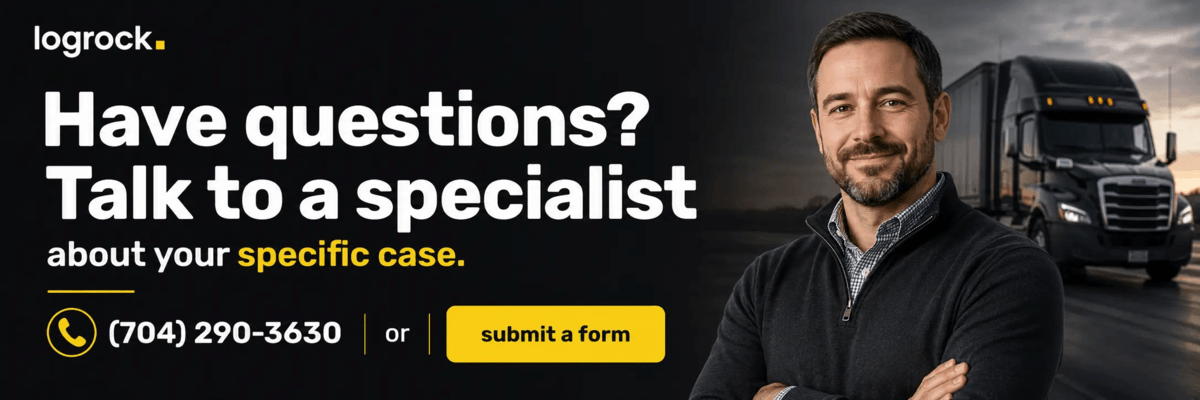
If you’re moving from “idea” to “own authority,” make sure your compliance timeline is realistic, because your insurance and filings need to line up with activation and onboarding. A good step-by-step reference is: DOT authority application steps.
Operator profile (you)
Underwriters price your MVR, claims history, violations, and verifiable commercial experience, and the first 12 months as a new venture or new authority can be the most expensive period.
- What helps most: Clean MVR plus documented experience (prior policies, letters, consistent records).
- What hurts fast: Lapses, recent at-fault losses, major violations, undisclosed drivers.
Operation profile (how you run)
Garaging state/ZIP, operating radius (local/regional/national), and commodity/lane choices can move premiums significantly even with the same truck.
Be honest about radius. If you quote “local” but routinely run 400-mile days across state lines, that mismatch can create problems at claim time and raises red flags at renewal.
Equipment profile (your truck + trailer)
Physical damage cost is largely based on insured value, repair costs, loss trends, and deductible (commonly $500–$5,000), so newer financed equipment with low deductibles tends to price higher.
Dash cams and telematics can help with certain carriers, but the biggest payoff is often claims defensibility—especially when a four-wheeler causes the crash and the story matters.
Authority vs leased-on (this changes what you pay for)
Own authority usually means you buy primary liability and filings, while leased-on operations often rely on the motor carrier’s primary liability while dispatched, with the owner-operator buying gap coverages like non-trucking/bobtail and physical damage.
- Own authority: You’re the carrier—your policy and filings are the backbone of compliance and broker onboarding.
- Leased-on: You may pay less for liability personally, but you still need to cover yourself when you’re not under dispatch (and protect your equipment).
You can verify a carrier’s authority and filing status using FMCSA SAFER: https://safer.fmcsa.dot.gov/.
State-by-state examples (monthly + annual)
Garaging state affects premium because traffic density, litigation environment, theft trends, and repair/labor costs vary widely by location, so quotes can differ even when the truck and driver are identical.
These are example market ranges to show how location can move pricing; final numbers depend on underwriting, filings, loss history, and cargo.
| State (garaging) | Liability-only (annual) | Liability-only (monthly) | Liability + cargo (annual) | Liability + cargo (monthly) |
|---|---|---|---|---|
| Texas | $6,500–$14,500 | $540–$1,210 | $8,500–$18,500 | $710–$1,540 |
| Florida | $7,500–$16,500 | $625–$1,375 | $9,500–$20,500 | $790–$1,710 |
| California | $9,000–$20,000 | $750–$1,665 | $11,000–$24,000 | $915–$2,000 |
| Georgia | $6,500–$15,000 | $540–$1,250 | $8,500–$19,000 | $710–$1,585 |
| Ohio | $6,000–$14,000 | $500–$1,165 | $8,000–$18,000 | $665–$1,500 |
Why the spread: traffic density, repair/labor costs, theft rates, litigation environment, and which carriers are actively writing business in that state.
Frequently Asked Questions
Most non-CDL hotshots in 2026 see $6,000–$15,000+/yr for liability-only, $8,000–$20,000+/yr with cargo, and $12,000–$30,000+/yr for a full package, depending on underwriting. The biggest cost drivers are authority status (own authority vs leased-on), garaging state/ZIP, operating radius, commodity, driver history, and truck/trailer value. Monthly payments can run higher than “annual ÷ 12” because many policies have down payments and billing fees, especially for new ventures.
If you operate under your own authority, you generally need primary liability with the required filings, and many brokers require cargo insurance (often $100,000) to approve your packet. For most for-hire interstate property carriers, federal public liability minimums start at $750,000 under 49 CFR §387.9, but $1,000,000 is a common market requirement from brokers/shippers. If your truck is financed, lenders commonly require physical damage (comp/collision). Official FMCSA guidance is here: https://www.fmcsa.dot.gov/registration/insurance-filing-requirements.
If you have your own authority, your insurer typically files proof of liability coverage with FMCSA, commonly via filings like BMC-91X depending on how the policy is written. If you’re leased-on to a motor carrier, the carrier’s primary liability and filings usually apply while you’re under dispatch, but you may still need coverage for non-dispatch use (like bobtail/non-trucking) and physical damage. You can verify a carrier’s authority and insurance filing status using FMCSA SAFER: https://safer.fmcsa.dot.gov/.
Choose physical damage based on (1) lienholder requirements if your truck/trailer is financed, (2) your ability to replace the unit after a total loss, and (3) a deductible you can fund during downtime (deductibles commonly range from $500 to $5,000). The main pricing levers are insured value and deductible, so a newer financed dually with a low deductible typically costs more than an older paid-off unit with a higher deductible. For a practical guide on value and deductibles, see physical damage coverage for hotshot trucks.
Conclusion: Price the risk you actually run
Non-CDL hotshot insurance isn’t priced like personal auto—it’s priced like commercial trucking. If you quote your radius, commodity, and equipment accurately, you’ll get better options and fewer surprises at renewal.
Key Takeaways:
- Use realistic budgets: $6K–$15K+ (liability-only), $8K–$20K+ (with cargo), $12K–$30K+ (full package).
- Match broker reality: many want $1,000,000 liability and $100,000 cargo even when legal minimums differ.
- Cut cost the smart way: tighten radius, pick a deductible you can actually pay, and avoid lapses/mismatched paperwork.
If you want state-specific follow-ups, these are good next reads: Texas hotshot insurance cost guide and Florida hotshot insurance cost guide.