
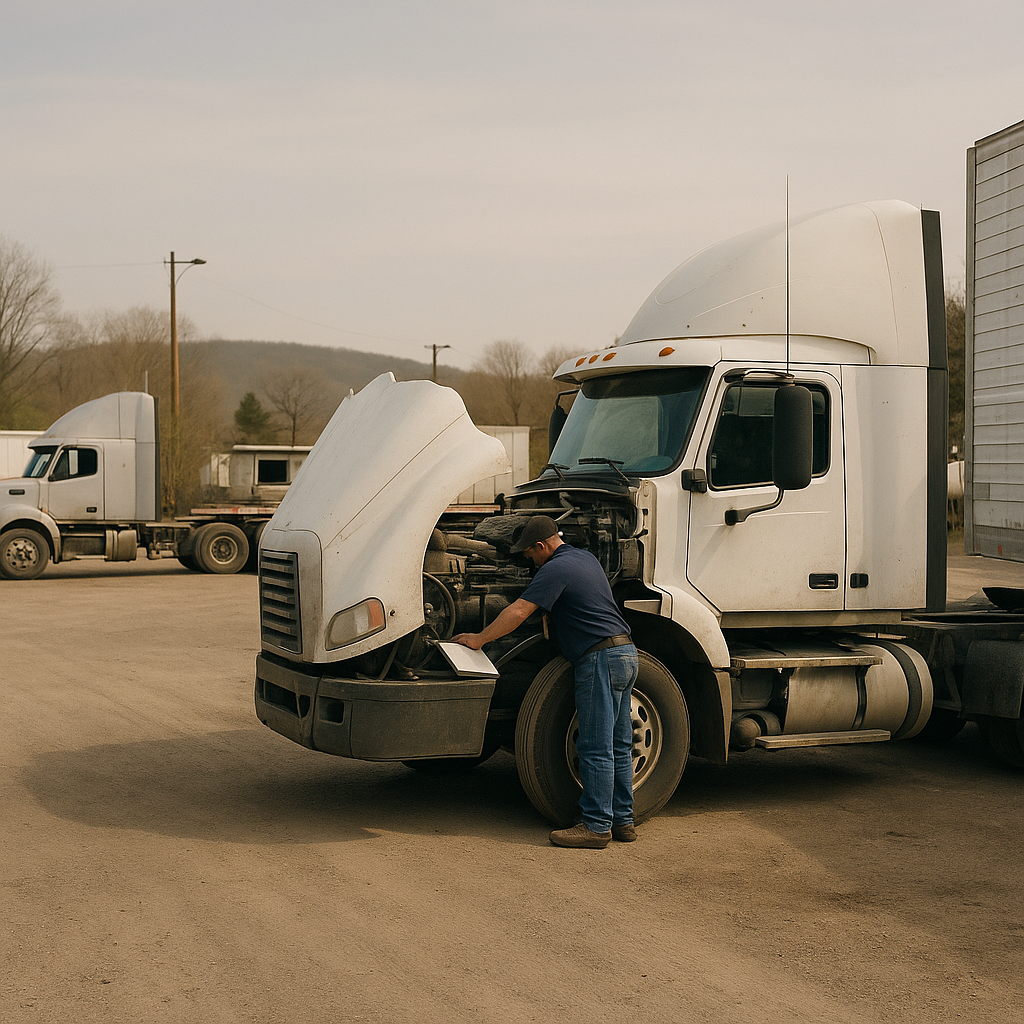

If you’re pricing ohio hot shot trucking insurance, the biggest mistake is assuming one rule covers everybody. It doesn’t. Your insurance and compliance picture changes based on whether you haul for hire, stay in Ohio or cross state lines, what your truck and trailer weigh, and what freight you carry.
This guide breaks that down in plain language. It also shows where owner-operators get tripped up on non-CDL setups, federal filings, cargo coverage, and "cheap" policies that leave expensive gaps.
What Ohio Hot Shot Trucking Insurance Covers#
Ohio hot shot trucking insurance is commercial insurance for smaller, fast-turn hauling operations, usually built around a pickup, dually, and trailer setup moving freight for business. The right policy depends on your carrier type, vehicle weight, cargo, and whether you run interstate or intrastate loads.
Hot shot trucking insurance means commercial coverage built for hauling freight in a pickup-and-trailer setup rather than under a personal auto policy. If you’re using a dually or pickup to move cargo for pay, personal auto insurance usually doesn’t match the risk or the business use.
Who counts as a hot shot operator#
Most hot shot operators haul time-sensitive loads with a pickup and trailer instead of a full semi. In practice, that can mean a one-truck owner-operator hauling equipment, building materials, parts, or other smaller freight on short notice.
The label matters less than the operation. A one-ton dually pulling a gooseneck for business still needs the insurance to match commercial hauling, even if the truck looks more like a heavy pickup than a tractor.
Core coverages for hot shot setups#
Commercial auto insurance covers liability from operating your business vehicle on the road. Motor truck cargo covers damage to the freight you’re hauling, subject to the policy terms. Physical damage covers your truck and trailer for collision and other covered losses like theft, fire, or weather damage.
A simple Ohio example: one owner-operator runs a dually and trailer hauling machine parts from Columbus to Dayton, then occasionally into Indiana. That operator may need auto liability for road risk, motor truck cargo for the customer’s freight, and physical damage for the truck and trailer itself.
What this policy does not replace#
Personal auto insurance is built for personal driving, not hauling freight for pay. State minimum auto insurance also isn’t the same thing as commercial trucking compliance.
This article focuses on hot shot operations LogRock writes for: owner-operators and small fleets running commercial freight. It does not focus on excluded niches like household goods movers, driveaway, or intermodal.
Ohio Rules vs. Federal FMCSA Requirements#
Ohio rules and FMCSA rules are not the same thing, and many hot shot operators get in trouble by blending them together. If you haul only within Ohio, state rules may control more of the picture. If you haul interstate for hire, federal authority, filings, and minimum financial responsibility under 49 CFR Part 387 can apply first.
The clean way to think about it is this: Ohio can regulate state-level insurance and vehicle matters, while the Federal Motor Carrier Safety Administration regulates many interstate for-hire trucking requirements. You can review federal carrier status on SAFER, federal financial responsibility rules under 49 CFR Part 387, and Ohio consumer insurance guidance through the Ohio Department of Insurance.
What Ohio may regulate locally#
Intrastate means operating only within one state. If your hot shot operation stays entirely inside Ohio, your insurance and compliance questions can look different from an interstate carrier’s.
For example, a same-day Cleveland-to-Cincinnati run that never leaves Ohio may stay under Ohio-specific rules for some issues. That does not mean you can assume personal coverage is enough, and it definitely does not mean every federal concept disappears.
What FMCSA controls for interstate hauling#
Interstate means your operation crosses state lines or is part of interstate commerce. If you haul for hire across state lines, federal registration and insurance filing requirements often come into play.
Under 49 CFR Part 387, for-hire interstate carriers hauling general freight in vehicles over 10,001 lbs must carry at least $750,000 in public liability. That is not a universal number for all truckers. Requirements vary by carrier type, weight, cargo, and whether the operation is interstate or intrastate.
A practical example: if you take a hot shot load from Toledo into Michigan, you may trigger a different compliance conversation than an Ohio-only run. A quote by itself doesn’t prove your authority, filing, or operating status is correct.
How carrier type changes the insurance requirement#
Public liability is the federal term for bodily injury, property damage, and environmental restoration liability required for certain motor carriers. For-hire carriers, private carriers, lighter vehicles, heavier vehicles, and hazmat operators do not all follow the same minimums.
For example, under the FMCSA framework, lighter vehicles under certain thresholds can be scoped differently than heavier interstate for-hire units. Auto haulers and hazmat operations can require higher limits than general freight. Before you assume a policy makes you compliant, verify your authority, filings, and carrier setup against FMCSA guidance and your actual operation.
CDL vs. Non-CDL Hot Shot Insurance in Ohio#
Non-CDL hot shot does not mean no insurance requirement. It usually means your vehicle and trailer combination falls into a licensing setup that may not require a commercial driver’s license, but you’re still hauling for business, so commercial insurance can still be necessary.
Non-CDL refers to a licensing category, not an insurance shortcut. A commercial driver’s license, or CDL, is a license class required for certain heavier or otherwise regulated vehicle configurations. Insurance is a separate issue tied to business use, carrier type, weight, cargo, and operating scope.
What makes a hot shot non-CDL#
In practical terms, operators usually call a setup "non-CDL" when the truck and trailer configuration stays below the threshold that would require a CDL. That’s why forum advice gets messy: people focus on truck size alone and ignore the full combination.
A dually pulling a lighter trailer may stay in non-CDL territory. The same truck with a heavier trailer or different load profile can move the operation into a different licensing and compliance category.
When a CDL changes the insurance conversation#
A CDL can change how an underwriter looks at the operation, the equipment, the radius, and the experience behind the wheel. But it doesn’t create the need for commercial insurance out of nowhere. If you’re hauling freight for business, that need already existed.
Don’t confuse licensing rules with liability minimums. A non-CDL setup can still need commercial auto insurance, cargo coverage, and federal compliance if it is used in the wrong scope for the assumptions the operator made.
DOT number, medical card, and authority basics#
A USDOT number is a federal identifier used to track safety and regulatory information for certain carriers. An MC number is operating authority for certain for-hire interstate carriers. Those items affect whether and how you can run, but they don’t replace insurance.
A DOT medical card is part of driver qualification in many operations, not an insurance policy feature. Whether you need one depends on the operation and applicable rules, often tied to commercial driving requirements under FMCSA regulations. The key point is simple: a DOT number, medical card, or CDL status may affect compliance, but none of them turns business hauling into personal-use driving for insurance purposes.
How Much Does Ohio Hot Shot Insurance Cost?#
Ohio hot shot insurance cost varies with your operation, not just your truck. The biggest drivers are vehicle value, trailer value, driving history, hauling radius, cargo type, authority status, and claims record. Non-CDL setups can still cost plenty if the routes, freight, or equipment create more exposure.
If you’re searching for a monthly number, treat any flat quote you see online with caution. Your actual premium depends on your operation, cargo, radius, driving history, and other factors.
Main quote drivers#
Underwriters usually start with the truck, trailer, and the person driving them. A newer dually with a higher stated value costs more to insure for physical damage than an older paid-off truck with limited damage coverage.
Then they look at how the truck runs. Interstate radius, for-hire authority, higher-value freight, and prior losses can all push pricing higher than a local operation with a cleaner profile.
Why non-CDL pricing can still vary a lot#
Non-CDL does not automatically mean low premium. A hot shot operator can still present serious risk if the truck is expensive, the trailer is specialized, the loads are valuable, or the operation crosses state lines regularly.
One operator may run lighter general freight within Ohio with modest equipment values and no losses. Another may have a new dually, a financed trailer, broader radius, higher cargo exposure, and a newer business with limited operating history. Both are "hot shot," but their pricing picture is not even close.
Examples of what changes a quote#
Example one: a one-truck Ohio owner-operator uses an older dually, hauls general freight, keeps a tighter radius, and only adds the coverages the operation actually uses. That risk may price more favorably than a broad, loosely described application.
Example two: a newer operation buys a high-value truck and trailer, requests physical damage on both, hauls more expensive loads, and needs interstate filings fast. That operator may see a much tougher market because the insurer is taking on more equipment risk, more cargo exposure, and less operating history.
Before you shop, have these details ready:

- Truck year, make, model, VIN, and stated value
- Trailer type, value, and ownership status
- Operating radius and states traveled
- Cargo types and typical load values
- USDOT or MC information if applicable
- Driver history, prior claims, and years in business
The better your details, the cleaner your quote. Sloppy applications create bad assumptions, and bad assumptions can hurt both pricing and claims later.
Coverage Choices That Matter for Hot Shot Operators#
Most hot shot operators need more than basic liability if they want the policy to match the real job. The common add-ons are cargo and physical damage, while other coverages like non-trucking liability, trailer interchange, non-owned trailer physical damage, or reefer breakdown only matter in specific setups.
MCS-90 is a federal endorsement attached to certain policies to satisfy public liability financial responsibility requirements. BMC-91 is a federal filing used to show proof of required liability coverage for certain interstate operations. They are related, but they are not the same thing, as reflected in FMCSA filing guidance at FMCSA.
Liability, cargo, and physical damage#
Liability handles third-party damage or injury you cause in a covered accident. Motor truck cargo helps if the freight you’re hauling is damaged in a covered loss. Physical damage protects your own truck and trailer.
This is where many Ohio hot shot operators underbuy. Liability may satisfy a legal requirement, but it won’t repair your dually after a collision and it won’t pay for the customer’s damaged freight unless the right coverages are in place.
NTL, trailer interchange, and non-owned trailer physical damage#
Non-trucking liability, or NTL, covers certain non-business use of a truck when you’re not under dispatch or hauling for pay. Bobtail is often used loosely for a similar idea, but the key point is the same: it does not cover paid hauling.
Trailer interchange covers a trailer you use under a signed interchange agreement. Non-owned trailer physical damage covers damage to a trailer you don’t own without relying on that interchange structure. Most non-intermodal hot shot owner-operators are more likely to need the second conversation than the first.
Reefer breakdown and special cargo situations#
Reefer breakdown covers certain loss tied to failure of refrigeration equipment on temperature-controlled loads. If you haul refrigerated freight, a basic cargo form may not be enough if the cooling unit fails and the load spoils.
Borrowed trailers, expensive equipment, and special cargo all change the coverage conversation. The goal is not to pile on every option. It’s to match the policy to the way you actually run freight.
How to Find Better Value Without Cutting Needed Coverage#
Better value in ohio hot shot trucking insurance usually comes from buying the right policy, not just the lowest-priced one. Compare coverage fit, exclusions, filings, deductibles, and claims support side by side. A cheap quote that misses cargo, trailer damage, or filing needs can get expensive fast.
Start by comparing what each quote actually covers. One policy may look cheaper because it leaves out physical damage, narrows cargo, or doesn’t fit the authority you plan to run under.
Keep your risk profile tight and honest. Match your radius, cargo description, and garaging details to reality. Don’t describe the operation one way to get a quote, then run it another way after binding.
Ask direct questions before you bind:
- Does this fit my carrier type and operating scope?
- Are the federal filings handled if my operation needs them?
- What is excluded for cargo, trailer use, or non-business driving?
- How does the claims process work if my truck or freight is damaged?
For owner-operators who run from the cab, speed matters too. If you’re not sure what coverage fits your operation,
What to Expect When Filing a Claim#
A good hot shot claim process should feel clear, fast, and document-driven. The carrier or adjuster will want the facts early, and delays often come from missing proof, bad photos, unclear cargo paperwork, or disagreements about what coverage was actually purchased.
A truck damage claim usually centers on the vehicle, repair estimates, photos, police reports if any, and what caused the loss. A cargo claim focuses more on the bill of lading, the condition of the freight, delivery details, and evidence showing when and how damage happened.
What speeds things up:
- Clear photos of truck, trailer, and cargo
- Bill of lading and dispatch records
- Repair estimates or shop information
- Driver statement and loss details
- Any supporting paperwork from the shipper or receiver
This is why the cheapest policy can backfire. Weak claims handling or the wrong coverage structure can cost more than the upfront premium difference.
Choose the Right Ohio Hot Shot Policy#
The right ohio hot shot trucking insurance policy matches how you actually operate, not how a generic online form guesses you operate. For Ohio owner-operators and small fleets, that means lining up your authority, cargo, truck and trailer setup, radius, and needed coverages before you buy.
If your quote seems built on assumptions, get a second look before you bind. LogRock specializes in trucking insurance for owner-operators and small fleets.
FAQ#
Do Ohio hot shot truckers need commercial insurance?
Yes, if you’re hauling freight for business, you generally need commercial insurance rather than personal auto coverage. Personal auto insurance is built for personal driving, not for-hire hauling with a pickup, dually, or trailer. The exact policy setup depends on your operation, including whether you run intrastate or interstate, what you haul, and what the truck and trailer weigh.
For many hot shot operators, the core conversation starts with commercial auto liability. From there, cargo and physical damage often matter too. The key is matching coverage to real business use, not assuming a pickup can stay on a personal policy just because it doesn’t look like a semi.
What insurance do you need for a non-CDL hot shot truck in Ohio?
A non-CDL hot shot truck in Ohio still usually needs commercial coverage if it’s being used to haul freight for business. Non-CDL only describes the licensing side of the setup. It does not remove the need for commercial auto insurance, and it does not guarantee that state minimum personal auto coverage is enough.
Most non-CDL hot shot operators should at least review commercial auto liability, motor truck cargo, and physical damage. Some also need coverage for non-owned trailers or limited non-business use. The right package depends on your cargo, radius, equipment values, and whether you operate only in Ohio or cross state lines.
Does Ohio hot shot insurance follow state rules or FMCSA rules?
It can follow either or both, depending on how you operate. If your hot shot business stays entirely inside Ohio, more of the requirement picture may come from Ohio rules. If you haul interstate for hire, FMCSA rules, federal authority, and filing requirements can apply as well.
That is where many operators get confused. They hear one number or one rule from another driver and assume it applies across the board. It doesn’t. Requirements vary by carrier type, vehicle weight, cargo, and whether you operate interstate or intrastate. If you’re unsure, verify your setup through FMCSA and make sure the quote reflects the operation you actually plan to run.
Can a hot shot truck run without a DOT number?
Sometimes, but it depends on what kind of hauling you’re doing, whether you operate interstate, and whether you meet the thresholds that trigger USDOT registration. A USDOT number is tied to safety and regulatory tracking, not just to big semis. Some hot shot setups need one even when operators assume they don’t.
The safest move is not to guess based on truck size or on whether the setup is non-CDL. Check your operation against FMCSA rules and confirm your status before you start hauling. Insurance and compliance work together, but having insurance alone does not mean your DOT registration obligations are covered.
Do hot shot truckers need a DOT medical card?
Some do, but not every operation is identical. DOT medical card requirements depend on the driver and the type of commercial operation being run. Those rules sit in the driver qualification and compliance world, which is separate from the insurance policy itself.
What matters for insurance is that the carrier accurately describes the operation and driver profile. What matters for compliance is that the driver meets any applicable qualification requirements, including medical certification where required. Don’t assume that because a setup is non-CDL, medical card questions automatically disappear. Review the actual rules that apply to your driving and operating scope.
What kind of insurance do you need for a dually in hot shot trucking?
A dually used in hot shot trucking usually needs commercial coverage built around business hauling. That often includes commercial auto liability for road risk, and it may also include motor truck cargo for the freight and physical damage for the truck and trailer. If you’re pulling a trailer you don’t own, trailer-related coverage may matter too.
The truck type alone does not decide the policy. A dually used personally is one thing; a dually used to haul freight for pay is another. The insurer will look at the truck, trailer, cargo, radius, and whether you operate intrastate or interstate before the right coverage picture becomes clear.
How much does hot shot insurance cost in Ohio?
There is no single Ohio hot shot insurance price because the premium depends on the operation. The biggest cost drivers usually include truck and trailer value, cargo type, driving history, operating radius, authority status, prior claims, and whether you want physical damage and cargo in addition to liability.
That is why two hot shot operators can get very different quotes even if both use pickups and trailers. A cleaner local risk with older equipment may price very differently than a newer interstate operation with financed equipment and higher-value freight. If you want a useful quote, bring exact equipment, driver, and operating details instead of rough estimates.
How can I find cheap hot shot trucking insurance without losing coverage?
The best way is to shop for fit first and price second. Compare what each quote actually includes, whether filings are handled if needed, what exclusions apply, and how claims work. A lower premium can look good up front but still be a bad deal if it leaves out cargo, trailer damage, or the coverage your operation really depends on.
It also helps to keep your application accurate and your risk profile clean. Use the real radius, real cargo description, correct garaging, and correct equipment values. Only buy the coverages your operation actually needs, but don’t cut the protections that would hurt most in a real claim.





