
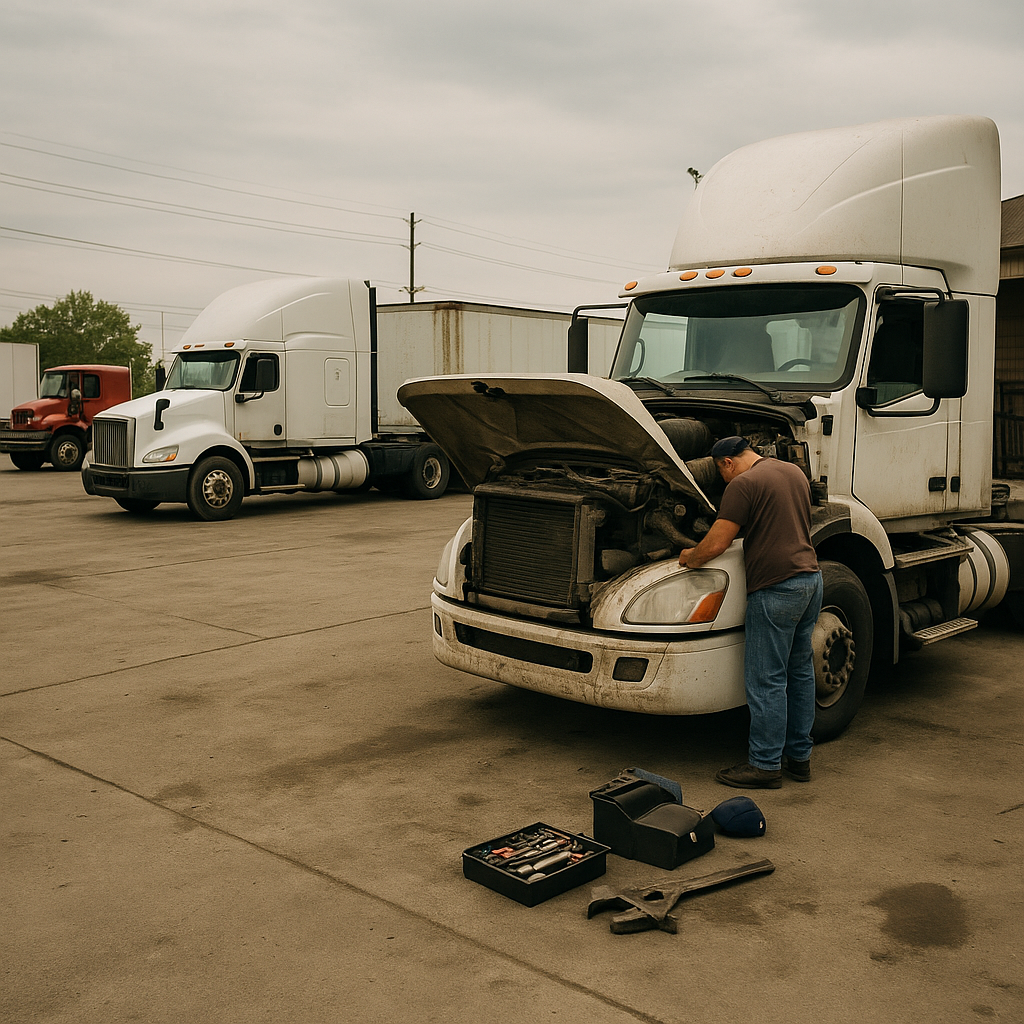

Philadelphia truck insurance only makes sense when it’s built around your actual operation. If you run one truck or a small fleet in the Philadelphia area, your coverage depends on whether you haul for-hire, what you haul, where you run, your truck weight, and what your contracts require.
Philadelphia Truck Insurance Starts With Your Operation#
Philadelphia truck insurance is commercial coverage for trucks doing business in or through the Philadelphia area, not personal car insurance. Before you compare anything, separate commercial trucking from personal auto, and separate legal requirements from shipper or broker requirements.
This guide is for owner-operators and small fleets hauling freight, not for someone shopping a family car policy. Commercial truck insurance is insurance built for business trucking exposures like auto liability, cargo, filings, and equipment damage.
Commercial truck insurance vs. personal auto insurance#
A personal auto policy usually won’t match a trucking operation’s risk. If you’re hauling freight for money, running under your own authority, or using a heavy truck for business, the coverage conversation changes fast.
A lot of confusion starts here. Drivers hear a number from a forum, compare it to a car policy, and assume that’s close enough. It usually isn’t.
Philadelphia Insurance Companies vs. Philadelphia-area truck coverage#
A company name with “Philadelphia” in it isn’t the same thing as a search for truck insurance in Philadelphia. Some search results are about Philadelphia Insurance Companies as a brand, while others are about local or regional commercial trucking coverage options.
If you’re an owner-operator, the real question is whether the policy fits your operation, not whether the name sounds local.
The operating details that change your insurance needs#
Your insurance needs change based on whether you’re for-hire or private, interstate or Pennsylvania-only, what your truck weighs, what cargo you haul, and whether a broker or shipper requires certain limits or endorsements. Authority means the operating permission tied to your business activity, such as federal operating authority connected to an MC number for certain for-hire interstate operations.
You also need to separate three buckets:
- coverage required by law or regulation
- coverage required by a broker, shipper, or lease
- optional protection for your truck, trailer, and business assets

Interstate or Pennsylvania Intrastate: Identify the Rules Before Buying Coverage#
The first rule question is simple: are you operating interstate for-hire, or are you strictly Pennsylvania intrastate? Interstate for-hire carriers may face federal financial-responsibility rules under 49 CFR Part 387, while Pennsylvania-only operators still need to verify state, contract, and customer requirements instead of assuming federal rules control everything.
When FMCSA financial-responsibility rules apply#
If you’re a for-hire carrier crossing state lines, federal financial-responsibility rules may apply. Under 49 CFR Part 387, the minimum public liability requirement depends on the type of operation and property transported.
That matters because there is no one-size-fits-all federal number for every trucker. Under 49 CFR Part 387, for-hire interstate carriers hauling general freight in vehicles over 10,001 lbs must carry at least $750,000 in public liability. Other operations can be scoped differently, including lower requirements for lighter vehicles, higher requirements for auto haulers, and much higher requirements for certain hazmat.
What Pennsylvania intrastate operators should verify#
If you run only within Pennsylvania, don’t assume the interstate FMCSA rule is your only reference point. Check state registration and financial-responsibility requirements, then compare those with whatever your customers, brokers, or lease agreements require.
The Pennsylvania Insurance Department is also a useful place to verify insurer and producer credentials when you’re evaluating the market.
Authority, cargo, and vehicle weight can change the answer#
Your USDOT number, MC number, cargo type, vehicle weight, and whether you’re for-hire or private can all change the answer. A USDOT number is the identifier tied to safety and operational records, while an MC number is operating authority used for certain for-hire interstate carriers.
Before you ask for filing help, confirm your public status in SAFER. SAFER is FMCSA’s public system for checking carrier identification and safety information tied to USDOT and MC records.
Why a certificate of insurance is not the same as a required filing#
A certificate of insurance shows evidence of coverage for a customer, but it is not the same thing as a regulatory filing. A BMC-91 or BMC-91X is a federal insurance filing made by an insurer when required for operating authority, not a customer-facing certificate, according to FMCSA.
That difference trips up a lot of new authorities. The shipper asks for a certificate, the FMCSA requires a filing, and they are not interchangeable.
Build a Coverage Map for Your Philadelphia Trucking Operation#
Philadelphia truck insurance usually means a package of separate coverages, not one policy that fixes every problem. Start by mapping each real-world exposure—truck, freight, trailer, off-dispatch use, and refrigeration equipment—to the coverage that actually responds.
Auto liability for third-party injury and property damage#
Auto liability pays for covered bodily injury and property damage you cause to others with the insured truck. It does not protect your freight, and it does not repair your own truck.
This is the coverage most people think of first because it’s often tied to legal or contract requirements. But it’s only one piece of the operation.
Motor truck cargo for freight you are responsible for hauling#
Motor truck cargo covers covered freight you’re legally responsible for hauling, subject to policy terms, causes of loss, exclusions, and limits. It is separate from auto liability.
A driver can have liability coverage and still have no cargo protection. That’s a bad surprise to discover after a load shift, theft, or damaged shipment.
Physical damage and combined additional coverage#
Physical damage protects the insured truck for covered loss to the equipment itself. It can include collision, comprehensive, fire and theft, and combined additional coverage, often shortened to CAC, depending on the policy structure.
Collision usually can’t stand alone. It normally pairs with comprehensive or with fire and theft plus CAC, and deductibles matter because that’s the amount you keep on your own side before coverage responds.
General liability for non-driving business exposures#
General liability covers certain non-driving business exposures, like premises or operations claims, depending on the policy. It is not a replacement for auto liability.
This matters when a customer contract asks for both. One handles trucking road risk; the other handles qualifying business liability outside the truck’s driving exposure.
Non-trucking liability for qualifying off-dispatch use#
Non-trucking liability, often called bobtail by drivers, covers qualifying non-business use of a truck under limited circumstances. It does not cover paid hauling, and dispatch, lease, and business-use restrictions matter.
This is one of the most misunderstood coverages in trucking. If the truck is being used in the business, don’t assume non-trucking liability will step in.
Trailer interchange and non-owned trailer physical damage#
Trailer interchange applies when you’re contractually responsible for a trailer you don’t own under a signed interchange agreement. Non-owned trailer physical damage addresses a different exposure involving damage to a trailer you use but do not own, often without that signed interchange setup.
Many non-intermodal owner-operators actually need the second conversation more than the first. Read the trailer agreement before you bind anything.
Reefer breakdown for temperature-controlled cargo operations#
Reefer breakdown covers certain loss tied to refrigeration unit failure for temperature-sensitive cargo operations, subject to policy terms. It only matters if you actually have refrigeration exposure and cargo obligations that create that risk.
Before binding, compare your carrier agreement, broker packet, and shipper requirements against the actual policy exclusions. If you’re not sure where the gaps are,
What Drives Philadelphia Truck Insurance Costs—and What You Can Control#
Philadelphia truck insurance costs are based on the whole risk, not one advertised limit. Insurers look at your operation, truck and trailer details, cargo, radius, driver history, prior losses, authority age, requested coverages, deductibles, and filing needs before they decide how to price the account.
Operating radius and Philadelphia-area traffic exposure#
Local congestion, dense delivery environments, and regular runs through Philadelphia can affect how underwriters view exposure. Radius matters because a truck running short local lanes is a different risk than one crossing multiple states every week.
Cargo, equipment value, and trailer responsibility#
Higher-value equipment, specialized trailers, expensive cargo, and borrowed trailer exposure all change the picture. A financed truck also raises the stakes because physical damage decisions can affect both downtime and loan obligations.
Driver history, experience, and prior losses#
Driving record, CDL experience, claims history, and gaps in prior insurance all matter. A clean file with consistent information is easier to underwrite than a submission with missing drivers, unclear loss history, or changing business details.
Authority age, safety profile, and insurance history#
New ventures usually face more scrutiny. SAFER visibility, filing accuracy, and continuity of coverage can all influence how a carrier is reviewed.
Coverage limits, deductibles, and contract requirements#
A higher limit or a lower deductible can change your premium, but the cheaper-looking option isn’t always the better business choice. Your deductible is the amount you retain in a covered loss, so picking it only to lower upfront cost can backfire when a claim hits.
How to reduce avoidable underwriting friction#
You can help your own submission by keeping driver and vehicle info accurate, documenting loss-control practices, describing cargo clearly, keeping required filings current, and avoiding unnecessary coverage gaps when possible. Your actual premium depends on your operation, cargo, radius, driving history, and other factors.
Prepare for a Faster, More Accurate Truck Insurance Quote#
A strong Philadelphia truck insurance quote starts with complete, accurate information. For a one-truck owner-operator or a small fleet, having the right details ready helps avoid misquotes, missed filings, and policy terms that don’t match the work you actually do.
Bring the basics first: business name, garaging ZIP code, contact information, and your USDOT and MC numbers where applicable. If you already have authority or filings in motion, say so up front.
Have your truck and trailer information ready too. That includes VINs, model years, stated equipment values, ownership or lease details, and whether you’re using owned, hired, borrowed, or non-owned trailers.
Driver records matter just as much. Bring license details for all drivers, prior loss information, and loss runs if available. If you’ve had a cancellation notice or non-renewal, include that too.
Cargo and lane details need to be specific. Describe what you haul, your usual radius, the states you travel, whether you have trailer interchange obligations, and whether refrigeration is part of the operation.
Finally, bring your current declarations pages, any customer insurance requirements, and notes about additional insured or waiver requests. A declarations page is the policy summary showing named insureds, vehicles, limits, and key coverages. A complete submission also makes it easier to spot whether you need a filing, a certificate, or some contract-driven endorsement.
Avoid Coverage Gaps Before a Loss Happens#
Most bad insurance surprises happen before the claim, not during it. Coverage gaps usually come from bad assumptions, stale business details, or a certificate request that gets treated like proof the whole exposure is covered.
A certificate does not expand the policy. If the policy excludes an exposure, the certificate doesn’t rewrite that.
Review common problem spots before a loss: undisclosed drivers, wrong garaging address, new operating lanes, changed cargo, hired or borrowed trailers, dispatch status for non-trucking liability, cargo sublimits, and refrigeration equipment details. A sublimit is a smaller cap that applies to a specific type of covered property or loss inside a larger policy.
If an accident, cargo claim, or theft happens, protect people and property first. Then document facts, take photos, preserve bills of lading, notify the carrier or broker promptly, and avoid admitting fault.
Claims duties come from the policy, so keep the claims contact process where you can reach it from the cab. Fast, accurate reporting gives the claim a better start.
Choose Coverage Based on Your Actual Philadelphia Trucking Work#
The right Philadelphia truck insurance comes from classifying the operation correctly, identifying whether federal or Pennsylvania rules apply, matching each exposure to the right coverage, and reviewing exclusions before binding. That’s a lot different from comparing one advertised liability limit or looking at personal auto prices.
If you’re hauling freight through or out of Philadelphia, scope the policy around the work you actually do, the equipment you run, and the contracts you sign. That’s the safest way to avoid buying the wrong coverage for the right truck.
FAQ#
Who is the cheapest truck insurance?
No insurer is always the lowest-cost option for every trucking business. Commercial truck pricing depends on your operation, cargo, truck and trailer details, radius, drivers, claims history, requested coverages, deductibles, and whether filings or contract endorsements are needed. A one-truck owner-operator hauling general freight won’t be priced the same way as a small fleet hauling specialized cargo.
The better way to compare is to line up equivalent coverage terms. If one quote looks cheaper because it removes cargo, raises the deductible, or leaves out trailer-related protection, it may not be a true apples-to-apples comparison. Your actual premium depends on your operation, cargo, radius, driving history, and other factors.
Is Philadelphia insurance a good company?
That depends on what you mean by “Philadelphia insurance.” Some searchers mean Philadelphia Insurance Companies as a brand. Others mean any company or broker offering truck insurance in the Philadelphia area. Those are different questions.
For a trucking operation, judge the fit by practical things: whether the insurer is properly authorized where relevant, whether it actually writes your class of trucking business, how the policy handles your cargo and trailer exposure, what the claims process looks like, and whether the terms fit your contracts. You can also use the Pennsylvania Insurance Department to verify market credentials and find consumer resources.
How much is a $1,000,000 liability insurance policy?
A $1,000,000 liability policy does not have one standard price. Underwriters look at what you haul, where you operate, truck weight, radius, driver experience, loss history, authority age, and what other coverages are packaged with the policy before they price it.
Also, a $1 million limit may be required by a contract, but that doesn’t automatically mean it satisfies every legal, cargo, or customer requirement in your situation. Requirements vary by carrier type, vehicle weight, cargo, and whether you operate interstate or intrastate. The useful question isn’t just “what does $1 million cost?” It’s “what does my operation require, and what terms come with that limit?”
Who has the cheapest car insurance in Philadelphia?
That question is usually about personal auto insurance, not commercial truck insurance. If you’re insuring a family car, consumer auto-shopping articles may help. If you’re insuring a tractor, straight truck, or business-use vehicle hauling freight, that pricing logic doesn’t carry over.
Commercial trucking coverage is built around business use, authority, cargo, routes, equipment, and liability exposure. A personal-auto ranking won’t tell you whether you need cargo, physical damage, non-trucking liability, trailer-related coverage, or a federal filing. For trucking, compare policies designed for your actual operation rather than general Philadelphia car-insurance ads.
Do I need a BMC-91 filing or just a certificate of insurance?
They serve different purposes. A certificate of insurance is usually something a broker, shipper, or customer asks for as evidence of coverage. A BMC-91 or BMC-91X is a federal filing made by the insurer when required for operating authority, according to FMCSA.
If you’re a for-hire interstate carrier, confirm your authority status and filing needs before you bind coverage. If you’re Pennsylvania intrastate only, the filing conversation may be different. Either way, don’t assume a certificate satisfies a federal requirement, and don’t assume a filing replaces a customer certificate request.





