
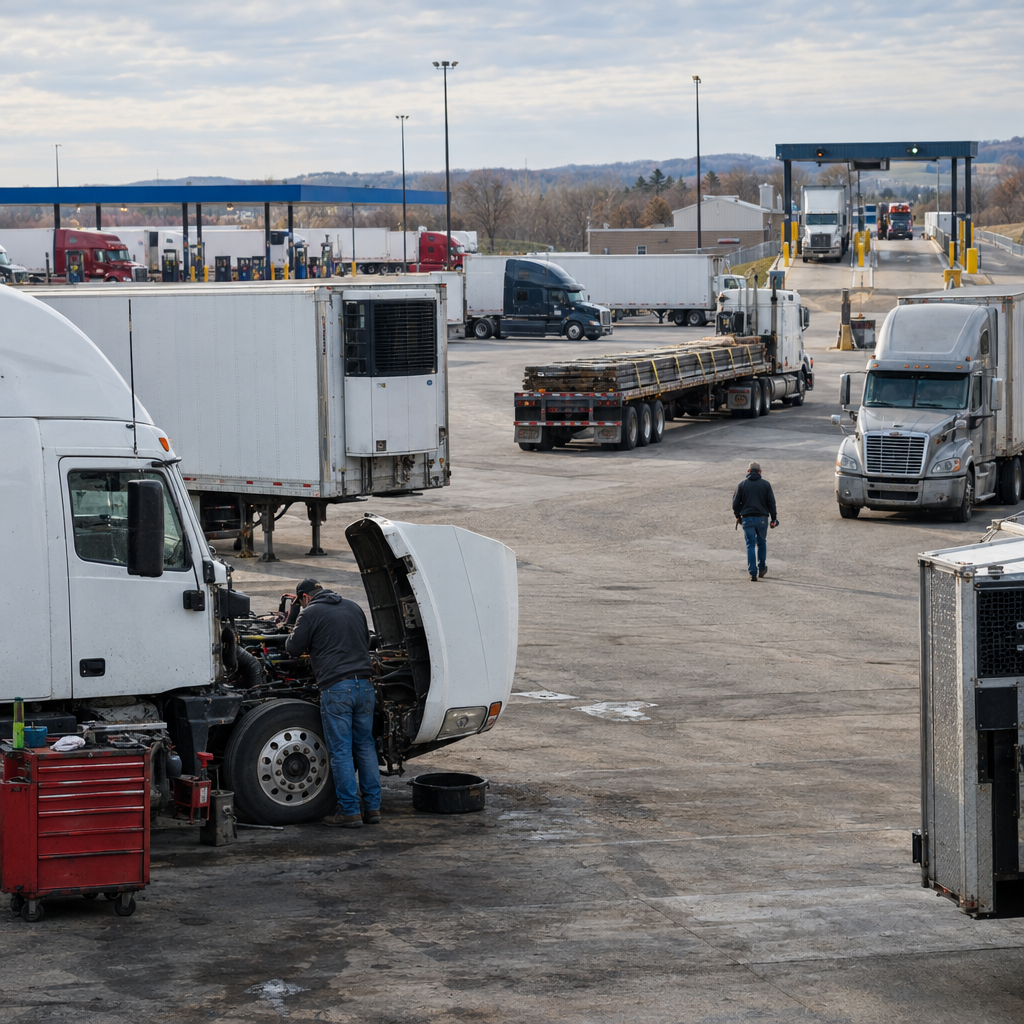

A reefer capacity shortage for owner-operators means more temperature-controlled freight is competing for available refrigerated trucks on a specific lane and date. That can create better opportunities, but a high posted rate alone doesn’t cover deadhead, reefer fuel, washouts, delays, or a weak reload market.
This guide breaks down how to check whether a lane is truly tight, price the complete trip, protect the next reload, and review operational and insurance questions when reefer work changes.
What a Reefer Capacity Crunch Actually Means#
A reefer capacity crunch happens when available temperature-controlled trucks or trailers are limited compared with freight demand on a particular lane and during a particular time period. It is not automatically a nationwide condition, and it does not mean every reefer load is profitable for every owner-operator.
Capacity is lane-specific, not a nationwide condition#
A market headline can say reefer capacity is tight, but your truck may be sitting in a soft origin market. The delivery city may also have weak reload options, long appointment waits, or freight that requires equipment you do not have.
Look at the exact origin, destination, pickup window, commodity, and trailer requirements. A tight produce lane out of one region may have nothing to do with a refrigerated load available near your current location.
Why a tight market does not make every reefer load profitable#
Tight capacity can push up load opportunities, but it can also make the work harder to execute. You may face more competition for trailer repairs, washout bays, parking, reefer fuel, and reloads after delivery.
A strong linehaul number can disappear once you add unpaid miles to pickup, a washout, reefer-unit fuel, tolls, delayed unloading, and empty miles out of a weak destination. The freight market is useful context; your actual trip is the business decision.
The owner-operator questions to ask before reacting#
Before repositioning, ask:
- Is this lane tight for my pickup date and trailer setup?
- What commodity, temperature range, and receiver rules apply?
- What will it cost to get to pickup and leave the delivery market?
- Is the reefer unit ready for the job?
- What does my next reload likely look like?

Why Reefer Capacity Can Tighten Faster Than Dry Van Capacity#
Reefer capacity can tighten faster than dry van capacity because perishable freight has less scheduling flexibility and requires working specialized equipment. Produce seasons, food-distribution demand, weather, holidays, and equipment failures can all change the number of usable reefer trailers on a lane quickly.
Perishable freight has limited flexibility#
Temperature-controlled freight is cargo that must stay within specified temperature conditions during transport. Fresh produce, frozen food, dairy, meat, and other temperature-sensitive loads can lose value when pickup or delivery slips.
That creates firmer appointment requirements than many dry van moves. A shipper may need a trailer pre-cooled before loading, while a receiver may require an exact appointment, seal process, or temperature record before unloading.
Produce seasons can overlap across regions#
Produce season is a major demand driver, but it is not the only one. Regional harvest activity can overlap with food-distribution cycles, holidays, weather disruptions, and promotional demand at grocery and restaurant supply chains.
Florida, Texas, and California can become important reefer origins or destinations during certain produce and food-distribution periods. That does not mean those markets are always tight. Check the active freight and available equipment for your actual dates instead of chasing a state-level rumor.
Specialized equipment and maintenance limit available trucks#
A reefer trailer is not simply a dry van with a cooling unit attached. It needs a functioning reefer unit, the refrigeration equipment that controls trailer temperature, plus fuel or power management, temperature monitoring, cleaning, and maintenance.
A trailer can be physically available but unusable for a load if the unit has an alarm, needs repair, lacks reefer fuel, has not been pre-cooled, or fails a shipper’s inspection. Those limits can reduce usable capacity even when plenty of trailers appear to be in the area.
Shipper requirements can narrow the usable trailer pool#
Some freight requires a clean trailer, a recent washout, specific temperature capability, or a multi-temperature setup. Others require pulp-temperature checks, which measure the temperature inside the product rather than only the air inside the trailer.
Rejected trailers and failed inspections matter because they cost time when timing is already tight. Confirm the shipper’s rules before you drive toward pickup, especially when the lane looks hot and appointment slots are scarce.
Check Whether Your Lane Is Actually Tight Before You Reposition#
You can test whether a reefer lane is actually tight by comparing current loads, truck availability, trailer requirements, and destination reload options for the same pickup window. Do this before deadheading into a market, because one attractive posting is not proof of repeatable demand.
Review the load-to-truck balance by origin and destination#
Start with the lane details that matter:
- Origin market and pickup date
- Delivery market and appointment window
- Commodity and temperature requirements
- Trailer type, cleanliness, and pre-cooling rules
- Linehaul, fuel surcharge, and accessorial terms
- Expected reload area after delivery
Compare several available loads rather than treating one high-rate posting as the whole market. A better picture comes from seeing whether similar freight is moving, what equipment is requested, and how much flexibility exists around pickup times.
Compare outbound opportunities with realistic reload options#
A strong outbound rate can be erased by a weak destination. If delivery leaves you several hours from the next viable pickup, the empty miles and lost time belong in the calculation.
Track what actually happens after delivery, not only what you hoped would happen. Over time, your own records will show which origin-destination pairs produce workable reloads for your truck, schedule, and equipment.
Watch appointment times, dwell risk, and temperature requirements#
Ask about loading and unloading appointments before accepting the load. Confirm whether detention applies, when it starts, what paperwork is required, and whether the receiver has special check-in or temperature procedures.
A load with narrow appointment windows may still fit the operation. But it should pay for the added risk of waiting, missed reload opportunities, or trailer issues at the dock.
Separate a one-day spike from a repeatable lane pattern#
One day of tight capacity can come from a weather event, holiday timing, a plant shutdown, or a temporary shortage of trucks. That can be useful freight, but it is not necessarily a lane you should reposition toward every week.
Keep a simple lane scorecard with booked rate, deadhead, detention, reefer fuel, washout cost, delivery performance, and reload outcome. Your own data is more useful than broad market commentary when deciding where to point the truck next.
Price Reefer Loads Beyond the Headline Rate#
A reefer load should be priced on the full trip cycle, not just loaded miles or the posted linehaul. Add pickup and post-delivery deadhead, tractor and reefer fuel, washouts, tolls, waiting time, accessorials, and the likely impact on your next reload before deciding whether the freight works.
Calculate revenue after repositioning miles#
Start with total trip revenue: linehaul, fuel surcharge, detention, layover, stop pay, and any other confirmed accessorials. Then include all miles, not only loaded miles:
- Deadhead to pickup
- Loaded miles
- Deadhead after delivery
- Miles needed to reach a realistic next pickup
A shorter loaded move can make sense if it positions you for a strong reload. A higher-rate load can fail if it puts you in a slow area with expensive empty miles.
Add reefer fuel, washouts, tolls, and waiting time#
Reefer fuel is separate from the fuel used by your tractor. The refrigeration unit may run through loading, transit, waiting time, and delivery, depending on the commodity and temperature instructions.
Also account for washouts, tolls, parking, and lost driving time at the dock. Review the load’s fuel surcharge terms so you know what is included and what still comes out of the trip’s margin.
The trailer comparison above can help frame equipment tradeoffs. Still, the right load decision comes down to your trailer, lane, costs, and ability to execute the shipment.
Account for temperature instructions and cargo-handling risk#
Get the set point, commodity details, loading instructions, seal requirements, and receiver procedures in writing. A vague instruction like “keep it cold” is not enough when a shipper expects a specific temperature setting or documented trailer condition.
A late pickup, rejected trailer, or reefer issue can affect more than the current load. It can disrupt the next appointment, force a repair stop, or leave you stranded in a weak reload market.
Protect the margin when delivery disrupts your next reload#
Build some room into the plan for the real world. If a delivery runs late, ask whether the next reload still works or whether you will need to reposition.
When the numbers are close, do not assume detention will solve the problem. Detention terms, documentation requirements, and actual payment practices should be clear before pickup.
If the freight creates questions about trailer use, cargo requirements, or your operation,
Use Tight Capacity to Make Better Spot and Contract Freight Decisions#
Tight reefer capacity can support either spot freight or repeat contract freight, depending on the lane and your operation. The better choice is the one that supports cash flow, workable appointments, equipment use, reload planning, and your tolerance for market swings across the full trip cycle.
When spot reefer freight may fit the operation#
Spot freight is freight booked load by load at current market terms rather than under an ongoing lane commitment. It can work well when you can verify live demand, equipment requirements, and destination reloads before accepting the load.
Spot work gives you flexibility, but it can also expose you to more variation in reload options and appointment conditions. Do not confuse a high rate with a complete plan.
When repeat contract freight may be more useful#
Contract freight is freight moved under an ongoing agreement or repeating arrangement with established terms. Repeat freight can help with planning when the lane, payment terms, volume, appointment pattern, and cargo rules fit your truck.
It is not automatically better than spot freight. A repeat lane with poor dwell, expensive repositioning, or equipment demands that do not fit your trailer can tie up capacity without improving the business.
Evaluate the full lane cycle instead of one outbound load#
Compare spot versus contract freight using the full cycle: outbound revenue, empty miles, dwell, reefer costs, likely reload, and time until the next paying move.
A per-mile figure is useful, but only when it includes enough of the trip to mean something. The truck earns over the whole sequence, not just the outbound loaded miles.
Use positioning to reduce unpaid miles#
Sometimes a lower-revenue move into a stronger reload area makes sense. It only works when the combined sequence produces enough revenue after the repositioning miles, fuel, time, and equipment costs.
Do not reposition based on a story that a market is “about to heat up.” Confirm freight, timing, trailer requirements, and a backup plan if the expected reload disappears.
A Practical Accept-or-Decline Process for Reefer Loads#
A consistent reefer accept-or-decline process helps you avoid booking freight based on rate alone. Confirm the commodity and equipment requirements, calculate the complete trip, review the appointment risk, and test the destination plan before you commit the truck.
Step 1: Confirm the commodity and temperature instructions#
Verify the commodity, temperature set point, pulp-temperature expectations when applicable, loading instructions, seal requirements, and receiver appointment. Ask whether continuous run is required and whether the shipper has specific paperwork or temperature-record requirements.
Do not rely on verbal shorthand when cargo condition could become disputed later. Keep written rate confirmations and operating instructions with the load file.
Step 2: Verify the trailer and refrigeration unit are ready#
Check reefer fuel level, unit operation, alarms, cleanliness, pre-cooling needs, and washout documentation. Confirm any commodity-specific requirements, including whether the trailer must be odor-free, dry, or held at a certain temperature before loading.
A trailer problem found at the shipper can cost the appointment and the next reload. Handle known readiness issues before accepting a tight-window load.
Step 3: Calculate the complete trip, including repositioning#
Use the total miles and total time, not just loaded miles. Include linehaul, fuel surcharge, accessorials, tractor fuel, reefer fuel, washout costs, tolls, parking, and expected deadhead after delivery.
Then compare the estimated trip result with the operational risk. A load with thin room for error may not fit if a late unload or repair would damage the rest of the week.
Step 4: Review appointment, detention, and rejection terms#
Confirm appointment times, check-in rules, detention terms, and who approves extra charges. Ask what happens if the trailer is rejected, the receiver refuses the load, or a temperature issue arises.
Keep names, instructions, and timestamps. Good documentation does not prevent every dispute, but it gives you a record of what happened.
Step 5: Confirm the destination and next-load plan#
Finish with a go-or-no-go question: Would this load still make operational sense if the next reload takes longer than expected or requires additional deadhead?
If the answer is no, the headline rate may be masking a weak trip cycle. Passing on the wrong load can protect more capacity than chasing it.
Review Reefer Insurance and Operating Exposures When the Work Changes#
Reefer work can add cargo-loss and equipment-related exposures that deserve a coverage review before operational changes become routine. Motor Truck Cargo, Refrigeration Breakdown, Physical Damage, and trailer-use coverage should follow the cargo, trailer arrangement, lanes, contracts, and real work your business performs.
Cargo coverage and the commodity being hauled#
Motor Truck Cargo coverage may address certain liability for customers’ cargo while it is in your care, custody, or control, subject to policy terms and exclusions. The commodity matters because cargo types, values, temperature requirements, and contract terms can change the exposure.
A broker or shipper may require certain cargo limits or endorsements. Those requirements are business-contract questions; they are not the same thing as federal auto-liability requirements.
Refrigeration breakdown and spoilage exposure#
Refrigeration Breakdown coverage may address certain cargo spoilage losses caused by a covered mechanical or refrigeration-unit failure. Coverage depends on policy wording, exclusions, deductibles, cargo type, maintenance, temperature documentation, and claim-reporting requirements.
It is not a substitute for maintaining the reefer unit. Keep service records, temperature readings, and written instructions because documentation can matter when a cargo issue occurs.
Physical damage and trailer-use changes#
Physical Damage generally refers to coverage for damage to your own covered equipment, such as collision or comprehensive losses, subject to policy terms. If you haul with another party’s trailer, the arrangement matters.
Trailer Interchange may apply when you have a signed trailer interchange agreement and are responsible for a non-owned trailer. Non-Owned Trailer Physical Damage may be relevant when you use a non-owned trailer without that signed interchange arrangement. Review the actual agreement rather than assuming the names mean the same thing.
Why coverage details should follow the real operation#
Tell your insurance contact before adding reefer freight, changing commodities, using another party’s trailer, expanding territory, or changing where the truck is garaged. Those changes can create trucking coverage gaps if the policy no longer matches the operation.
For interstate for-hire carriers, federal financial-responsibility requirements also depend on carrier type, vehicle weight, and commodity. Under 49 CFR Part 387, verify what applies to your actual operation rather than relying on one universal liability figure.
Separate insurance questions from freight-market commentary#
A tight reefer market does not automatically change your insurance requirements. Your USDOT and MC number authority, contracts, cargo, equipment, and operating territory are what drive the questions to review.
Requirements vary by carrier type, vehicle weight, cargo, and whether you operate interstate or intrastate. A coverage review should be specific to the work you actually take.
Build a Reefer Capacity Playbook Before the Next Seasonal Shift#
A practical reefer playbook validates the lane, prices the whole trip, protects the reload plan, and keeps equipment and coverage aligned with the operation. Use seasonal shifts as a trigger to review what has changed before a busy week exposes a weak process.
Keep a lane and reload scorecard#
Track reefer fuel, repairs, washouts, temperature instructions, appointment performance, detention outcomes, and destination reload results. This record helps separate a repeatable lane from a one-time spike.
Maintain trailer-readiness records#
Keep service records, washout receipts, reefer-unit checks, and cargo instructions organized. If operating details change, check your carrier snapshot through FMCSA’s SAFER system and keep your records accurate.
FMCSA’s MCS-150 filing guidance explains how carriers maintain USDOT registration information. A market change alone does not determine whether a filing is needed, but changes to your operation deserve a review.
Review operating changes before they become coverage gaps#
Review commodities, radius, trailer ownership, contracts, and equipment arrangements before the next produce season or new customer changes the work. Ask whether policy changes and endorsements are needed to reflect the operation.
FAQ#
How can an owner-operator tell whether reefer capacity is tight on a specific lane?
Compare several current loads and available trucks for the same origin, destination, pickup window, and equipment type. Look beyond rates: confirm commodity requirements, temperature settings, appointment rules, trailer cleanliness standards, and whether the delivery market offers realistic reloads. A single high-rate posting may reflect a difficult appointment, a specialized trailer need, or a one-day disruption. Track your own outcomes by lane, including deadhead, dwell, reefer fuel, washouts, and reload timing, so you can identify patterns that work for your operation.
Why can reefer freight pay differently from dry van freight?
Reefer freight can involve time-sensitive cargo, refrigeration equipment, reefer fuel, washouts, temperature monitoring, stricter appointments, and higher cargo-handling expectations. A refrigerated trailer needs to be clean, operational, fueled, and sometimes pre-cooled before loading. Delays can affect cargo condition and disrupt the next reload. Those operating demands can change how a load is priced, but they also create costs and risks that do not always show up in the linehaul number. Compare total trip revenue and total trip cost instead of assuming reefer freight is automatically stronger.
Should I take a high-rate reefer load if the destination market looks weak?
Only if the complete trip cycle still works after delivery. Add post-delivery deadhead, likely reload timing, tractor fuel, reefer fuel, washout costs, and the possibility of a late unload. A high outbound rate can be worthwhile when it positions you near good freight, but it can lose its advantage if you sit for days or must run empty to find the next load. Before booking, ask what you would do if the expected reload does not materialize. That answer should be part of the decision, not an afterthought.
What should I verify before hauling refrigerated produce or food?
Confirm the commodity, temperature set point, any pulp-temperature expectations, pickup and delivery appointments, seal requirements, and loading instructions. Verify the trailer is clean, has required washout documentation, is pre-cooled if required, has adequate reefer fuel, and has no active unit alarms. Ask about receiver procedures, temperature records, detention terms, and who to contact if the trailer is rejected or an exception occurs. Keep instructions and confirmations in writing. Good documentation helps you follow the shipment requirements and respond quickly if a disagreement develops.
Does reefer trucking require different insurance than dry van trucking?
It can, depending on the cargo, trailer ownership or interchange arrangement, contracts, lanes, operating authority, and policy terms. Reefer operators commonly review Motor Truck Cargo for the commodities hauled, Refrigeration Breakdown for certain covered spoilage scenarios, Physical Damage for owned equipment, and trailer-use coverage for non-owned trailers. Shipper and broker requirements may also set contract expectations. Federal auto-liability rules are a separate question and depend on the carrier type, vehicle weight, commodity, and interstate or intrastate operation. Review the details before changing the work.
What happens if a reefer unit fails while I am hauling freight?
First, follow the shipper or carrier’s written cargo instructions and notify the appropriate dispatch, broker, shipper, or receiver contacts. Document the time, temperature readings, reefer-unit alarms, fuel level, and steps taken to protect the freight. Preserve temperature records, bills of lading, communications, and repair invoices. Seek qualified repair guidance and avoid making undocumented decisions about cargo disposition. Then review your policy’s claim-reporting requirements and notify the insurer or agent as required. The response depends on the cargo, contract, policy terms, and the facts of the incident.