
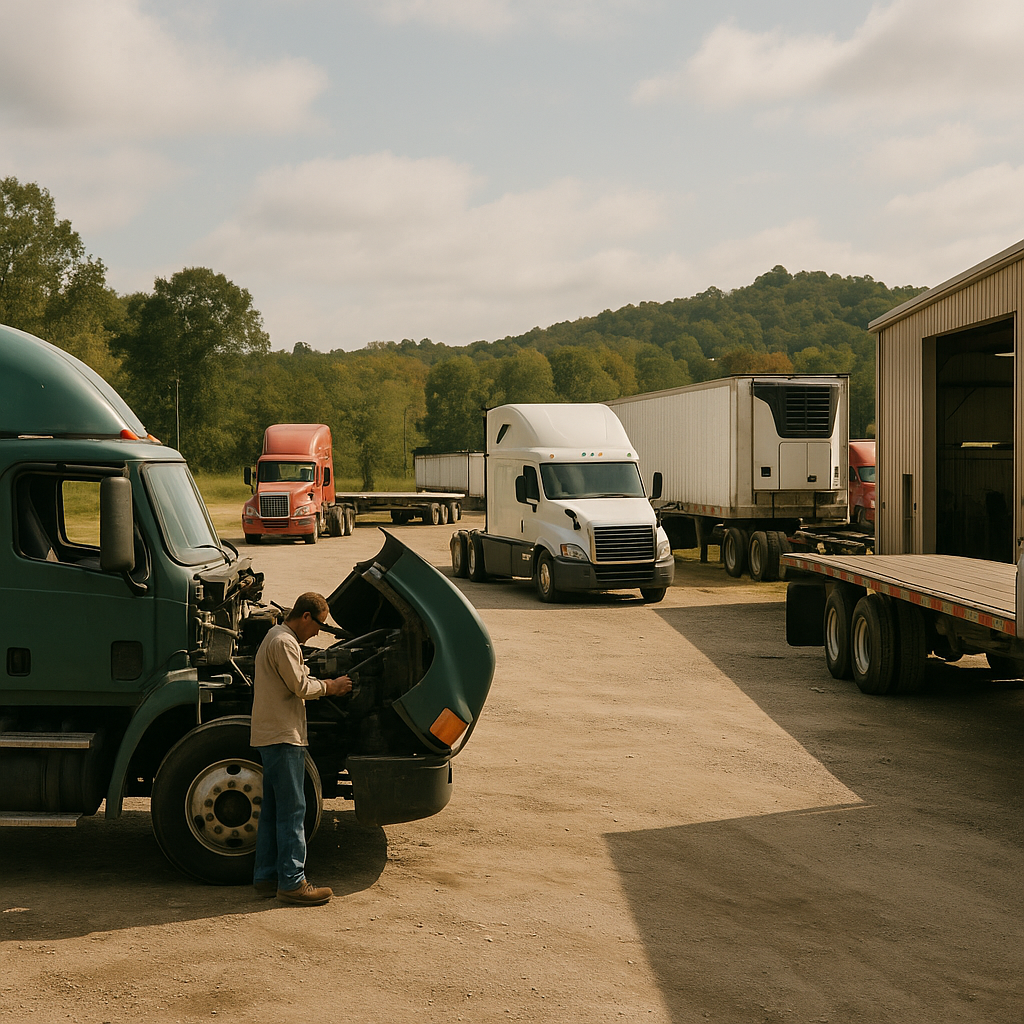

If you haul refrigerated freight in Mississippi, reefer trucking insurance isn’t just "regular truck insurance with a cold trailer." It usually means a mix of commercial trucking insurance coverages that protect your truck, your liability, the freight, and the extra risk that comes with temperature-sensitive loads.
What reefer trucking insurance covers#
Reefer trucking insurance in Mississippi usually means commercial trucking coverage built around refrigerated freight operations. In plain English, it helps protect a trucker hauling temperature-controlled loads from the liability, cargo, equipment, and spoilage risks that come with reefer work. The exact package depends on what you haul, how you run, and whether you’re an owner-operator or a small fleet.
Reefer trucking insurance is commercial trucking coverage for operations hauling refrigerated or temperature-sensitive freight.
Cargo damage vs. refrigeration breakdown#
Motor truck cargo insurance is coverage for the freight you’re hauling while it’s in your care, custody, and control. That’s different from refrigeration breakdown coverage, which is protection for cargo spoilage tied to failure of the reefer unit or temperature-control equipment.
That distinction matters because a load can look fine from the outside and still be a total loss. If the reefer unit fails, the temperature drifts, or the freight gets rejected for spoilage, a basic cargo form may not respond unless the right reefer protection is included.
A lot of Mississippi truckers learn this the hard way. They assume "cargo is cargo," then find out a temperature loss, contamination issue, or delay-related spoilage wasn’t covered the way they thought.
Core coverages in a reefer policy#
Auto liability is the coverage that pays for injury or property damage you cause to other people in a crash. Physical damage coverage protects your truck or trailer against direct damage, usually through collision and comprehensive or fire-and-theft-type protection. General liability covers certain business-related third-party claims that don’t come from a road accident.
For many reefer operators, the core review includes:
- Auto liability
- Motor truck cargo
- Physical damage for the tractor and possibly trailer
- Refrigeration breakdown coverage
- General liability, if the operation needs it
Some owner-operators also look at non-trucking liability, often called bobtail in everyday conversation, for non-business driving. Non-trucking liability covers non-business use only, not paid hauling.
Who should pay attention to this coverage#
Owner-operator means a trucker who owns and runs their own truck, either under their own authority or leased on. Small fleet usually means a business running a handful of trucks under one operation.
If you haul produce, dairy, frozen foods, pharmaceuticals, or other temperature-sensitive freight in Mississippi, this coverage deserves close attention. Reefer work creates cargo risks that dry van operators may never deal with, and small wording differences in a policy can decide whether a spoiled load is covered.
If you’re staring at quotes that all say "cargo" but none clearly explain reefer losses,

Mississippi trucking insurance rules and FMCSA requirements#
Mississippi trucking insurance rules do not replace federal rules for interstate motor carriers. If you operate in interstate commerce, FMCSA financial responsibility rules control the liability minimums, and those minimums depend on carrier type, vehicle weight, and cargo, not just the fact that you pull a reefer trailer.
What Mississippi does and does not set#
Mississippi can have its own insurance rules for intrastate operations, registration issues, and state-level enforcement. But if you’re a for-hire motor carrier crossing state lines, Mississippi isn’t the final word on your liability requirements.
That’s where truckers get tripped up. They hear a state minimum number, assume that’s enough, then apply it to a commercial operation that falls under federal rules instead.
When FMCSA requirements apply#
FMCSA is the Federal Motor Carrier Safety Administration, the federal agency that regulates commercial motor carriers. A USDOT number identifies a carrier in the federal safety system. An MC number is operating authority for certain for-hire interstate carriers.
Under FMCSA rules and 49 CFR Part 387, for-hire interstate carriers hauling general freight in vehicles over 10,001 lbs must carry at least $750,000 in public liability. Other operations can require different amounts. For example, auto haulers and hazmat carriers face different minimums.
An MCS-90 is a federal endorsement tied to motor carrier financial responsibility filings. It isn’t the same thing as broad cargo or physical damage protection.
Why state minimums are not the whole answer#
Your state minimum isn’t your federal minimum. If you run interstate reefer freight, FMCSA rules can override the number you were told by another driver, a DMV counter, or a personal auto agent.
Personal auto insurance also isn’t commercial trucking insurance. A personal policy is built for private driving, not for-hire freight hauling, cargo exposure, or federal filings. That’s one of the most common and expensive misunderstandings in trucking.
The reefer part doesn’t automatically change your federal liability minimum by itself. What matters is whether you’re for-hire or private, interstate or intrastate, over the weight threshold, and what commodity you’re hauling.
How reefer freight changes your coverage needs#
Reefer freight changes your coverage needs because the main loss isn’t always a wreck. Temperature-sensitive cargo can be rejected from spoilage, contamination, or temperature deviation even when the trailer arrives upright and the freight looks untouched.
High-risk cargo and temperature sensitivity#
A reefer load can fail in ways dry freight doesn’t. The unit can stop running, the set point can be wrong, airflow can be blocked, or detention can leave a load sitting too long. The result may be a full cargo claim even without visible damage.
That matters more on longer routes, tighter appointment windows, and freight with strict shipper specs. Produce, frozen foods, dairy, and some medical loads can come with less room for error than general freight.
Common gaps in refrigerated hauling#
A cargo policy may cover theft, collision-related loss, or certain named causes of loss, but not every reefer-specific problem. If the policy doesn’t include the right refrigeration breakdown protection or if exclusions are too tight, you can still be exposed.
Common trouble spots include:
- Spoilage from reefer unit failure
- Temperature deviation disputes
- Contamination allegations
- Claims tied to delay or detention
- Mismatched cargo limits for higher-value loads
This is where buyers get sold the wrong policy. Two quotes can both say "cargo coverage" while one handles reefer losses much better than the other.
Choosing limits based on the freight you haul#
Your cargo limit should match the loads you actually pull, not the loads you wish you pulled or the cheapest quote available. If your freight value regularly runs higher than your cargo limit, you’re taking on a gap every trip.
Route length matters too. Longer lanes create more time for a reefer unit problem, a delay, or a claim dispute. An owner-operator with one truck may need a simpler structure than a small fleet, but the basic question is the same: does the policy match the freight, the lanes, and the way the business runs?
What drives reefer trucking insurance cost in Mississippi#
Reefer trucking insurance in Mississippi doesn’t come with one standard price because the premium depends on your operation. The biggest drivers are usually your driving history, claims record, cargo type, radius, equipment value, and how much reefer-specific protection the policy includes.
Driver and loss-history factors#
Insurance companies look closely at who’s driving and how the operation has performed. A cleaner record generally gives you more options, while violations, recent claims, gaps in prior insurance, or an inexperienced setup can narrow them.
For small fleets, underwriter attention usually goes beyond one driver. They want to understand who drives each truck, how drivers are screened, and whether prior losses point to a bigger operating issue.
Vehicle, trailer, and equipment factors#
The truck, trailer, and reefer unit all affect cost. Higher equipment values can mean higher physical damage premiums, and a refrigerated setup adds moving parts that don’t exist on a basic dry van account.
That also answers part of the common question about reefer trailer cost. Insuring a reefer trailer is not the same thing as pricing your whole commercial trucking policy. The trailer itself may be scheduled for physical damage or related trailer protection, while the broader policy may also include auto liability, cargo, and refrigeration-related coverage.
Cargo, radius, and route factors#
What you haul often matters more than your Mississippi mailing address. Higher-value freight, stricter temperature requirements, longer routes, and more complicated delivery patterns usually create more underwriting scrutiny.
Mississippi location can still affect quoting because garaging, theft patterns, storm exposure, and legal environment all matter. But in practice, the bigger question is how the truck is used day to day.
If you’re comparing two numbers without checking cargo type, radius, or reefer terms, you’re not really comparing the same policy. That’s how truckers end up buying a quote that looks cheaper until the first spoiled-load claim. If you want help sorting that out,
Core coverages to review before you buy#
Most Mississippi reefer operators should review liability, cargo, physical damage, and reefer-specific protection before buying or renewing a policy. The key is separating what protects other people, what protects the freight, and what protects your truck, trailer, and refrigeration equipment.
Auto liability and cargo#
Auto liability protects the public if your truck causes bodily injury or property damage. That’s the coverage tied most directly to state and FMCSA financial responsibility rules.
Motor truck cargo protects the freight you’re hauling, but only within the terms of the policy. For reefer operators, that’s where you need to confirm cargo limits, exclusions, and whether temperature-related losses are actually addressed.
Physical damage and reefer breakdown#
Physical damage coverage protects the truck and, when scheduled, the trailer from direct loss such as collision or comprehensive-type events. It does not automatically mean spoiled cargo is covered.
Refrigeration breakdown coverage is what addresses spoilage tied to failure of the reefer unit or temperature-control system, subject to policy terms. That’s the piece many buyers assume is included when it isn’t.
Optional coverages to consider#
Not every operation needs the same package. A leased-on owner-operator may need a different setup than a small fleet running under its own authority.
Depending on the operation, coverages to review may include:
- General liability
- Non-trucking liability for non-business use
- Trailer-focused protection if you don’t own every trailer you pull
- Higher cargo limits for higher-value refrigerated loads
The right package depends on your authority, your contracts, your lanes, and your freight profile.
How to compare quotes without buying the wrong policy#
The right way to compare reefer trucking insurance quotes is to compare the actual protection, not just the premium. Check cargo limits, reefer breakdown terms, deductibles, exclusions, and how each quote describes your operation, because two quotes that look similar on price can protect very different risks.
Questions to ask an agent#
Ask plain questions and make them answer in plain language. Does the cargo form address temperature spoilage? What triggers reefer breakdown coverage? Are delay, contamination, or unattended-unit situations excluded? What deductibles apply to truck damage versus cargo damage?
Also ask whether the quote matches your real operation. If you run longer lanes, haul produce one month and frozen food the next, or switch between leased-on and your own authority, that needs to be reflected.
Red flags in quote comparisons#
Be careful when a quote looks thin on details. If reefer protection isn’t clearly listed, don’t assume it’s there.
Other red flags include:
- Cargo limits lower than your usual load value
- Vague wording around refrigeration breakdown
- Missing trailer or equipment values
- Wrong operating radius
- A policy built like personal or non-commercial auto coverage
How to match the policy to the operation#
A good quote fits the way you actually run. That means the right authority setup, the right cargo description, the right territory, and the right reefer terms for your freight.
This is where overbuying and underbuying both happen. Some truckers pay for coverages they don’t need. Others save a little up front and leave a major spoilage gap open.
How to get a Mississippi reefer insurance quote#
Getting a Mississippi reefer insurance quote goes faster when you have the main operation details ready. Most agents will want your USDOT and MC information if applicable, cargo type, operating radius, equipment values, driver information, and prior insurance history so they can tell whether your operation fits standard reefer coverage or needs special handling.
Information to have ready#
Start with the basics:
- USDOT and MC details, if you operate under authority
- Tractor, trailer, and reefer unit values
- Cargo types and typical load values
- Radius and states traveled
- Driver records
- Prior claims and prior insurance history
You can also verify carrier and authority status on SAFER, which helps confirm the compliance picture before a policy is bound.
What an agent will usually review#
A good quote process should feel like decision support, not a sales script. The point is to line up the policy with the operation and catch gaps before they become claim problems.
An agent will usually review whether you’re interstate or intrastate, for-hire or private, what freight you haul, and whether reefer breakdown protection needs closer attention than a standard cargo setup provides.
When to ask follow-up questions#
Ask follow-up questions any time the quote leaves room for guessing. If the load values change seasonally, if your routes are getting longer, or if you’re adding another truck, bring it up before binding coverage.
FAQ#
How much does it cost to insure a reefer trailer?
The cost to insure a reefer trailer depends on what part you’re talking about. If you mean the trailer itself, pricing usually depends on the trailer’s value, the reefer unit, where and how it’s used, and whether you’re adding physical damage or other trailer-related protection. If you mean the full reefer trucking policy, the price also depends on liability, cargo, route radius, driver history, and claims history. That’s why there’s no useful one-size-fits-all number. A reefer trailer on a broader commercial trucking policy is priced as part of the whole operation, not as a standalone guess.
How much is commercial truck insurance in Mississippi?
Commercial truck insurance in Mississippi varies by operation, so a flat number won’t tell you much. The biggest pricing factors are your driving record, years in business, prior insurance, claims history, operating radius, equipment value, cargo type, and whether you need reefer-specific protection for temperature-sensitive freight. Mississippi location can influence quoting, but it’s usually not the main driver by itself. A one-truck owner-operator hauling refrigerated produce under interstate authority is a different risk than a local private carrier with shorter routes. Your actual premium depends on your operation, cargo, radius, driving history, and other factors.
What is reefer insurance coverage?
Reefer insurance coverage usually means insurance built for refrigerated freight operations. In practice, that often includes motor truck cargo coverage for the freight, refrigeration breakdown protection for spoilage caused by reefer unit failure, and other trucking coverages like auto liability and physical damage. The important point is that cargo coverage and reefer breakdown coverage are not the same thing. One protects the hauled goods under certain causes of loss, while the other addresses temperature-related spoilage tied to the refrigeration equipment. If you haul perishable or temperature-controlled loads, you need both concepts reviewed carefully.
What is the cheapest state for commercial trucking insurance?
There isn’t a reliable single "cheapest state" for commercial trucking insurance because state location is only one part of pricing. Underwriters usually care more about your authority type, cargo, route radius, garaging, driver record, loss history, and coverage structure than a simple state ranking. A truck based in one state can still run expensive long-haul lanes or haul high-risk freight, while a truck based somewhere else may run a much simpler operation. For reefer truckers especially, the type of refrigerated freight and the policy’s treatment of spoilage risk often matter more than chasing a supposed cheap state.
Do I need separate reefer breakdown coverage if I already have cargo insurance?
Often, yes, or at least you need to confirm exactly how the cargo form handles temperature loss. Cargo insurance may protect the freight, but it does not automatically mean spoilage from reefer unit failure is covered the way you expect. Some policies require specific refrigeration breakdown wording or endorsements to address those losses. That’s why reefer operators should never stop at "I have cargo." The real question is whether the policy covers temperature deviation, unit failure, and related spoilage scenarios for the freight they actually haul.





