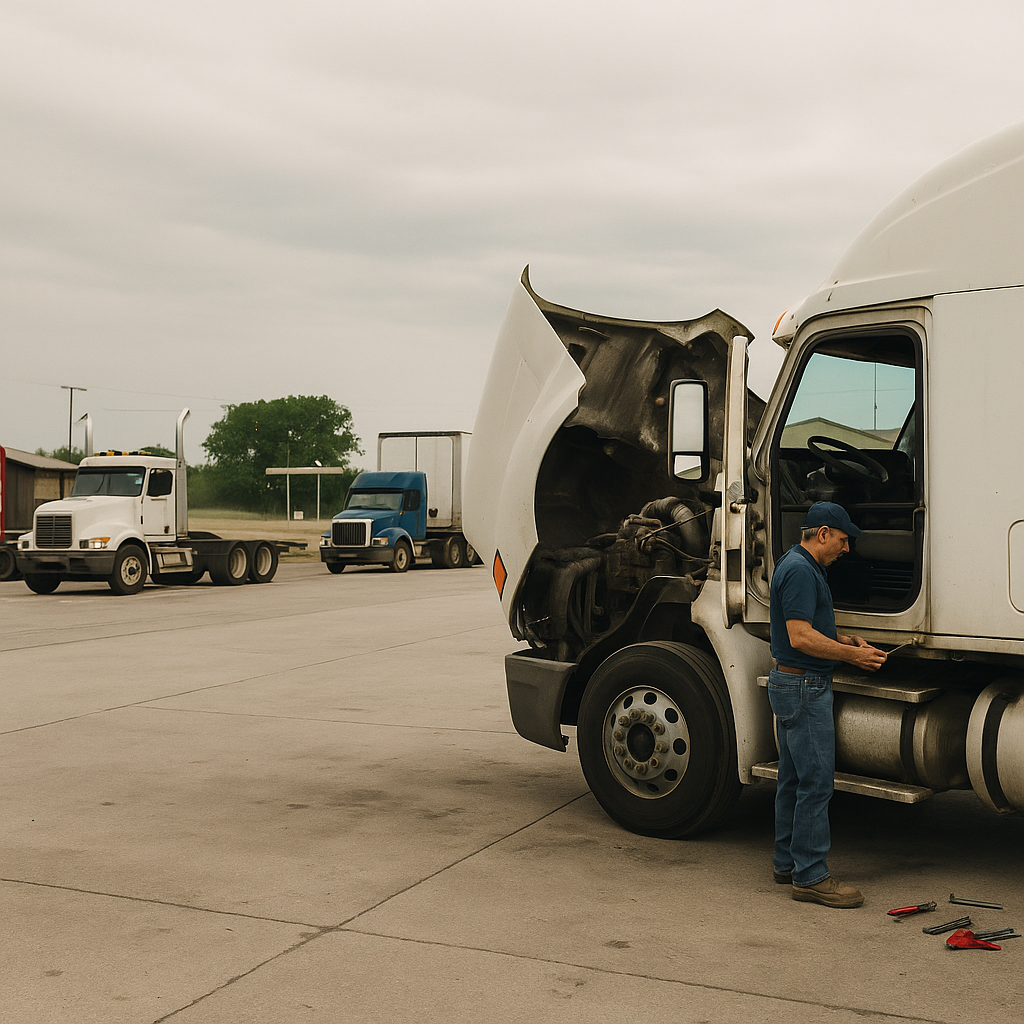

If you searched semi truck how to start, you might mean two different things: how to start and move the truck itself, or how to start a trucking business. Both matter, and mixing them up is where beginners get lost. This guide separates the cab steps from the business steps so you can handle each one the right way.
👉 Prefer watching a quick video about semi truck insurance?
Watch the video below for a quick overview of semi truck insurance rules, how much it costs, and practical ways to save. Or give us a call: (704) 290-3630
Start by Clarifying What You Mean by “Start”#
Most people searching this phrase mean one of two things: starting the engine and moving a tractor-trailer, or starting a trucking business as an owner-operator. They are separate jobs. The first is a driving routine; the second is a compliance and business setup process.
Starting the engine and moving the truck#
A tractor-trailer is the truck and trailer combination used to haul freight. If your question is about the truck itself, the safest path is simple: check the truck first, start it while watching the gauges, learn the controls, then move it slowly and deliberately.
That sounds basic, but that’s the point. Beginners usually don’t need more theory. They need a clean order of operations they can repeat every time.
Starting a trucking business#
An owner-operator is a driver who owns or leases the truck and runs the business side of the operation. If this is what you mean, your first steps depend on what kind of carrier you are, what freight you haul, and whether you run interstate or intrastate.
Interstate means crossing state lines or hauling freight tied to interstate commerce. Intrastate means operating only within one state’s rules. That difference affects authority, filings, and insurance, so this guide covers the cab steps first and the business path after that.
Step 1 – Check the Truck Before You Start It#
Before you touch the key or starter, do a quick pre-start inspection. Look for anything obviously unsafe, make sure the truck is secured, and get the cab set up for you. A short check now can prevent damage, delays, or a bad surprise once the engine is running.
Walk-around basics#
Start outside. Look under the truck for leaks, check tires for obvious low pressure or damage, and scan for anything loose, broken, or out of place.
Check the area around the truck too. Make sure no one is walking near it, no equipment is in the way, and the trailer area is clear if one is attached.
You don’t need to turn this into a full roadside inspection every time you start the truck in the yard. But you do need to catch the obvious stuff before you commit to moving thousands of pounds of equipment.
Parking brake and wheel chocks#
A parking brake is the brake system that holds the truck in place when it’s parked. Make sure it’s set before you climb in and before you start working through the cab.
Wheel chocks are blocks placed against the tires to help keep the vehicle from rolling. Use them when appropriate for the surface, slope, or work situation around the truck.
The habit matters because beginners sometimes trust the truck too quickly. Secure first, then start. Not the other way around.
Cab readiness#
Once you’re inside, adjust the seat, mirrors, and steering position if needed. You want to reach the pedals comfortably and see clearly before the engine starts.
Make sure you know where the brake controls, gear selector, lights, and other basic switches are. If something feels unfamiliar now, it won’t feel better once the truck is idling and you’re under pressure to move.

Step 2 – Start the Engine the Right Way#
Start the engine only when you’re seated, ready, and able to control the truck if something doesn’t look right. As soon as it starts, check the gauges and warning lights. Then let the truck stabilize instead of rushing straight into gear.
Ignition and startup sequence#
Sit down fully, make sure the truck is secured, and confirm the transmission is in the proper position for startup. Then use the key or start switch according to the truck’s normal procedure.
Don’t lean in from outside the seat or try to multitask while starting it. You want both your attention and your body in the right place in case the truck gives you a warning or moves unexpectedly.
Oil pressure and warning lights#
Right after startup, watch the gauges. You want to see the truck building normal oil pressure and you want warning lights to behave the way they should for that truck.
If a warning light stays on or a gauge looks wrong, don’t treat that like a minor inconvenience. Stop and figure out what the truck is telling you before you move.
This is where beginners often get into trouble. They hear the engine come alive and assume that means everything is fine. It doesn’t. A running engine is not the same thing as a ready truck.
Idle and warm-up basics#
Modern trucks usually don’t need long idling just to “warm up” before every move. In many cases, once the truck is stable and readings look normal, gentle operation does more for warm-up than sitting still too long.
Cold weather changes things, and manufacturer guidance still matters. So does the truck’s condition. Keep it simple: don’t rush a cold truck, but don’t assume a long idle is always the right answer either.
Step 3 – Learn the Controls Before You Roll#
Before you move even a few feet, know what each main control does and how the truck responds. That matters even more in a manual. A few minutes of control awareness is cheaper than one bad pull-away or one tight turn into a curb.
Steering, pedals, and clutch#
The steering wheel controls direction, the accelerator adds power, and the brake pedal slows or stops the truck. In a manual, the clutch is the pedal that connects and disconnects engine power from the drivetrain so you can start moving and change gears.
The parking brake needs to feel familiar too. You don’t want to be hunting for it after the truck starts rolling.
Manual transmission basics#
A manual transmission is a transmission where the driver selects the gear instead of the truck doing it automatically. In plain language, you choose the gear and the clutch helps manage the handoff between engine power and the wheels.
That handoff is where beginners get jerky starts, stalls, or too much throttle. Smooth clutch use matters because the truck is heavy, the drivetrain responds differently than a car, and bad habits show up fast.
Shifting and gear control#
The gear selector tells the truck what gear you want. In a manual, that means you are actively controlling what gear the transmission is in, not just steering and pressing the gas.
Some beginners learn double clutching, where you use the clutch in a deliberate sequence while changing gears. Whether your training truck requires that technique or you’re in an automatic, the lesson is the same: understand how the truck responds before you take it into traffic.
Practice low-speed control first. Straight starts, slow stops, and short controlled movements teach more than trying to “drive normally” too soon.
Step 4 – Move the Truck Safely#
To move the truck safely, confirm the area is clear, select the right gear, release the parking brake, and ease into motion. Keep the first movement slow and controlled. A semi-truck needs more room than a car, especially when stopping, backing, or turning.
Release brakes and select gear#
Before moving, check mirrors and look around the truck’s path again. Then select the proper gear for a smooth start.
Release the parking brake only when you’re fully ready to roll. Beginners sometimes let the truck get ahead of them here by releasing too early, adding too much throttle, or trying to correct both problems at once.
Slow pull-away#
Ease into motion. You are not trying to impress anybody with a smooth launch on the first try. You’re trying to keep the truck controlled, straight, and predictable.
If the truck feels wrong, stop early. That’s better than forcing a bad start into a worse one.
If you’re not sure whether your startup routine, control setup, or insurance plan fits your operation,
Stopping and turning basics#
Stopping should be smooth and planned. Brake early, settle the truck, and once you’re parked, secure it before getting out.
Turning a semi-truck takes more space and more patience than turning a car. Go slower, watch your mirrors, and expect the trailer to track differently than the tractor. Tight yards and intersections are where rushed beginners clip curbs, posts, or trailers.
Step 5 – Know Cool-Down and Shut-Down Habits#
After driving, park the truck safely, secure it, and shut it down based on conditions instead of guessing at a fixed idle time. Cool-down depends on the truck, the load, and how hard it was working. Safe parking now also makes the next startup easier and safer.
After driving#
When you stop a tractor-trailer, choose level ground if possible. Bring it to a controlled stop and make sure it’s secure before you do anything else.
Don’t jump straight from stopping to exiting. Give yourself a short pause to verify the truck is stable and where you expect it to be.
Parking and securing the truck#
Set the parking brake and follow your normal securement habits before leaving the seat. If conditions call for it, use wheel chocks.
This is one of those habits that seems repetitive until the day it prevents a roll or a close call. Secure trucks save headaches.
Engine cool-down timing#
There isn’t one universal cool-down time that fits every tractor-trailer. Follow manufacturer guidance and use common sense based on weather, grade, load, and how hard the truck was just working.
That’s different from an emergency shutdown. If something is seriously wrong, protect people first and respond to the situation. Routine shutdown and emergency shutdown are not the same thing.
Step 6 – If You Mean Starting a Trucking Business, Verify the Real First Steps#
Starting a trucking business is not the same as learning to start the truck. First decide what kind of operation you want, what freight you’ll haul, and where you’ll run. Then line up the right authority, filings, and insurance for that exact operation.
Owner-operator vs company driver#
A company driver drives for a carrier that handles the business side. If you want to own the operation yourself, you’re stepping into the owner-operator path instead.
That means you’re not just learning how to drive. You’re deciding what lanes you want, what equipment you can handle, and whether you want the responsibility of authority, filings, and coverage in your own name.
Authority and filing basics#
A USDOT number is an identifier used by FMCSA for safety and regulatory tracking. An MC number is operating authority used for certain for-hire interstate operations.
FMCSA explains federal registration and operating requirements at FMCSA. After setup, you can verify basic carrier status and details through SAFER.
If you’re running for-hire interstate, federal financial responsibility rules can apply under 49 CFR Part 387 on eCFR. That’s where people get tripped up: state minimums and federal requirements are not the same thing.
Insurance and compliance#
Commercial auto liability is trucking liability coverage tied to the truck’s business use, not a personal car policy. The NAIC is a good plain-language source for how commercial insurance differs from personal auto.
Under 49 CFR Part 387, for-hire interstate carriers hauling general freight in vehicles over 10,001 pounds must carry at least $750,000 in public liability. But that is not a universal trucking rule. Requirements vary by carrier type, vehicle weight, cargo, and whether you operate interstate or intrastate.
You may also need other coverages depending on your contracts and freight, like commercial auto liability, motor truck cargo coverage, physical damage coverage, and general liability for truckers. Personal auto insurance is not the same thing as a trucking policy, and your actual premium depends on your operation, cargo, radius, driving history, and other factors.
Step 7 – Avoid Beginner Mistakes That Cause Delays or Damage#
Most beginner mistakes come from rushing, assuming the truck behaves like a car, or skipping the same boring steps that keep the day under control. A simple repeatable routine prevents most of them. Think: check, start, verify, move, park, secure.
Rushing the startup sequence#
Starting before checking the truck is a common mistake. So is firing it up and immediately focusing on motion instead of gauges, air, warnings, and surroundings.
Slow is fine here. Fast is expensive.
Forgetting parking brakes#
Another common error is releasing the parking brake before you’re fully ready. That can create a chain reaction: truck rolls, driver panics, throttle gets jabbed, and now a small mistake turns into a real problem.
Make brake release the last step before movement, not an early one.
Confusing car habits with truck habits#
Cars forgive bad timing, sharp turns, and last-second corrections more than a semi-truck does. A tractor-trailer needs room, patience, and cleaner planning.
That’s especially true in yards, fuel islands, docks, and tight intersections. If it feels slow, you’re probably doing it right.
Step 8 – Build Confidence With a Simple Repeatable Routine#
The best way to build confidence is to use the same startup and movement routine every time. Repetition reduces nerves, catches mistakes early, and makes the truck feel more predictable. Safe drivers rely on habits, not guesswork.
Morning startup routine#
Use a simple sequence you can memorize: outside check, secure the truck, set yourself in the seat, start the engine, verify gauges, confirm the path is clear, select gear, release the brake, and move slowly.
That routine works because it keeps each task in order. You’re never asking yourself, “What did I forget?”
Practice in a safe area#
Practice first moves in a low-pressure area before dealing with traffic. Focus on starts, stops, mirror use, and slow turns.
You don’t need a complicated drill. You need controlled repetition until the truck stops feeling foreign.
When to get help#
Ask for help when controls are unclear, warning lights don’t make sense, shifting feels wrong, or you aren’t sure what business setup applies to your operation. Guessing is how beginners turn a small knowledge gap into equipment damage or compliance trouble.
FAQ#
How to properly start a semi-truck?
To properly start a semi-truck, begin with a quick inspection before touching the ignition. Check for leaks, tire problems, and anything unsafe around the truck, then make sure the parking brake is set and the cab is adjusted for you. Once seated, start the engine, watch the gauges and warning lights, and wait for the truck to stabilize. Before moving, confirm the area is clear, select the correct gear, and release the parking brake only when you’re ready. Then pull away slowly and stay smooth on the controls.
What are the steps to start a semi-truck business?
The main steps to start a semi-truck business are deciding what kind of operation you want, what freight you’ll haul, and whether you’ll run interstate or intrastate. From there, confirm whether you need a USDOT number, an MC number, and other filings tied to your operating authority. Then line up insurance that matches your operation instead of assuming state minimums cover federal requirements. After setup, verify your status through official sources like FMCSA and SAFER. The exact requirements depend on carrier type, vehicle weight, cargo, and operating scope.
How to start a truck step by step?
If you mean the vehicle itself, the step-by-step process is straightforward: inspect the truck, secure it, adjust the cab, start the engine, verify gauges and warning lights, and let it stabilize. Then check your surroundings, choose the proper gear, release the parking brake, and move off slowly. After your move, stop smoothly, park on level ground if possible, set the brakes, and secure the truck before exiting. If you mean starting a trucking business, the steps are different and involve authority, filings, insurance, and compliance.
How do you turn a semi-truck?
To turn a semi-truck, slow down early, give yourself more space than you think you’ll need, and watch your mirrors through the entire turn. The tractor and trailer do not follow the same path the way a car does, so tight turns can cause the trailer to track inward and hit curbs, signs, or other equipment. Positioning matters, but so does patience. Avoid sharp last-second steering inputs and don’t rush the turn because traffic behind you feels impatient. A clean slow turn beats a fast ugly one every time.