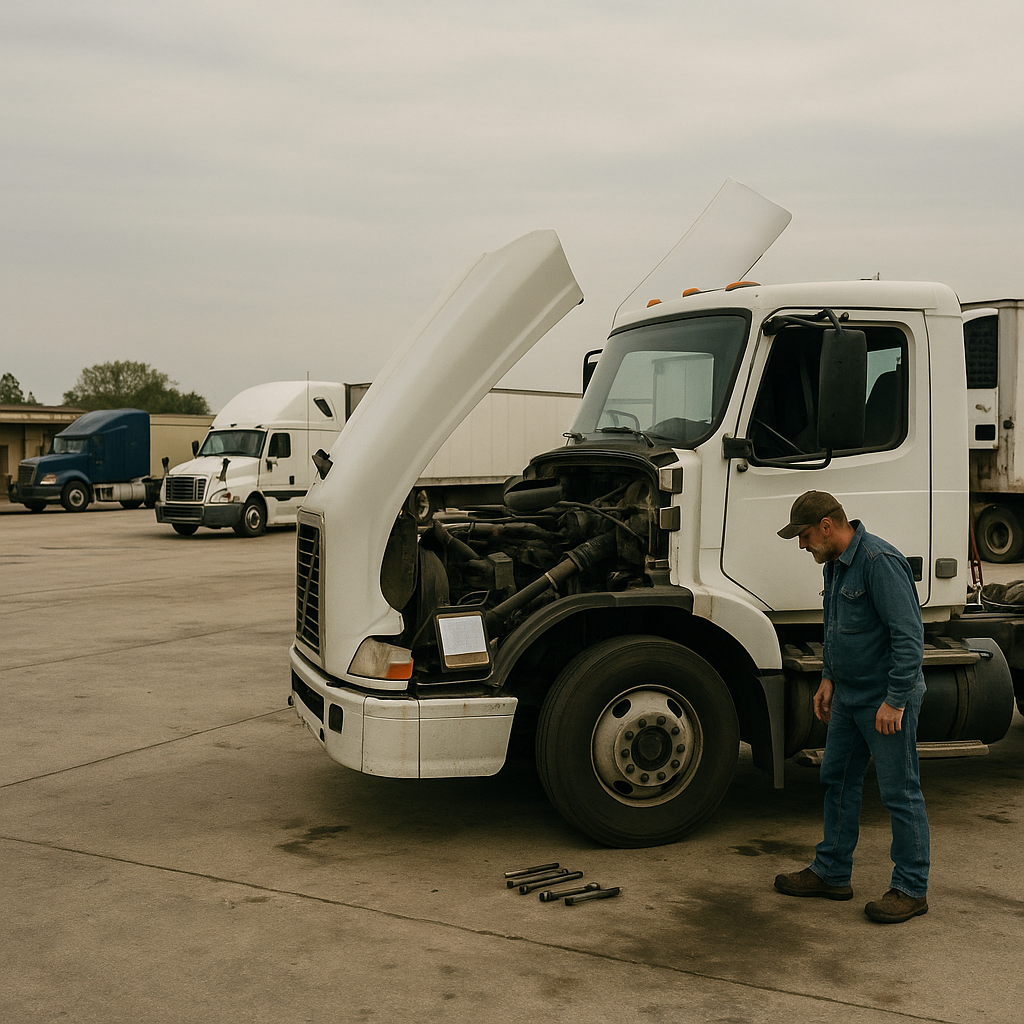
A stolen truck insurance claim usually falls under comprehensive coverage, not liability-only coverage. That one detail decides whether the truck itself may be covered at all. For owner-operators and small fleets, the bigger problem is that theft can shut down revenue fast while you sort out police reports, claim documents, lender paperwork, and replacement plans.
This guide breaks down what comprehensive coverage may pay for, what proof insurers usually want, how recovery changes the claim, and where commercial trucking claims differ from ordinary car-insurance advice.
What a stolen truck claim can pay for#
A stolen truck insurance claim may pay for the truck if your policy includes comprehensive coverage, which is the part of physical damage insurance that generally responds to non-collision losses like theft. Liability-only coverage usually does not pay for your own stolen truck. What gets paid depends on the policy, the deductible, the truck’s value, and what property was actually insured.
Comprehensive coverage vs. liability-only#
Comprehensive coverage is insurance for certain non-collision damage or loss, including theft, subject to the policy terms. Liability-only means coverage that pays for damage or injury you cause to others, not for loss to your own truck.
That distinction matters because many truckers focus on operating requirements and miss the property-damage side of the policy. Under FMCSA rules and 49 CFR Part 387, federal financial responsibility requirements deal with public liability for certain motor carriers, not whether your own tractor is covered for theft.
So if you carry only the liability needed for your operation, that may satisfy a legal or contract requirement without helping on a stolen truck insurance claim. Compliance and theft protection are two different questions.
What a payout usually covers#
Actual cash value (ACV) is the truck’s value at the time of loss, after age, condition, mileage, and market factors are considered. A deductible is the amount you absorb before insurance pays the covered balance.
If the theft is covered, the insurer usually looks at the truck’s ACV under the policy, subtracts the deductible, and then accounts for any lien. A lien is a lender’s legal interest in the truck until the loan is paid off.
The trailer, cargo, and attached equipment may be separate issues. Cargo often falls under motor truck cargo coverage, not the tractor’s comprehensive claim.
Truck-specific gaps to watch#
Commercial truck claims get messy when the missing property includes more than the truck itself. The tractor may be insured one way, the trailer another way, and the load another way.
Common gaps show up with:
- liability-only physical damage setups
- leased or financed trucks with lender requirements
- tools, chains, tarps, electronics, and personal gear
- aftermarket equipment not clearly listed or documented
- trailers you don’t own
That’s where owner-operators get burned. They assume “full coverage” means everything on and around the truck is covered, then find out the claim is narrower than expected. If you’re not sure how your physical damage, cargo, trailer, or equipment coverage fits together,
Step 1 – Report the theft and start the paper trail#
If your truck is stolen, report it to police first, then notify your insurer as soon as you can and start gathering proof. The fastest way to help your claim is to lock down the timeline: where the truck was, when you last saw it, who had access, and what records support that story. Good documentation matters from day one.
Call police and get the report number#
Start with law enforcement in the jurisdiction where the truck disappeared. Get the report number, the officer’s name if available, and the date and time the theft was reported.
The NAIC generally advises policyholders to report losses promptly and cooperate with claim handling. In a truck theft, that means the police report becomes one of the anchors of the file.
Be ready to give basics like the VIN, unit number, plate, USDOT or company name if relevant, where the truck was parked, and whether a trailer was attached. If you have tracking or telematics, tell police that too.
Notify your insurer quickly#
After the police report is started, notify the insurer or claims line. Don’t wait until you’ve gathered every last document.
An adjuster is the claim professional assigned to investigate coverage, facts, and value. The adjuster will usually ask when the truck was last seen, who last drove it, where the keys were, whether there were signs of forced entry, and whether any GPS, ELD, or dashcam data exists.
Quick notice doesn’t guarantee a faster payout, but late notice can create avoidable friction. Theft claims already take more scrutiny than a simple fender-bender.
Document everything you can#
Build the timeline while details are fresh. Save photos of the truck, parking location, broken locks or glass if there’s evidence left behind, messages with drivers, dispatch notes, and any device pings.
Useful records often include:
- police report number and contact info
- timestamps for last confirmed location
- GPS, ELD, telematics, or tracking screenshots
- key inventory and who had access
- photos of the truck and attached equipment
- recent maintenance or repair receipts
- lease, loan, or dispatch records showing use and custody
For commercial trucks, insurers may also want proof the vehicle was secured and evidence of normal business use. That can mean gate logs, yard camera footage, fuel receipts, or driver logs.
What proof insurers usually ask for#
Insurers usually ask for proof of ownership, policy details, a police report, theft facts, and any records that help verify the truck’s condition and value before the loss. If there’s a loan or lease, they also need lender or lessor information. Claims involving tools, cargo, or added equipment usually need extra proof.
Ownership and policy records#
Start with the basics: title if available, registration, VIN, policy number, and named insured information. If the truck is leased on or operating under a carrier arrangement, make sure the ownership and operating relationship are clear.
For commercial units, it can help if the records line up cleanly across registration, insurance, and operating documents. If ownership or operating identity is unclear, that can slow things down.
If needed, carrier status and operating identity can be checked on SAFER, which is FMCSA’s public system for motor carrier and USDOT information. That does not decide coverage, but it can help verify business details in the claim file.
Theft evidence and loss details#
The insurer will usually ask how the theft happened, when the truck was last seen, and what evidence supports the timeline. That may include key records, lot or yard details, camera footage, toll records, fuel stops, or telematics data.
Photos matter even if they were taken before the theft. They can help establish condition, tires, installed accessories, and existing damage.
If you’re claiming missing extras, expect more questions. A theft claim for the truck itself is one thing. A claim that also includes tools, custom headache racks, electronics, chains, or tarps needs item-by-item support.
Loan or lease paperwork#
If the truck has an open balance, the lender usually has to be involved because of the lien. If it’s leased, the lessor may also have rights under the contract and policy.
That affects who gets paid and in what order. If the covered payout is less than what you still owe, you may still be responsible for the difference unless another product or contract provision addresses it.
How stolen truck claims are investigated and paid#
A stolen truck claim is usually investigated by confirming coverage, ownership, theft facts, condition, and value before any settlement is finalized. The insurer then applies the policy terms, including any deductible and lender interest. If the truck is recovered, the claim may shift from a total theft loss to a damage claim or a partial loss.
What adjusters verify#
Underwriting is the insurer’s process for evaluating and pricing risk before and during renewal, while claim investigation focuses on what happened in this specific loss. In a theft claim, the adjuster is usually trying to answer a few basic questions: Was the truck insured for theft, did the loss happen as reported, who had access, and what was the truck worth?
That’s why they may ask for keys, access records, GPS data, service records, prior photos, and finance paperwork. They may also compare statements, timestamps, and known truck location data.
Commercial truck claims can involve more moving parts than car claims. There may be a named insured, a driver, a motor carrier, a lender, and a trailer owner all tied to the same file.

How payout amounts are set#
If the claim is covered, settlement is often based on ACV, not what you originally paid and not necessarily what you still owe. Condition, mileage, age, installed equipment, and comparable market units all affect the number.
The deductible is then applied. If there’s an active lien, the lender may be paid first or included on the payment.
That’s where financed-truck problems show up. If the loan balance is higher than the covered value, the claim may not wipe out the debt. The insurance settlement and the loan payoff are related, but they aren’t automatically the same amount.
Recovery before or after payment#
Recovery changes everything. If the truck is found before final settlement, the insurer usually inspects it and decides whether repairs, partial payment, or a different claim path applies.
If the truck is found after a total-loss payout, ownership often depends on the policy settlement and transfer paperwork. Salvage is the damaged or recovered property that retains some value after a loss.
In many cases, once the insurer has paid and taken title or salvage rights, the recovered truck belongs to the insurer. If it’s found damaged before payout, the missing parts, break-in damage, wiring damage, and other theft-related repairs may become part of the claim instead of a total theft settlement.
How long a stolen vehicle claim can take#
Stolen vehicle claims often take longer than standard repair claims because the insurer may wait to see if the truck is recovered, verify ownership and value, and resolve lender or paperwork issues. Some claims move quickly, while others take weeks or longer. The biggest drivers are recovery efforts, document quality, and how responsive everyone is.
Why insurers may wait before final payment#
Many theft claims include a waiting period while law enforcement and tracking efforts continue. A truck that turns up quickly may become a repair or damage claim instead of a total-loss settlement.
That’s normal claim handling, not always a sign something is wrong. Theft creates more uncertainty than a visible collision loss.
What slows the process#
The usual delays are missing documents, unclear ownership, conflicting statements, open loan issues, and trouble proving added equipment. Recovery in another state can also slow inspection and release.
For truckers, downtime makes every extra day hurt more. The claim file may be moving, but your business is still parked.
How to keep the claim moving#
Answer requests fast, send clean copies, and keep a simple file with dates, names, and what was submitted. If the adjuster asks for keys, GPS reports, payoff letters, or photos, send them in one organized batch if possible.
If you’re unclear on how your physical damage setup affects a theft claim,
What happens if the truck is recovered#
If the truck is recovered, the outcome depends on when it is found, what condition it is in, and whether the insurer has already settled the total theft loss. Some owners get the truck back after inspection and repairs. In other cases, the insurer keeps the recovered unit after payout because ownership or salvage rights have already transferred.
Recovered before payout#
If police recover the truck before the claim is settled, the insurer usually inspects it first. If there’s little or no damage, the claim may be limited to covered theft-related damage, towing, or related loss items under the policy.
You usually don’t get to skip that inspection step. The insurer still has to confirm condition and coverage.
Recovered after payout#
If the insurer already paid the claim as a total loss, the truck may no longer be yours in practical terms. That usually depends on the settlement documents and whether title or salvage rights were transferred.
This is why truckers ask, “Do I have to take it back?” Often, not if the claim was fully settled and ownership changed. But the exact answer turns on the policy and paperwork.
Damage, missing parts, and salvage#
Recovered trucks are often not recovered clean. Batteries, emissions parts, tires, electronics, and cargo-control gear may be missing. Locks, ignitions, doors, and wiring may be damaged.
If repair costs are high enough, the recovered truck can still end up treated as a total loss. If it retains value after the loss, that remaining value is part of the salvage calculation.
What about personal items, tools, and aftermarket equipment#
The truck itself is often covered differently from personal property, tools, and added equipment. Many policies focus on the scheduled vehicle, not everything sitting inside it. If you want theft protection for extra gear, you usually need clear documentation and sometimes separate coverage or endorsements.
What is often excluded#
Personal items inside the cab are commonly handled differently from the truck. Clothing, luggage, and other non-business property may not be covered under the truck policy at all.
Business tools and removable gear can also be limited unless the policy specifically addresses them. Don’t assume tarps, binders, chains, tablets, dashcams, coolers, or spare parts are automatically covered because they were in the truck.
When endorsements may help#
An endorsement is a policy change that adds, removes, or modifies coverage. Depending on the policy, scheduled equipment or other endorsements may help cover custom parts or permanently attached accessories.
The same issue comes up with trailers and cargo. A stolen trailer may need trailer-specific coverage, and stolen freight is usually a cargo question, not a tractor comprehensive question.
How to document extra gear#
Before a loss happens, build a simple inventory with photos, serial numbers, receipts, and install dates. Keep it backed up somewhere outside the truck.
For custom equipment, photograph it attached to the unit and keep purchase records. That makes it easier to prove both existence and condition later.
How a theft claim can affect your next renewal#
A theft claim can affect renewal because insurers review loss history, operating profile, parking practices, and overall risk when they re-underwrite the account. That does not mean every theft claim makes coverage hard to place, but it can change how carriers look at the risk. For owner-operators, the bigger business issue is often downtime and replacement planning.
Claim history and underwriting#
A theft loss becomes part of your claims history. At renewal, underwriters may look at where the truck was stored, whether anti-theft controls were used, and whether similar losses are common in your operating area.
Financed-truck considerations#
If the claim didn’t fully clear the loan, the theft can leave you dealing with both an insurance file and an unpaid balance. That matters when you need to replace the truck fast.
Downtime and replacement planning#
Most owner-operators can’t sit long waiting for a perfect answer. Replacement timing, lender approval, and the next policy setup all matter right away.
FAQ#
What does insurance do if your truck is stolen?
If your truck is stolen, insurance usually opens a comprehensive claim, investigates the theft, confirms coverage, and reviews the truck’s value before settling. If the policy only has liability coverage, the truck itself usually is not covered for theft. When coverage applies, the insurer may pay based on the truck’s actual cash value, minus the deductible and subject to any lender interest. If the truck is recovered first, the claim may shift to inspection and repair instead of a total-loss payment. The exact outcome depends on the policy terms, documentation, and whether the truck is found.
How to make an insurance claim for a stolen vehicle?
Start by reporting the theft to police and getting the report number. Then notify your insurer quickly and be ready to give the last known location, time last seen, who had access, and whether GPS, ELD, dashcam, or yard camera data exists. After that, submit core documents like registration, VIN, policy details, photos, and finance paperwork if the truck is financed or leased. Keep records organized and respond quickly to the adjuster’s requests. In a commercial truck claim, clean documentation can make a big difference because ownership, equipment, and lender issues often add complexity.
How long do stolen vehicle claims take?
Stolen vehicle claims can take anywhere from several days to weeks or longer, depending on whether the truck is recovered, how complete your documents are, and whether there are ownership or loan questions to resolve. Theft claims often take longer than repair claims because the insurer may wait through a recovery period before making a final settlement decision. Delays are common when keys are missing, records don’t match, added equipment is disputed, or the truck is found in another location and needs inspection. The best way to help timing is to submit complete proof and stay responsive.
What proof do I need for a theft claim?
Most theft claims need a police report, proof of ownership, registration, VIN, policy information, and a clear timeline of when and where the truck was last seen. Insurers may also ask for key records, access details, GPS or ELD data, photos, repair history, payoff information, and lease or loan paperwork. If you’re also claiming missing tools, electronics, or aftermarket equipment, expect to provide receipts, photos, serial numbers, or install records. In short, the insurer wants proof the truck existed as described, was insured as described, and was actually stolen under the reported facts.
What happens if your truck is recovered after the claim is paid?
If the truck is recovered after the insurer has already paid the claim as a total loss, ownership often depends on the settlement paperwork and whether title or salvage rights were transferred. In many cases, the insurer keeps the recovered truck because it has already paid for the loss and taken the related rights. If the truck is found before final payment, the insurer usually inspects it to decide whether it should be repaired, partially paid, or still treated as a total loss. Damage, stripped parts, and missing equipment can all affect that decision.