
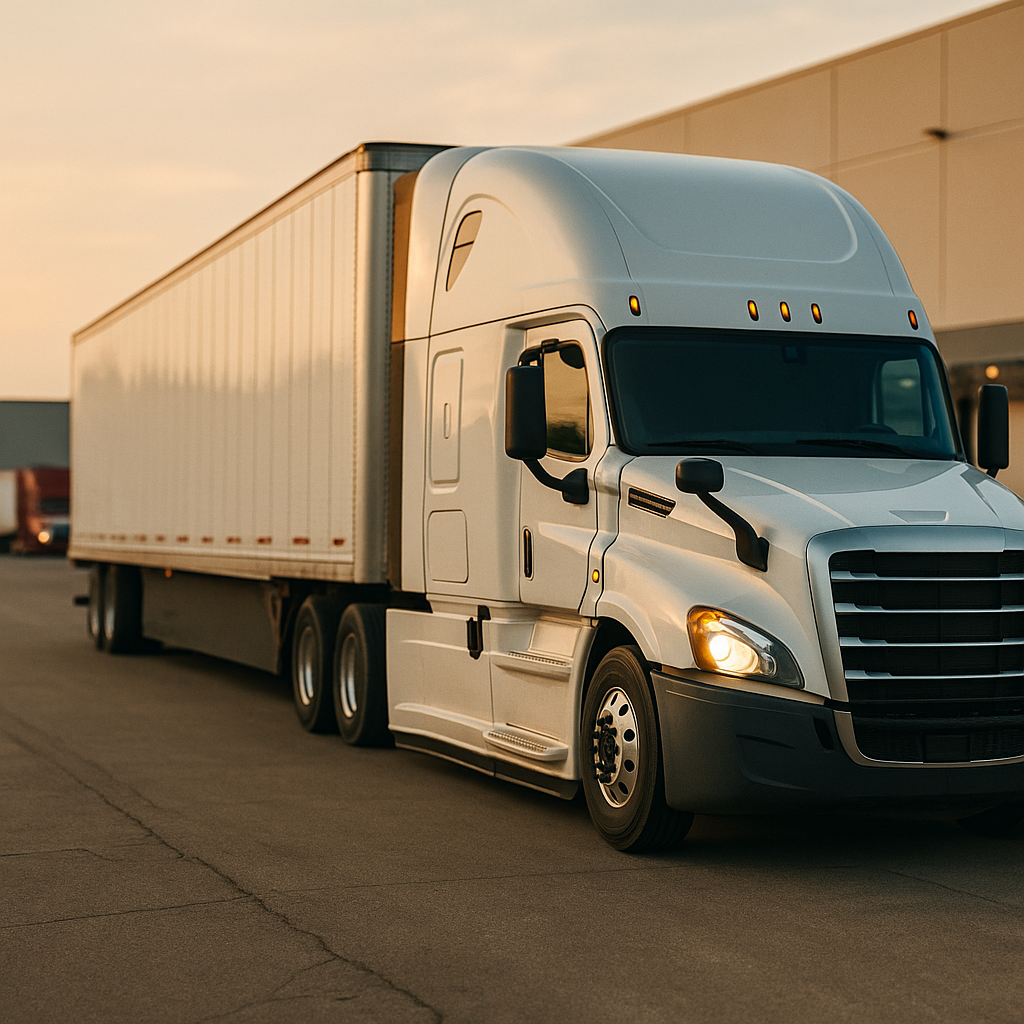

Tennessee semi truck insurance requirements explained: TN limits, FMCSA overrides, common coverages, 2026 cost ranges, and a checklist—get compliant.
Tennessee semi truck insurance requirements come down to two rulebooks: Tennessee intrastate rules (if you truly never cross state lines) and FMCSA federal minimum financial responsibility (49 CFR Part 387) when you operate in interstate commerce—commonly $750,000 for general freight, with higher requirements for certain hazardous materials. On top of that, brokers and shippers often require $1,000,000 auto liability to accept your carrier packet.
One missed detail can cost you a load, a contract, or an out-of-service day. If you want the baseline terminology for Tennessee, start with this state pillar: Tennessee commercial truck insurance overview.
Table of Contents
Reading time: 8 minutes
- What counts as a “semi truck” (and when it’s commercial)
- Tennessee liability limits vs FMCSA federal limits (table + decision flow)
- Required vs recommended coverages for Tennessee semi trucks
- 2026 semi truck insurance costs in Tennessee (budget ranges)
- Compliance in Tennessee: proof of insurance + checklist
- Frequently Asked Questions
- Conclusion
What Counts as a “Semi Truck” (and When It’s Commercial)
A tractor-trailer (typically a Class 8 combination) operating for-hire or under a motor carrier authority is treated as commercial trucking for insurance and compliance purposes, not personal auto. Most confusion happens in the middle ground: hotshot (pickup + gooseneck), straight trucks, and power-only setups.
A simple way to think about it: once you’re hauling for-hire, hauling business goods, crossing state lines, or operating under a USDOT/MC authority, you’re in commercial truck insurance territory—where liability limits, filings, and contract requirements show up fast.
Semi vs straight truck vs hotshot (why it matters)
- Semi (tractor-trailer): higher weights and higher claim severity, so brokers and underwriters typically scrutinize limits and safety harder.
- Straight truck: still commercial when used for business; insurance pricing often shifts based on weight class, radius, and cargo.
- Hotshot: often underwritten differently than a Class 8 tractor, but “commercial triggers” (for-hire, authority, interstate) still apply.
Commercial-use triggers (what flips the switch)
- For-hire hauling (load boards, brokered freight, dedicated contracts)
- Interstate commerce (crossing state lines, even occasionally)
- Operating under your own authority (FMCSA-regulated)
- Leased-on to a carrier (your lease agreement creates insurance obligations even if the carrier provides primary liability under dispatch)

Tennessee Liability Limits vs FMCSA Federal Limits (The Fast Answer + Table)
FMCSA financial responsibility minimums for for-hire interstate motor carriers are set in 49 CFR §387.9 and commonly start at $750,000 for general freight, while certain hazardous materials require higher limits based on the specific hazmat class. Tennessee intrastate operations can follow state commercial rules, but contracts often push “real-world” limits to $1,000,000 anyway.
Featured-snippet answer (plain English)
Tennessee semi truck insurance requirements depend on how you operate. Intrastate-only carriers follow Tennessee commercial/intrastate rules, while interstate carriers must meet FMCSA federal minimum financial responsibility—commonly $750,000 for general freight, with higher limits for certain hazardous materials. Brokers frequently require $1M liability even if your legal minimum is lower.
Start with the baseline numbers (don’t stop there)
- Tennessee personal auto minimum liability is often summarized as 25/50/15 (BI per person / BI per accident / PD), but that’s not a realistic semi-truck target for for-hire work.
- Commercial trucking limits are typically much higher due to exposure, claim severity, and broker/shipper contracts.
FMCSA insurance filing requirements and minimum financial responsibility information: https://www.fmcsa.dot.gov/registration/insurance-filing-requirements
Quick limits table (use this to stop guessing)
| Situation | What usually governs | What you should expect to carry (real world) |
|---|---|---|
| Intrastate-only in Tennessee (never cross state lines) | Tennessee intrastate/commercial rules + your contracts | Often hundreds of thousands up to $1M depending on weight/cargo + broker/shipper requirements |
| Interstate (crossing state lines, or FMCSA jurisdiction) | FMCSA minimum financial responsibility | $750,000 is a common federal baseline for general freight; many carriers carry $1M for broker acceptance |
| Hazmat (certain classes) | FMCSA (higher tiers) | Confirm your exact hazmat class and required tier before quoting limits |
The “don’t get burned” rule: law vs broker reality
Brokers and shippers can require higher limits than the legal minimum (and they do), so “legal” doesn’t always mean “load-eligible.” Common examples include $1,000,000 auto liability, cargo coverage minimums, additional insured wording, and specific certificate-holder formatting.
If you operate under federal authority or you’re unsure how compliance gets verified, this resource is a helpful explainer: FMCSA/DOT compliance and insurance records (verify URL before publishing).
Decision flow (simple and fast)
- Will you cross state lines (even once)? If yes, assume FMCSA rules apply.
- Are you for-hire/commercial in Tennessee? If yes, follow TN commercial/intrastate requirements plus contracts.
- Are you leased-on to a motor carrier? If yes, the carrier typically provides primary liability while under dispatch, but you may still need other coverages.
Required vs Recommended Coverages for Tennessee Semi Trucks (What Actually Keeps You in Business)
Auto liability is the legal foundation, but most for-hire operations also need cargo and equipment protection to avoid contract rejections and cash-flow-killing losses. Liability alone won’t fix a stolen trailer, a reefer claim, or a financed tractor that gets totaled.
For a national-level overview of how policies are commonly packaged, see: National semi truck insurance coverages checklist.
Primary liability (non-negotiable)
Primary liability pays for injuries and property damage you cause to others, and it’s the coverage that makes you legal and broker-ready. Low limits can get exceeded quickly in severe crashes, especially with a loaded combination unit.
Cargo insurance (often “required” by contract)
Cargo insurance covers damage to, or loss of, the freight you’re responsible for, and many brokers won’t tender loads without proof. Even when it’s not “state required” the way liability is, it’s often contract required.
Physical damage (if you own/finance the tractor)
Physical damage (comprehensive + collision) protects your truck, and lenders commonly require it when the tractor is financed. If you can’t replace a tractor out of pocket tomorrow, skipping physical damage is a risky cash-flow bet.
Common add-ons that matter in real operations
- Non-trucking liability / bobtail: commonly needed for leased-on owner-operators when off-dispatch (coverage depends on lease terms and use).
- Trailer interchange: important if you pull someone else’s trailer under a written interchange agreement.
- General liability: covers certain non-auto liability claims (for example, dock-related property damage or some “slip-and-fall” exposures).
2026 Semi Truck Insurance Costs in Tennessee (What to Budget)
Tennessee semi truck insurance pricing is driven by underwriting factors like authority age (new venture vs established), MVR/claims, operating radius, cargo class, and equipment value—not by a single statewide “average.” If a quote comes back without those questions, it’s usually a placeholder.
For Tennessee-specific ranges and budgeting examples, start here: Commercial truck insurance cost in Tennessee.
Typical pricing reality (ranges, not fantasies)
- New venture vs established authority: new ventures often pay more until they build loss history.
- MVR + claims: tickets and at-fault losses can move premiums fast.
- Operating radius: local, regional, and OTR are priced differently.
- Cargo type: higher-risk cargo classes can increase premiums.
- Equipment value + deductibles: higher values and lower deductibles usually cost more.
- Garaging location: metro vs rural can change rates due to theft and claim frequency.
Compare quotes like a business owner (not like a shopper)
- Match liability and cargo limits exactly across quotes.
- Match physical damage deductibles exactly (this changes the premium a lot).
- Confirm radius and cargo are accurate (misclassification can cause claim problems).
- Ask how claims are handled (process and timelines matter when you’re down).
ATRI publishes annual operational cost reports that many fleets use for cost-per-mile benchmarking (insurance is a meaningful line item in those models): https://truckingresearch.org/2025/10/operational-costs-of-trucking/
Compliance in Tennessee: Penalties, Proof of Insurance, Exemptions + A Checklist
Insurance compliance failures usually show up as lapsed coverage, under-limit policies, missing/incorrect filings, or COIs that don’t match broker packets—and those mistakes can lead to load rejections or enforcement problems. In practice, the admin details can cost as much downtime as a mechanical breakdown.
Penalties & enforcement (what it looks like on the road)
Depending on the issue (lapse, under-limit, incorrect filing for authority, or paperwork that doesn’t match your operation), consequences can include citations, lost loads, audit problems, and contract termination—especially on dedicated lanes.
Proof of insurance (what brokers and shippers actually ask for)
Most of the time, they want a COI (certificate of insurance) that matches their carrier packet, including:
- Correct Named Insured
- Correct Certificate Holder
- Any required Additional Insured language (when applicable)
- Correct limits and effective dates shown
For a practical walkthrough, reference: Certificate of insurance (COI) guide for trucking (verify URL before publishing).
Exemptions (answering the “do I qualify?” question without guessing)
There can be limited exceptions depending on vehicle type and use (for example, certain government or farm-related cases), but if you’re for-hire hauling freight in a semi, you should assume you need commercial truck insurance that meets (1) the governing law (TN or FMCSA) and (2) your contracts.
Compliance checklist (save this and use it)
- Confirm intrastate-only vs interstate: one out-of-state load can trigger FMCSA requirements.
- Confirm own authority vs leased-on: your lease determines what the carrier covers under dispatch.
- Match liability limits: meet legal requirements and broker/shipper packet requirements.
- Add cargo: especially if you run brokered freight or higher-value loads.
- Add physical damage: if you can’t replace the tractor out of pocket.
- Confirm bobtail/non-trucking needs: common for leased-on drivers when off-dispatch.
- Keep COIs updated: new truck, renewal, carrier change, or radius/cargo changes.
- Check your public snapshot: brokers do—SAFER is a common reference: https://safer.fmcsa.dot.gov/
Frequently Asked Questions
Minimum liability limits for a semi in Tennessee depend on whether you’re intrastate-only or operating interstate under FMCSA jurisdiction. Interstate for-hire carriers must meet FMCSA minimum financial responsibility in 49 CFR §387.9, which is commonly $750,000 for general freight, with higher requirements for certain hazardous materials. Intrastate Tennessee operations follow Tennessee commercial/intrastate rules, but many brokers and shippers still require $1,000,000 auto liability to tender loads.
FMCSA reference: https://www.fmcsa.dot.gov/registration/insurance-filing-requirements
FMCSA federal limits apply when you operate in interstate commerce (cross state lines) and/or operate under federal motor carrier authority, and the minimums are defined under 49 CFR Part 387. Your cargo can also change the required minimums, especially if you haul regulated hazardous materials. If you’re unsure whether a lane, load, or lease puts you under FMCSA rules, treat federal compliance as the default until you confirm your exact operation and filing needs.
FMCSA reference: https://www.fmcsa.dot.gov/registration/insurance-filing-requirements
Most semi truck operators need more than liability because broker packets and real-world losses involve cargo and equipment, not just third-party damage. Cargo insurance is often contract-required before a broker will tender freight, and physical damage is commonly required by lenders when the tractor is financed. Depending on your operation, you may also need non-trucking/bobtail (often for leased-on drivers off-dispatch), trailer interchange (when pulling someone else’s trailer under an interchange agreement), and general liability for certain non-auto exposures.
Semi truck insurance cost in Tennessee varies based on underwriting inputs like authority age (new venture vs established), MVR/claims, operating radius, cargo class, and equipment value and deductibles, so you should budget using ranges rather than a single number. The cleanest way to compare is to shop quotes with identical liability/cargo limits and identical deductibles, then confirm the radius and cargo classification match how you actually run.
For Tennessee-specific budgeting ranges: Commercial truck insurance cost in Tennessee.
The safest way to cut premium is to reduce risk and tighten the policy details without dropping required limits: choose deductibles you can truly pay, keep radius and cargo classification accurate, improve MVR over time, and re-shop at renewal with apples-to-apples limits. Avoid cutting liability or cargo below what your broker packets and lanes demand, because “cheaper” can quickly turn into rejected loads or uncovered losses. For tactical ideas, see: Affordable trucking insurance savings tactics (verify URL before publishing).
Conclusion: Meet Tennessee Rules—and the Loads You Want to Haul
Tennessee semi truck insurance requirements are really two checks: what keeps you legal (Tennessee intrastate vs FMCSA federal minimums) and what keeps you bookable (broker and shipper contract requirements). Handle both, and you protect your cash flow, your authority, and your ability to take better freight.
Key Takeaways:
- Intrastate vs interstate is the first fork in the road; crossing state lines can trigger FMCSA rules.
- $750,000 is a common FMCSA baseline for general freight, but many brokers want $1,000,000 liability.
- Build your coverage around your real operation (authority type, lanes, cargo, equipment) and compare quotes apples-to-apples.
Related reading:
- Bobtail vs non-trucking liability explained (verify URL before publishing)
- Truck insurance cost in Florida (comparison for multi-state ops) (verify URL before publishing)





