
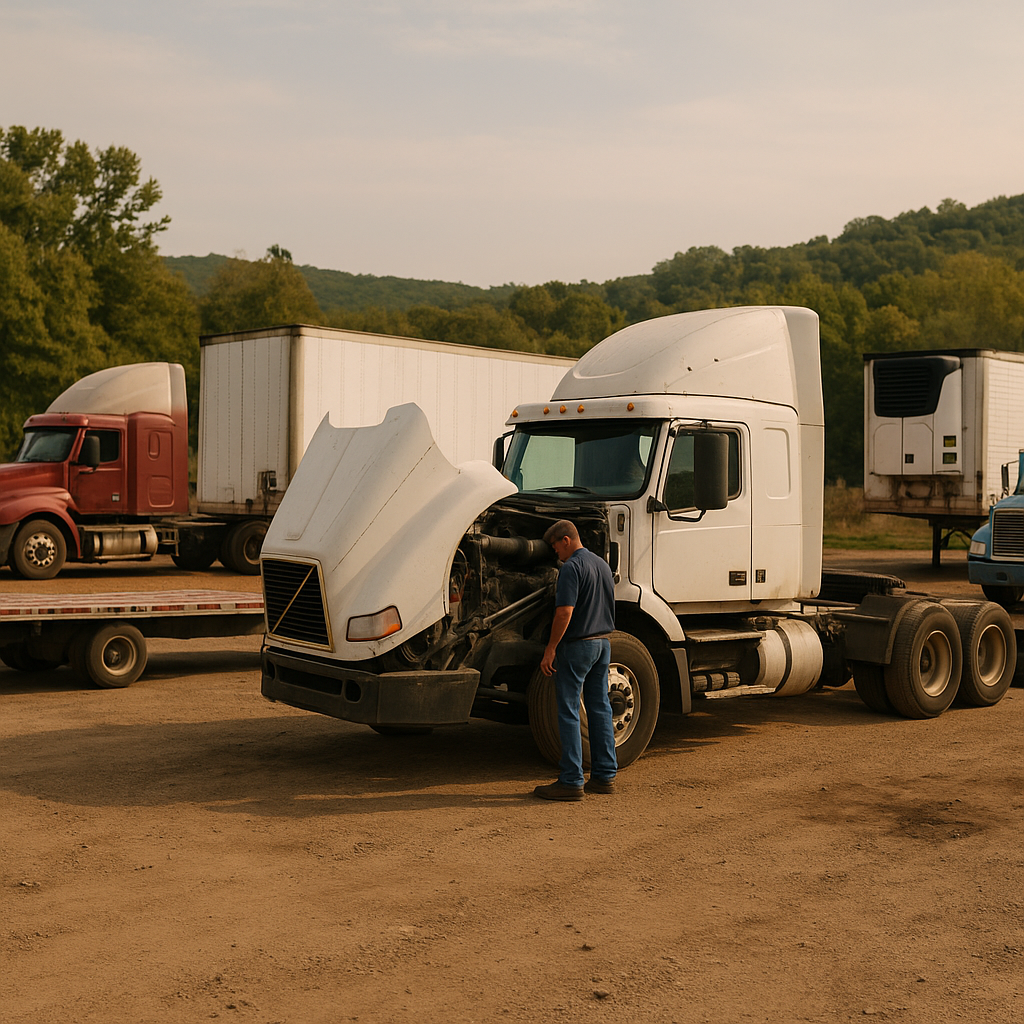

Tow truck insurance Alabama searches usually start with one question: what do you actually need, and what can you skip? The short answer is that a tow truck needs commercial insurance built for towing work, not a personal auto policy or a generic contractor truck policy.
A tow truck creates a different kind of risk. You’re not just driving your own vehicle. You’re hauling somebody else’s car, working roadside, and sometimes storing vehicles, keys, or equipment. That means Alabama rules, FMCSA rules, and your actual day-to-day exposure don’t always line up.
What Tow Truck Insurance Covers in Alabama#
Tow truck insurance is commercial coverage built for towing operations in Alabama, including liability for the truck, damage to the truck itself, and tow-specific risks like customer vehicles in your care. It is not the same as personal auto insurance, and it usually needs more than a basic commercial auto setup.
Tow truck insurance is a commercial policy package designed for a business that tows, recovers, transports, or sometimes stores vehicles. Personal auto insurance is coverage for private driving, and it usually excludes business towing work.
That difference matters fast. If you rear-end someone in a tow truck, that’s one problem. If a customer’s vehicle gets damaged while it’s hooked up, or while it’s sitting in your yard, that’s a different problem entirely.
Tow truck vs. personal auto insurance#
A lot of new operators assume a commercial pickup policy or personal policy with "business use" will cover towing. Usually, that falls apart once the carrier sees winch-out work, roadside service, impounds, recovery, or customer vehicles being transported.
The base of most tow truck policies is commercial auto liability. That’s the part that covers bodily injury or property damage you cause with the truck. But towing operations often need more layered protection than that.
Standard coverages and towing-specific add-ons#
Standard coverages usually include liability and, if selected, damage protection for the truck. Tow-specific add-ons often deal with the customer’s vehicle, roadside activity, and storage exposure.
That’s why a one-truck local wrecker, a repossession-style operator, and a shop that occasionally tows its own units may not need the exact same policy. A not-for-hire tow truck is a tow truck used for your own business purpose rather than hauling vehicles for the public for a fee, and that can change how the policy should be built.
Who needs this policy#
Owner-operators, towing companies, roadside service businesses, and some repair shops with tow exposure all need to review commercial coverage carefully. Alabama state requirements may apply one way, while federal motor carrier rules may apply another way if you cross state lines, run under someone else’s authority, or operate in a regulated interstate setup.

Alabama Tow Truck Insurance Requirements vs. Federal Rules#
Alabama tow truck insurance requirements are not automatically the same as federal trucking requirements. State registration and financial responsibility rules may control an in-state towing operation, while FMCSA rules can apply when a tow truck operates interstate, under leased authority, or in another federally regulated motor carrier setup.
This is where a lot of operators get bad advice. A state minimum is not the same thing as a federal minimum, and neither one tells you whether your towing business is actually well covered.
Alabama minimums and where they come from#
Alabama’s insurance and vehicle responsibility rules come from state agencies, including the Alabama Department of Insurance and vehicle registration guidance tied to the Alabama Department of Revenue. Those state rules govern in-state compliance issues like registration, proof of insurance, and financial responsibility.
But state compliance is only part of the picture. A tow truck can be legal enough to tag and register, while still carrying the wrong insurance for how it actually operates.
When FMCSA rules apply#
FMCSA is the Federal Motor Carrier Safety Administration, the federal agency that regulates many interstate motor carriers. Under 49 CFR Part 387 and FMCSA guidance at fmcsa.dot.gov, for-hire interstate carriers hauling general freight in vehicles over 10,001 pounds must carry at least $750,000 in public liability.
That does not mean all truckers need $750,000, and it does not mean every tow truck falls into the same box. Requirements vary by carrier type, vehicle weight, cargo, and whether you operate interstate or intrastate. If you’re sorting that out from scratch, it helps to review the commercial trucking insurance basics before you compare quotes.
A leased operator can also get tripped up here. If you run under another carrier’s authority, or your setup involves interstate commerce, you may need to confirm how your insurance and filings fit with that arrangement. You can also verify operating status through SAFER.
Why state minimums are not enough for towing risk#
A legal minimum only addresses the minimum. It doesn’t pay for every type of loss a tow truck business faces.
If you damage a customer’s vehicle on the hook, lose control of a stored unit, or have a roadside claim that falls outside pure auto liability, the cheapest legal setup can leave you exposed. That’s the real trap with tow truck insurance in Alabama: confusing "I can register the truck" with "my towing operation is protected."
If you’re not sure which rules apply to your setup,
Core Coverages Every Tow Truck Policy Should Include#
Most Alabama tow truck policies should start with auto liability, then add coverage for the truck itself and any off-truck business activity that creates risk. The exact mix depends on your operation, but a bare-bones liability-only quote often misses the exposures that hurt tow operators most.
NAIC is the National Association of Insurance Commissioners, a standard consumer-facing source for plain-language insurance definitions at naic.org. Using simple terms, think of the policy in layers: damage you cause with the truck, damage to your truck, injuries to you or passengers, and business activity that happens outside the driving itself.
Auto liability#
Auto liability is the part of the policy that pays when your tow truck causes bodily injury or property damage to others. It’s the core legal coverage behind most commercial truck policies.
For a tow operator, that’s the foundation. If the truck hits another vehicle, damages a building, or causes an injury crash, auto liability is the first place the claim usually lands. But it doesn’t cover every towing mistake just because the truck was involved.
Physical damage#
Physical damage coverage protects your truck from collision and comprehensive-type losses. Collision covers damage from impact or overturn, while comprehensive covers non-collision losses like theft, vandalism, weather, or fire.
On a financed tow truck, this is usually not optional in the real world even if state law doesn’t require it. If the truck is your income, cutting physical damage coverage to shrink the premium can turn one bad week into a business-ending loss.
Medical payments and UM/UIM#
Medical payments coverage helps with certain injury-related costs after an accident, regardless of fault, up to the policy terms. Uninsured/underinsured motorist coverage, often shortened to UM/UIM, helps when the other driver doesn’t carry enough insurance.
These aren’t the flashy coverages, but they can matter when your operator gets hit by someone who doesn’t have much behind them. In a roadside business, that isn’t a far-fetched scenario.
Roadside and towing-related general liability#
General liability is coverage for business-related bodily injury or property damage that happens outside the normal use of the truck as an auto. For tow operators, that can include slip-and-fall claims, damage tied to roadside service activity, or other non-driving incidents.
This is where operators get caught using generic advice. Auto liability covers auto use. Roadside work around a scene or at a yard can create a different kind of claim.
Tow-Specific Coverages That Often Matter Most#
The coverages that often matter most on a tow truck are the ones tied to customer property in your care. For many Alabama operators, on-hook and garage-related protection matter more than chasing the leanest possible liability-only quote.
A generic truck policy can look fine until the claim involves the customer’s car instead of your own truck. That’s usually where towing businesses learn the hard way that "commercial auto" and "tow truck insurance" are not always the same thing.
On-hook towing coverage#
On-hook coverage protects a customer’s vehicle while it is being towed, lifted, or carried by your truck. If the car slips, gets damaged in transit, or suffers a covered loss while attached to your unit, this is the coverage people expect to be there.
This is one of the biggest coverage gaps for new operators. They assume the customer’s vehicle is covered because it’s "part of the tow." Often, it isn’t unless the policy specifically includes that exposure.
Garagekeepers legal liability#
Garagekeepers legal liability is coverage for a customer’s vehicle left in your care, custody, or control at a lot, yard, or shop. That matters if you store vehicles overnight, hold impounds, or keep units waiting for pickup.
If your operation includes any storage at all, review garagekeepers coverage closely. A single-truck operator with a fenced lot can still have a real garagekeepers exposure even without running a full repair shop.
Non-owned trailer physical damage and trailer interchange#
Non-owned trailer physical damage protects a trailer you don’t own while it’s in your possession without a formal interchange agreement. Trailer interchange applies when there is a signed interchange agreement in place.
Most non-intermodal tow operators won’t need both. If your operation rarely touches trailers, this may be a non-issue. But if you recover or move trailers as part of the job, don’t assume your base tow truck policy handles that automatically.
Reefer breakdown only if applicable#
Reefer breakdown is specialized coverage for refrigeration equipment failure on temperature-controlled cargo operations. Most tow truck operators won’t need it.
It’s worth mentioning only because some package discussions throw in every trucking add-on under the sun. A one-truck Alabama tow operator usually needs a policy built around actual towing exposure, not a one-size-fits-all bundle.
How Much Tow Truck Insurance Costs in Alabama#
Tow truck insurance in Alabama does not have one standard price because the premium depends on how the truck is used, what it tows, where it operates, and which tow-specific coverages are included. Monthly payments may be available, but your actual premium depends on your operation, cargo, radius, driving history, and other factors.
That answer frustrates people, but it’s the honest one. A local owner-operator doing light-duty roadside calls is a different risk from a truck doing recoveries, impounds, storage, and damaged-vehicle transport.
What drives premium up or down#
The biggest drivers usually include vehicle value, operating radius, garaging location, driver history, claims history, and the type of towing you do. A policy with on-hook, storage exposure, and broader protection for customer vehicles will usually be built differently from a stripped-down liability-first quote.
Even two similar trucks can price differently if one works dense city calls and the other runs a tighter local radius with cleaner loss history. That’s why "my buddy pays less" is almost never useful quote advice.
Monthly payment considerations#
A lot of operators care less about annual premium math than whether the payment fits cash flow. That’s fair, especially for a one-truck business.
But the monthly number only helps if the policy actually matches the operation. A lower payment can come from higher deductibles, narrower coverage, or leaving off the exact protection you’d need after a hooked-vehicle loss or yard claim.
Why quotes vary between similar trucks#
Insurers price the operation, not just the VIN. If your application says local towing only, but the real work includes storage, roadside service, after-hours impounds, or occasional interstate activity, quote accuracy falls apart.
That can mean surprises at audit, renewal, or claim time. The point isn’t to chase the lowest-looking number. It’s to make sure the quote reflects the business you’re really running.
How to Save Without Undercutting Coverage#
The safest way to save on tow truck insurance is to make the quote more accurate and the risk easier to understand. Better underwriting detail can improve fit, while clean operations and good controls can help avoid paying for exposures you don’t actually have.
Price matters, but cheap mistakes cost more. Tow operators usually get into trouble when they buy a policy that looks affordable because it quietly leaves out the hard parts of towing.
Quote accuracy basics#
Be specific about whether you’re for-hire, not-for-hire, roadside only, recovery-focused, storage-based, or some mix. Tell the broker your usual radius, whether you cross state lines, what kinds of vehicles you tow, and whether customer vehicles ever stay on your lot.
That detail helps the quote match the business. It also helps avoid a situation where the carrier priced one operation and the claim came from another.
Ways operators reduce risk before shopping#
Clean MVRs matter. So do maintained equipment, documented safety routines, secure key handling, lot security, and clear storage procedures.
Those aren’t gimmicks. They’re the kinds of details that can make an underwriter more comfortable with the account and help you avoid preventable losses in the first place.
Common low-coverage traps to avoid#
The big traps are liability-only thinking, skipping on-hook, ignoring storage exposure, and assuming every "commercial auto" policy includes tow work. Another common mistake is buying around a monthly payment target before you confirm what was left out.
Savings should come from better risk alignment, not from cutting the parts of the policy that make it a tow truck policy.
How to Get the Right Quote for a Tow Truck in Alabama#
The right tow truck insurance quote starts with clean, complete operation details. If you gather the right information before applying, you’ll get a more useful quote and make it easier to compare coverage side by side instead of guessing from price alone.
For a single-truck operator, this doesn’t need to be complicated. It just needs to be honest and organized.
Information to gather before requesting quotes#
Have your business name, operating structure, driver details, vehicle identification, garaging address, and loss history ready. You should also know whether the truck is financed, what radius you run, whether you stay intrastate or go interstate, and whether you store customer vehicles.
If you operate under a USDOT number, MC number, or leased setup, have that information ready too. An MC number is a federal operating authority number used in certain for-hire interstate operations.
What to disclose about your towing operation#
Be clear about the kind of work you actually do: private property impounds, roadside assistance, accident recovery, dealer transport, shop towing, or not-for-hire use. Also disclose storage exposure, after-hours drops, and any customer property that stays in your control beyond the tow itself.
Those details change the coverage mix. They also help prevent the classic "the quote was cheap because it wasn’t built for what I do" problem.
How to compare offers side by side#
Compare quotes by coverage scope, limits, deductibles, exclusions, and tow-specific protections first. Then look at payment options and total cost.
If one quote is far lower, ask what it removed. That’s usually the fastest way to see whether you’re comparing real apples to apples.
FAQ#
How much is insurance to run a tow truck?
Tow truck insurance cost depends on the truck, where it runs, how far it travels, who drives it, and which coverages are included. A policy for a local light-duty unit can look very different from one that includes storage exposure, impounds, recoveries, or broader customer-vehicle protection. On-hook and garagekeepers can change the quote materially because they insure risks a basic truck policy may not. Monthly payment options may be available, but your actual premium depends on your operation, cargo, radius, driving history, and other factors.
Is tow truck insurance required in Alabama?
Yes, a tow truck used for business needs commercial insurance that fits the operation, but the exact requirement depends on how the truck is used. Alabama state rules govern registration and financial responsibility for in-state operations, while federal rules may apply if the truck operates interstate or in a regulated motor carrier setup. The important part is not assuming the minimum needed to register the truck is enough for towing work. A legal minimum may still leave major gaps for customer vehicles, storage, or roadside business activity.
Does auto liability cover the car I’m towing?
Usually, not by itself. Auto liability is meant to cover bodily injury or property damage you cause to others with the tow truck. The customer’s vehicle being towed is often a separate exposure that may call for on-hook coverage. If the vehicle is later stored on your lot or in your yard, garagekeepers may come into play instead. This is one of the most common misunderstandings in towing insurance, and it’s why a generic commercial auto quote can look fine until the first claim involves a customer’s car.
What if my tow truck is not for hire?
Not-for-hire towing can change the policy structure, but it does not automatically mean the risk is simple or that a basic policy will do. If you tow only your own vehicles for your own business, the coverage need may differ from a public tow-for-fee operation. But the insurer still needs to understand whether you do roadside work, transport damaged units, store customer vehicles, or cross state lines. The label matters, but the actual day-to-day use matters more when the quote is built.
Do I need garagekeepers if I only have one tow truck?
You might. Garagekeepers is about customer vehicles in your care, custody, or control at a lot, yard, or shop, not about how many trucks you run. If your one-truck business stores vehicles overnight, holds impounds, or keeps units waiting for pickup, that exposure can still be real. A lot of single-truck operators think garagekeepers is only for full repair shops, but storage alone can create the issue. If customer vehicles ever stay with you after the tow, it’s worth reviewing closely.





