
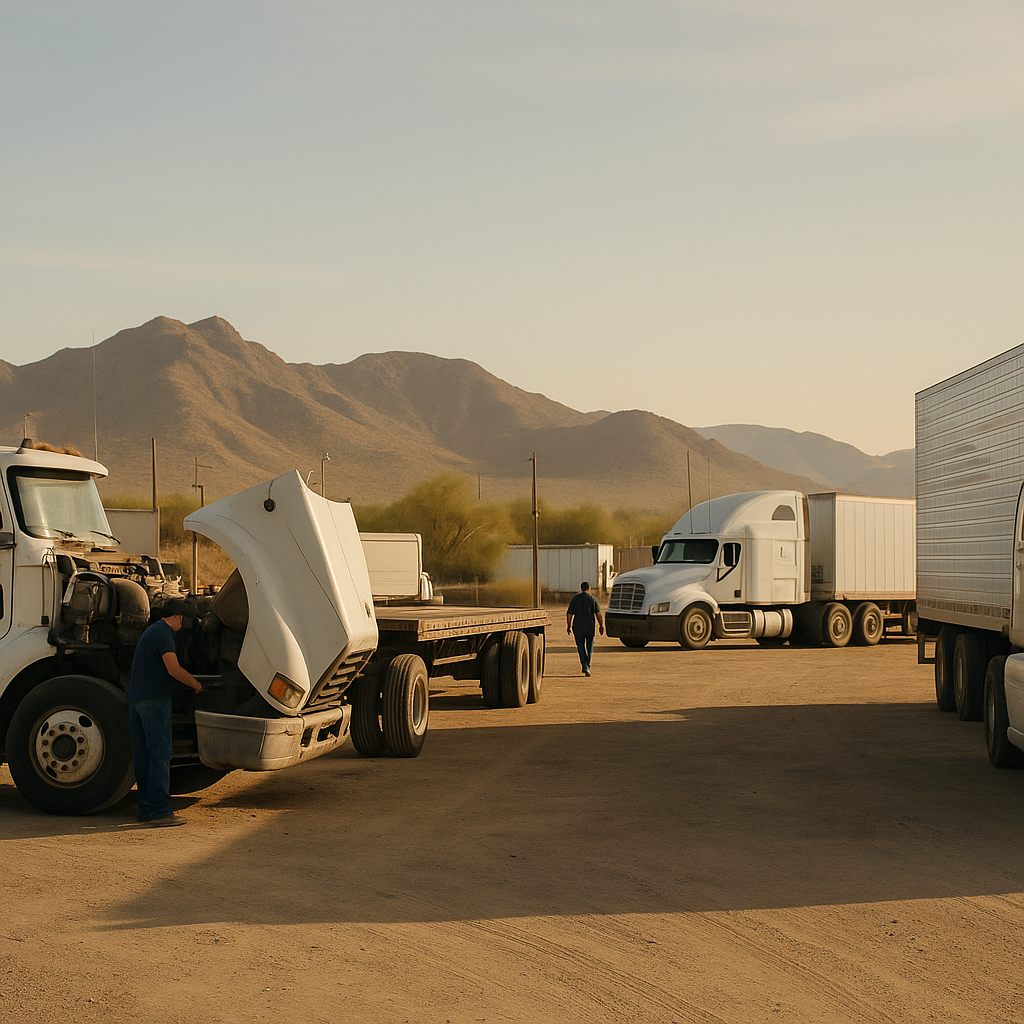

If you’re shopping for tow truck insurance Arizona, the first thing to clear up is simple: a tow truck used for business usually needs commercial coverage, not a personal auto policy. What you need depends on how you tow, where you operate, whether you cross state lines, and what kind of risk your jobs create.
Tow Truck Insurance in Arizona: What It Covers and Who Needs It#
Tow truck insurance in Arizona is commercial insurance for vehicles used to tow, recover, or transport other vehicles as part of a business. If you run roadside service, scheduled towing, impounds, recoveries, or dealer moves for pay, you’re in commercial territory and your coverage needs change fast.
Tow truck insurance means insurance built for a truck that does towing work for business. That matters because towing creates risks a normal pickup or personal auto policy usually wasn’t built to handle.
Tow truck insurance vs personal auto#
A practical way to look at it: using a pickup to move your own trailer around your property is not the same as sending a rollback out on paid roadside calls. Once the vehicle is used for business towing, the insurer will usually want it rated as a commercial risk.
That split is where many operators get burned. They assume the truck is insured because it has a policy, then find out the policy wasn’t written for paid towing, recovery work, or customer vehicles.
Commercial towing, business use, and scope#
Commercial auto liability is coverage for bodily injury or property damage you cause while operating the truck in business. Physical damage is coverage for damage to your own truck from collision, theft, weather, fire, and similar losses. General liability covers certain non-driving business exposures, like premises or operations claims that don’t come from driving the truck.
Depending on the job, you may also need protection tied to customer property, equipment, or trailer use. A local roadside operator with one rollback may need a different setup than a heavy wrecker doing recoveries for fleets or hauling vehicles over longer distances.
Why Arizona operators need a closer look at requirements#
Arizona tow operators need to look closely at requirements because state rules, city practices, and federal motor carrier rules don’t always line up. The truck, the work, and whether you’re intrastate or interstate usually drive what matters most.

What Arizona Tow Operators Need to Check First#
Arizona tow operators should first separate state-only rules from federal motor carrier rules, then confirm whether their work is intrastate or interstate. That one distinction affects whether FMCSA filings, USDOT registration, or federal financial responsibility rules may apply alongside Arizona requirements.
Start with the basics before you look at a quote. Figure out what truck you’re insuring, what kind of towing you do, how far you run, and whether any part of the business crosses state lines.
State rules versus federal trucking rules#
Intrastate commerce means you operate only within one state. Interstate commerce means the business crosses state lines or is part of the movement of goods or vehicles across state lines.
Arizona towing rules and enforcement issues are not the same as FMCSA insurance rules. For state towing-law and enforcement context, check the Arizona Department of Public Safety. For federal operating status, authority concepts, and registration context, use the FMCSA and verify records in SAFER.
When FMCSA filing requirements matter#
A DOT number is a federal identifier for certain commercial motor carriers. An MC number is operating authority used for certain for-hire interstate carriers.
If your towing business stays local in Arizona and doesn’t trigger interstate authority, your insurance setup may be more about Arizona compliance and your actual risk profile. If you haul across state lines or operate as a for-hire interstate carrier, federal rules can enter the picture, including financial responsibility under 49 CFR Part 387.
Under 49 CFR Part 387, for-hire interstate carriers hauling property in vehicles over 10,001 pounds often must meet federal public liability minimums, but the exact requirement depends on carrier type, vehicle weight, and what is being hauled. That’s why “all truckers need $750K” is bad advice. Some operations fall below that, some fit it, and some need more.
Tow-service and recovery-job differences#
A local tow operator doing short-radius roadside calls around Phoenix may have very different exposures than a business doing long-distance dealer transports, post-accident recoveries, or fleet work near state borders. Recovery work can bring more severe loss potential because of jobsite conditions, higher-value units, winching exposure, and longer dispatch patterns.
That difference is where operators often overbuy or underinsure. A generic truck quote may miss how you actually work. If you’re not sure how to scope interstate versus intrastate use or what filings may matter,
Required and Common Coverages for Tow Trucks#
Most business tow trucks need commercial auto liability first, then they add other coverages based on the truck, the jobs, and the property involved. The right mix usually starts with the core truck policy and then expands to protect the truck itself, customer property, and non-driving business risks.
The key is to separate required coverage from useful coverage. Required coverage is what law, contracts, or filings demand. Useful coverage is what keeps one bad tow, theft, or claim from turning into a business-ending loss.
Auto liability#
Auto liability is the core coverage for bodily injury and property damage arising from operating the tow truck. If your driver rear-ends another vehicle on the way to a call or damages someone else’s property in a traffic incident, this is the coverage people usually mean first.
For some interstate operations, liability limits may also tie into federal financial responsibility rules. For state-only operations, Arizona requirements and contract demands may shape the practical minimum, but many tow operators still carry higher limits because the loss severity on a loaded tow can climb fast.
Physical damage#
Physical damage covers the tow truck itself. Collision pays for crash damage. Comprehensive covers things like theft, vandalism, weather, or animal strikes. Fire and theft with combined additional coverage is a narrower version sometimes used in some trucking setups, but most operators think in terms of collision plus comprehensive.
A simple example: an older local rollback may have lower insured value and a different deductible strategy than a financed newer heavy wrecker. If the truck is central to your income, physical damage usually matters even when it’s not legally required.
Motor truck cargo and reefer breakdown if applicable#
Motor truck cargo is coverage for property you haul for others, subject to the policy’s terms and exclusions. For tow operators, this gets trickier than it sounds because the exposure may involve customer vehicles, parts, tools, or other property connected to the tow.
Not every tow operation needs the same cargo approach, and the details matter. A roadside-only operator may have a different need than a business that regularly transports vehicles, specialty units, or equipment between locations. Reefer breakdown is usually not a core tow-truck issue, but it can matter if the operation handles temperature-sensitive loads in a trucking context.
General liability and trailer-related coverages#
General liability covers certain business risks not caused by driving the truck. Think slip-and-fall claims at your yard, some completed-operations allegations, or other third-party claims tied to business activity instead of road use.
Trailer Interchange applies when you have a signed interchange agreement for a trailer in your care. Non-Owned Trailer Physical Damage applies when there is no signed interchange agreement and you need coverage for a trailer you don’t own. Most non-intermodal owner-operators care more about the second situation, but the right answer depends on how the trailer is being used.
The plain-language insurance terms above line up with general definitions used by the NAIC, but your actual tow-truck policy still depends on the operation being insured.
How Much Tow Truck Insurance Costs in Arizona#
Tow truck insurance in Arizona can be expensive compared with personal auto because towing is a higher-risk commercial use, but there is no one-size-fits-all price. Your actual premium depends on your operation, cargo, radius, driving history, vehicle value, claims record, and whether the work is local, regional, or interstate.
That’s the part most quote pages skip. Two trucks that look similar from the outside can price very differently once the insurer sees what they do all week.
Main cost drivers#
The biggest drivers are usually truck type, job type, territory, driver history, and claim severity potential. A light-duty rollback doing local breakdown tows is different from a heavy wrecker handling accident recovery, impounds, or long-distance hauls.
Vehicle value matters too. A paid-off older unit may create a smaller physical damage exposure than a financed newer truck with specialized equipment. Garaging, storage security, and whether the truck is parked in a controlled yard can also affect how underwriters view the risk.
Why quotes vary by towing use#
Tow use is not one clean category. A business focused on roadside assistance may look different from one doing police rotation work, recovery jobs, or commercial fleet towing. The farther you run and the more complex the jobs, the more ways a claim can get expensive.
That also answers the common question about a $1,000,000 liability policy. Higher liability limits generally cost more, but there is no universal price for a $1,000,000 policy. The premium depends on the vehicle, the drivers, the operating territory, prior losses, and whether the operation is local or interstate.
Practical examples of risk factors#
Picture two Arizona operators. One has a single older rollback, runs daytime calls in a tight local radius, stores the truck in a fenced lot, and has clean driver history. The other runs a newer heavy wrecker, takes after-hours recovery calls, works highways, travels longer distances, and has more severe claim potential. Those are not the same insurance risk even if both say “tow company.”
The smartest move is to compare quotes based on the real operation, not a vague class code. If the quote doesn’t reflect how you actually tow, it can fail when you need it most. If you want help sorting what fits your operation without wasting time on generic forms,
Ways to Lower Cost Without Creating Coverage Gaps#
You can lower tow truck insurance costs in Arizona by tightening the operation, improving the risk profile, and buying coverage that matches the actual work. The goal isn’t the least possible insurance; it’s avoiding both wasted premium and the kind of gap that shows up after a claim.
Start by matching limits and endorsements to what you really do. If you don’t cross state lines, don’t let a quote assume interstate exposure unless that’s accurate. If you don’t handle certain property or trailer situations, ask whether those coverages are actually needed.
Match limits to real exposure#
A local operator may not need the same structure as a heavier recovery-focused business, but cutting limits just to cut premium can backfire. One serious accident, damaged customer vehicle, or highway incident can make a low-limit policy feel cheap for exactly one day.
Separate must-have and nice-to-have coverages#
Ask which coverages are legal, contractual, financed-vehicle related, or simply risk-based recommendations. That helps you see the difference between core protection and optional add-ons.
Reduce risk with safer operations#
Insurers usually care about driver quality, truck condition, maintenance discipline, storage, and operating radius. Cleaner driving records, well-kept equipment, narrower territory, and better documented operations can all help make the risk easier to place.
How to Get a Better Tow Truck Insurance Quote in Arizona#
A better tow truck insurance quote starts with cleaner information, not more applications. If you give the insurer the right details up front, you’re more likely to get a quote that actually matches your towing operation instead of a generic commercial truck estimate.
Have the basics ready before you shop: truck year, make, value, and use; towing type; service radius; where the truck is stored; driver information; and recent loss history. If you handle specialty recovery, long-distance transport, impounds, or customer vehicles in a specific way, say that early.
Information to have ready#
Underwriters will usually want a clear picture of the unit and the business. Be ready to explain whether the truck is a rollback, wrecker, or heavy recovery unit, whether you stay in Arizona, and whether your work is roadside service, scheduled transport, recovery, or mixed use.
Questions to ask before binding#
Ask whether the quote assumes intrastate or interstate use. Ask whether any filing requirements apply. Ask what the policy assumes about drivers, radius, garaging, and business activity. Those questions can catch bad assumptions before they become claim problems.
When to compare options#
Compare options when the business changes, not just at renewal. A new truck, new service area, heavier jobs, added drivers, or interstate work can all change what fits. LogRock specializes in trucking insurance for owner-operators and small fleets and can help scope coverage around the operation instead of forcing you through generic online forms.
Arizona Tow Truck Insurance FAQ#
Is it expensive to insure a tow truck?#
Tow truck insurance is often expensive relative to personal auto because towing is a higher-risk commercial use. The truck may handle disabled vehicles, highway calls, recovery work, night operations, and more severe claim situations than a standard commercial vehicle. Still, there is no single price. A local single-truck operator with an older rollback, clean drivers, and a narrow radius may look very different from a heavy wrecker doing longer-distance or recovery work. Your actual premium depends on the truck, drivers, territory, claims history, limits, and the type of towing you perform.
What kind of insurance do I need for a tow truck?#
Most business tow trucks need commercial auto liability first because that is the foundation for road-use claims involving bodily injury or property damage. Many operators also add physical damage to protect the truck itself, especially if it is financed or hard to replace. Depending on the operation, you may also need general liability, protection tied to customer property or transported vehicles, or trailer-related coverage. The right mix depends on whether you do local roadside calls, recoveries, long-distance transport, or interstate work. Requirements vary by carrier type, vehicle weight, cargo, and whether you operate interstate or intrastate.
What is the towing law in Arizona?#
Arizona towing law is broader than insurance alone. State rules can affect how towing businesses operate, what procedures they follow, and what proof or business documentation may matter in practice. The insurance piece depends on the operation: a state-only tow business may face different requirements than a business that also falls under FMCSA interstate rules. Start by checking Arizona towing and enforcement context with the Arizona Department of Public Safety, then confirm whether your business also has federal registration, authority, or financial responsibility obligations. The right answer depends on the truck, the work, and where the operation runs.
How much does a $1,000,000 liability insurance policy cost?#
There is no single Arizona price for a $1,000,000 liability policy on a tow truck. Higher limits usually cost more, but the premium depends on who is being insured and what the truck does. Insurers will look at the tow unit, operating radius, state-only versus interstate use, driver history, prior losses, garaging, and job type. A locally operated older rollback may price differently than a newer heavy wrecker taking highway recovery calls. The best way to judge the number is to compare quotes built on the real operation, because a limit amount by itself does not tell the whole pricing story.
Do I need commercial insurance if I only tow occasionally?#
If the truck is used for business towing, even occasionally, commercial coverage is usually the safer assumption. Insurers care less about how often you tow than whether the vehicle is being used to make money, serve customers, or perform commercial work. A personal auto policy may not be designed for paid towing, roadside jobs, or business use involving customer vehicles. If the truck only moves your own equipment on private property, that is a different conversation. The key question is whether the towing is personal use or business use, because that usually changes the insurance you need.





