
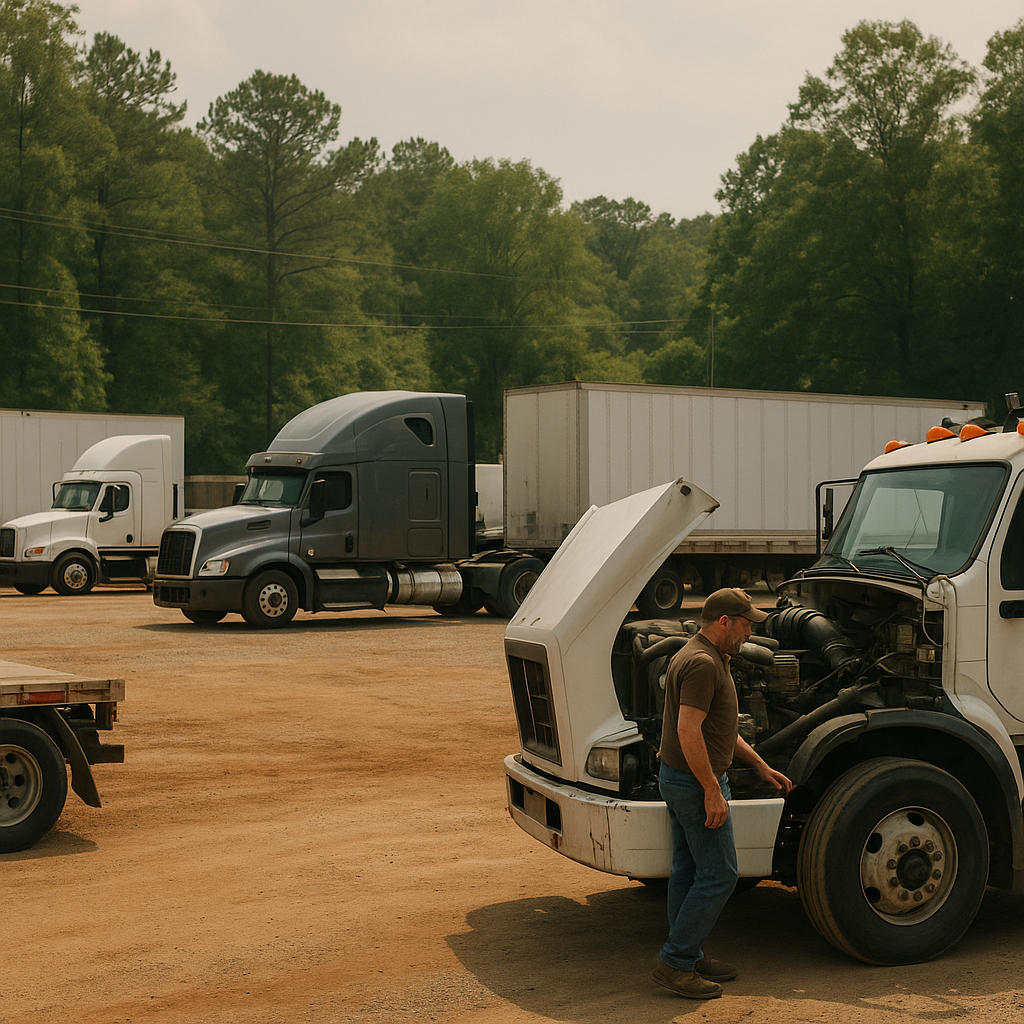

If you’re shopping for tow truck insurance Decatur Georgia, the biggest mistake is treating a tow truck like a personal pickup with a business add-on. Towing is commercial work with different risks, different coverage needs, and sometimes different rules depending on whether you stay local or cross into federally regulated operations.
This guide breaks down what tow truck insurance usually covers, where Georgia rules stop and FMCSA rules start, what drives cost, and how to compare quotes without buying the wrong policy.
What Tow Truck Insurance Covers in Decatur, Georgia#
Tow truck insurance in Decatur, Georgia is commercial insurance built around towing work, not personal driving. The right setup depends less on your ZIP code than on what your truck actually does: roadside calls, private property tows, recovery work, or hauling vehicles longer distances.
A tow truck operation means a business using a rollback, wrecker, or similar truck to tow, transport, or recover vehicles for pay or as part of a commercial service. That matters because a personal auto policy usually isn’t built for on-hook towing, business liability, or the day-to-day exposure that comes with dispatch work.
Why towing businesses need commercial coverage#
A rollback is a flatbed-style tow truck that carries a disabled vehicle on its bed. A wrecker is a tow truck that pulls or recovers a vehicle using towing equipment rather than loading it fully onto a bed.
If you’re running calls around Decatur, near I-285, or across DeKalb County, the local market affects pricing and carrier appetite. But the bigger issue is use: a truck doing private property tows, accident recovery, and roadside assistance has a different insurance profile than a truck used for occasional non-business driving.
That is why towing businesses usually need commercial auto coverage instead of trying to stretch a personal auto policy into something it was never meant to cover.
What counts as a tow truck operation#
For insurance purposes, it usually counts as towing if the truck is dispatched for roadside help, repossession support, disabled vehicle transport, recovery work, impound-related towing, or similar for-hire activity. Even a single-truck owner-operator can have a commercial risk profile if that truck is used to pick up customer vehicles.
A practical example: a rollback hauling a disabled sedan on I-285 faces road liability, equipment exposure, and possible damage claims involving the customer vehicle. A light-duty local tow truck used only for private property tows may still need commercial coverage, but the job mix and radius can look very different to an underwriter.
Common coverage building blocks#
Auto liability pays for bodily injury or property damage you cause to others in an at-fault accident. Physical damage covers the insured tow truck itself for collision and other covered losses like theft, fire, or certain non-collision damage.
Many towing businesses also look at motor truck cargo, general liability, and a few operation-specific add-ons. The exact mix depends on whether you are strictly towing vehicles, transporting property, working under contracts, financing newer equipment, or adding exposures beyond basic on-road liability.
Georgia Tow Truck Insurance Requirements: State Rules vs. Federal Rules#
Georgia tow truck insurance requirements are not the same as federal trucking requirements. Many local towing businesses are mainly dealing with Georgia registration, insurance expectations, and contract rules, while some operations can also trigger FMCSA filings and federal financial responsibility rules.
When Georgia rules apply#
If your towing business operates locally in Decatur or elsewhere in Georgia, state-level requirements usually drive the basic setup. That can include vehicle registration, state insurance compliance, local contract requirements, and any rules tied to the kind of towing you perform.
The key point is that state minimums are not automatically the same thing as the right business limit. A minimum may help you stay legal on paper while still leaving very little room for a real tow-related loss, especially if there is a damaged customer vehicle, roadway property damage, or an injury claim.
When FMCSA rules apply#
FMCSA rules usually come into play when the towing operation fits federally regulated interstate or for-hire carrier activity. You can review federal carrier guidance at FMCSA, and the financial responsibility rules themselves are set out under 49 CFR Part 387.
Under 49 CFR Part 387, for-hire interstate carriers hauling general freight in vehicles over 10,001 lbs must carry at least $750,000 in public liability. That does not mean all tow operators automatically need that amount. Requirements vary by carrier type, vehicle weight, cargo, and whether the operation is interstate or intrastate.
An MCS-90 is a federal insurance endorsement that helps satisfy certain public liability filing requirements for regulated motor carriers. If your operation involves interstate recoveries or another setup that triggers federal authority and filings, that question needs to be scoped carefully instead of guessed.
Why minimums are not one-size-fits-all#
A single local tow operator may only need state-level compliance plus the coverages required by lenders, contracts, or the actual risk of the work. A company doing interstate recoveries, contract transport, or other regulated carrier activity may need to think about USDOT registration, operating authority, and federal filings as well.
That is why "state minimum" and "federal minimum" are not interchangeable. They answer different questions, and neither one automatically tells you what a Decatur towing business should carry in the real world.
What Affects Tow Truck Insurance Cost in Decatur#
Tow truck insurance cost in Decatur usually comes down to the truck, the work, the drivers, and the coverage structure. Two operators in the same city can get very different quotes because towing class, radius, claims history, truck value, and deductible choices all change the risk.
Vehicle and towing equipment factors#
A newer truck generally costs more to repair or replace, so that can push up the cost of physical damage coverage. Physical damage coverage is insurance for your own truck, usually including collision and comprehensive-type losses rather than damage you cause to someone else.
Rollback, wrecker, and heavy-duty towing setups can price differently because the exposure differs. A heavily financed rollback with expensive equipment, specialty gear, and a higher stated value does not look the same on paper as an older light-duty unit with a lower replacement cost.
Driver and loss history factors#
Driving record matters because insurers are pricing the chance of future loss, not just the truck. Prior accidents, violations, claims, years of commercial experience, and who is allowed to drive all shape the quote.
Loss history matters too. If a business has repeated backing claims, equipment damage, or disputed losses involving customer vehicles, that can affect both price and market options.
Operation type and radius#
A local roadside-assistance operation often has a different profile than a truck doing recoveries, storage-lot moves, and higher-mileage dispatch work. Radius matters because more time on the road, more highway exposure, and more varied job locations usually change the risk.
For example, a newer rollback doing mostly local service calls around Decatur may look different to an underwriter than an older wrecker running frequent recovery calls and longer-distance dispatches across metro Atlanta. Same city, different exposure.
Coverage choices and deductible tradeoffs#
The same towing business can receive different quotes depending on limits, deductibles, lender requirements, and whether extra coverages are included. A lower deductible can make a claim easier to absorb, but it may raise the premium. A higher deductible can reduce premium, but it shifts more loss back onto the business when something happens.
This is where owners get into trouble. A cheap-looking quote can become expensive fast if it leaves out a needed coverage, uses a deductible you can’t actually afford, or classifies the operation too narrowly.
If you’re trying to sort out what fits your operation before you commit,
Core Coverages Every Tow Operator Should Compare#
Most tow operators should compare more than just the liability limit. The important question is how the policy handles damage to others, damage to your truck, customer property exposure, and any add-ons tied to the way your towing business actually works.
Auto liability#
Auto liability is the core commercial coverage for injuries or property damage you cause to others with the tow truck. If your driver rear-ends a vehicle at an intersection in Decatur or damages roadside property during a bad turn, this is the coverage that generally responds first, subject to the policy terms and limits.

This is usually the starting point, but not the whole policy.
Physical damage#
Physical damage covers your own insured truck. If the rollback is hit, stolen, burned, or damaged in a covered collision, this is the part that helps repair or replace it.
That matters a lot for financed units and for owner-operators who can’t afford long downtime. If the truck is the business, a claim that takes it off the road can become a cash-flow problem fast.
Cargo and general liability#
Motor truck cargo is coverage for certain property you haul as part of the trucking operation, subject to the policy terms and exclusions. If your business has an exposure involving property in your care while being transported, motor truck cargo may need a close look.
General liability covers certain non-auto third-party claims tied to the business, such as some premises or operations claims, rather than crashes involving the insured truck. For for-hire operations that need it, general liability for truckers can be part of a broader commercial setup.
For towing businesses, the exact treatment of customer vehicles and on-hook exposure needs careful review because not every property-related risk is handled the same way by every policy structure.
Extra coverages that may fit specific jobs#
Some add-ons fit only certain operations. Non-trucking liability, also called bobtail in common use, generally applies to non-business use and does not cover paid hauling or dispatched towing work.
Other specialty options, like non-owned trailer physical damage or reefer coverage, may matter in some trucking operations but may not be relevant to a local towing business. The point is to build around the actual jobs you do, not to pile on every coverage name you’ve heard in a forum.
How to Lower Tow Truck Insurance Cost Without Creating Gaps#
You can lower tow truck insurance cost by tightening the policy to match the real operation, not by stripping out protection you may need. The safest savings usually come from cleaner classifications, accurate schedules, smart deductibles, and fewer preventable losses.
Match coverage to real operations#
Make sure every truck, driver, garaging address, operating radius, and job type is listed correctly before you ask for quotes. If a business only does local light-duty tows, it may not need the same structure as a company handling recoveries or long-distance transport.
But underreporting what you do can backfire. A policy mismatch is cheaper only until there is a claim dispute.
Choose deductibles carefully#
A higher deductible can help control premium, but only if the business can absorb it without wrecking cash flow. If a tow truck is down after a covered loss, the deductible is only part of the pain; lost jobs and delayed repairs can hurt just as much.
Reduce avoidable risk#
Cleaner driver selection, documented maintenance, dash cameras, and tighter dispatch procedures can all help reduce avoidable claims. Even simple habits like confirming job details and checking hookup procedures matter when a single mistake can damage a customer’s vehicle.
Avoid policy mismatches#
A business that only performs local private-property tows should not assume it needs the same insurance structure as a broader towing company with interstate exposure. At the same time, cutting too much can leave a dangerous gap.
Downtime from a denied claim or a coverage fight often costs more than the savings from an overly lean policy.
How to Compare Quotes and Choose the Right Policy#
The best tow truck insurance quote is the one that matches the real operation, shows its exclusions clearly, and does not surprise you after a loss. When you compare quotes, focus on limits, deductibles, scheduled vehicles, filing needs, and whether the broker understands towing work instead of just chasing the lowest headline number.
What to ask every agency#
Ask what coverages are included, what is excluded, how deductibles apply, whether any filing is needed, and how the truck is classified. Also ask whether the quote assumes local-only work, a certain radius, or a specific type of towing.
Two quotes can look similar at the top line while being very different underneath.
What to verify before binding#
Verify that the policy matches the business type and isn’t just a generic commercial auto form with gaps for towing exposure. If federal filings may apply, confirm them. If you’re unsure whether your operation appears as a regulated carrier, check the basic status through SAFER.
A practical example: Quote A and Quote B may both show similar liability limits, but Quote A could carry a much higher deductible or a narrower coverage approach for the actual work being done. That difference only shows up if you read the structure, not just the price.
Why service matters after the sale#
Tow operators don’t have time to chase paperwork all day from the cab. Fast certificate turnaround, responsive claims help, and clear answers matter because insurance becomes very real when a contract needs proof of coverage or a truck is sitting after a loss.
If you’re not sure how to compare one quote against another,
Tow Truck Insurance in Decatur vs. Towing Service Pricing in Georgia#
Tow truck insurance cost and towing-service charges are two different things. Insurance is what the towing business pays for coverage; towing charges are what the business may bill a customer for a tow, storage, recovery, or related service.
Insurance cost is not a towing charge#
A lot of searches mix these together, but they are separate issues. Your insurance premium depends on risk factors like truck type, drivers, radius, and coverage structure.
What Georgia towing charge questions usually mean#
When people ask how much a towing company can legally charge in Georgia, they usually mean fee rules, storage rules, local ordinances, or consumer-protection issues. Those are not set by your insurance policy.
Where to check local rules#
For state-specific context, start with the Georgia Department of Insurance. For towing fee or local enforcement questions, also check the city, county, or other Georgia authorities that regulate towing practices where the service occurs.
FAQ#
How much does it cost to insure a tow truck?
Tow truck insurance cost depends on the truck, the type of towing, the drivers, the operating radius, the garaging location, prior claims, and the coverages you choose. A local light-duty rollback with a clean driver and modest radius may price very differently from a recovery-focused wrecker with older equipment, more mileage, and prior losses. Deductibles, lienholder requirements, and whether you add things like physical damage or cargo-related protection also change the quote. There is no universal rate that fits every Decatur towing operation.
How much can a towing company legally charge in Georgia?
That question is about towing-service pricing, not insurance pricing. Legal charges can depend on the kind of tow, where the tow happened, storage, recovery work, local ordinances, and other Georgia rules. Insurance does not set what a towing company may charge a customer. If you need the actual fee rules for a specific situation, check the relevant Georgia or local government source instead of relying on an insurance quote or a general online estimate. Start with state guidance and then confirm the city or county rules that apply to the tow location.
Do I need commercial insurance for one tow truck in Decatur?
Yes, in most cases a single tow truck used for business needs commercial coverage because it is performing for-hire or business-use towing work. A personal auto policy usually is not designed for dispatch activity, towing exposures, or the liability that comes from handling customer vehicles. Even a one-truck owner-operator can have the same basic commercial risk issues as a larger company. The exact policy structure still depends on what kind of towing you do, where you operate, and whether any contracts or filings apply.
Do all tow truck operators need FMCSA coverage filings?
No. Federal filings do not automatically apply to every local towing business. They usually become relevant when the operation fits regulated interstate or for-hire carrier activity that triggers FMCSA rules. A local Georgia tow operator may mainly be dealing with state compliance, while a business doing interstate recoveries or other regulated transport may need to review federal authority and filings more closely. The safest approach is to scope the operation first, then confirm whether any federal requirement actually applies instead of assuming it does.
What should I compare besides price on a tow truck insurance quote?
Compare liability limits, deductibles, covered vehicles, excluded uses, filing needs, and whether the policy is actually written for towing work. Also look at service basics like certificate turnaround, claims responsiveness, and whether the broker can explain what happens if a customer vehicle is damaged during a job. Two quotes with similar pricing can be very different once you see the exclusions or deductible structure. For a towing business, the cheapest-looking option can become the most expensive one if it leaves a gap that shows up after a claim.





