
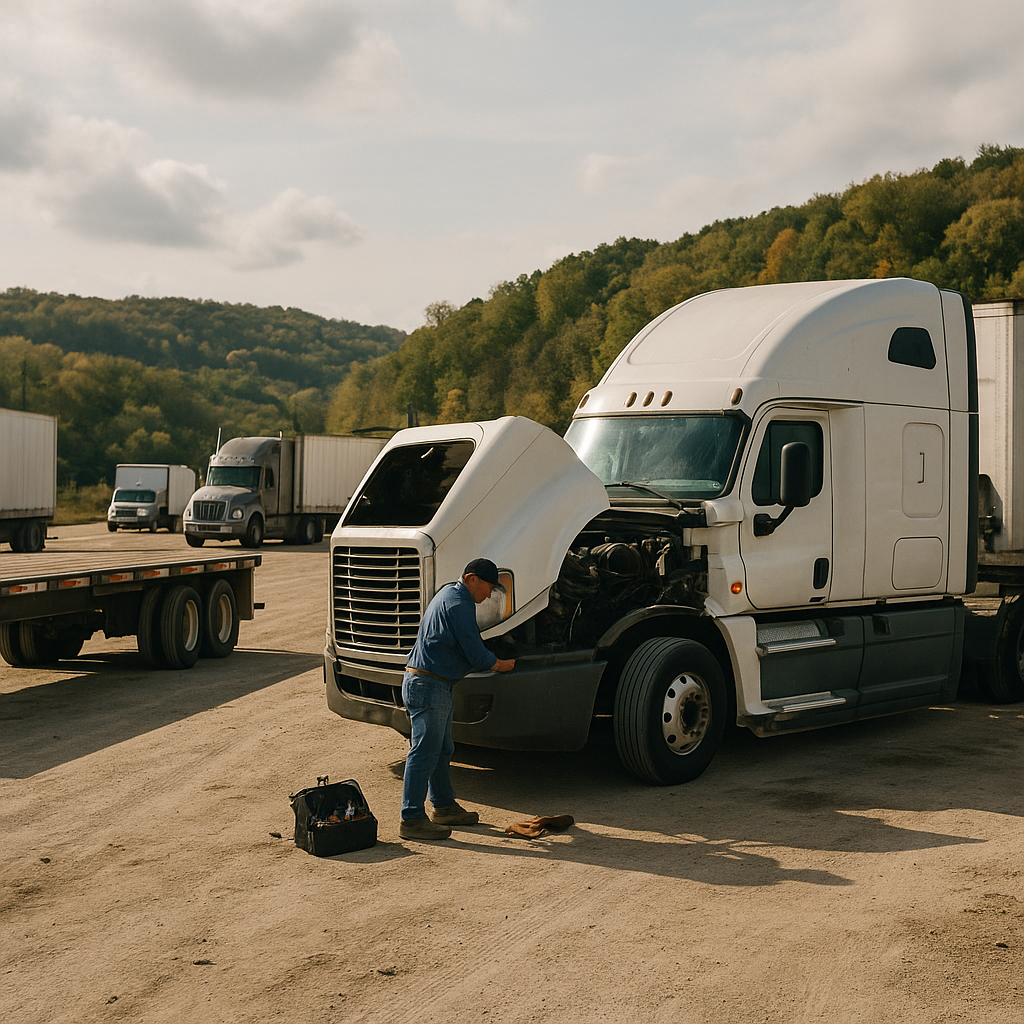

If you’re shopping for tow truck insurance Kentucky operators actually need, the first thing to clear up is simple: a tow truck used for business usually needs commercial insurance, not a personal auto policy with a trailer on the back. The right setup depends on how the truck is used, what it tows, where it runs, and whether the operation stays local or crosses into broader commercial or federal requirements.
What Tow Truck Insurance Is in Kentucky#
Tow truck insurance in Kentucky is commercial coverage built for towing operations, not ordinary personal driving. If you use a truck to tow customer vehicles, respond to roadside calls, recover disabled units, or run a towing business, insurers rate and underwrite that as commercial risk. Kentucky matters, but the real starting point is how the truck is used day to day.
A lot of confusion starts when people mix up occasional personal towing with commercial towing. A truck pulling your own boat trailer to the lake once a month is one thing. A rollback or wrecker dispatched to pick up a stranded driver’s vehicle for pay is something else entirely.
Personal-use towing vs. commercial towing#
Personal auto insurance is coverage written for private driving, like commuting, errands, and other non-business use. Commercial auto insurance is coverage written for vehicles used in a business, including towing for customers and other money-making operations.
That split matters because insurers look at exposure, not just the truck itself. A one-ton pickup used around a farm may be insurable very differently from a truck that takes roadside service calls every day. Once you’re moving customer vehicles, collecting fees, or advertising towing services, the insurance question usually shifts from personal use to business use.
For a broader foundation on this distinction, review these commercial auto insurance basics.
Why tow trucks usually need commercial policies#
Tow trucks usually need commercial policies because towing creates higher liability and property exposures than ordinary driving. You’re not just operating the truck. You’re also loading, securing, transporting, and unloading someone else’s vehicle under time pressure, often on highways, shoulders, lots, and accident scenes.
A practical example helps. If you back into a pole in your own driveway with a personal truck, that’s one type of claim. If your driver hooks a customer’s SUV, pulls into traffic, and a loading mistake damages that vehicle while another car swerves and crashes, that loss picture is much more complex.
Where Kentucky fits into the insurance decision#
Kentucky affects licensing, local business setup, and state insurance oversight, but it doesn’t erase the commercial-use analysis. A tow truck in Louisville, Lexington, Bowling Green, or a rural county still needs to be insured based on what work it does.
That means location is only one factor. The bigger questions are whether the truck is for-hire, whether it tows customer vehicles, whether it crosses state lines, and whether the operation fits broader commercial motor carrier rules.

What Coverage a Kentucky Tow Truck Policy Usually Needs#
Most Kentucky tow truck policies combine core commercial auto coverage with towing-specific protection. In plain terms, you usually need liability for damage you cause, protection for the tow truck itself, and coverage for the customer’s vehicle while it’s in your care. The exact mix changes if the truck is for-hire, not-for-hire, local-only, or doing limited towing work.
Auto liability#
Auto liability is coverage for bodily injury or property damage you cause to others with the insured vehicle. For a tow truck, this is the foundation because road claims can involve other drivers, parked vehicles, buildings, guardrails, and injury allegations.
If your driver runs wide in a turn and clips a passenger car, auto liability is the coverage people usually think about first. The same goes for a highway merge, an accident while backing into a lot, or a recovery scene where the tow truck itself causes damage. This is also why state minimum thinking often gets people in trouble: the legal minimum for a private car isn’t the same as a sound towing policy.
Physical damage#
Physical damage is coverage for damage to your own truck, usually including collision and comprehensive; comprehensive often includes risks like theft, vandalism, weather, and some fire losses. For tow operators, this can be critical because the truck is both the vehicle and the income-producing equipment.
A newer flatbed with financed equipment has a very different exposure than an older paid-off wrecker. If the truck is damaged in a crash, stolen from a yard, or hit by falling debris during a storm, physical damage can help repair or replace it subject to the policy terms and deductible. If you want a deeper breakdown of physical damage coverage, that article helps.
On-hook or towing-related cargo coverage#
On-hook coverage is protection for a customer’s vehicle while your tow truck has it hooked up, loaded, or in transport, subject to the policy’s terms. This is a different exposure from damage caused by driving your truck into another vehicle.
That difference matters in real life. If you safely drive the tow truck but the customer’s car shifts, scrapes, drops, or gets damaged during loading or unloading, the claim may fall into towing-specific coverage instead of ordinary truck liability. Some operators also look for coverage discussions similar to cargo coverage details, but towing risks need to be matched carefully because a towed car is not the same thing as general freight in a dry van.
General liability and other add-ons#
General liability is coverage for certain non-driving business claims, like a visitor slipping at your lot or accidental property damage not caused by operating the truck. It can matter if customers come to your yard, you store vehicles, or your operation includes office, lot, or shop activity.
For example, if someone trips over equipment near your office entrance, that’s not the same kind of claim as a road accident. If your business has those exposures, general liability coverage may belong in the package. Depending on the operation, operators may also need other endorsements or specialty forms tied to storage, recovery work, or employee use.
How Kentucky Rules Affect Tow Truck Insurance#
Kentucky towing rules affect how a towing business operates, but they do not automatically tell you the full insurance answer. Insurance still turns on business use, vehicle type, whether the operation is for-hire, and whether it stays local or touches interstate commercial rules. That’s why a Kentucky tow truck can be subject to both state considerations and, in some cases, federal motor carrier context.
State towing rules and business licensing context#
Kentucky regulates insurance and business activity at the state level, and the Kentucky Department of Insurance is the right source for state insurance oversight. For tow operators, state and local rules can shape how the business is set up, what contracts it takes, how impounds or releases are handled, and what proof of insurance a customer, lender, lot owner, or municipality may ask to see.
But those rules don’t replace underwriting facts. A local operator doing police rotation work, private-property towing, or roadside assistance may have different insurance expectations than someone who mainly moves auction vehicles or transports disabled units across state lines.
Commercial auto requirements vs. state minimums#
State minimums are the minimum liability limits required under a state’s basic auto rules. Commercial towing needs are the broader insurance requirements created by the vehicle’s business use, loss exposure, contract requirements, and sometimes federal rules.
That distinction is where many buyers make a bad comparison. A personal auto minimum may satisfy a private driver on paper, but it doesn’t mean a carrier will write a commercial tow operation on that basis. A lender, contract partner, motor club, or municipal agreement may require more. And the practical risk of towing customer vehicles usually pushes coverage decisions well beyond “what’s the minimum?”
Why federal trucking rules can still matter#
Federal rules can matter when a tow operation fits commercial motor carrier activity, especially if it involves interstate operations, higher vehicle weights, or for-hire transportation. FMCSA is the Federal Motor Carrier Safety Administration, the federal agency that oversees safety and financial responsibility rules for many commercial motor carriers.
Under 49 CFR Part 387, for-hire interstate carriers hauling property in vehicles over 10,001 pounds often face federal public liability requirements, with scope depending on carrier type, weight, and commodity. The FMCSA also provides the operating framework many carriers use to determine whether federal registration and insurance filings come into play.
A practical example: a local Kentucky tow company that stays intrastate and handles neighborhood calls may mostly be dealing with state, contract, and insurer requirements. A wrecker that regularly operates across state lines or fits a broader for-hire interstate profile may face additional federal documentation and insurance expectations.
What Tow Truck Insurance Costs and What Changes the Price#
Tow truck insurance cost in Kentucky does not come from one reliable average. The real answer is that underwriters price the truck, the towing work, the radius, the drivers, the claims history, and the coverage choices together. Two operators in the same Kentucky city can get very different quotes because the operation, not just the ZIP code, drives the premium.
Vehicle type and tow equipment#
The truck itself changes the price fast. A light-duty tow unit used for limited local work is usually viewed differently than a heavy wrecker, a rollback with newer equipment, or a truck with customized recovery gear.
For example, a newer flatbed with high replacement value may cost more to insure for physical damage because repairs and parts are expensive. An older wrecker with visible wear, prior damage, or harder-to-source parts can also raise concerns, especially if inspections, maintenance, or condition suggest a higher chance of loss.
Driving radius and business volume#
Driving radius is the distance the truck typically operates from its base. Business volume is how often the truck is working, how many calls it handles, and how much time it spends in active service.
A truck doing occasional local tows within a tight radius may present a different risk than a unit running long days, busy highways, and constant dispatch calls. More time on the road usually means more chances for accidents, loading mistakes, roadside exposure, and customer vehicle damage. The same logic applies if one truck is a backup unit and another is the main revenue truck working every day.
Claims history and driver record#
Claims history is your prior loss record, and driver record is the history of violations, accidents, and licensing issues tied to the people operating the truck. These are major underwriting factors because they give insurers a picture of how the operation has performed in the real world.
A clean record can help a quote stay more competitive. A recent at-fault accident, multiple towing-related losses, or driver violations can push pricing the other way. Even if the truck value stays the same, the premium can move sharply if the underwriter sees a pattern of preventable losses or inexperienced drivers.
Coverage limits, deductibles, and operation scope#
A deductible is the amount you pay out of pocket before covered physical damage insurance pays on a claim. Higher deductibles may lower premium, but they also mean you’re taking on more risk when something goes wrong.
Coverage scope matters just as much. A narrow policy may look cheaper until you notice lower limits, missing towing-related protection, stricter exclusions, or a class code that doesn’t really fit your work. That’s why broad “average monthly tow truck insurance” searches are only so useful. A better approach is to compare the operation against the actual commercial truck insurance cost factors the underwriter is using.
If you get this part wrong, the cheap-looking quote can be the one that fails when a customer’s vehicle is damaged or a dispatcher asks for proof you don’t actually have. If you’re not sure how your Kentucky towing operation should be classified,
How to Save Money Without Buying the Wrong Coverage#
The safest way to save on tow truck insurance is to match the policy to the real operation from the start. Accurate underwriting details can prevent you from paying for the wrong thing, but they also help avoid a “cheap” policy that doesn’t fit your towing work when a claim happens.
Match coverage to actual towing work#
If you only do light-duty local tows, say that clearly. If you also do recoveries, impounds, long-distance transport, or storage-lot work, that needs to be disclosed too.
A policy priced for limited use may not be the right fit for a truck that’s actually running full-time roadside calls. Savings come from correct classification, not from leaving out the risky part of the job.
Separate personal use from business use#
If the truck is truly a business vehicle, insure it like one. Trying to keep a commercial tow truck on personal coverage because it also gets used at home can create a bad surprise later.
A cleaner setup is to separate the private vehicle from the commercial one, disclose garaging accurately, and describe who drives which unit. That helps the underwriter match the policy to reality.
Choose deductibles intentionally#
Higher deductibles can reduce premium, but only if you can absorb the out-of-pocket cost. If one windshield, fender hit, or equipment-related damage claim would strain cash flow, the lower premium may not be worth it.
Compare policies on scope, not just price#
Tow operators should compare limits, towing-related protections, exclusions, and use class before comparing premium alone. The cheapest quote on paper may exclude the exposure you were actually trying to insure.
Is Towing a Good Business to Start?#
Towing can be a good business to start for the right operator, but it is not a low-overhead side hustle. It depends on equipment, dispatch relationships, compliance, cash flow discipline, and the ability to manage risk every day. Insurance is part of startup planning from the beginning, not something to figure out after the truck is already on the road.
What startup operators should budget for#
Startup costs go beyond the truck purchase. You may be dealing with equipment condition, maintenance, fuel, storage, software, permits, staffing, and downtime before revenue stabilizes.
A one-truck startup can be leaner, but it also has less room for error. If the truck is down, revenue can stop. A small fleet may bring more call capacity, but it also brings more payroll, more drivers to underwrite, and more exposure to claims.
Insurance as part of launch planning#
Insurance affects whether the business is truly ready to operate. A quote can change based on truck type, business description, radius, and driver history, so it belongs in the budget early.
That matters especially for startups that are still deciding between limited local work and full-service roadside towing. The insurance setup should reflect the actual business model, not the optimistic version of it.
When towing may or may not be a good fit#
Towing can be solid work if you’re comfortable with odd hours, operational pressure, vehicle risk, and customer-service headaches. It may be a poor fit if cash reserves are thin, maintenance is deferred, or the business plan depends on underinsuring the operation just to get started.
How to Get the Right Kentucky Tow Truck Quote#
The best Kentucky tow truck quote starts with accurate operation details, not just a request for the lowest price. Insurers will ask how the truck is used, what it tows, who drives it, where it’s garaged, and how far it runs. When those details are clear, it’s much easier to compare quotes based on coverage fit instead of guessing from the premium alone.
Information insurers will ask for#
Have the basics ready before you start. VIN is the vehicle identification number, the unique serial number used to identify the truck and verify its specs.
Most underwriters will ask for:
- VIN and year, make, model
- Garaging address
- Type of towing performed
- Operating radius
- Driver information and records
- Business use description
- Prior insurance and claims history
A good prep step is working through a truck insurance quote checklist so you don’t miss details that change underwriting.
Questions to ask before you bind coverage#
Don’t stop at “What’s the premium?” Ask what class of towing the policy is written for, what customer-vehicle exposure is covered, what exclusions apply, and whether your limits match your contracts and actual work.
If your operation may touch federal motor carrier status, check your profile through SAFER and make sure your insurance conversation matches the way the business is registered and operated. That’s especially useful for operators who may have a USDOT number, interstate activity, or a for-hire profile that creates extra scrutiny.
When a specialty broker is useful#
A specialty broker can help when the operation doesn’t fit a generic commercial auto template. Tow trucks often involve a mix of vehicle exposure, customer-property exposure, contract demands, and local business activity that needs more than a basic small-business auto quote.
For a Kentucky operator, the practical next step is simple: gather the truck details, driver details, use description, and radius first. Then compare options against the real towing scope, not the shortest quote form.
FAQ#
What insurance do I need for a tow truck?
Most tow trucks need commercial auto liability, physical damage, and towing-specific protection such as on-hook coverage. Commercial auto liability covers injuries or property damage you cause with the truck. Physical damage covers the tow truck itself for losses like collision, theft, or certain weather events, subject to policy terms. On-hook coverage addresses damage to a customer’s vehicle while it is being loaded, transported, or unloaded. If your business also has a yard, office, or customer foot traffic, general liability may matter too. The exact setup depends on whether the truck is for-hire, not-for-hire, local-only, or part of a broader commercial operation.
How much is the average tow truck insurance?
There isn’t one reliable average that tells you what your tow truck insurance will cost. Premium depends on the truck type, equipment, vehicle value, radius, towing volume, driver records, claims history, garaging, and the coverages you choose. A single light-duty unit doing occasional local calls may price very differently from a busy roadside recovery truck or a small fleet. Deductibles and limits also move the quote more than many buyers expect. If you’re comparing options, focus less on a vague monthly average and more on whether the underwriting details match how your truck is actually used.
What are the towing laws in Kentucky?
Kentucky towing laws affect how a towing business operates, but they don’t create a one-line insurance answer by themselves. State rules may shape business practices, releases, contracts, and proof-of-insurance expectations, while the actual policy still depends on business use, vehicle setup, and whether the truck operates commercially. A local tow company working intrastate may mostly be dealing with state, local, and contractual requirements. An operator that crosses state lines or fits a broader for-hire commercial profile may also run into FMCSA and 49 CFR Part 387 issues. The safest approach is to review Kentucky rules and then match the policy to the real towing operation.
Is towing a good business to start?
Towing can be a good business if you understand the equipment costs, dispatch reality, compliance duties, and insurance demands before you launch. The upside is steady demand in many markets, but the work can be physically demanding, unpredictable, and expensive to run. A one-truck startup may keep overhead lower, but it also has less margin for downtime, repairs, or claims. A larger operation may capture more volume, but it comes with more staffing and insurance complexity. Towing tends to work best for operators who plan conservatively, maintain equipment well, and treat insurance as part of the business model, not an afterthought.





