
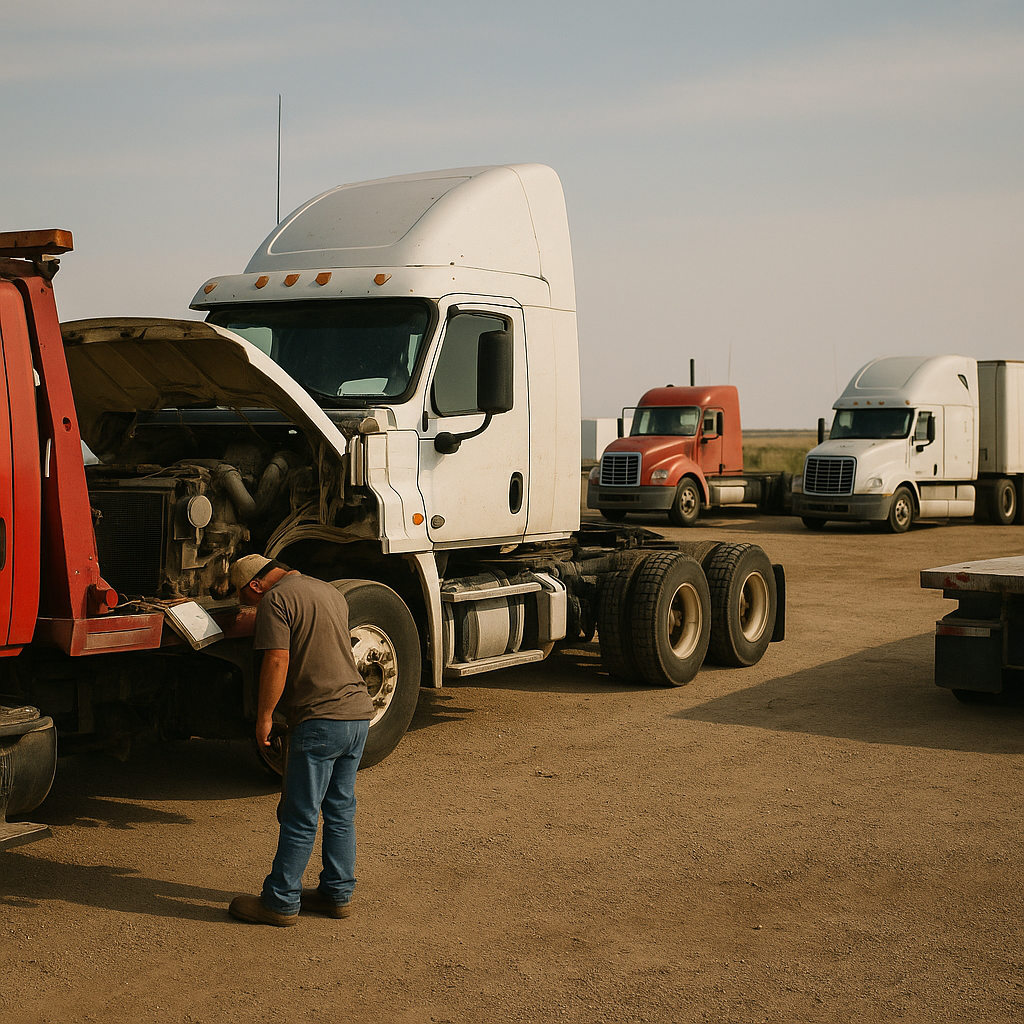

If you’re shopping for tow truck insurance Oklahoma operators actually need, the biggest mistake is treating a wrecker like a regular pickup or a generic semi. Tow work has its own exposures, its own contract headaches, and sometimes a different compliance path depending on whether you stay local or cross into federal motor carrier rules.
What Oklahoma Tow Truck Insurance Covers#
Tow truck insurance in Oklahoma usually starts with a commercial auto policy built around towing work, not a personal auto policy. The right setup depends on what kind of towing you do, what truck you run, where you operate, and whether you need extra protection for vehicles in your care or damage to your own unit.
Tow truck work isn’t the same as over-the-road trucking. A wrecker may handle roadside tows, recovery jobs, impounds, private property tows, dealership moves, or mixed local hauling. Those details matter because underwriters rate the business based on what the truck actually does, not just the VIN.
Tow truck operations are not the same as over-the-road trucking#
A commercial auto policy is business vehicle insurance designed for work use, liability exposure, and equipment values that personal auto policies aren’t built to handle. That’s the baseline for most towing businesses because a tow truck isn’t just transportation — it’s the business itself.
Personal auto assumptions cause problems fast. Oklahoma drivers often hear advice meant for regular cars, then assume it carries over to a rollback or wrecker. It usually doesn’t, and the NAIC is a good baseline source for understanding how personal and commercial policy structures differ.
The core coverages most towing businesses compare#
Most Oklahoma tow operators start by comparing a few core coverages:
- Auto liability pays for injury or property damage you cause to others in a covered accident.
- Physical damage pays for damage to your truck from collision, theft, fire, weather, and similar losses.
- Motor truck cargo is insurance for property you’re transporting, but it does not automatically mean every towed vehicle loss will be covered the way an operator assumes.
- General liability covers certain non-driving business claims, like some premises or operations-related third-party claims.
If the truck is financed, a lienholder will usually care a lot about physical damage. If you do private property towing, police rotation work, or more involved recovery jobs, you may also need endorsements or policy language that matches those exposures instead of a generic truck setup.
Coverage gaps to watch in towing work#
Some of the biggest mistakes happen in the gaps between names people throw around online. Non-trucking liability, often called bobtail, covers certain non-business use only, not paid hauling or active business operations. For a tow truck, that means it is not a cure-all for every off-duty or in-between situation.
Another common misunderstanding is assuming cargo covers the customer’s whole vehicle in every scenario. It may not. Towing claims can turn on how the vehicle was hooked, transported, stored, or handled, so you need to read the terms, exclusions, and operation description carefully.
That gets expensive when you find out after a loss that the policy was built for general trucking, not towing. If your setup is mixed or hard to classify,

Oklahoma Rules vs Federal Trucking Requirements#
Oklahoma insurance rules and FMCSA trucking rules are not the same thing, and mixing them up leads owner-operators to buy the wrong limits or chase the wrong filing. Your requirements depend on whether you operate intrastate or interstate, whether you’re for-hire, what you haul or tow, your vehicle weight, and whether federal authority applies.
State minimums are not the same as FMCSA requirements#
A state minimum is the minimum insurance Oklahoma may require for vehicles registered or operated under state rules. An FMCSA requirement is a federal financial responsibility rule that applies when your operation falls under federal motor carrier regulations.
This is where drivers get tripped up by shorthand like “all truckers need $750K.” That’s wrong. Under 49 CFR Part 387, for-hire interstate carriers hauling general freight in vehicles over 10,001 lbs must carry at least $750,000 in public liability, but federal minimums vary by carrier type, vehicle weight, and commodity. FMCSA’s main regulatory guidance is available at FMCSA.
When a tow truck is subject to federal filing rules#
An MC number is federal operating authority for certain for-hire interstate carriers. Some Oklahoma tow operations stay intrastate and mainly deal with state or local requirements. Others may cross state lines, contract for transport connected to interstate commerce, or otherwise trigger federal compliance questions.
An MCS-90 is an endorsement used to show proof of federally required public liability financial responsibility for certain motor carriers. Whether you need filings depends on the business model, not just where the truck is parked.
If you’re not sure whether federal rules apply, check your status and operating authority details through SAFER. It’s a practical way to confirm whether you’re looking at a state-only question or a federal one.
Why carrier type and operating radius matter#
Carrier type means whether you’re operating for-hire or in another business use category that changes the rules. Operating radius matters because a local tow operator working one metro area is a different risk from a truck running wide regional calls.
Oklahoma operators also ask whether the state is PIP or no-fault because they are mixing personal auto language into a commercial question. Oklahoma is not a no-fault/PIP state in the way many shoppers mean it, and commercial tow truck policies are usually underwritten around business use, liability, truck value, and operation type instead of personal auto assumptions.
How Much Tow Truck Insurance Costs in Oklahoma#
Tow truck insurance in Oklahoma does not have one standard monthly price because the premium is built around business risk, not just the truck itself. Your actual premium depends on your operation, cargo, radius, driving history, truck value, loss history, and the coverages and endorsements needed for your towing work.
What drives the monthly premium#
Underwriters look at the truck, but they also look at the business behind it. A rollback doing light local roadside work is not the same risk as a heavier unit doing recovery, police rotation, or higher-exposure towing in dense traffic.
A financed truck often needs broader physical damage protection because the lender wants the unit protected. A more valuable truck, specialized equipment, or higher deductibles can all change the quote in different ways.
Why two tow trucks can get very different quotes#
Two operators in Oklahoma can run similar-looking trucks and still get very different numbers. One may have a clean driving record, tight operating radius, and well-documented business use. The other may have losses, broader territory, newer drivers, or a description of operations that creates more uncertainty for underwriting.
| Quote factor | Lower-risk example | Higher-risk example |
|---|---|---|
| Operating radius | Local metro service area | Wide regional multi-county area |
| Truck use | Basic roadside tows | Recovery, impound, mixed operations |
| Driver history | Clean MVR and experience | Violations, claims, limited experience |
| Equipment value | Older lower-value unit | Newer financed higher-value unit |
| Documentation | Clear records and garaging | Incomplete or inconsistent details |
The monthly payment alone doesn’t tell you whether a quote is better. A lower number can come from stripped-down coverage, different deductibles, or a policy form that doesn’t really fit towing.
Ways to lower cost without creating coverage gaps#
The practical way to lower premium pressure is to make the risk easier to understand and avoid paying for the wrong thing. Accurate garaging address, correct radius reporting, current driver information, and clean documentation help more than chasing vague “cheap” promises.
It also helps to buy only the coverages your operation actually needs. If you’re comparing policies and can’t tell what’s missing, LogRock specializes in trucking insurance for owner-operators and small fleets, and can help scope it correctly.
How to Compare Oklahoma Tow Truck Quotes the Right Way#
A useful tow truck quote comparison starts with matching the inputs on every submission. If one carrier quotes local roadside towing and another quotes mixed recovery work with a wider radius, you’re not comparing prices — you’re comparing different risks.
Use the same inputs on every quote#
Start with the same truck details, driver history, garaging address, operating radius, and use description every time. If the unit is financed, include that. If the truck does recovery, private property towing, or other special work, say so up front.
That keeps one quote from looking cheaper only because the carrier was given a narrower story. Towing classifications can be sensitive, so small differences in wording can create big differences in price or fit.
Compare coverage, not just the payment#
A deductible is the amount you pay out of pocket before the insurer pays on a covered claim. That matters, but so do liability limits, physical damage terms, cargo wording, and exclusions tied to towing or recovery operations.
Compare each quote side by side on:
- Liability limits
- Deductibles
- Physical damage coverage
- Cargo terms
- Endorsements or exclusions for towing work
- Any filing needs tied to your operation
A low monthly payment can hide expensive gaps. If a claim hits and the carrier says the work wasn’t described correctly, the “cheap” quote wasn’t cheap.
Questions to ask before you bind#
Before you bind coverage, ask what operations are actually contemplated by the policy. Ask whether roadside towing, recovery, storage exposure, or private property work changes anything. Ask whether the quote assumes intrastate-only use or something broader.
Those are the questions that keep a quote from falling apart at claim time. If you want help matching policy language to your towing setup,
Ways to Save Without Buying the Wrong Policy#
The safest way to save on tow truck insurance is to tighten the quote around your real operation, not to strip out coverages blindly. The cheapest-looking policy can leave out towing-specific exposures, use restrictive terms, or create trouble when a claim tests what the policy actually covers.
Avoid overinsuring the wrong risk#
Don’t pay for broad add-ons just because they sound familiar. Start with the truck’s actual work: roadside assistance, local tows, recovery, impounds, or mixed use. Then separate what is essential from what is optional.
That matters because some operators overbuy one area and underbuy another. A clean schedule and accurate operation description usually helps more than guessing.
Bundle only when the coverage still fits#
Bundling can be useful if the coverages still match the tow operation. But don’t assume a package built for general contractors, delivery vans, or generic commercial auto automatically fits a wrecker.
Towing is specialized enough that policy fit matters more than convenience. Your actual premium depends on your operation, cargo, radius, driving history, and other factors.
Keep records that help underwriting#
Good underwriting files can support better quote accuracy and fewer delays. Keep current unit details, driver license information, garaging address, operating radius, and prior loss information ready.
That doesn’t guarantee a lower premium, but it gives the underwriter a cleaner picture of the business. An experienced trucking insurance professional can help sort out what is essential versus optional for a specific Oklahoma tow setup.
FAQs About Oklahoma Tow Truck Insurance#
What insurance do I need for a tow truck?#
Most Oklahoma tow trucks need a commercial auto policy built for towing operations, not a personal auto policy. That usually means auto liability first, then physical damage for the truck, with cargo, general liability, or towing-specific endorsements added depending on the work.
What you need depends on what the truck actually does. Local roadside tows, recovery work, private property towing, and mixed operations can all change the right coverage setup. If the business triggers federal authority, filings and higher limits may also apply.
How much is tow truck insurance per month?#
There is no universal monthly price for Oklahoma tow truck insurance because rates vary by truck value, driver history, location, operating radius, loss history, and coverage choices. Tow truck insurance is usually priced around the business risk, not just the unit.
A local owner-operator with clean history may look very different to an underwriter than a recovery-focused truck with broader territory and prior claims. The right way to compare cost is to keep the quote inputs consistent and then compare coverage fit, not just payment.
Who has the cheapest tow truck insurance?#
There isn’t one carrier that is cheapest for every Oklahoma tow truck. The lowest quote for one operator may be unavailable, misclassified, or a poor fit for another based on unit type, towing radius, claims history, and the kind of work performed.
The better question is which quote gives the most efficient cost for the coverage your operation actually needs. A policy that leaves out towing-related exposures or uses restrictive terms can cost more later, even if the monthly payment looks lower up front.
Is Oklahoma a PIP state?#
Oklahoma is not a no-fault or PIP state in the way many personal-auto shoppers mean it. That’s important because tow truck buyers often bring personal car insurance assumptions into a commercial insurance decision.
Commercial tow truck coverage is usually evaluated on business use, vehicle type, liability exposure, contract needs, and whether state-only or federal trucking rules apply. So even if a driver is familiar with personal auto terms, that doesn’t answer what a tow business needs.
Do all Oklahoma tow trucks need FMCSA coverage?#
No. Not every Oklahoma tow truck falls under the same federal rules. Some operators stay intrastate and mainly deal with Oklahoma requirements, while others may trigger FMCSA compliance based on interstate activity, for-hire status, vehicle weight, and the nature of the operation.
That’s why state minimums and federal minimums shouldn’t be treated as the same thing. Review your operating authority, filings, and status carefully, and verify details through FMCSA and SAFER when federal questions come up.





