
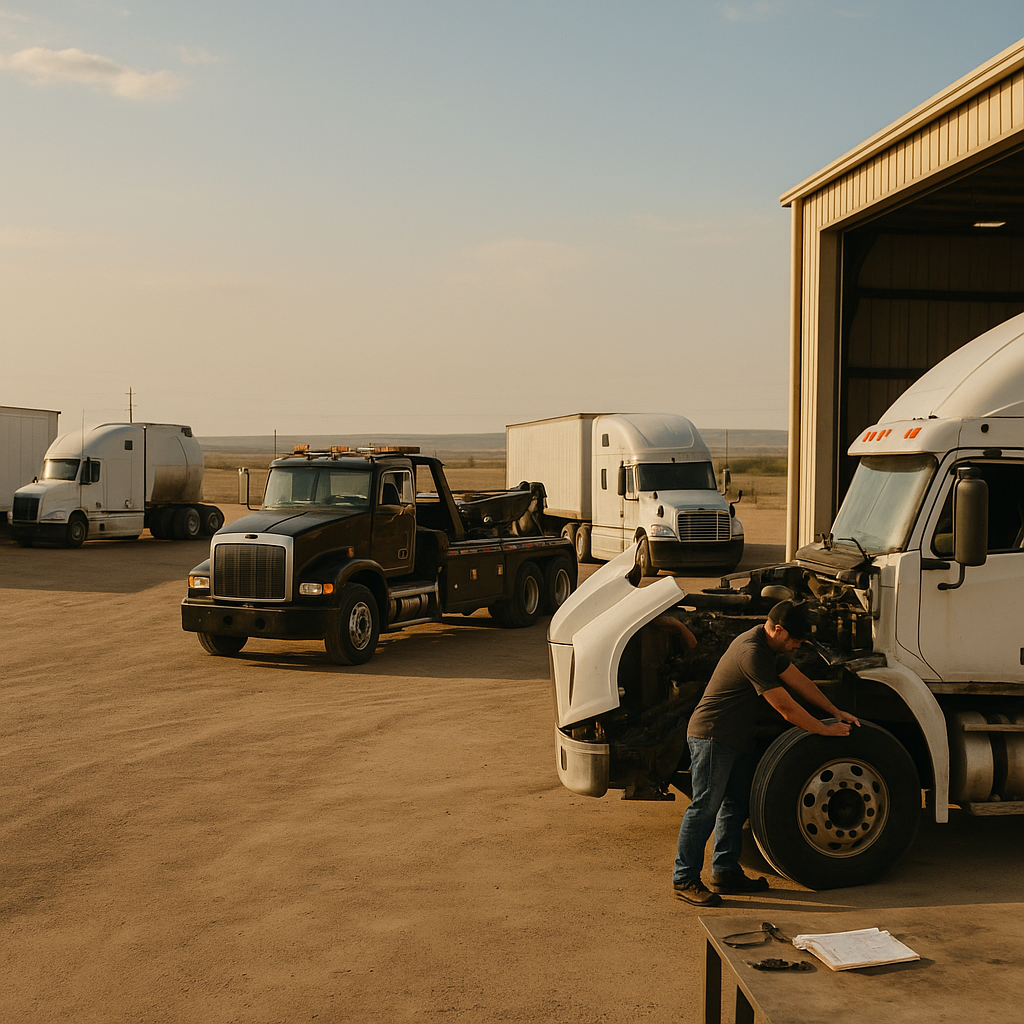
Tow truck insurance in Texas is a commercial insurance setup built for towing risk, not a personal auto policy with a business name on it. If you tow customer vehicles, store them, run roadside calls, or do recovery work, the right policy usually depends more on what you actually do than on finding the lowest premium.
What Tow Truck Insurance Covers in Texas#
Tow truck insurance in Texas usually means a commercial auto insurance foundation plus towing-specific coverages for the risks that come with handling someone else’s vehicle. For most small towing businesses, the key issue isn’t just liability for your truck on the road – it’s whether your policy fits loading, transport, storage, and roadside exposure.
A commercial auto insurance policy is insurance built for vehicles used in business, not personal driving. A tow truck insurance setup is the package of commercial coverages used for towing operations.
Why towing needs different coverage than a standard auto policy#
A normal commercial auto policy may cover the truck itself and liability from driving, but towing creates extra exposure the average plumber’s pickup or contractor van doesn’t have. If a rollback is hauling a customer’s car and that car gets damaged during loading, tie-down, or transport, the question becomes whether the policy includes towing-specific protection such as on-hook coverage, which covers a customer’s vehicle while it’s attached to or being transported by your tow truck.
Another example: a wrecker operator finishes a late-night call and keeps a customer’s keys or vehicle under their control until morning. That can create storage or custody issues that generic auto liability was never designed to handle.
For-hire towing vs not-for-hire towing#
For-hire towing means you’re getting paid to tow someone else’s vehicle. Not-for-hire towing usually means towing your own equipment, your company’s vehicles, or vehicles connected to your own business rather than offering towing service to the public.
That difference matters because insurers rate the operation based on actual exposure, not just what the truck looks like. A one-truck roadside tow operator hauling disabled customer vehicles all day usually needs a different policy structure than a business that only moves its own equipment between yards.
Personal-use towing vs commercial towing#
Personal-use towing means non-business driving, like using a pickup and trailer for your own property or hobby use. Once you’re doing side jobs for pay, moving customer vehicles, or advertising towing services, personal auto assumptions usually break down fast.
A common Texas mistake is assuming a personal pickup that occasionally does paid tow work can stay on a personal policy. If that pickup is doing commercial towing, the operation – not the zip code – drives the coverage fit. When that mismatch shows up after a claim, that’s when the cheap option stops looking cheap. If you’re not sure where your operation falls,
Texas Requirements: What Applies and What Does Not#
Texas tow truck insurance requirements depend on whether you’re operating as a local Texas towing business, an intrastate commercial operator, or an interstate motor carrier subject to federal rules. The biggest mistake is mixing up Texas business and licensing rules with FMCSA insurance requirements, because state minimums and federal minimums are not the same thing.
The FMCSA is the Federal Motor Carrier Safety Administration, the federal agency that regulates certain commercial motor carriers. An MC number is a federal motor carrier operating authority number used for certain for-hire interstate operations. BIPD means bodily injury and property damage liability, the public liability coverage federal rules refer to.
Texas rules for towing businesses#
Texas operators should check business, licensing, and insurance expectations with the Texas Department of Insurance and applicable state vehicle or registration rules through the Texas DMV. Texas may have state-level requirements tied to business operations, vehicle registration, or towing activity, especially when the business is local and not operating as an interstate motor carrier.
A local tow operator working only inside one Texas metro may be dealing mostly with Texas rules, contracts, local towing relationships, and insurer underwriting for roadside and storage exposure. A storage-lot-heavy operation may also need insurance pieces that go beyond basic road liability.
When federal FMCSA rules matter#
Federal rules matter when the towing operation falls under interstate commercial motor carrier rules. Under 49 CFR Part 387, for-hire interstate carriers hauling general freight in vehicles over 10,001 lbs must carry at least $750,000 in public liability, while other operations can fall under different thresholds depending on vehicle weight, commodity, and carrier type.
That doesn’t mean all tow truck operators automatically need the same federal limit. A cross-state recovery tow or interstate for-hire setup may trigger federal insurance and authority issues that a local-only Texas operation may not. You can verify carrier status through SAFER and review federal guidance from the FMCSA.
Why state minimums and federal requirements are not the same thing#
Texas state minimums and registration rules are not a substitute for federal motor carrier requirements when federal rules apply. If your operation crosses state lines, holds interstate authority, or otherwise falls under FMCSA oversight, the controlling standard may come from federal law rather than the Texas minimum you hear quoted locally.
A practical example: a Texas tow operator doing local impound and roadside work may need one compliance path, while a tow business handling interstate recoveries may face another. The insurance conversation has to start with what kind of operation you actually run, not with a generic "Texas minimum" answer.

Core Coverages Tow Operators Usually Need#
Most tow operators in Texas need more than basic liability because towing creates road risk, customer-vehicle risk, and often storage or roadside service risk. The right mix usually starts with auto liability, then adds on-hook, garagekeepers, physical damage, and other protections based on how the business actually works.
Auto liability for the truck#
Auto liability pays for injury or property damage you cause to others with the insured truck. This is the core road-use coverage and the one most people think about first.
If your driver rear-ends another vehicle on the way to a call, auto liability is the coverage that responds to the third party’s damage and injuries, subject to the policy terms and limits. It’s necessary, but by itself it doesn’t solve the towing-specific parts of the job.
On-hook towing insurance#
On-hook coverage protects a customer’s vehicle while it’s attached to or being carried by your tow truck. This is one of the biggest gaps in generic policies sold to towing businesses that were quoted too fast or scoped too loosely.
Example: you’re loading a disabled sedan onto a rollback, and it slides into the bed rail and damages the quarter panel. Or a vehicle gets damaged while secured behind your wrecker during transport. That’s the kind of loss on-hook coverage is designed to address.
Garagekeepers and storage exposure#
Garagekeepers legal liability covers damage to a customer’s vehicle when it’s in your care, custody, or control at a covered garage, lot, or storage location, depending on the policy terms. This matters when your business stores vehicles, holds impounds, parks customer cars overnight, or otherwise controls them off the road.
A pure roadside operator with no yard may need less of this than a towing business that regularly holds vehicles for a day or two. If your business is storage-heavy, the policy structure may look very different from a simple roadside tow setup.
Physical damage, medical payments, and UM/UIM#
Physical damage covers damage to your own truck and usually includes collision and comprehensive-type protection. Medical payments helps with certain medical expenses after an accident regardless of fault, up to the policy terms. UM/UIM means uninsured/underinsured motorist coverage, which can help if another driver causes a loss and doesn’t have enough insurance.
These coverages can matter more when the truck is expensive, financed, or operating in dense traffic or over a wider radius. A newer rollback with a loan usually needs a different approach than an older paid-off unit used sparingly.
Roadside and general liability considerations#
General liability covers certain non-driving business liability exposures, such as some premises or operations claims, rather than losses caused by driving the truck. For a tow operator, that may matter if a customer slips at your office or lot, or if roadside activity creates non-auto exposure depending on the facts.
This is also where towing businesses need to stop relying on generic commercial auto advice. A one-truck roadside operator, a recovery operator, and a tow-plus-storage business can all look similar on paper, but they don’t have the same risk.
How Much Tow Truck Insurance Costs#
Tow truck insurance cost in Texas depends on the truck, the operation, the drivers, the radius, and the coverage mix – especially whether you need towing-specific protection like on-hook or garagekeepers. The fastest way to get a misleading price is to ask only for the cheapest tow truck insurance and not spell out what the business actually does.
A deductible is the amount you pay out of pocket before insurance starts paying on a covered claim. A coverage limit is the maximum the policy will pay for a covered loss. For plain-language insurance definitions, the NAIC offers consumer insurance guidance.
What drives price up or down#
Insurers usually look at things like:
- truck type and value
- towing type and recovery complexity
- driver history
- operating radius
- whether the business is for-hire or not-for-hire
- storage or impound exposure
- selected limits and deductibles
A single rollback doing local roadside calls is one risk. A tow truck handling police rotation work, impounds, or customer vehicle storage is another.
Why small towing businesses pay differently from larger fleets#
A one-truck owner-operator often gets rated very differently from a larger towing company because there are fewer units to spread risk across and one driver’s history matters more. On the other hand, a very small operation without a yard, without heavy recovery work, and without multiple drivers may avoid some of the complexity larger operators carry.
That means "small" doesn’t automatically mean cheap or expensive. It means the details matter more.
Practical examples of cost differences#
Take two Texas operators. One runs a single local rollback, stores no customer vehicles, and does standard breakdown tows within a tight radius. Another also stores customer vehicles overnight, handles impound work, and keeps several units on a controlled lot.
Those operations shouldn’t expect the same quote structure, even if both ask for "tow truck insurance texas." The second operator has more custody exposure, more claim scenarios, and usually more coverage pieces to account for.
How to avoid buying more than you need#
Coverage fit comes first, price comparison comes second. If you ask three agencies for "the cheapest quote," one may strip out on-hook, another may leave out garagekeepers, and a third may quote broader protection that looks more expensive until you compare the details.
A better approach is to define the operation clearly, then compare apples to apples. Your actual premium depends on your operation, cargo, radius, driving history, truck value, and other factors.
How to Pay Less Without Buying the Wrong Policy#
The safest way to lower tow truck insurance cost is to match coverage to the real operation, then trim avoidable cost drivers without creating claim gaps. Cheap only helps if the policy still covers the job you actually do.
Choose coverage that matches the actual operation#
If you never store customer vehicles, a storage-heavy policy structure may be more than you need. If you do store vehicles, cutting garagekeepers just to lower the premium can backfire the first time a customer’s car is damaged in your lot.
The same goes for on-hook. A tow operator who hauls customer vehicles for pay shouldn’t treat that coverage like an optional extra unless the policy is deliberately structured another way and the exposure is clearly addressed.
Separate optional extras from must-have protections#
Some coverages are operation-driven, while others are more elective. The trick is figuring out which is which for your business model.
For example, a financed truck may make physical damage effectively non-negotiable. Medical payments or UM/UIM may be more about your risk tolerance, driver setup, and operating environment.
Use deductibles and limits strategically#
Raising deductibles can lower premium if you can realistically absorb more out-of-pocket cost after a claim. Choosing limits should also be deliberate – not just the lowest available, but not automatically the highest either.
That balance matters most for owner-operators running tight cash flow. If you want a second set of eyes on whether a policy is cutting the right corners or the wrong ones,
Clean up avoidable rating factors#
Some price drivers are hard to change, but some aren’t. Clean driver records, stable business details, consistent garaging information, documented safety practices, and accurate descriptions of towing and storage activity can all help keep quotes grounded in reality.
Misclassifying the operation to chase a lower premium usually catches up with you later, often when a claim exposes what the business was really doing.
How to Get the Right Texas Tow Truck Quote#
The right Texas tow truck quote starts with accurate operation details, not just a truck VIN and a request for a low price. For owner-operators and very small towing businesses, the difference between a good quote and a bad one is often whether the underwriter understood your towing and storage exposure from the start.
Information you should gather before shopping#
Have these details ready:
- truck type and value
- towing type, such as roadside, recovery, rollback, or wrecker work
- whether work is for-hire or not-for-hire
- operating radius
- driver history
- whether you store, impound, or hold customer vehicles
- whether the truck is financed
- where the vehicle is garaged
Questions to ask about towing and storage exposure#
Ask directly whether on-hook is included, whether garagekeepers applies, and whether the quote assumes any customer vehicle storage. If the business does side work, after-hours storage, or occasional impound handling, say so up front.
A quote can look fine until you realize it only addresses road liability and your own truck. That’s not enough for many towing operations.
When to compare policies instead of just prices#
Compare coverage structure line by line before comparing premium. A lower quote that excludes on-hook can be the wrong quote if your whole business is transporting customer vehicles.
LogRock specializes in trucking insurance for owner-operators and small fleets. If you’re not sure what coverage fits your operation, LogRock can help you scope it.
FAQ#
How much does tow insurance cost?
Tow insurance cost depends on the kind of truck you run, what type of towing you do, where you operate, how far you travel, your driving history, and which coverages you include. A simple local tow operation with one truck and no storage exposure is usually rated differently from a business that also handles impounds or stores customer vehicles overnight. Limits, deductibles, truck value, and whether the work is for-hire or not-for-hire also matter. The useful way to shop is to compare quotes built around the same coverage structure, not just the lowest number.
Does a personal auto policy cover a tow truck used for side jobs?
Usually, no. A personal auto policy is built for personal driving, not paid towing work involving customer vehicles. If you use a pickup or tow truck for side jobs, roadside calls, or paid vehicle transport, that creates commercial exposure that personal coverage often doesn’t fit. The problem isn’t just whether the truck is registered personally – it’s whether the vehicle is being used in business. Once money changes hands or you take control of a customer’s vehicle, you should assume the insurance question has changed and verify that the policy is built for commercial towing.
Is not-for-hire tow truck insurance the same as for-hire towing coverage?
No, not always. For-hire towing means you’re being paid to tow vehicles for customers, which usually creates a broader and more specialized risk profile. Not-for-hire towing may involve moving your own vehicles, your own equipment, or vehicles tied to your own business rather than towing for the public. Insurers care about that distinction because it affects both liability exposure and whether towing-specific protections like on-hook or garagekeepers are relevant. Two trucks may look identical, but if one hauls customer vehicles for pay and the other doesn’t, the policy fit can be very different.
Do all Texas tow truck operators need FMCSA insurance filings?
No. FMCSA insurance requirements apply when the operation falls under interstate commercial motor carrier rules, not automatically to every local Texas tow business. A local operator working only inside Texas may be dealing mainly with Texas business, registration, and insurer requirements. But once the operation becomes interstate or otherwise falls under federal motor carrier rules, federal insurance requirements may apply under 49 CFR Part 387. That’s why "Texas minimum" and "federal minimum" should never be treated as the same answer. Start by identifying whether the business is local intrastate, interstate, for-hire, and what type of vehicles and work are involved.
Do I need garagekeepers or on-hook coverage for a tow business?
Many tow operators need one or both, but not every operation needs the same mix. On-hook coverage matters when you’re towing or transporting customer vehicles and need protection while those vehicles are attached to your truck. Garagekeepers legal liability matters when customer vehicles are stored, parked, or otherwise kept in your care, custody, or control at your location. A pure roadside operator with no yard may focus more on on-hook. A tow business with a storage lot or impound exposure may need both. The key is matching the policy to how the business actually handles customer vehicles.





