
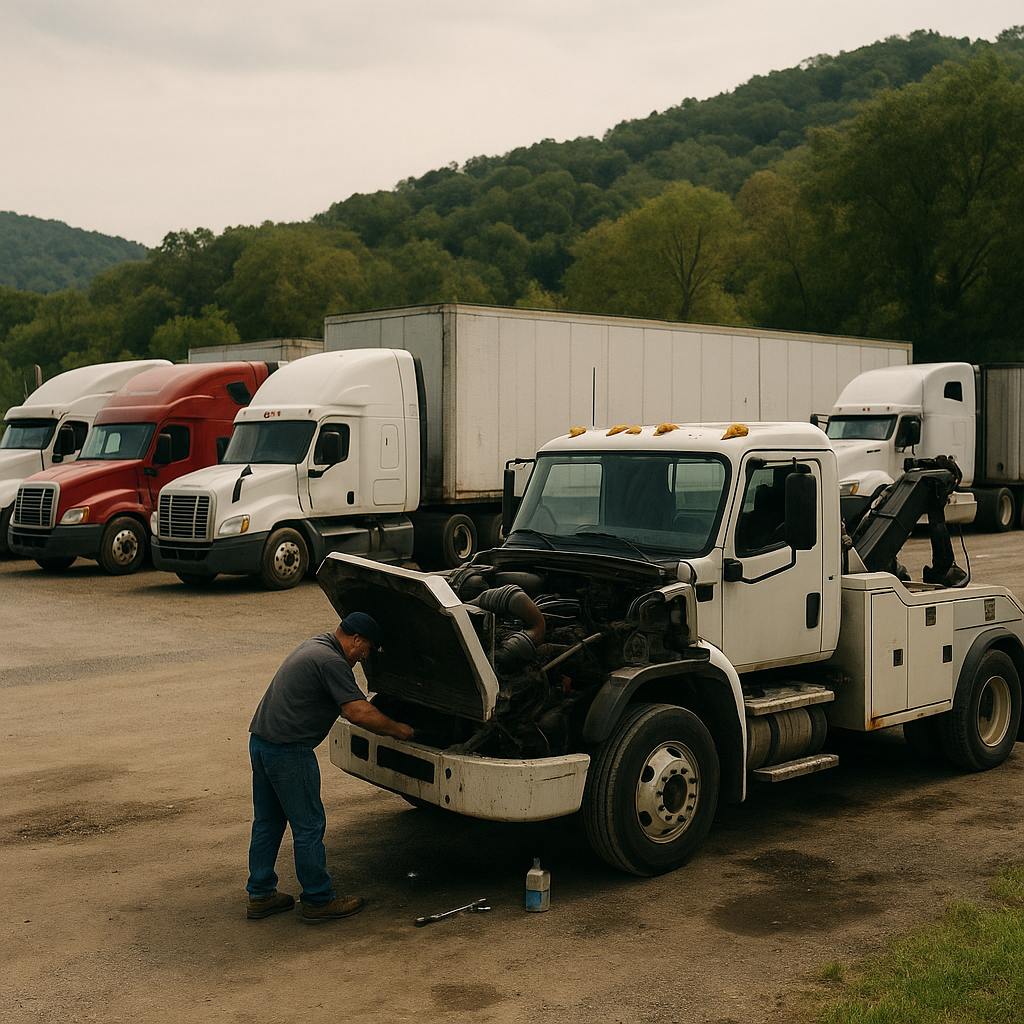

Tow truck insurance Virginia operators need isn’t just "truck insurance." It’s commercial coverage built around how the truck is actually used, whether that’s paid towing, recovery, roadside service, or limited personal use. The big mistake is buying a policy that doesn’t match the job, then finding out too late that Virginia rules, FMCSA rules, and your insurance setup don’t line up.
What Tow Truck Insurance Covers in Virginia#
Tow truck insurance in Virginia is commercial insurance designed for towing and recovery operations, not a personal auto policy with a different vehicle. Most paid tow operators need commercial auto liability as the base, then add other coverages based on the truck, the work, and whether the business runs intrastate or interstate.
A tow truck used in business creates a different risk than a pickup used for errands. You’re handling disabled vehicles, roadside calls, hookups, winching, and sometimes storage or recovery exposures. That’s why insurers classify tow and recovery separately from ordinary personal driving.
Tow truck insurance vs. personal auto insurance#
Tow truck insurance covers business use, while personal auto insurance usually excludes paid towing, recovery, and other commercial operations. If the truck earns money, responds to service calls, or supports a towing business, a personal policy usually isn’t the right fit.
Commercial auto insurance is coverage built for business-owned or business-used vehicles. For a tow operator, that usually means the insurer needs to know the truck type, radius, driver history, and the exact kind of towing work being done. If you want a broader grounding in commercial auto coverage, start there before comparing tow-specific options.
Core coverages most operators consider#
Most tow operators look at a package built around liability for damage to others, damage to the truck itself, and protection for non-driving business risks. The exact mix changes by operation, but a few coverages come up over and over.
Auto liability pays when your truck causes bodily injury or property damage to others. Physical damage covers the insured tow truck itself for collision and other covered losses. General liability covers non-driving business risks, like certain incidents around the business that aren’t caused by the truck on the road.
Motor truck cargo is coverage for property you haul as cargo, though its fit for towing operations depends on exactly what the business is moving and how. Some tow and recovery operations may also need specialized protections tied to stored vehicles, on-hook exposures, or roadside service work.
What changes when towing is part of the business#
Once towing becomes part of the business, the insurer has to rate for towing and recovery risk instead of ordinary commercial driving. That can affect both what coverages are available and how the policy is structured.
Paid towing is different from occasionally hauling your own project car. Recovery work, impounds, roadside service, police rotation work, and after-hours storage all change the exposure. Requirements also vary by carrier type, vehicle weight, cargo, and whether you operate interstate or intrastate.

Virginia Requirements: Insurance, Registration, and Licensing Context#
Virginia tow truck owners need to separate vehicle setup, registration, and licensing from insurance requirements, then make sure all three match the real operation. State rules don’t replace federal rules, and federal rules don’t replace Virginia registration steps.
What Virginia rules affect a tow truck#
Virginia rules matter because the truck has to be titled, registered, and used in a way that matches its actual job. Before the truck goes into service, verify current registration, title, and licensing steps through the Virginia DMV.
That matters because a truck set up for paid towing isn’t the same as a personal-use vehicle, even if the equipment looks similar. If the registration says one thing and the insurance application says another, that’s a problem waiting to happen. Virginia also has its own vehicle and business-use requirements that may apply before you ever get to federal motor carrier questions.
Where state requirements end and federal rules begin#
Virginia handles state vehicle registration and licensing context, while FMCSA rules apply when the operation falls into federal motor carrier territory. Operators often mix these up and assume one set of rules covers everything.
If you operate in interstate commerce, federal filings and minimum financial responsibility rules may apply depending on the operation. Under 49 CFR Part 387, for-hire interstate carriers hauling property in vehicles over 10,001 lbs commonly run into federal public liability requirements, but the exact minimum depends on carrier type, weight, and commodity. For example, for-hire interstate general freight carriers over 10,001 lbs commonly face a $750,000 public liability minimum, while some operations require more. You can review federal carrier status and filings through FMCSA and verify operating status on SAFER.
If you need a broader breakdown of commercial truck insurance requirements, that helps separate state minimums from FMCSA rules.
Why registration and insurance need to match the operation#
The truck’s registration, authority status, and insurance classification should all describe the same business use. If they don’t match, you can end up with delays, bad quotes, or a policy that doesn’t fit when a claim happens.
A truck registered for one purpose but insured for another raises red flags. The same goes for an operator who says "personal use" on an application but is actually doing paid towing or roadside assistance. This is where people buy the wrong policy trying to save time.
If you’re unsure how to line up your setup before you buy,
How Tow Truck Operation Type Changes the Coverage You Need#
The kind of towing operation you run changes the policy more than most first-time buyers expect. A personal-use tow truck, a paid local wrecker, and a two-truck recovery business can all need different insurance structures even if the trucks look similar.
Personal-use tow truck#
A tow truck used only for personal or hobby purposes may be treated differently than a truck used to earn money, but the insurer still needs the truth about how it’s used. The key issue is whether there’s any paid hauling, roadside work, or business use.
If the truck is only moving your own vehicles and not serving customers, the insurance path may be different than a commercial tow business. But mixed use is where trouble starts. Once the truck does paid work, personal-style coverage often stops being the right answer.
Commercial towing and recovery#
Paid towing, roadside assistance, and recovery work create a business exposure that usually calls for commercial coverage built for those services. The insurer needs to know whether you tow disabled vehicles, recover wrecks, do winch-outs, or handle impounds.
These details affect liability, equipment exposure, and sometimes whether other specialized coverages make sense. If the truck ever operates without a trailer or outside business use, operators sometimes ask about bobtail insurance, but non-trucking liability is for non-business use only and doesn’t cover paid hauling or towing work.
Owner-operator vs. small fleet#
A one-truck owner-operator usually has a simpler quoting path than a small fleet, but accurate classification still matters just as much. More trucks usually mean more drivers, more schedules, more garaging variables, and more ways policies can differ.
A small fleet may also need tighter recordkeeping around who drives what and where the trucks are garaged. Even a single-truck tow operator can get misclassified, though, if the application doesn’t clearly describe the work. The goal isn’t to buy more coverage than you need. It’s to buy the right policy for the operation you actually run.
Common Coverages for Tow Trucks#
Most Virginia tow truck policies start with auto liability, then build outward based on the truck, the business, and the kind of losses you want covered. Not every operation needs every add-on, but most buyers should understand what each piece does before they compare quotes.
Auto liability#
Auto liability is the foundation of most commercial tow truck insurance because it covers bodily injury and property damage you cause to others. For many operators, this is the coverage that gets the most attention because it’s tied to legal and contractual requirements.
Auto liability is not the same thing as general liability. It’s tied to the truck causing harm in a vehicle accident. Limits can matter a lot in towing because these trucks are heavy, work in traffic, and often operate in tight spaces.
Physical damage#
Physical damage protects the insured tow truck itself, not the other party’s vehicle or injuries. It’s usually built from collision plus comprehensive, or fire and theft with combined additional coverage where available.
Collision pays for covered crash damage to your truck. Comprehensive pays for non-collision losses like theft, vandalism, weather, or certain animal strikes. If you want a deeper breakdown of physical damage coverage, it helps to review deductibles and how truck value changes the premium.
General liability#
General liability covers certain business risks that don’t come from the truck causing a road accident. Think of it as protection for non-driving exposures tied to running the business.
For example, a claim arising from operations around your yard or customer interaction may fall into this lane rather than auto liability. It’s separate coverage with a separate job. If you’re comparing policies, check whether general liability for truckers is included, optional, or not quoted at all.
Optional coverages that may matter#
Some tow operations need more than the basics because towing and recovery can involve customer vehicles, stored property, or specialized equipment risks. This is where one "cheap-looking" quote can be missing something important.
Depending on the operation, buyers may ask about motor truck cargo, on-hook-style exposures, trailer-related coverage, or protections tied to tools and attached equipment. If your business hauls property in a way that creates a cargo exposure, review how motor truck cargo insurance works before assuming it’s automatically included. The right answer depends on what you’re towing, hauling, storing, or recovering.
How Much Tow Truck Insurance Costs in Virginia#
Tow truck insurance in Virginia can be expensive compared with simpler commercial vehicle classes, but there is no single monthly price that fits every operator. Your actual premium depends on your operation, cargo, radius, driving history, truck value, prior losses, garaging location, and other factors.
What drives monthly cost#
The biggest pricing drivers are the truck, the drivers, the kind of towing work, and how much risk the insurer sees in the day-to-day operation. A local light-duty setup can price very differently from a recovery-heavy operation or a truck with a high insured value.
Insurers usually look closely at driving records, years of experience, where the truck is garaged, how far it travels, and whether it handles higher-risk work. A more valuable rig, broader coverage, lower deductible, or higher liability limit can all push the premium up.
Why one quote can differ from another#
Two quotes can look wildly different because they may not be quoting the same coverage, limits, or classification. That’s why a lower number on page one doesn’t always mean a better fit.
One quote might include broader physical damage, another might exclude a key exposure, and another might classify the operation differently. The answer to "How much does a $1,000,000 liability insurance policy cost?" is still the same: it depends on the operation behind that limit. The limit is only one part of the price.
How to avoid comparing the wrong policy#
The best way to compare tow truck insurance is to line up the same limits, deductibles, vehicle use, and endorsements across every quote. Otherwise you’re comparing apples to oranges.
Ask whether each quote describes the same towing radius, same driver list, same truck value, and same business use. Make sure the policy reflects whether you do roadside assistance, recovery, or customer towing. A quote based on the wrong class can look attractive until a claim exposes the gap.
What You Need to Request a Tow Truck Quote#
A good tow truck insurance quote starts with complete, accurate information. The more clearly you describe the truck and the operation, the faster the process usually goes and the less back-and-forth you deal with later.
Business and truck details#
Gather the basic business and vehicle facts first so the quote reflects the actual truck being insured. Missing basics often slow everything down.
Have the year, make, model, VIN, garaging address, ownership details, and current registration information ready. If there are multiple units, list each truck separately with the same level of detail.
Operation and coverage details#
The insurer also needs to understand exactly how the truck is used, because use drives both eligibility and pricing. This is where many bad quotes begin.
Be ready to explain your towing radius, whether you run intrastate or interstate, whether you perform roadside service or recovery, what types of vehicles you tow, and what coverages you want quoted. Include all drivers and their history, not just the owner.
Documents that speed up quoting#
Good documents don’t guarantee a lower premium, but they usually produce a cleaner, more accurate quote. They also reduce the chance that the final policy has to be reworked.
Prior declarations pages, loss runs if available, driver information, vehicle schedules, and any authority or business documents can help. Matching the policy to the real operation helps prevent underinsurance and helps avoid ending up with a policy that doesn’t work when you need it.
Step-by-Step: How Virginia Tow Truck Owners Can Buy the Right Policy#
The safest way to buy tow truck insurance is to work in order: confirm the operation, verify the legal setup, then compare quotes on equal terms. That keeps you from shopping too early and buying a policy for the wrong class of risk.
Confirm how the truck is used#
Start by defining the truck’s real use in plain language before you ask anyone for a quote. If the truck does paid towing, recovery, roadside assistance, or mixed-use work, say so up front.
Don’t describe the truck based on what you’d like it to be rated as. Describe what it actually does. That single step prevents a lot of quoting mistakes.
Verify state registration and licensing context#
Next, confirm that the truck’s registration and business setup match the intended use before you bind coverage. Insurance should support the legal setup, not guess at it.
Check current Virginia DMV requirements for title, registration, and vehicle-use status. If the operation crosses into federal motor carrier territory, confirm whether a USDOT number, MC number, or FMCSA filing applies to the business.
Compare quotes on equal terms#
Only compare quotes after you line up the same limits, deductibles, and coverage assumptions. Headline price alone doesn’t tell you much.
Use the same driver list, same truck value, same liability limit, and same description of operations across every quote. If one quote includes extras and another doesn’t, note that before deciding.
Bind coverage and keep proof handy#
Once you choose the policy, bind it only after checking that the documents match the truck, drivers, and operation. Then keep proof where you’ll actually need it.
Store insurance ID cards, policy contact information, and registration records in the truck and in your business files. If the operation changes later, update the policy instead of assuming the old setup still fits.
When to Get Help From a Commercial Truck Insurance Broker#
A broker is most useful when the operation isn’t a simple personal-use vehicle and you’re trying to avoid a classification mistake. The point isn’t to create more paperwork. It’s to make sure the policy matches the truck’s real job.
If the operation is not a simple personal-use truck#
Once a tow truck is doing paid work, the insurance decision usually gets more specialized than a standard vehicle quote. That’s where extra guidance can save time and headaches.
Tow and recovery isn’t just another delivery class. Small details about the operation can change the structure of the policy.
If federal and state rules seem mixed together#
If Virginia DMV steps, USDOT questions, and FMCSA insurance rules are all blending together, outside help can keep you from solving the wrong problem. That confusion is common, especially for first-time operators.
A broker can help separate state registration issues from federal authority questions and insurance requirements. That’s often more valuable than rushing to a fast quote.
If you need help comparing policies#
If two quotes look similar but use different assumptions, a broker can help you compare what you’re actually buying. That’s especially useful for owner-operators who don’t have time to decode exclusions line by line.
LogRock specializes in trucking insurance for owner-operators and small fleets. If you’re not sure what coverage fits your operation, LogRock can help you scope it.
FAQ#
What type of insurance do I need for a tow truck?
Most paid tow trucks need commercial auto liability first, because that’s the base coverage for bodily injury and property damage you cause to others with the truck. Many operators also consider physical damage for the truck itself and general liability for non-driving business risks. Depending on the operation, specialized towing or recovery exposures may matter too.
The right setup depends on how the truck is used. A truck used only for personal or hobby purposes may be handled differently than one doing paid roadside service, repossession support, or recovery work. The insurer needs the actual use, not a simplified label.
How much does a $1,000,000 liability insurance policy cost?
There isn’t one fixed price for a $1,000,000 liability policy because the limit is only one part of the quote. Insurers also price the truck type, garaging location, driver history, towing radius, prior losses, experience, and the kind of work being done. A local owner-operator and a recovery-focused operation can have very different premiums even with the same liability limit.
The best way to compare cost is to request quotes built on identical terms. Use the same limits, deductibles, vehicle values, and driver list so you’re comparing the policy structure, not just a number that may be based on different assumptions.
Is it expensive to insure a tow truck?
Tow truck insurance is often more expensive than simpler commercial vehicle classes because towing and recovery creates a higher-risk profile. The truck is heavier, the work often happens in traffic or roadside conditions, and the business may involve disabled vehicles, recoveries, or after-hours calls. Higher liability limits and more valuable equipment can also raise the premium.
That said, there is no universal price. Your actual premium depends on your operation, cargo, radius, driving history, truck value, garaging location, and loss history. Cleaner records and a clearly described operation usually help produce a more accurate quote.
How to get a tow truck license in Virginia?
The practical first step is to verify current requirements with the Virginia DMV, because registration, title, and vehicle-use rules can change and may depend on how the truck is classified and used. A tow truck used in business needs to be legally set up for that actual use, not just insured under a generic vehicle description.
If the operation also falls under federal motor carrier rules, you may need to look beyond state setup and confirm whether USDOT or FMCSA requirements apply. That’s why it helps to separate Virginia registration and licensing steps from federal authority and insurance questions before buying a policy.
Can I insure a tow truck for personal use?
Possibly, but only if the truck is truly used for personal or hobby purposes and not for paid towing, roadside assistance, or other business activity. The insurer has to understand the real use of the vehicle. If the truck earns money or supports a towing business in any way, a personal-style policy usually won’t fit the risk.
This is where many owners get into trouble. A truck may look like a personal-use vehicle on paper, but if it’s doing commercial work, the policy needs to reflect that. The safest move is to describe the operation exactly as it is and let the carrier classify it correctly.





