
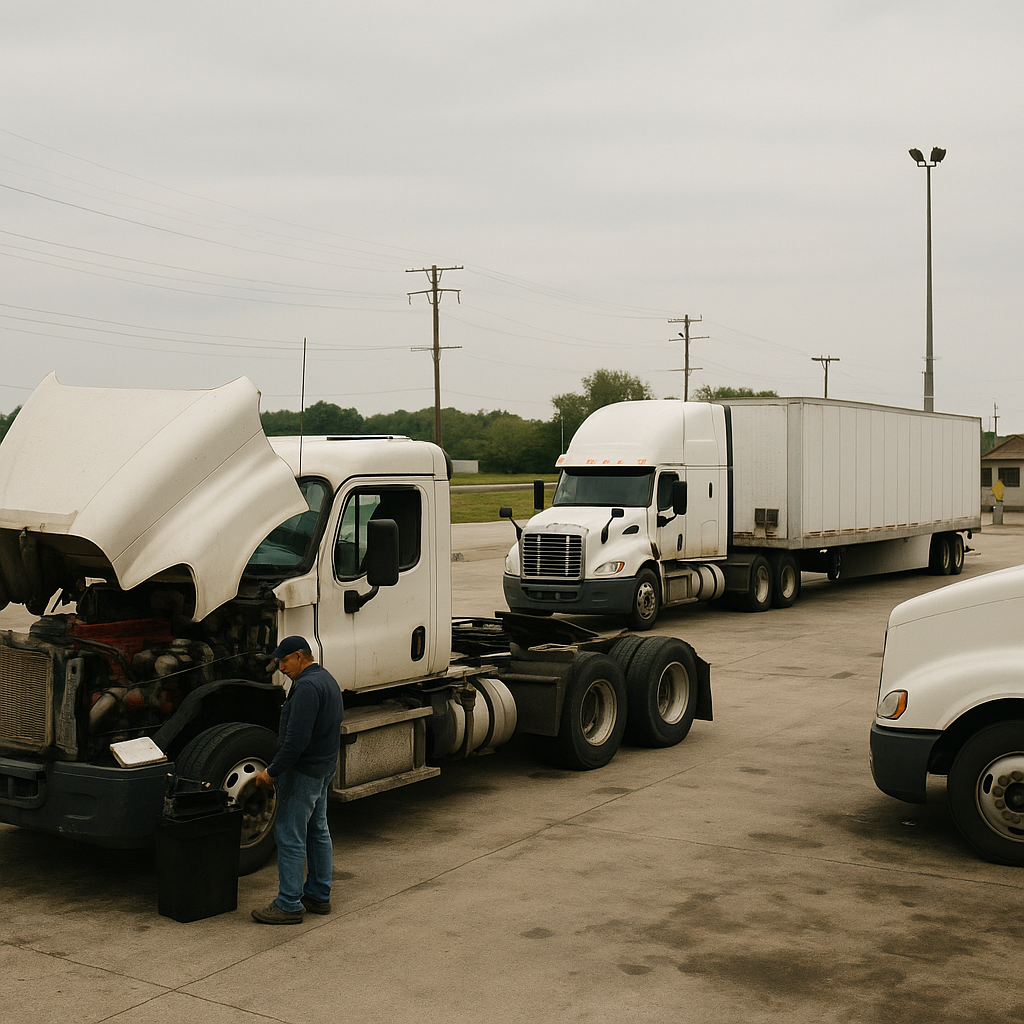

Tow truck loadboards can help you find tow-away, vehicle transport, or nearby recovery-related work, but most boards weren’t built for a wrecker’s day-to-day reality. If you’re trying to avoid another subscription that only shows generic freight, this guide breaks down what actually matters and what to ignore.
A lot of “best load board” lists lump tow operators in with dry van, reefer, and flatbed carriers. That’s where people waste time. A board can have plenty of loads and still be useless if those loads don’t fit your truck, your lanes, or how you book work from the cab.
What Tow Truck Load Boards Are — and What They Are Not#
Tow truck load boards are marketplaces where a carrier — a trucking business that moves property for hire — can look for available work posted by a broker or shipper. For tow operators, the key question isn’t whether a board has lots of listings. It’s whether it has tow-away, vehicle transport, or other work your equipment can actually handle.
A load board is an online marketplace that shows available freight or transport jobs and lets carriers search, contact, or book them. That’s the basic idea, but the details matter a lot more in towing than they do in general freight.
FMCSA uses carrier terminology around registration and operating authority, which helps separate actual for-hire transport activity from casual lead generation or dispatch chatter on social media. If you’re evaluating a platform, start by asking whether it’s really built for authorized carriers and transport work, not just general trucking marketing or informal job swapping on FMCSA.
Tow-away loads vs. general freight#
Tow-away work usually means moving vehicles, units, or equipment that fit towing or vehicle transport setups, while general freight boards often center on dry van, flatbed, and standard truckload freight. A tow-away load is a move involving a vehicle or towable unit rather than palletized freight in a trailer.
That’s why many tow operators open a popular board and immediately see loads that don’t fit their day. The listings may be real, but they’re built for a different operation. If your truck mainly handles local towing, recovery, or short repositioning moves, generic freight volume won’t help much.
A car hauler is equipment built to transport vehicles, often with loading setups that make vehicle moves more practical than a standard wrecker-only workflow. Some tow operators overlap with car-haul work, but not all do.
When a load board fits towing operations#
Tow truck loadboards make the most sense when you already do tow-away or vehicle transport work, want backhaul options, or need to cut down on empty repositioning. Deadhead is the unpaid distance you drive to reach a pickup or after a delivery before the next paying move.
That deadhead risk is where boards either help or hurt. If a platform can’t show nearby loads, usable radius filters, or enough booking detail to judge the trip fast, it turns into scrolling instead of revenue.
Common reasons tow boards disappoint operators#
Tow boards disappoint when they promise broad load access but mostly surface generic freight, long-haul moves, or poor geography for your operation. A membership tier is the level of access a platform gives you based on whether you use its free plan or a paid subscription.
Another problem is confusing access with fit. A board may be easy to log into on your phone and still be wrong for your business. NAIC’s consumer insurance language is also a good reminder that access to work and proper commercial coverage are different issues; finding a load doesn’t mean your operation’s risk is simple or your insurance needs are NAIC.

How to Judge Whether a Load Board Is Worth Your Time#
The best way to judge tow truck loadboards is to ignore hype and test whether they produce usable, nearby work for your equipment with a booking process you can handle from the cab. For most small operators, equipment fit, geography, and booking speed matter more than raw load count.
A board that claims thousands of loads can still be a bad fit if only a tiny slice applies to a wrecker or tow-away setup. What you need is a practical filter, not a giant number.
Start with four checks.
Check load type and equipment fit#
First, make sure the board actually surfaces tow-away, vehicle transport, or other work that matches your setup. If your truck isn’t built for broad freight hauling, skip any platform where most results are dry van, reefer, or flatbed moves with no meaningful way to narrow them.
A wrecker is a tow truck set up to recover, tow, or move disabled or repositioned vehicles. A wrecker operator should be able to tell quickly whether listings are true vehicle moves or just generic freight noise.
Look for local or nearby search tools#
Tow operators usually need local or short-haul visibility more than national volume. Radius search, nearby load views, lane filters, and location alerts matter because they cut down on deadhead and let you find work you can realistically cover without losing half the day getting to it.
This is where a lot of subscriptions go bad. You pay for volume, then discover the volume is three states away or wrong for your truck. If that sounds familiar,
if you also need help sorting the insurance side of a towing or transport operation.
Compare booking speed and workflow#
A good board should let you understand the load fast: pickup area, delivery area, equipment need, timing, and who you’re dealing with. If you have to make too many calls just to learn the basics, the board is creating friction instead of saving time.
Phone usability matters too. A platform can look polished on desktop and be miserable in-cab. If your day runs through a smartphone, test the mobile workflow before you commit.
Verify whether the board serves carriers, brokers, or shippers#
Some boards are broker-heavy. Some are closer to marketplaces with direct shipper visibility. Some are really lead-gen channels dressed up as load boards.
That matters because each setup changes speed, pricing visibility, and how much back-and-forth you need. Before trusting a poster, verify the company identity and operating status through SAFER. Short trial periods or month-to-month access are usually the safest way to test whether a platform produces real, bookable work for your lanes.
Free vs. Paid Load Boards for Tow Operators#
Free tow truck loadboards can work for occasional, local, or test-case use, while paid boards usually add better search tools, alerts, and access depth. The right choice depends less on price alone and more on whether the board consistently shows usable loads for your truck and service area.
A lot of operators ask the wrong question first. “Is it free?” matters, but “does it show work I can actually book?” matters more.
What free boards usually offer#
Free boards often give you limited searches, basic posting access, or partial visibility into available loads. That can be enough if you’re checking for local vehicle moves, occasional backhauls, or market feel before adding another monthly expense.
They’re also useful for testing categories. If you’re not sure whether a platform has real tow-away or car-haul activity, free access lets you validate fit without committing.
What paid boards tend to add#
Paid access often adds fuller search depth, saved searches, alerts, better contact access, and workflow tools that help you move faster. For a time-pressed owner-operator, those features matter only if they cut wasted calls and help surface nearby, relevant jobs.
| Option | Typical access | Best use case | Main limitation |
|---|---|---|---|
| Free board | Basic search or limited listings | Occasional local work | Thin details or fewer tools |
| Trial plan | Short-term fuller access | Testing real fit | Limited test window |
| Paid plan | Deeper search and alerts | Consistent load hunting | Subscription only pays if loads fit |
When free access is enough#
Free access is usually enough when load boards are a side channel, not your main source of work. If most of your jobs come from local accounts, police rotation, dealers, shops, auctions, or existing transport contacts, a free board may be all you need for fill-in work.
When a subscription may make sense#
A paid board may make sense when you’re actively building a vehicle transport lane, trying to reduce empty miles, or depending on board-sourced work more consistently. But don’t buy based on feature lists alone. Judge cost against usable loads, booking speed, and whether the platform helps you avoid deadhead instead of creating more of it.
The Best Types of Load Boards for Tow Truck Work#
The best tow truck loadboards aren’t always the biggest general freight platforms. For many operators, the strongest fit comes from car-haul-focused tools, tow-away or vehicle transport sources, and local networks that surface nearby work you can actually cover.
Instead of asking for one universal winner, sort platforms by type. That’s more useful in the real world because towing setups vary so much.
Generic freight boards#
Generic freight boards can still help if you do mixed work, support broader transport moves, or have equipment that overlaps with mainstream freight categories. But for many tow operators, these boards produce a lot of noise.
They’re strongest when you need broad market visibility and have flexibility in geography or load type. They’re weakest when your operation depends on short-notice, nearby, vehicle-specific work.
Car-haul-focused boards#
Car-haul-focused boards are often a better fit for operators handling vehicle transport rather than pure recovery or local incident towing. They tend to line up better with car hauler equipment, multi-vehicle moves, and the details that matter in auto transport.
If your workflow already overlaps with vehicle relocation, auction transport, dealer transfers, or repo-related movement, this category usually deserves more attention than broad trucking load boards.
Tow-away or vehicle transport sources#
Tow-away and vehicle transport sources can be more relevant than generic freight because the job type is closer to what many tow operators actually do. These platforms may not always have the biggest raw volume, but they can produce better fit.
That tradeoff matters. A smaller pool of relevant loads often beats a giant board full of freight that doesn’t apply to your truck.
Local load sources and networks#
Local sources matter more than many national rankings admit. For a small operator, “loads near me” is often more valuable than a national list with weak local density.
That can include regional marketplaces, dispatch relationships, dealer and auction channels, and nearby transport networks that act like informal load boards. If a national platform doesn’t help you find local work fast, its size won’t save it. If you’re not sure what coverage fits a towing or transport setup while you build those lanes,
How to Search for Tow Loads Without Wasting Time#
The fastest way to search tow truck loadboards is to start narrow: nearby radius, equipment match, and clear pickup and delivery details. Broad searches waste time because they flood the screen with freight that doesn’t fit a tow truck’s workable range or workflow.
Think of load board searching like dispatch triage. You want to disqualify bad loads fast.
Use nearby radius filters#
Start with the radius you can realistically service without turning the load into a deadhead problem. If a board has “near me,” city, or zip-based search, use it first before expanding outward.
Sort by equipment and load type#
Filter for vehicle transport, tow-away, or whatever category most closely matches your truck. If those filters barely exist, that’s a warning sign about platform fit.
Watch for deadhead risk#
A promising load can still be a bad move if pickup is too far out, delivery leaves you in a weak reload area, or timing forces unpaid repositioning. Check the whole trip, not just the posted opportunity.
Check booking details before calling#
Before you commit time, confirm who posted it, what equipment is required, where pickup and drop-off sit, and how booking actually works. The more complete the details, the more likely the board is helping instead of slowing you down.
Top Questions Tow Operators Ask About Load Boards#
Tow truck loadboards are useful when they match your equipment, show nearby work, and let you book without a lot of wasted calls. Free vs. paid matters, but the real test is whether the board consistently surfaces relevant tow-away or vehicle transport loads in your operating area.
Here are the short answers most operators are after.
What load boards cost in practice#
Pricing varies by platform and plan. Some boards are free, some offer limited free access, and others gate the useful tools behind paid tiers. The real cost question is whether the board helps you find enough usable work to justify the subscription.
Whether free boards are available#
Yes, free boards exist. The catch is that free access may come with thin detail, weaker filters, delayed visibility, or lower listing quality. For some local operators, that’s still enough.
Which load board types are most relevant#
For many tow operators, generic freight boards come second to car-haul, vehicle transport, or tow-away sources. Local search tools often matter just as much as national brand recognition.
How car haulers should evaluate options#
Car haulers should focus on vehicle-specific inventory, equipment fit, booking clarity, and nearby density. A board with fewer but better-matched listings can outperform a much larger marketplace.
FAQ#
How much does a loadboard cost?
Loadboard cost varies by platform, feature set, and membership tier. Some are free, some offer limited access at no charge, and some require a paid subscription for full searches, alerts, or contact tools. For a tow operator, the smarter question isn’t just “what does it cost?” but “does it produce usable loads for my truck and area?” A low-cost plan isn’t a bargain if it mostly shows irrelevant freight. A paid plan may be worth it if it consistently surfaces nearby tow-away or vehicle transport work you can actually book.
Are there any free load boards for truckers?
Yes, there are free load boards for truckers, and some can be useful for tow operators too. The catch is that free access often comes with limited filters, fewer listing details, or less visibility into the best opportunities. That’s not always a deal-breaker. If you’re using a board for occasional local work, market testing, or fill-in loads, free access may be enough. But if you rely on load boards more heavily, you’ll want to judge whether the board shows relevant nearby work and enough booking information to save time instead of creating more phone calls.
What are the top 5 load boards?
For tow operators, there’s no honest universal top five because fit depends on equipment, geography, and the kind of work you want. A board that’s strong for dry van freight may be weak for tow-away or vehicle transport. A better way to choose is to compare five things: whether it has relevant load types, whether it supports local or radius search, how easy it is to use on your phone, whether booking details are clear, and whether the platform serves carriers in a practical way. Use that framework and test before subscribing.
What is the best load board for car haulers?
The best load board for car haulers is usually the one with vehicle-specific inventory, useful filters, and strong density in the lanes you actually run. Car-haul-focused boards often fit better than generic freight marketplaces because the listings, equipment assumptions, and workflow are closer to auto transport. Look for platforms that let you sort by location, route, and vehicle move details instead of forcing you to dig through unrelated freight. If a board gives you nearby, bookable car-haul work with clear pickup and delivery information, it’s probably a better choice than a bigger but less relevant platform.
Do tow truck loadboards replace dispatch relationships or local accounts?
Usually not. For most small towing operations, load boards work best as one source of business, not the whole business. Local accounts, auctions, repair shops, dealers, transport partners, and repeat dispatch relationships can be more stable than board-only work. Load boards are most useful when they help fill gaps, reduce empty miles, or expand your reach into tow-away or vehicle transport moves. That’s why nearby search and booking practicality matter so much. The best platform is the one that supports your existing operation instead of pulling you into loads that don’t fit how you actually run.





